
Doorstep holding English is four spoken lines a spokesperson can say while walking from a car to a door: what happened as far as you know, what you won’t invent, where the next update will be, and who owns the next hour.
A doorstep is not a press conference. There is no podium, no slide, no moderator. There is a microphone, a camera, a shouted question, and a few seconds before the clip is cut.
This is the language companion to our crisis holding-statement templates, which cover the written holding statement and the rehearsal. It sits next to breach first-hour English, which writes the first-hour page, and POFMA holding lines, which handle a correction direction. This piece is the walk: the doorstep holding lines you say out loud, in motion, on camera.
Street-smart APAC English: short sentences a tired operator can say out loud.
Why does “we take this very seriously” die on a doorstep?
Because it is the sentence every organisation says, so it tells the viewer nothing. Worse, it sounds rehearsed at exactly the moment you need to sound human.
On a doorstep, a vague sentence does not get skipped. It gets used. The editor picks the one line that sounds evasive and runs it under your face.
Doorstep English has one rule: every sentence you say must be safe as the only sentence that airs.
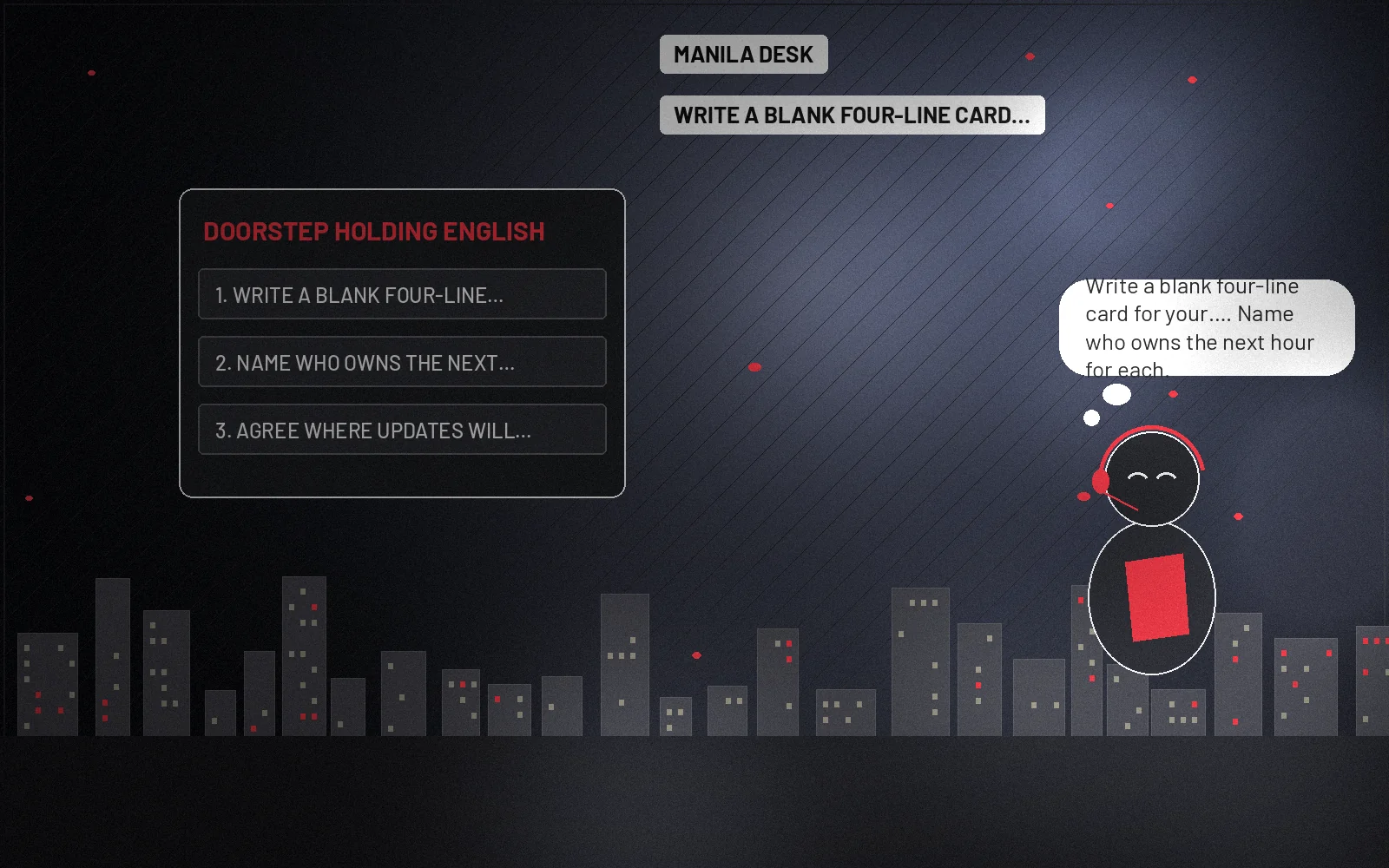
What are the four lines of doorstep holding English?
One job each. Short enough to say while walking.
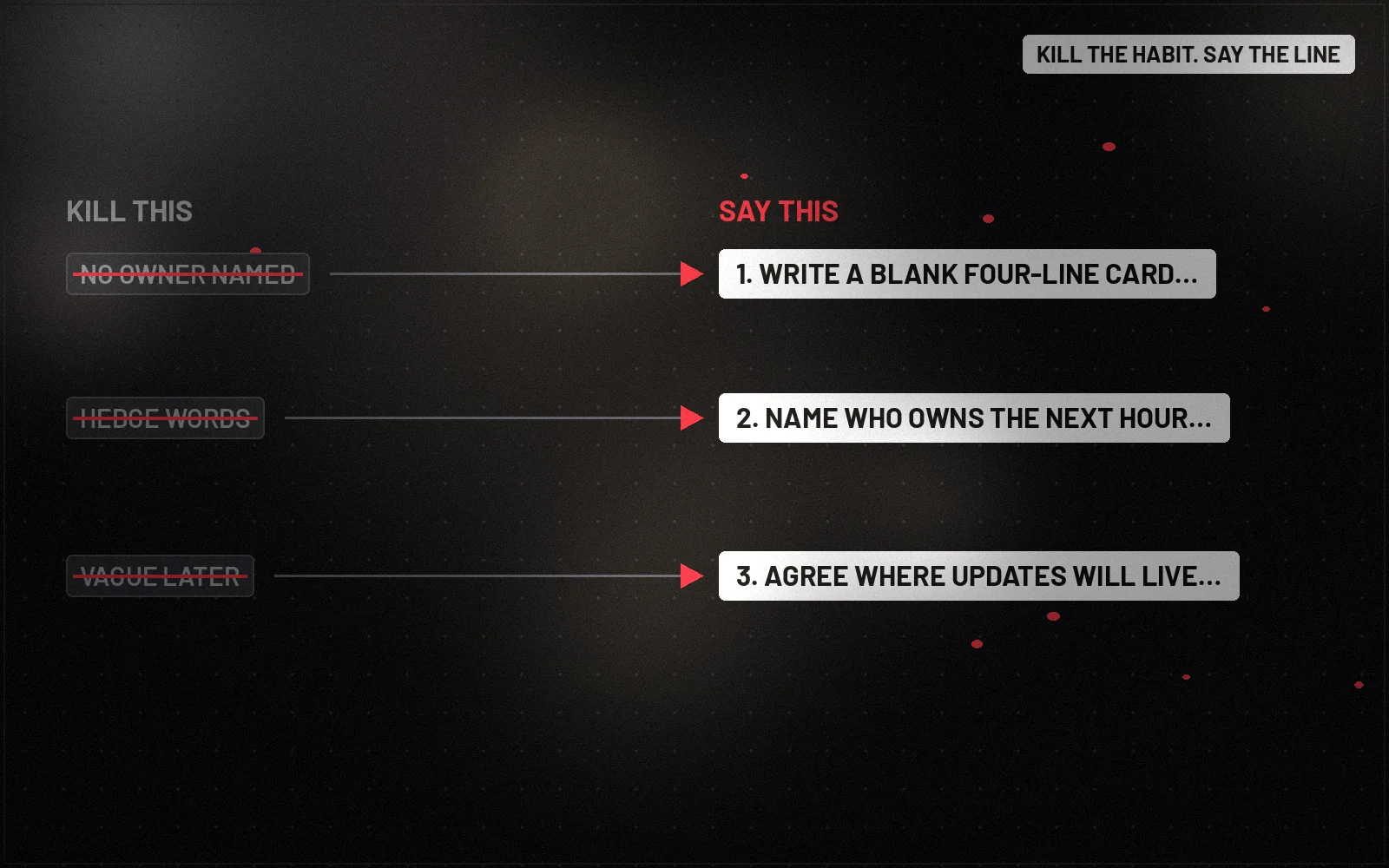
| Line | Kill this | Say this (illustrative) |
|---|---|---|
| 1. What happened | “There has been an unfortunate incident.” | “There was a fire at our site this morning. That is what we can confirm right now.” |
| 2. What you won’t invent | “It’s too early to say anything.” | “I won’t guess the cause or a number while I’m standing here.” |
| 3. Where the next update is | “We’ll keep everyone informed.” | “The next update is on our website at 3pm today.” |
| 4. Who owns the next hour | “The team is on it.” | “Our operations head owns the response. Media questions go through the media line.” |
Paste-ready card (illustrative):
There was a fire at our site this morning. That is what we can confirm right now.
I won’t guess the cause or a number while I’m standing here.
The next update is on our website at 3pm today.
Our operations head owns the response. Media questions go through the media line.
Four lines. Under thirty seconds. Every one of them can air alone.
What do you say to the shouted question?
Go back to a line you already said. Do not invent a fifth.
The shouted question is designed to pull you off the card. “Was anyone hurt?” “Is it arson?” “Who is to blame?” If you know a fact that is confirmed and cleared, say it once. If you don’t, return to line two or line three.
| Shouted question | Kill this | Say this (illustrative) |
|---|---|---|
| “Was it negligence?” | “Absolutely not.” | “I won’t guess the cause. The update is at 3pm.” |
| “How many were affected?” | A round number from the car radio | “We will give a number when it is checked.” |
| “Are you hiding something?” | “No comment.” | “No. What we know is on the website, and it updates at 3pm.” |
“No comment” sounds like a door closing. “I won’t guess” sounds like a person being careful. Same restraint, different clip.
What if the camera keeps rolling after you stop?
Assume it always is. There is no off the record on a doorstep.
Use an exit line and keep walking.
Exit line (illustrative): That’s all I can confirm right now. The next update is at 3pm. Thank you.
Then stop talking. Do not add a joke, a sigh, or “off the record.” The half-sentence after the exit line is the one that trends.
How does a doorstep change between Manila and Singapore?
The language of the question changes. The facts do not.
In Manila, the question may come in Taglish. In Singapore, a desk may ask in English and then in another language. Answer in the language you were asked only if you can say the same four facts cleanly in it. If you can’t, answer in English and say where the translated update will be.
Kill: a more generous line in one language and a stricter one in another. Say: the same four facts in every language, checked against one card.
For debate-style clip risk, our clip-safe English for war rooms post has the drill.
Who carries the card?
The spokesperson carries it in their head. An aide carries it on paper, with the clock.
When a fact changes, the aide updates the card before the next doorstep, not during it. The spokesperson never learns a new fact from a reporter’s question.
Kill: “Let me check with the team,” said on camera. Say, before the walk: “Card updated at 1:40pm. Line one now includes the site closure.”
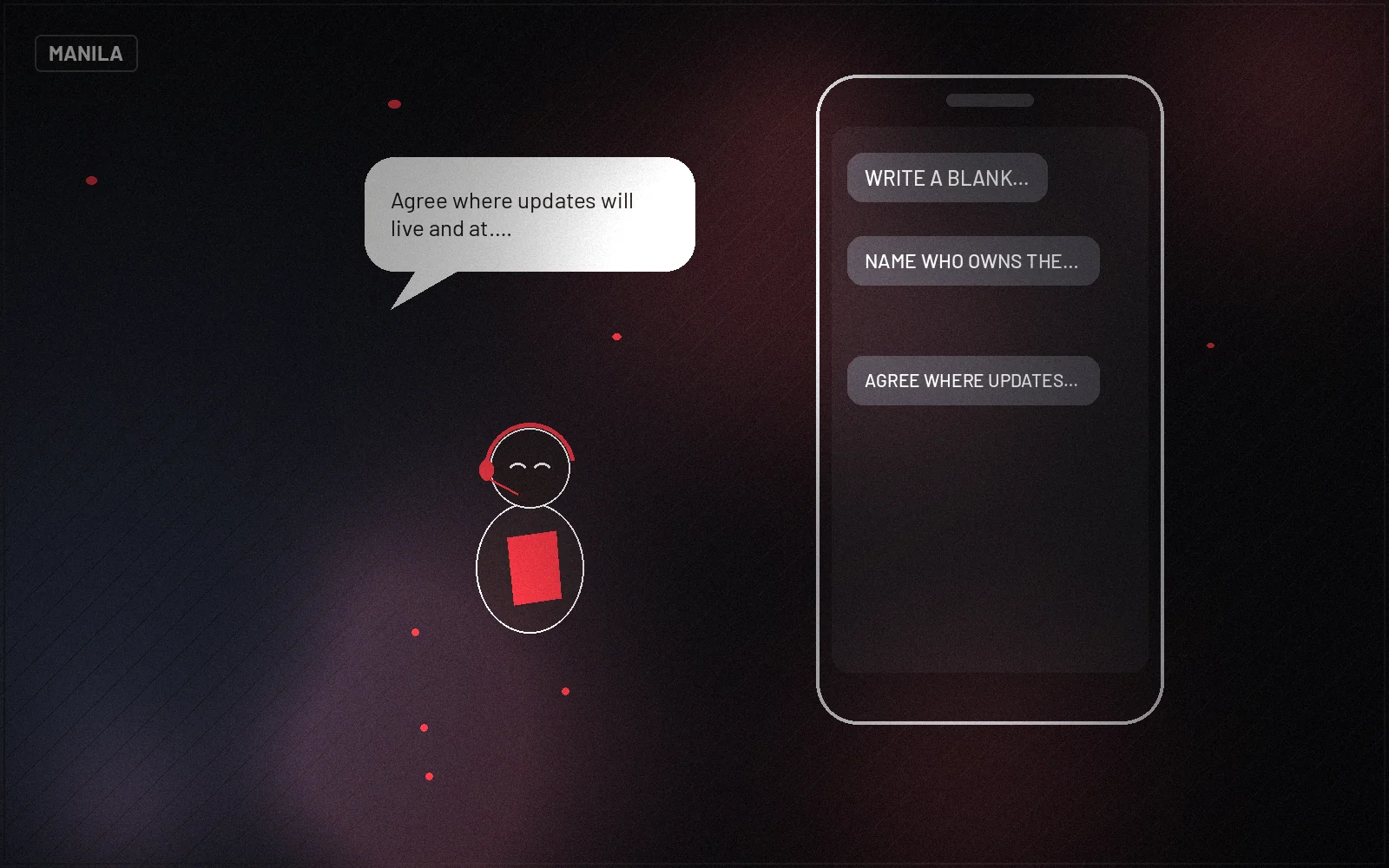
Monday field kit
- Write a blank four-line card for your top three incident types.
- Name who owns the next hour for each.
- Agree where updates will live and at what times.
- Drill the shouted questions. Answer each with a line already on the card.
- Practise the exit line until it is boring.
- Record the drill on a phone and play only the worst ten seconds.
Paste-ready note for the aide:
Doorstep card: four lines, owner named, next update time set, exit line agreed. No new facts on the walk.
FAQs
What is doorstep holding English?
It is four spoken lines for an unplanned camera moment: what happened, what you won’t invent, where the next update is, and who owns the next hour. Each line is safe to air on its own.
Should a spokesperson ever say “no comment”?
Avoid it. “I won’t guess on that, and the next update is at 3pm” gives the same restraint without sounding like you are hiding.
Can the spokesperson apologise at the doorstep?
Expressing care for the people affected is usually right. Admitting cause or fault on the walk is a different matter, so agree that wording with counsel before anyone leaves the car.
What if a reporter quotes a number we haven’t confirmed?
Do not confirm or deny it. Say you will give a number when it is checked, and name the time of the next update.
What to do this week
Pick the incident your organisation fears most. Write its four-line card and exit line. Drill it once with someone shouting.
Neuwark Communications preps spokespeople and holding lines under Crisis & Rapid Response and Strategy & Messaging. If your first doorstep would start with “we take this very seriously,” talk to us at Contact. More field English lives in Insights.
Communications craft, not legal advice. Any line about cause, fault, injuries or regulatory notice should be cleared by counsel before it is said on camera.
Related: Crisis holding-statement templates · Breach first-hour English · POFMA holding lines · Clip-safe English for war rooms