
A brand-safety memo that reads like a philosophy paper will not reach the DSP. Brand safety brief English is three blocks a buyer can paste: what we exclude, what we allow on conviction flights, and what we say if a screenshot lands in group chat. Hygiene protects spend. Theater neuters reach.
This is the language companion to brand safety for progressive paid media in PH and APAC.
Street-smart APAC English: short sentences a tired operator can say out loud.
This is operator language, not legal advice. Counsel and the media owner sign the live exclusion list.
What belongs in the one-page brief?
| Block | Who uses it | Sentence shape |
|---|---|---|
| Exclusion intent | Buyer / DSP | “Keep us off gambling, predatory lending, conspiracy farms, and named disinformation domains on this week’s list.” |
| Flight tier | Planner | “Tier A is allowlist only. Tier B is curated exchange plus the exclusion list. Tier C is mobilization, still not open exchange.” |
| Incident line | Comms | “If a screenshot of adjacency lands, pause the line, save the URL, and tell the named buyer. Do not argue in comments.” |
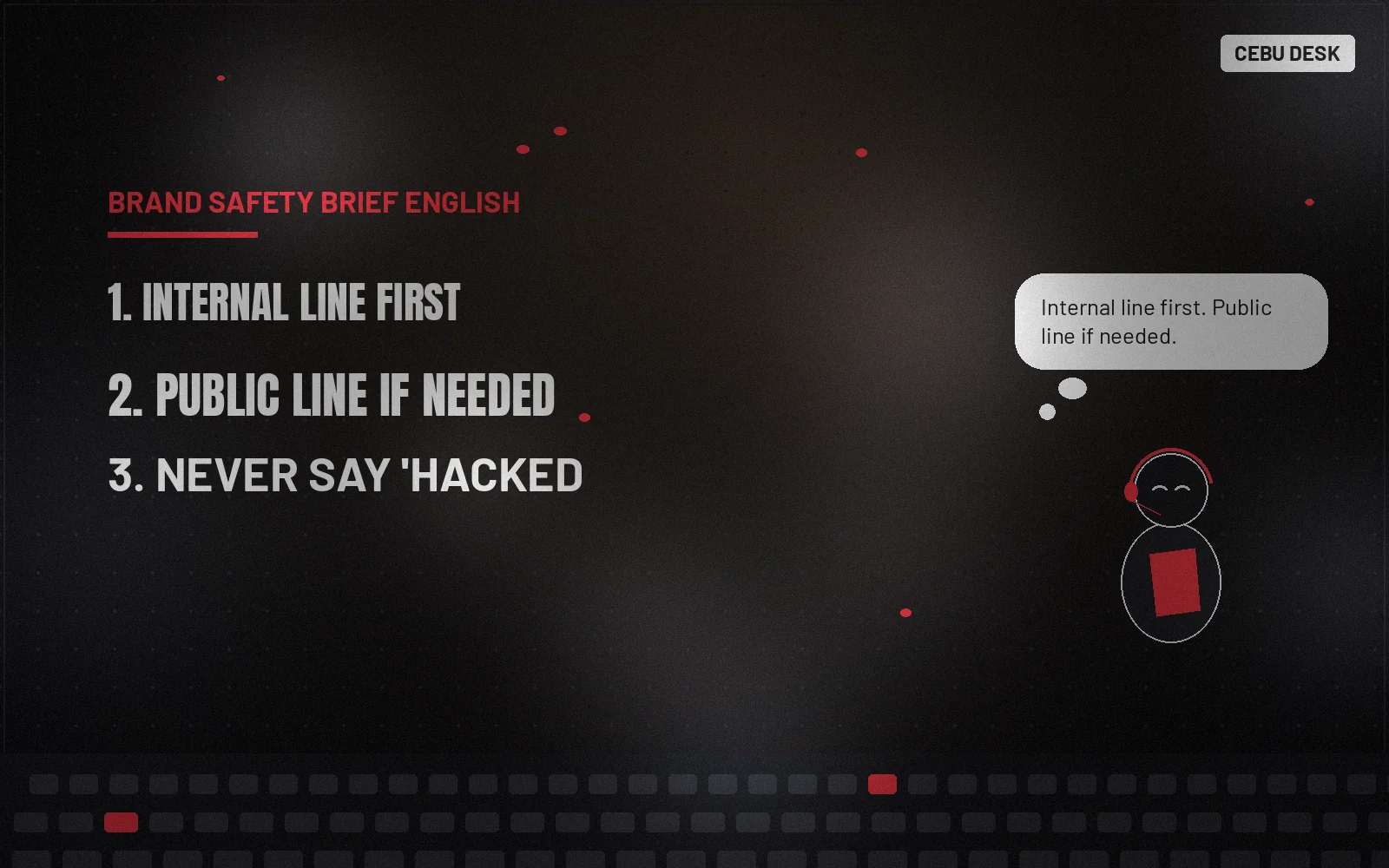
If the brief needs a glossary to be understood, it is not a brief. It is a deck.
Why do progressive flights still land under junk?
Default “brand safety” packages were built for soft drinks and telcos. They block words your coalition must say. They miss local farms your barangay captain already screenshots.
Write the political intent in English a trader will not rewrite.
Bad: “Ensure holistic suitability aligned to our values ecosystem.” Good: “No gambling, no hate adjacency, no fake-news listicles, no softcore thumbnail farms. Update the named domain list every Monday in hearing season.”
Kill list for the brief
| Kill | Why spend gets hurt | Replace |
|---|---|---|
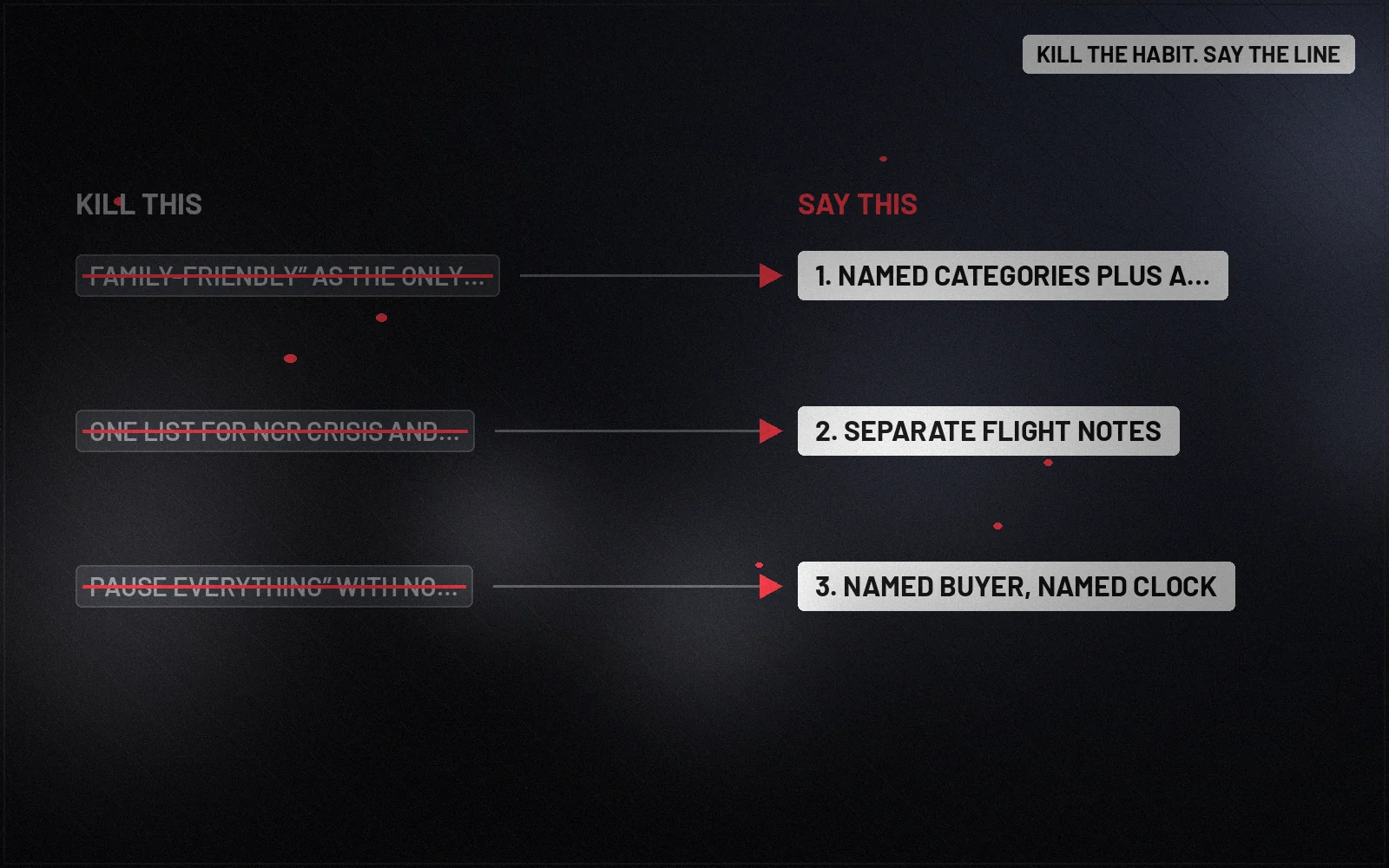
| “Family-friendly” as the only rule | Vague. Blocks issue speech | Named categories plus a review cadence |
| One list for NCR crisis and Cebu persuasion | Wrong tier, wrong adjacency | Separate flight notes |
| “Pause everything” with no owner | The line stays live overnight | Named buyer, named clock |
| Public apology for a placement you have not verified | Creates a second incident | “We are checking the URL. Next update by [time].” |
| Open-exchange bravery on integrity creative | Donor-trust risk | Allowlist for Tier A |
Incident sentences the night desk can use
Use these only after the URL is in the private folder.
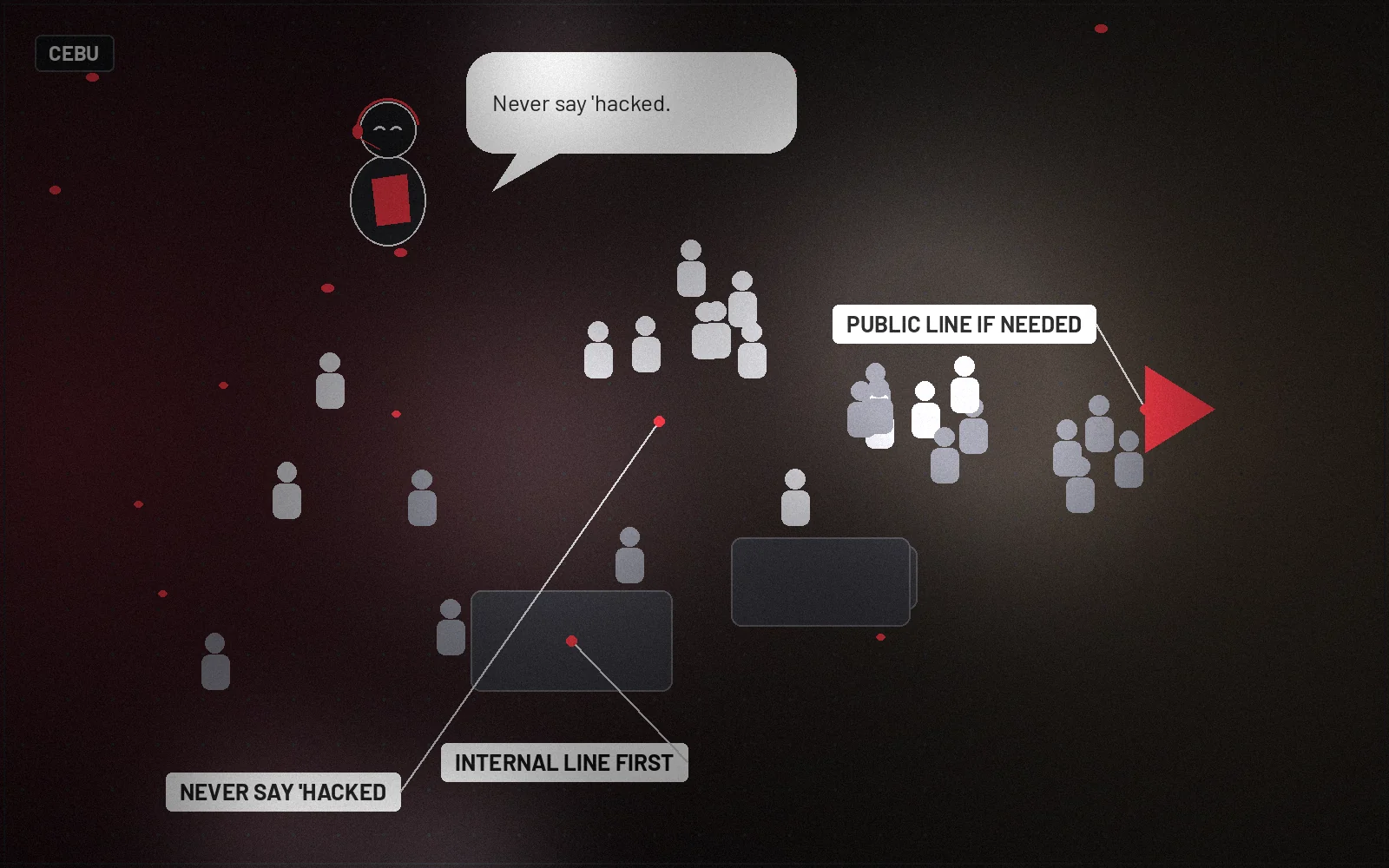
- Internal: “Adjacency screenshot on [placement ID]. URL in the folder. Pausing that line. Need buyer confirmation.”
- Public, if you must speak: “We paused the line. We are checking the placement. Next update by [time].”
- Do not say: “We were hacked.” Do not say: “The platform is the whole problem.” Do not name a publisher you have not verified.
For holding-page tone when the incident is bigger than one line item, use crisis dark-site English. For weekly labels when you report adjacency to a principal, use scorecard English.
Monday field kit
- One-page brief in the buyer’s inbox, not buried in a 40-slide PDF.
- Named exclusion list with a date stamp.
- Tier letter on every flight.
- Screenshot folder path that two people can open at night.
FAQs
What is brand safety brief English?
It is the short language that tells a paid desk what to exclude, which tier the flight is on, and what to say if adjacency is screenshotted.
Is a soft filter enough?
No. Soft filters that strip issue words are theater. Open exchange with no exclusions is negligence. The work is the middle.
Who signs the list?
The comms owner names political intent. The buyer builds the DSP list. Counsel flags legal exposure. All three names sit on the page.
Neuwark Communications writes paid-hygiene language under Media & Paid and Digital & Social. Start at Services. More desks: Insights.
Related: brand safety for progressive paid media in PH and APAC · crisis dark-site English · weekly scorecard English · Undas social copy