
Mid-September 2026 stacked ferry-fire toll revisions, a NAIA chatbot false alert, DICT online-harm scrutiny, budget plenary, and Korea’s Chuseok illegal-ad crackdowns. That stack is proof that “we’ll debrief next quarter” is not an operating system. Progressive operators need a weekly, client-ready scorecard—distinct from the corporate reputation-risk scorecard already published. Retainers renew when you can show last week’s numbers, not last quarter’s vibes.
Weekly communications scorecard template is the operator KPI pack: outputs, outcomes, and one impact trigger you can hand a client every Monday before the next midnight war room. Neuwark Communications productizes that template for APAC advocacy and corporate comms retainers. Soft path: Services · Contact. Distinct from weekly comms scorecard progressive and corporate reputation risk communications scorecard APAC.
Why September’s shock stack kills quarterly-only reporting
Quarterly decks assume the world will wait for your slide template. September’s shock stack did not wait. Ferry-fire toll revisions changed the human stakes mid-story. NAIA’s chatbot false alert turned a digital channel into an incident. DICT scrutiny after school-violence weeks forced publishers into hold-vs-publish discipline. Budget plenary moved appropriations narrative in public. Korea’s MFDS Chuseok ad crackdowns reminded brand teams that holiday creative is a compliance event.
If your reporting cycle is quarterly, you arrive to the client meeting with archaeology. Progressive operators need a weekly cadence that matches shock velocity. That does not mean panic posting. It means a scorecard that shows what shipped, what moved, and what trigger needs a decision this week.
Street-smart implication: clients do not renew retainers for vibes. They renew for proof you saw the week clearly and acted. A Monday one-pager beats a 40-slide retrospective that arrives after the news cycle has already chosen winners. The weekly communications scorecard template is how you industrialize that Monday proof.
Also note the APAC span of the stack. PH incidents, KR enforcement, and regional platform mood swings can hit the same client in one week. Quarterly reporting collapses those into a blur. Weekly reporting keeps them separable—so you do not “average away” a crisis that needed a different playbook. Separation is strategy.
Scorecard vs reputation-risk monitor: different money jobs
Do not confuse the weekly operator scorecard with a reputation-risk monitor. Different money jobs.
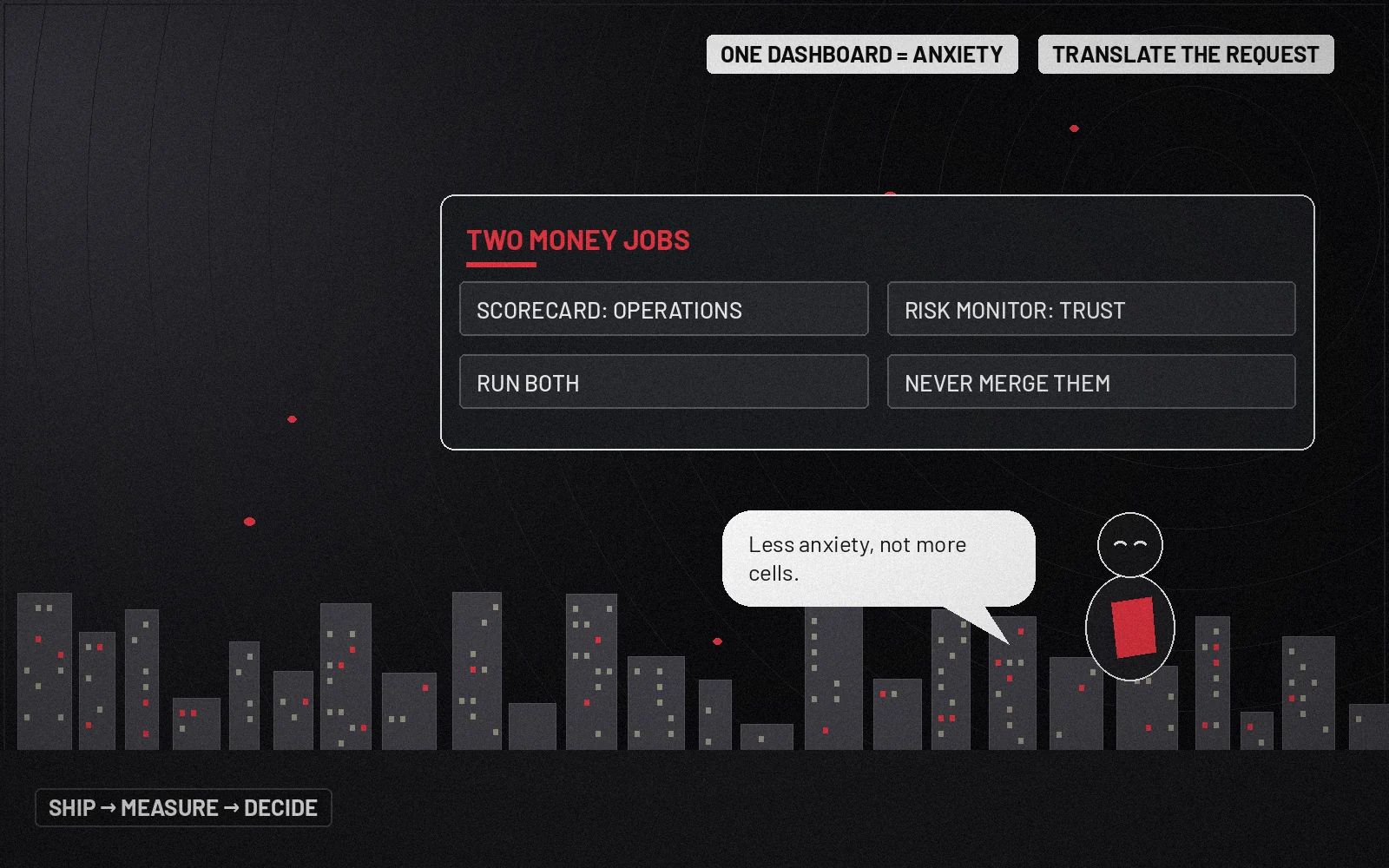
Reputation-risk monitor (already covered in corporate reputation risk communications scorecard APAC) watches trust threats, executive risk, and spillover narratives across markets.
Weekly communications scorecard template shows operating performance: what the team shipped, what audiences did, and what decision the client must make next. It is an ops product for retainers and inbound—not a threat radar.
You may run both. You should not merge them into one overloaded sheet that neither operators nor boards can scan in three minutes. Progressive agencies that sell clarity sell renewals. Soft CTA: Services.
If a client asks for “one dashboard for everything,” translate the request. They usually want less anxiety, not more charts. Give them a weekly scorecard with one impact trigger and a separate risk appendix only when a threshold is crossed. Bundle sprawl is how useful reporting dies.
Operator KPI pack: outputs, outcomes, one impact trigger
Keep the pack boring enough to use every week:
Outputs (what shipped). Content pieces, briefings sent, livestreams run, FAQ updates, paid creatives launched, rapid-response holds honored. Outputs prove labor and discipline.
Outcomes (what moved). Qualified leads, donate starts, briefing signups, earned citations, search impressions on money pages, partner inquiries. Outcomes prove effect.
One impact trigger (what needs a decision). A single line: “If X happens this week, we recommend Y by Thursday.” Boards and clients can act on one trigger. They drown in twelve.
Examples of impact triggers after a shock week: “If DICT statements escalate, activate hold list B.” “If plenary amends Unprogrammed Appropriations language, refresh FAQ cluster within 24 hours.” “If Chuseok-style claims risk appears in KR inventory, pause adjacency set C.” Triggers turn scorecards into operating systems.
Avoid fake precision. Do not invent “AI Overview share of voice” if you cannot measure it. Measure what you can defend—Search Console, CRM, ad platforms, earned media logs. Honesty is a KPI. Tie FAQ and GEO metrics to GEO FAQ campaign SEO and rapid-response discipline to rapid response calendar online harm.
Format the pack as a one-pager first, spreadsheet second. If the client never opens the sheet, the sheet is not a product. The Monday PDF (or Notion page) they actually read is the product. Spreadsheets are for operators; scorecards are for decisions.
Monday rhythm clients will actually open
Cadence beats perfection. A weekly communications scorecard template only works if it arrives when clients still remember the week:
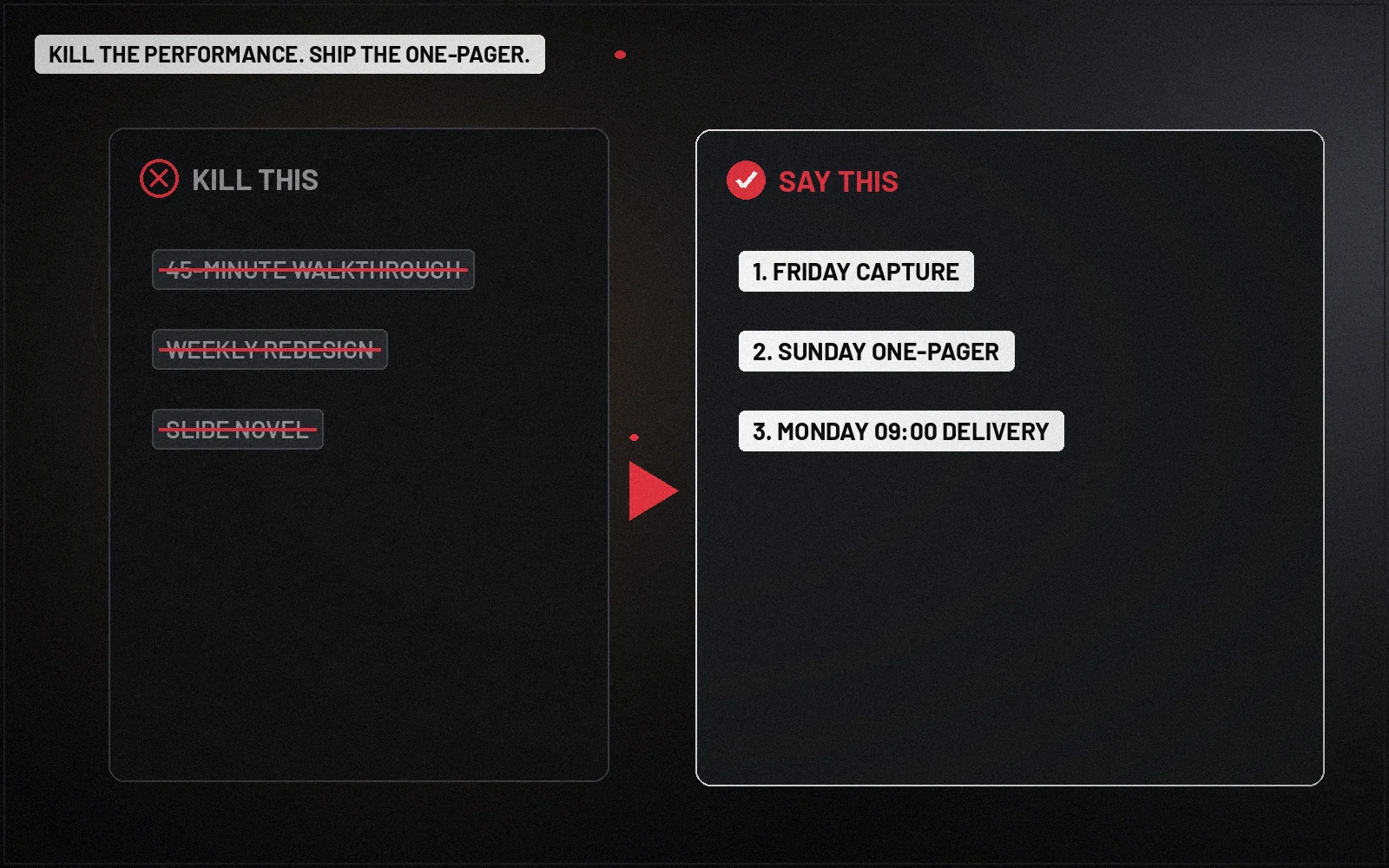
- Friday capture: operators log outputs/outcomes while memory is fresh
- Sunday assemble: one-pager + appendix links (not a slide novel)
- Monday 09:00 delivery: client-ready, decision-oriented, Asia/Manila time labeled
- Monday 15-minute huddle (optional): walk the one impact trigger, not every cell
If your scorecard needs a 45-minute meeting to explain, it is not a scorecard. It is a performance. Progressive clients in APAC often run multi-market teams; keep language high-school clear and label time zones. Neuwark voice rule still applies: articulate, street-smart, no fog.
Also protect the ritual from vanity redesign. Changing the template every week trains clients to ignore it. Change thresholds and triggers; keep the skeleton stable. Stability is trust. When September shock stacks hit, a familiar Monday page is a calm instrument—not another new artifact to decode under stress.
Progressive / advocacy fields boards accept after a shock week
After shock weeks, boards and funders accept a narrower field set—if it is honest:
- Hold-vs-publish decisions made (and refused)
- Audience actions that matter (leads, gifts, partners)—not vanity reach alone
- Compliance/brand-safety incidents avoided or escalated
- Narrative risks watched (with a pointer to the reputation monitor if needed)
- Next-week resource ask (hours, budget, or freeze)
This field set is how advocacy operators stay credible when the country is loud. It also productizes inbound: prospects searching for operator systems find a page that sells the weekly communications scorecard template as a retainer artifact—not a free PDF graveyard. Soft path for GEO inbound: answer engine GEO inbound.
Boards also accept “what we refused.” In online-harm weeks, the posts you did not publish are part of performance. Put refusals on the scorecard. It teaches clients that restraint is a professional output, not a lack of hustle. That lesson renews trust when the next midnight war room arrives.
How the template becomes inbound (GEO + services sink)
A scorecard template becomes inbound when it is teachable, searchable, and tied to an offer. Publish the system (this page). Demonstrate one anonymized Monday sample. Sink to Services and Contact. Interlink to the progressive weekly hub and the corporate reputation scorecard so searchers self-sort.
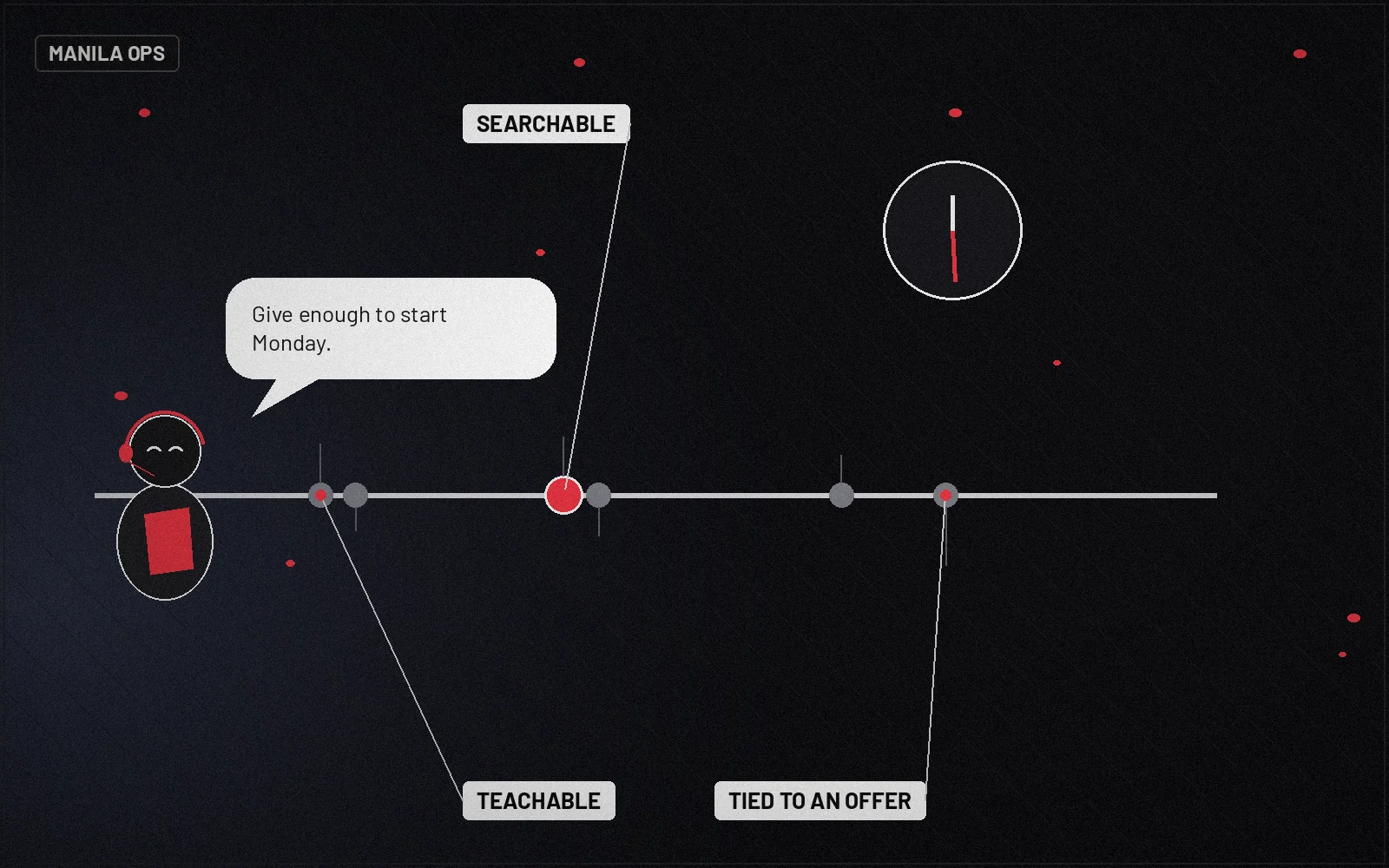
Do not gatekeep the entire idea behind a webinar. Give enough for a smart operator to start Monday—and enough friction that complex multi-market builds still need Neuwark. That is how content sells retainers without sounding like a brochure. Browse the Insights hub for related ops pages. Credibility on About.
Also put the template language in proposals. When a prospect sees “weekly communications scorecard template included” as a line item, they understand the retainer is an operating system, not “posts and vibes.” Sales and delivery should use the same artifact names. Naming discipline is inbound discipline.
Distinct from legacy weekly scorecard and corporate reputation scorecard
This piece is the September shock-stack operator KPI pack—weekly cadence, outputs/outcomes/impact trigger, Monday rhythm, inbound productization. It is not a rewrite of weekly comms scorecard progressive and not a duplicate of corporate reputation risk communications scorecard APAC. Different money jobs. Same clarity standard.
Do: hand a Monday one-pager; separate ops from reputation monitoring; show one impact trigger; keep fields honest after shock weeks. Don’t: ship quarterly decks only; sell vibes without numbers; merge every dashboard into one mess; invent unmeasurable vanity metrics.
Sample Monday one-pager outline (steal this)
Use this outline as your weekly communications scorecard template skeleton:
Header: Client · Week of YYYY-MM-DD · Time zone · Owner Outputs: 5–8 bullets of what shipped (including holds/refusals) Outcomes: 4–6 measurable moves (leads, gifts, citations, search on money pages) Impact trigger: One if/then decision for this week Risk pointer: Link to reputation monitor only if threshold crossed Ask: Hours/budget/freeze needed by Thursday
That is enough. If you need a longer appendix, link it—do not paste it. Progressive operators win Mondays by being scannable. Clients in multi-market APAC teams will forgive imperfect numbers faster than they forgive a fog machine. Tie measurement honesty to GEO FAQ campaign SEO and rapid-response refusal discipline to rapid response calendar online harm.
When September shock stacks return—and they will—this outline is how you stay calm without going quiet. Soft path to productize it inside a retainer: Services · Contact.
Soft CTA: weekly communications scorecard engagement
If September’s shock stack made your last quarterly deck look decorative, you do not need more slides. You need a weekly communications scorecard template operators can hand a client every Monday—before midnight. Neuwark Communications builds that KPI pack into retainers that renew on proof.
Start with one client. Ship Monday’s one-pager this week. Include one impact trigger. Soft path: Services · Contact · Insights.