
If your crisis plan starts with “call the agency,” you already lost the first hour. Retainers buy thinking time. On 8 September 2026, Tokyo’s Material Inc. launched an AI-assisted “Smart Retainer” PR model—a live signal that the APAC market is re-pricing monthly retainers (strategy plus crisis adjacency) against project-only fire drills. Boards still buy crisis help after midnight. Smart operators scope a crisis communications retainer APAC package before the next PIPA, APPI, or haze week owns their calendar.
Neuwark Communications builds Crisis & Rapid Response retainers for dual-desk brands across PH, SG, MY, ID, and TH. This piece is the money version of Japan’s retainer wave: what you actually buy before midnight, how to scope SLAs without vanity fees, and where AI back-office helps versus where it must never replace counsel. Soft next step: Services and Contact.
Why Japan’s “Smart Retainer” wave matters for every APAC board
Japan’s agency market is not your market—but it is a pricing and productization signal. When Tokyo firms package monthly strategy retainers with AI back-office and crisis adjacency, they are answering a buyer complaint common from Manila to Singapore: project-only PR is too slow when the first hour decides the narrative.
APAC boards face stacked regulatory and weather calendars. Korea’s PIPA surcharge logic, Japan’s APPI AI-data path, ASEAN haze weeks, and Philippine monsoon cycles do not wait for a new SOW. A retainer is not a luxury line item. It is pre-purchased decision speed.
The commercial lesson is blunt. If your “partner” only activates when something blows up, you are paying panic rates for unfinished thinking. Japan’s Smart Retainer framing—monthly access, productized scope, AI for drafts and logistics—forces a useful question: what should your APAC crisis communications retainer include so midnight does not become your kickoff call?
Read this against your live hubs on crisis holding statements and crisis dark-site readiness. Those pages are tactics. The retainer is the operating agreement that makes tactics usable under stress.
Retainer vs project fire drill: what you actually buy before midnight
A project fire drill buys bodies after the blast. A retainer buys three quieter assets:
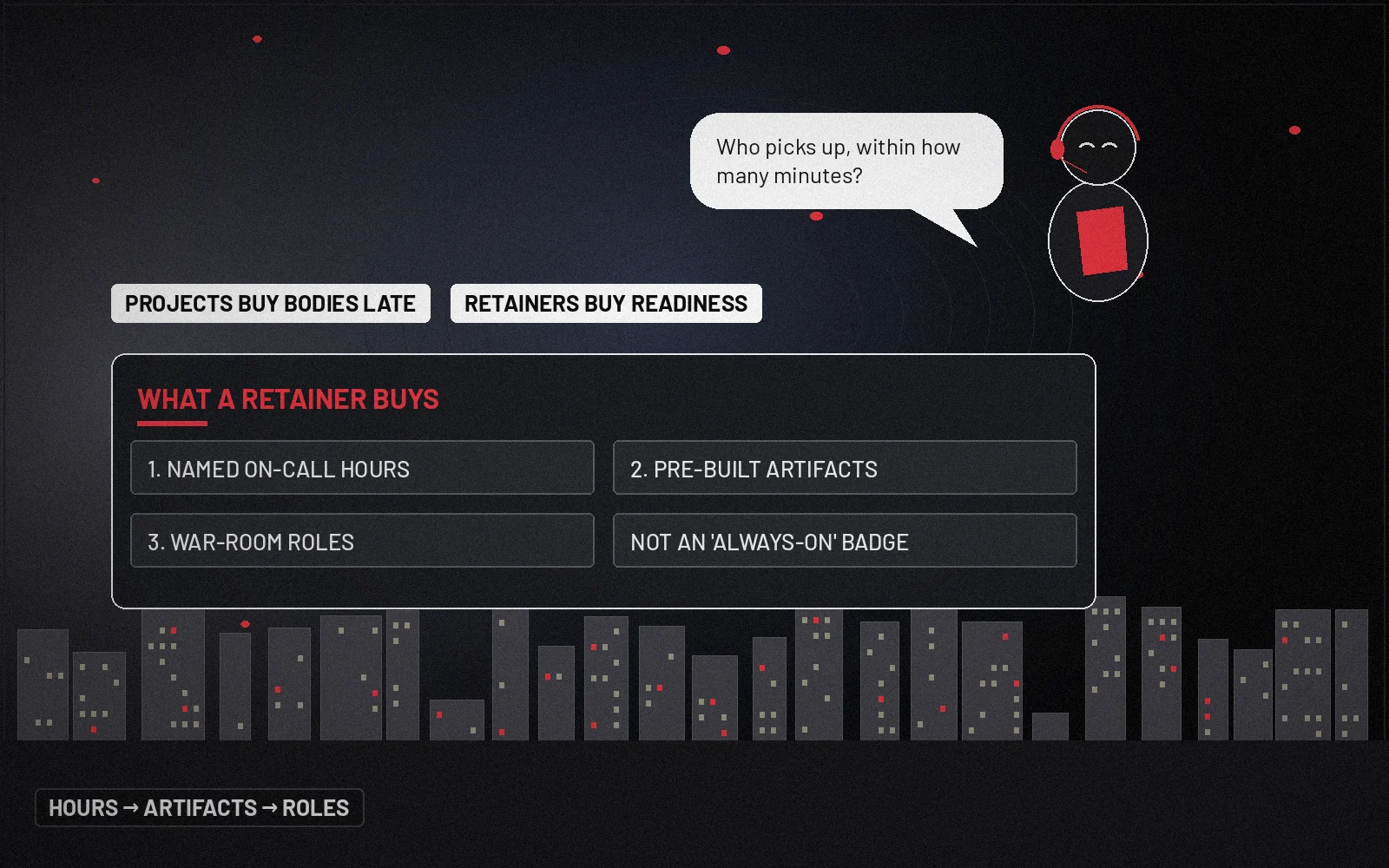
- 1. Named on-call hours — who picks up, in which time zones, within how many minutes.
- 2. Pre-built artifacts — holding lines, dark-site skeleton, stakeholder maps, approval trees.
- 3. War-room roles — who drafts, who clears legal, who speaks, who monitors.
Project-only buying feels cheaper until the first hour. Then you pay for introductions, context dumps, and reinvented templates while group chats invent your position for you. Retainers look expensive on a calm month. They look cheap the week a regulator, a data integrity story, or a haze alert lands on your brand.
What you are not buying: a vanity “always-on PR” badge with no SLA, no drills, and no dark-site. That is a newsletter subscription wearing crisis language. Scope ruthlessly.
Scoping matrix: on-call SLA, war-room hours, dark-site readiness
Use a four-row matrix in every SOW:
On-call SLA. Define weekday and weekend windows. Name primary and backup. Set acknowledgment time (for example: 15 minutes in window, 45 minutes out of window) and first holding-line draft time (for example: 60–90 minutes after acknowledgment). If the SLA is “we’ll try,” it is not an SLA.
War-room hours. Cap included war-room hours per month and define the overage rate. Include a quarterly tabletop. If you never drill, your first live war room will be a introductions meeting.
Dark-site readiness. Require a dark-site skeleton, DNS/CMS path tested, and FAQ blocks that can go live without a designer inventing layout at 2 a.m. Link this to your dark-site readiness discipline—not a slide titled “we have a microsite idea.”
Counsel vs production. Separate senior counsel hours from production hours (media monitoring, CMS, design). Mixing them hides whether you bought judgment or just busy hands.
Put the matrix on one page. Attach it to the SOW. Review it every quarter. Markets change; so should hours and triggers.
What “AI back-office” should (and should not) replace in crisis counsel
Japan’s Smart Retainer story leans on AI for back-office speed. That is useful and dangerous in equal measure.
AI should help with: first-draft monitoring digests, translation scaffolding, checklist generation, CMS assembly of pre-approved blocks, and searching your own approved language library.
AI should not replace: stakeholder judgment, legal risk calls, apology culture decisions (especially Japan/Korea), regulator sequencing, or the choice between silence and statement when politics spills onto the brand.
If a vendor sells “AI crisis counsel,” ask who still owns the decision when the model hallucinates a regulator name or invents a quote. Your crisis communications retainer APAC package should name humans for counsel and tools for production. Tools scale drafts. Humans own consequences.
Pricing signals: monthly strategy + crisis adjacency without vanity retainers
Price signals in APAC are noisy, but the structure is clearer than the number:
- Base monthly — strategy cadence, monitoring, light counsel, artifact maintenance.
- Crisis adjacency — on-call SLA, war-room hours bank, dark-site keep-warm.
- Burst overage — defined rate when hours exhaust, with pre-approved authority to open the bank.
Avoid vanity retainers that buy “visibility” with no crisis adjacency. Avoid pure project fees that pretend midnight kickoffs are normal. The hybrid Japan is productizing—monthly plus AI-assisted ops plus crisis readiness—is the shape most APAC boards can defend to finance.
Ask vendors for last-quarter drill notes, sample SLA dashboards (anonymized), and what happens when two clients crisis at once. Capacity honesty is part of pricing.
Pre-season checklist before the next PIPA / APPI / haze week
Run this before the calendar owns you:
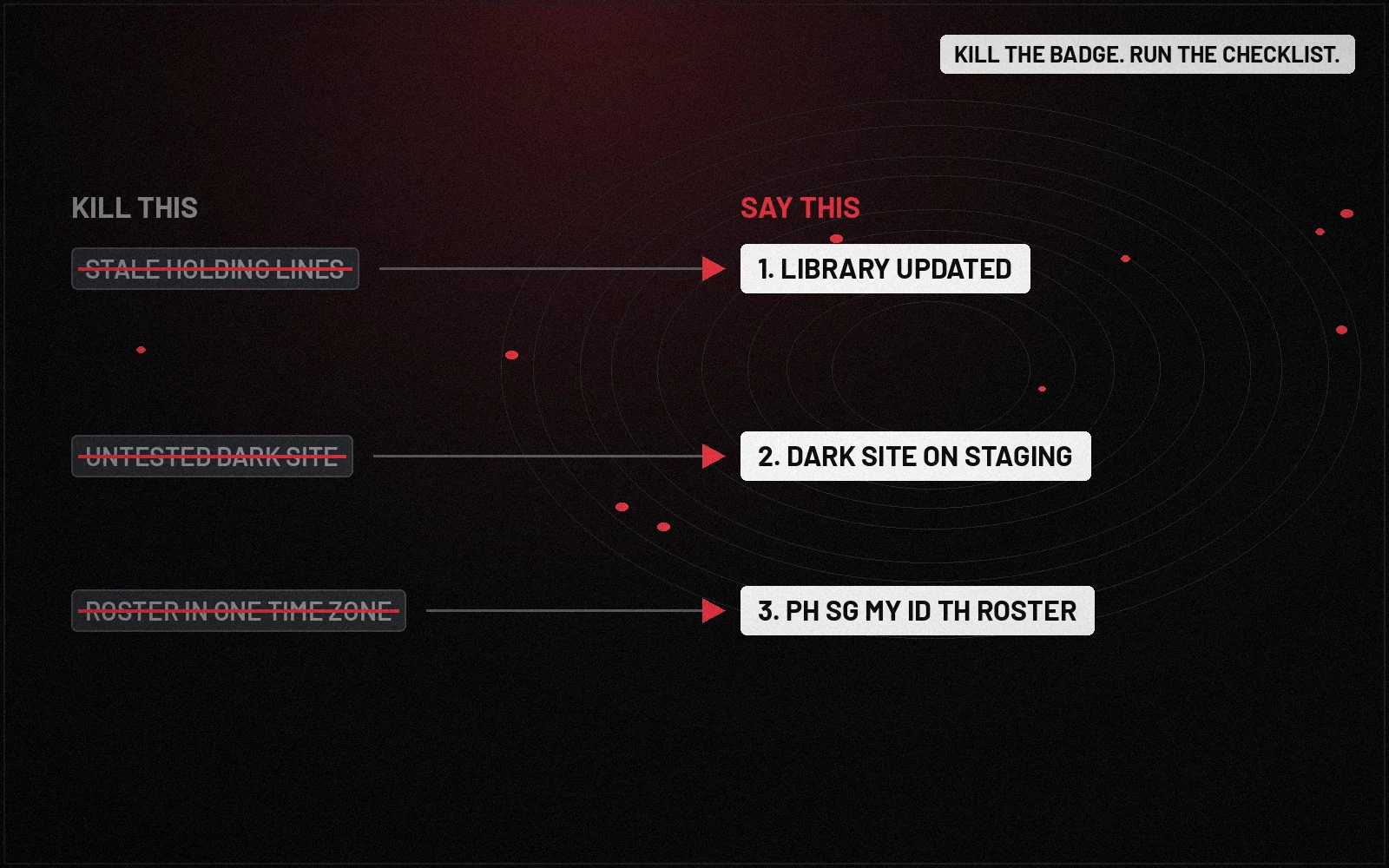
- [ ] Holding-statement library updated for current products and markets
- [ ] Dark-site skeleton tested on staging
- [ ] Approval tree printed and in the war-room channel
- [ ] On-call roster time-zone verified for PH, SG, MY, ID, TH
- [ ] Media monitoring keywords refreshed (regulator + weather + brand)
- [ ] Quarterly tabletop scheduled with a named date
- [ ] SOW SLA page signed by both sides
Pair the checklist with Insights playbooks you already trust. Do not invent a new binder the night of the alert.
Market notes: PH, SG, MY, ID, TH
Philippines. Habagat and cyclone weeks make on-call real. Pair retainer scoping with flood-week readiness and local search intent for crisis help. Dark-site and holding lines should assume mobile-first stressed readers, not desktop war rooms only.
Singapore. Corporate buyers expect institutional calm. SLAs should read like operations documents. AI back-office is welcome for drafts; counsel still needs named seniors who can brief a board without improvisation theater.
Malaysia / Indonesia. Political and regulatory spillover can collide with product crises. Retainer SOWs should include adjacency language for reputation weeks—not only “classic” product recalls.
Thailand. Marketplace and influencer regulatory risk can become brand crises fast. On-call rosters need bilingual draft capacity and clear approval trees so local teams do not freestyle under pressure.
Sample scoping workshop agenda (90 minutes)
- 1. Map last three near-misses — what hour failed, who was missing.
- 2. Draft SLA numbers — acknowledgment and first holding-line times.
- 3. Dark-site status — live, staging, or fantasy.
- 4. War-room role cards — names, not titles alone.
- 5. AI boundary — what tools may draft; what humans must clear.
- 6. Price shape — base + adjacency + overage, with finance in the room.
- 7. Drill date — put a tabletop on the calendar before leaving.
Walk out with a one-page matrix, not a mood. If finance is absent, you will re-litigate price under panic later.
What “good” looks like in the first sixty minutes of an incident
Minute 0–15: acknowledgment, channel open, facts sheet started (known / unknown / do-not-say). Minute 15–45: holding line draft v1; legal/comms parallel review; monitoring keywords live. Minute 45–60: approved holding line or explicit “still gathering” line; stakeholder sequence kicked; dark-site decision yes/no.
If your retainer cannot support that rhythm, you bought a logo, not readiness. Practice the sixty minutes in tabletop form until it is boring.
Vendor diligence questions boards should ask
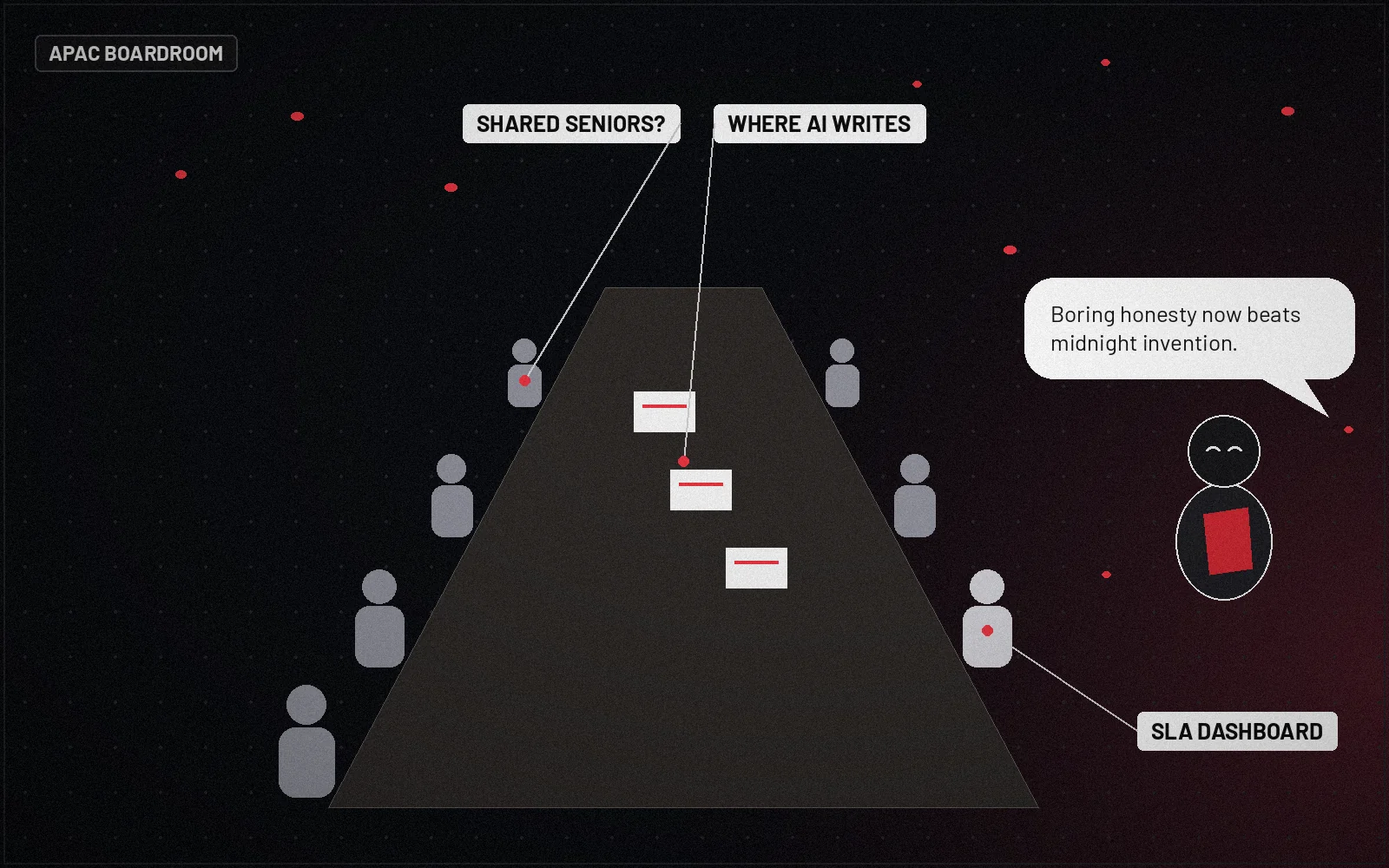
- How many clients share the same on-call senior during peak haze / monsoon weeks?
- Show an anonymized SLA dashboard from last quarter.
- What is excluded from crisis adjacency (litigation PR, M&A, political endorsements)?
- How do you handle conflicts when two clients crisis the same day?
- Where does AI write, and where is human sign-off mandatory?
Vendors who cannot answer cleanly will invent answers at midnight. Prefer boring honesty now.
Connecting retainers to Insights and services language
Internally link your crisis retainer offer to Crisis & Rapid Response on Services, and keep Insights as proof fuel—not a substitute for an SOW. Readers who land on this article should leave with a scoping vocabulary they can take to procurement: SLA, war-room hours, dark-site, counsel vs production, overage.
That vocabulary is the commercial asset. Japan’s Smart Retainer wave simply made the vocabulary louder across APAC.
Soft CTA: scope a crisis communications retainer
Midnight is a terrible kickoff. Japan’s Smart Retainer wave is a reminder that APAC buyers will keep productizing monthly access—with or without you. Scope a crisis communications retainer with real SLAs, war-room hours, and dark-site readiness while the room is still calm.
Neuwark’s Crisis & Rapid Response desk scopes retainers for brands that cannot afford first-hour fog. For Singapore-first crisis retainers, see Singapore crisis & issues. Start on Services, skim About for desk model, and use Contact when you want a scoping matrix workshop—not a vanity pitch deck. Browse more on the Insights hub, or return [home](/) if you are mapping the full offer set.
Retainers do not prevent every crisis. They prevent the expensive amateur hour that happens when your plan is still “call someone.”