
Months after the May “Tank Day” fiasco and the August HQ raid, South Korean local governments were still cutting Starbucks gift-card purchases through the first half of 2026—and September reporting kept showing the reputational tax. That is the harsh lesson of cultural calendar brand safety Asia: one culturally blind promo can torch B2G and consumer spend for quarters, long after the meme cycle moves on.
Brand safety is not only ad inventory. It is knowing which dates your market will never forgive. Neuwark Communications builds cultural-calendar clearance systems and creative retainers so global templates do not become local disasters. When institutional buyers quietly exit, you do not get a second “oops” creative. You get a year of harder conversations with procurement.
Why Tank Day still shows up in September spend reports
Crisis headlines fade. Procurement memory does not. When local governments slash gift-card buying, you are not looking at a weekend boycott—you are looking at institutional spend treating your brand as politically expensive. That is a commercial signal: trust and budget moved together.
Three dynamics keep the tax alive into September:
- Institutional lag — B2G and corporate gifting cycles report slower than social outrage, so damage lands in later quarters.
- Screenshot permanence — The original creative remains easy to resurface when a related anniversary or news beat returns.
- Permission collapse — Employees, franchise partners, and civic buyers quietly choose safer brands without issuing a press release.
If your team only tracks “share of voice in week one,” you will declare victory while finance is still bleeding. Build a longer scoreboard: institutional spend, franchise sentiment, employee advocacy rates, partner willingness to co-brand, and whether civic calendars still want you on the stage. Those metrics tell you whether repair is real or just a quieter news week.
Also track secondary effects: store-level harassment incidents, franchisee group-chat tone, and whether B2B RFPs start asking awkward cultural-risk questions. Reputation taxes show up in boring places first.
Cultural calendar ≠ content calendar
A content calendar asks: what do we post this week? A cultural calendar asks: which dates, images, uniforms, vehicles, and jokes are radioactive in this market—even if they test funny in a global Slack?
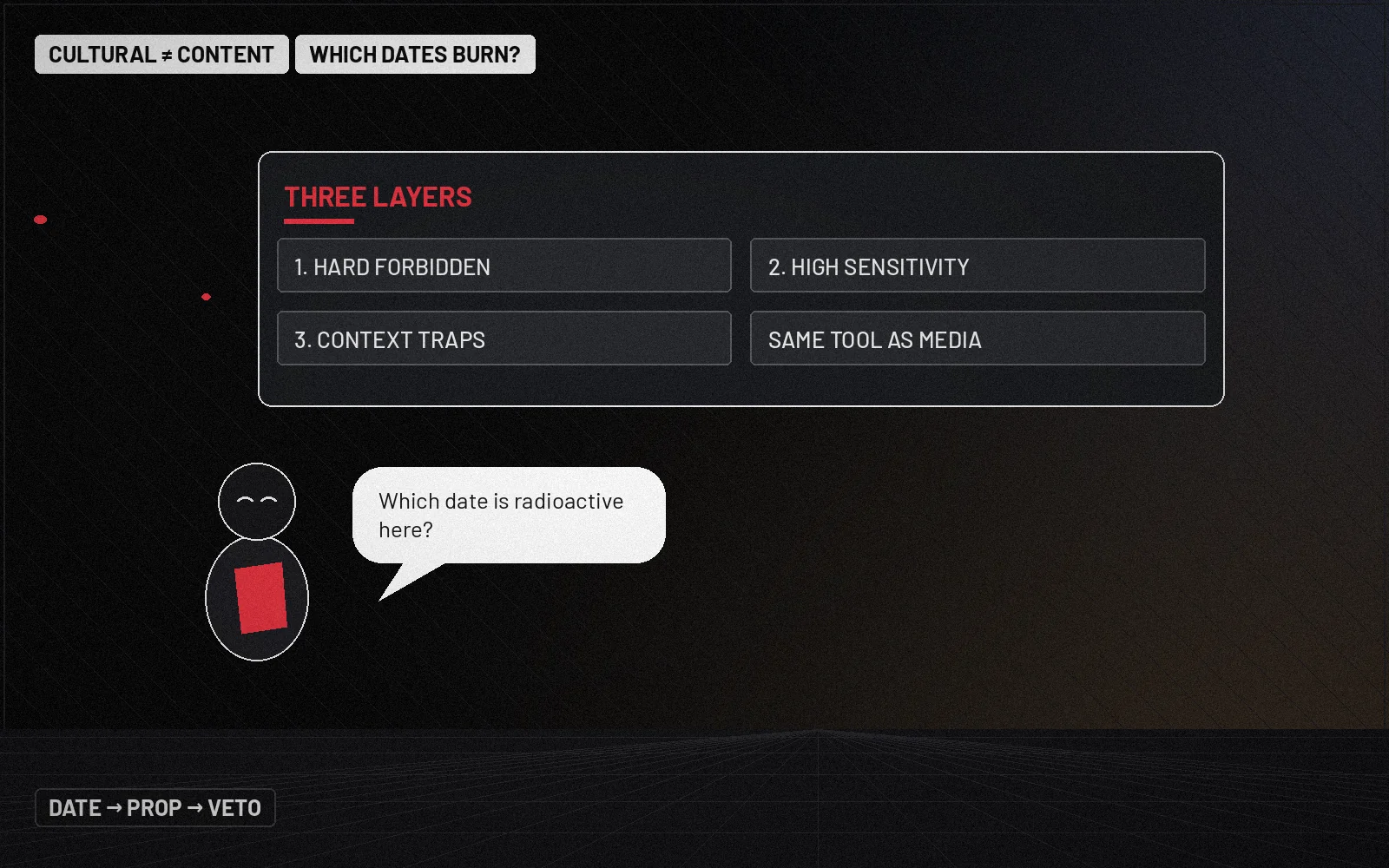
Build three layers:
- Hard forbidden — Occupation anniversaries, massacre memorials, military coup references, atrocity imagery “for vibes.”
- High sensitivity — Faith calendars, mourning periods, disaster anniversaries, contested sovereignty symbols.
- Context traps — Props that are neutral abroad (tanks, riot gear, colonial architecture) but loaded locally.
Korea is not the only market with landmines. Japan, Taiwan, Hong Kong, the Philippines, Indonesia, and Vietnam each carry different “never joke about this” lists. One region’s edgy humor is another’s wound. That variance is why global creative without local veto is a revenue risk, not a process preference. Relate this to broader brand-safety discipline in paid media—adjacency rules matter, but date and symbol clearance matter just as much.
Practical tip: keep the cultural calendar in the same place as the media calendar. If creatives have to open a second tool they will skip it under deadline. Put forbidden weeks in red on the same wall the traffic team already stares at.
Clearance workflow: creative → market historian → legal → media
Speed without clearance is how Tank Day happens. Install a boring workflow that still ships on time:
- Creative concept — Flag military, historical, faith, or protest imagery in the brief, not at the end.
- Market historian / local brand lead — Someone with permission to say no without needing a global VP’s mood.
- Legal / public affairs — Especially for B2G-exposed brands and franchise markets.
- Media — Confirm the buy will not amplify the risk on anniversary weeks.
Rules that make it real: local veto is binding for that market—appealable, not ignorable; “HQ loved it” is not a clearance argument; document the decision because future you will need the paper trail when someone asks why a concept died. Put the veto owner’s name in the campaign brief the same way you put a media budget—if it is not named, it will not happen.
Set service levels: 48 hours for standard clearance, 24 hours for surge campaigns, same-day for anything touching military, faith, or national trauma motifs. Without clocks, “local review” becomes a soft kill on every idea—or worse, a rubber stamp nobody actually reads.
Retainer model beats one-off panic
A cultural clearance retainer includes living calendars by market, monthly refresh, rapid review hours for surprise campaigns, and an incident playbook when something still slips. One-off reviews only catch what you remember to send. Retainers catch the Friday night promo someone “just needed to launch.” Price the retainer against one quarter of institutional spend loss—not against a junior designer’s hourly rate.
Include training for agencies and franchise social teams. Most Tank Day–class failures are not evil. They are untrained speed. A thirty-minute monthly briefing costs less than a year of gift-card cuts.
B2G and institutional spend as reputation sensors
Gift cards, canteen contracts, event sponsorships, and employee rewards are early-warning systems. When they drop, do not only brief consumer social. Brief government affairs, key account teams, and franchise owners with a repair narrative that is specific: what you learned, what process changed, what will never ship again.
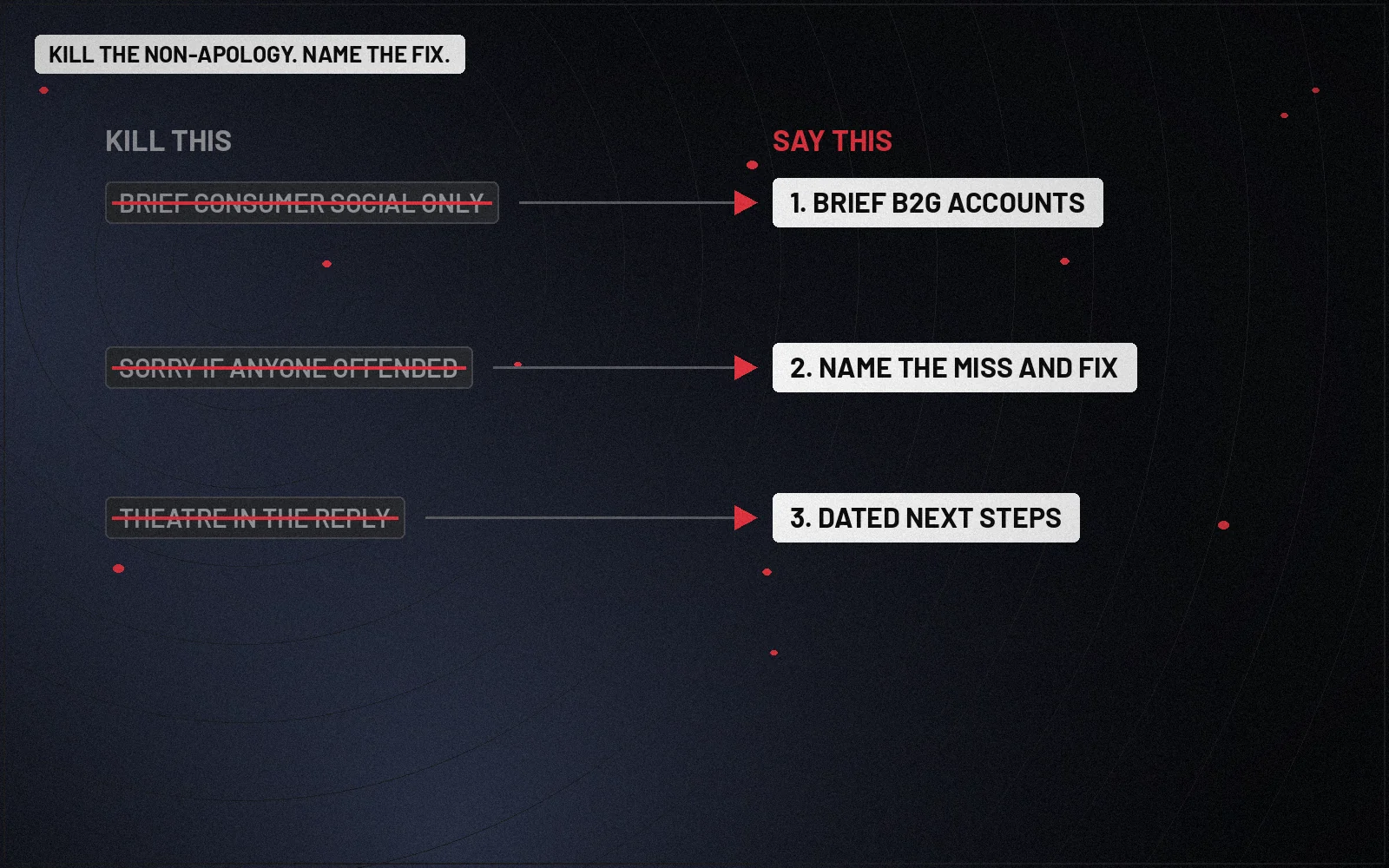
Empty “we apologize if anyone was offended” language reads as evasion. Adults name the miss and the fix. That is how you earn the right to ask institutions to reconsider spend—not by hoping the next seasonal latte art resets memory. Pair repair messaging with visible process change: new veto owners, updated calendars, and a public commitment to local clearance before global templates land.
When you need language under pressure, borrow the discipline from crisis holding-statement templates: short, factual, non-theatrical, dated next steps. Repair is a campaign with a scorecard, not a single sorry post.
KR / JP / TW / HK variance: one region’s joke is another’s wound
Do not copy-paste a Korea calendar into Tokyo or Taipei and call it APAC brand safety. Shared East Asian aesthetics do not mean shared historical triggers. Build market files covering forbidden visual motifs, sensitive date ranges (including lunar variants), political flashpoints that change with election cycles, and franchise vs corporate posting rules. Then train creative partners. A beautiful deck that never reaches the junior designer still fails in production. More operator notes live across the Insights hub.
When markets disagree inside the same “region” label, default to the stricter veto for shared assets. You can always localize a safer frame. You cannot un-send a tank meme. If a concept only works in one market, keep it in that market—do not force a regional “efficiency” that imports risk.
Operator checklist: stand up cultural clearance in 15 working days
Week 1 — Draft hard-forbidden and high-sensitivity lists for your top three markets; assign local veto owners; pull the last 24 months of promo concepts and mark near-misses that almost shipped.
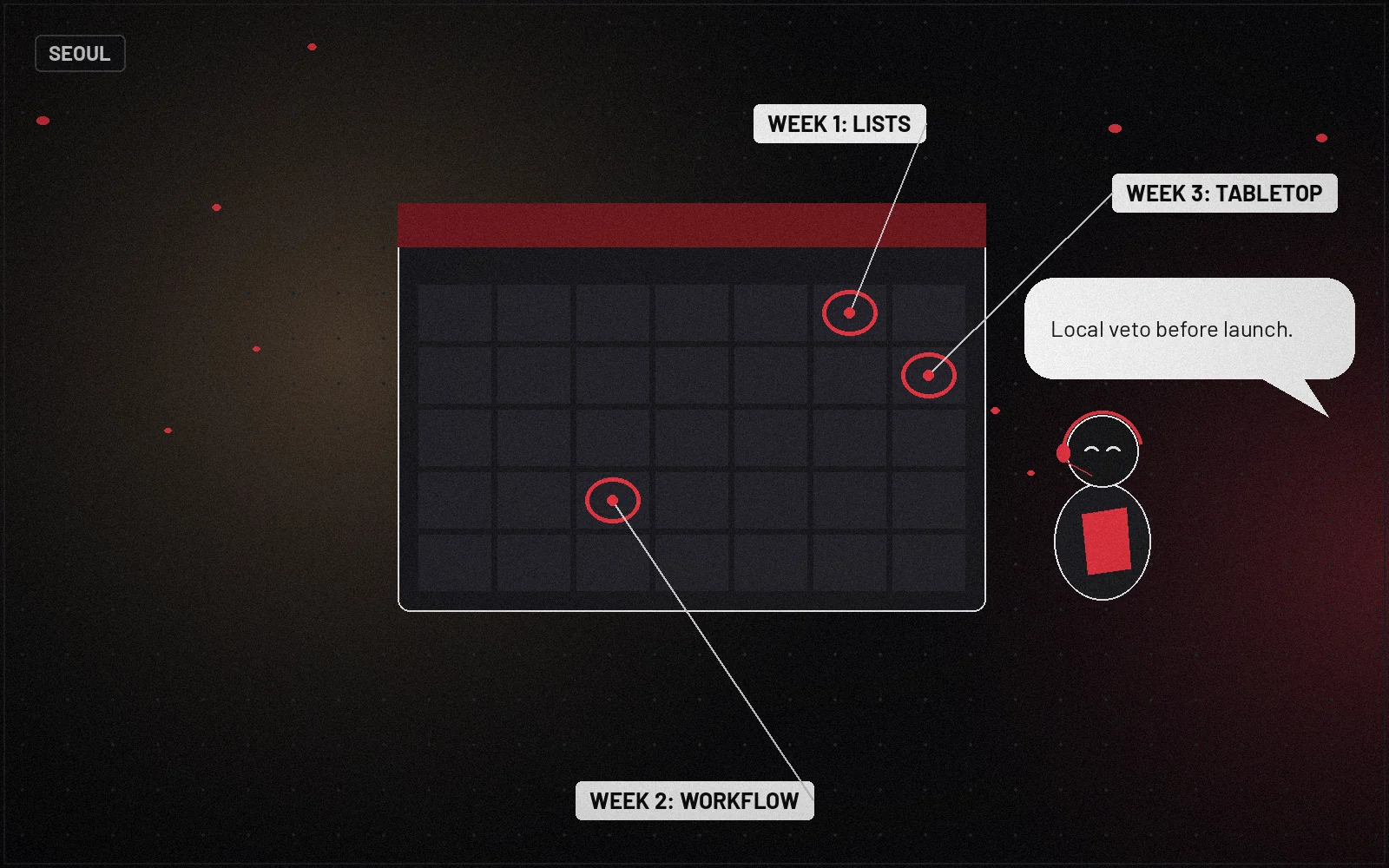
Week 2 — Wire the workflow into briefing templates; kill any “global always wins” language in SOWs; train agencies on the three-layer calendar; add clearance status fields to your project tracker.
Week 3 — Tabletop a Tank Day–style miss: who pauses media, who briefs B2G accounts, who owns the repair line; time the response; fix gaps in writing; brief franchise social leads the same day.
Ongoing — Monthly calendar refresh; quarterly drill; post-mortems that change the list, not only the apology. Track institutional spend as a brand-safety KPI, not only as a sales KPI.
Promo speed without market permission is how you buy a year of trust tax. Permission without speed is how you lose the quarter. The win is both: local veto with a clock, not local veto as endless delay. Leaders who want only speed will eventually buy a Tank Day. Leaders who want only caution will starve growth. The adult operating system is clearance that is fast because it is rehearsed.
Operator FAQ: cultural calendar brand safety
Do we need a separate calendar for every APAC market? Yes for your top revenue markets. Shared “APAC” lists hide the exact dates that get you into trouble. Start with the three markets that drive the most institutional and consumer spend, then expand.
Who should hold the veto? A local brand or public-affairs lead who can say no without waiting for a global mood. Creative can appeal. Global cannot steamroll. Put the name in the brief.
What if a concept is already in production? Pause. Clear. Then decide. Shipping a radioactive prop because the shoot is booked is how Tank Day happens. Budget the kill fee as brand-safety insurance.
How does this connect to paid media brand safety? Inventory brand safety keeps you off unsafe placements. Cultural calendar brand safety keeps you from creating the unsafe creative in the first place. You need both—see paid media brand safety and keep clearance upstream of the buy.
What is the commercial offer? A cultural-calendar build plus creative clearance retainer: living date lists, review hours, incident playbook, and B2G repair messaging when something still slips. That is cheaper than a year of gift-card cuts. Explore services or contact.
Soft CTA
If your “cultural review” is still a Slack emoji from someone who once lived in Seoul, you are gambling with institutional spend. Neuwark builds brand-safety cultural calendars and creative clearance retainers for APAC brands that cannot afford another Tank Day. See services or contact us.
Brand safety isn’t only ad inventory—it’s knowing which dates your market will never forgive.