
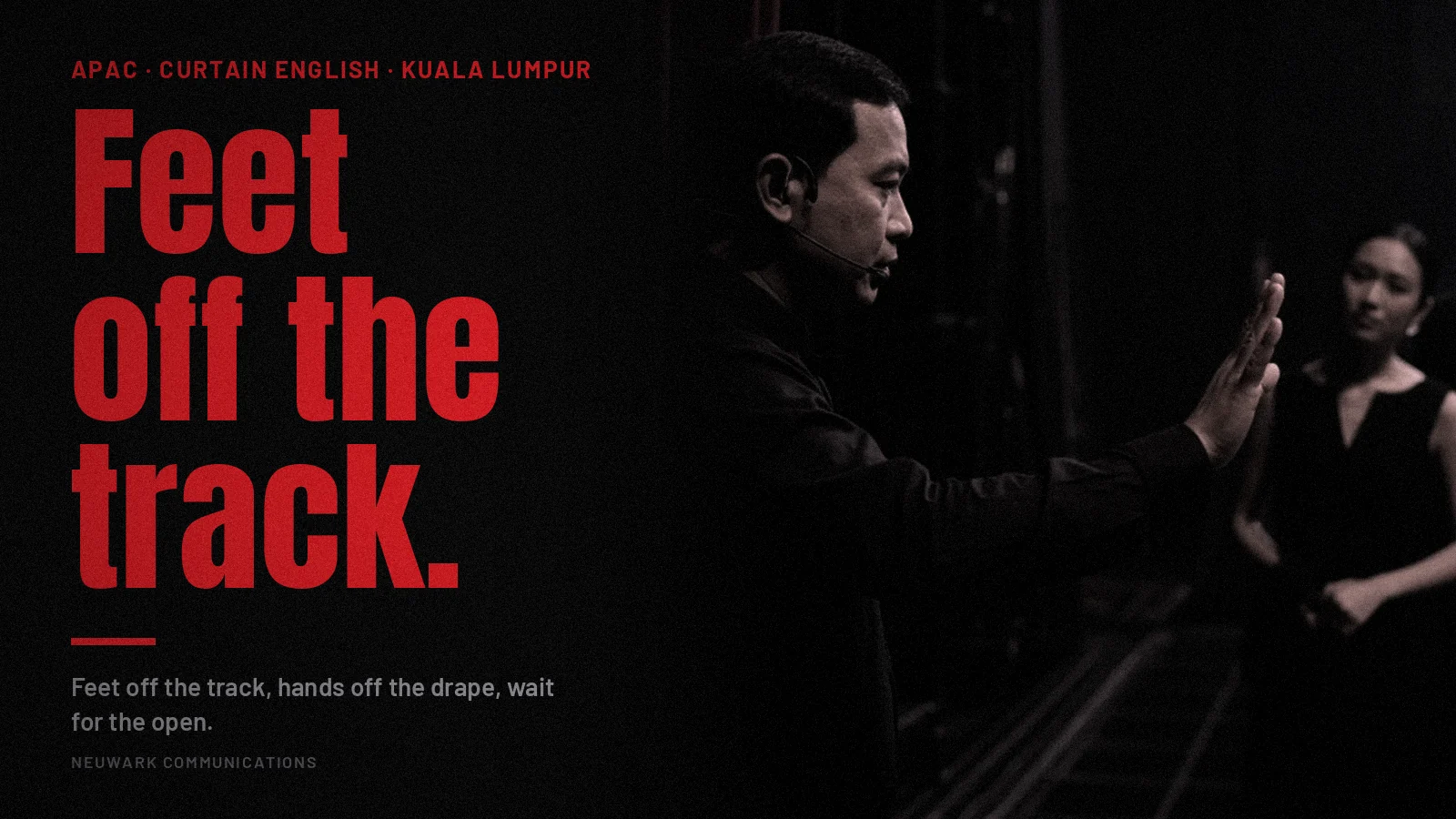
Feet off the track, hands off the drape, wait for the open.
Street-smart APAC English: short sentences a tired operator can say out loud.
Quick answer: A curtain line English APAC is the stage manager’s rule for anyone waiting behind the main curtain: feet off the track, hands off the drape, wait for the open. Presenters stand clear of the floor track, never pull or peek through the cloth, and walk on only when the curtain is fully open.
A gala night in a Singapore theatre, five minutes to the top of the show.
The presenters are lined up behind the main curtain, excited, close to the cloth.
One lifts the edge to see the full house, and a strip of work light spills onto the audience.
Pair it with the wing-clear line English APAC for keeping the wings open and the blackout-cross line English APAC for moving in the dark. Same craft: one short rule, said early and said the same way.
What is a curtain line English APAC?
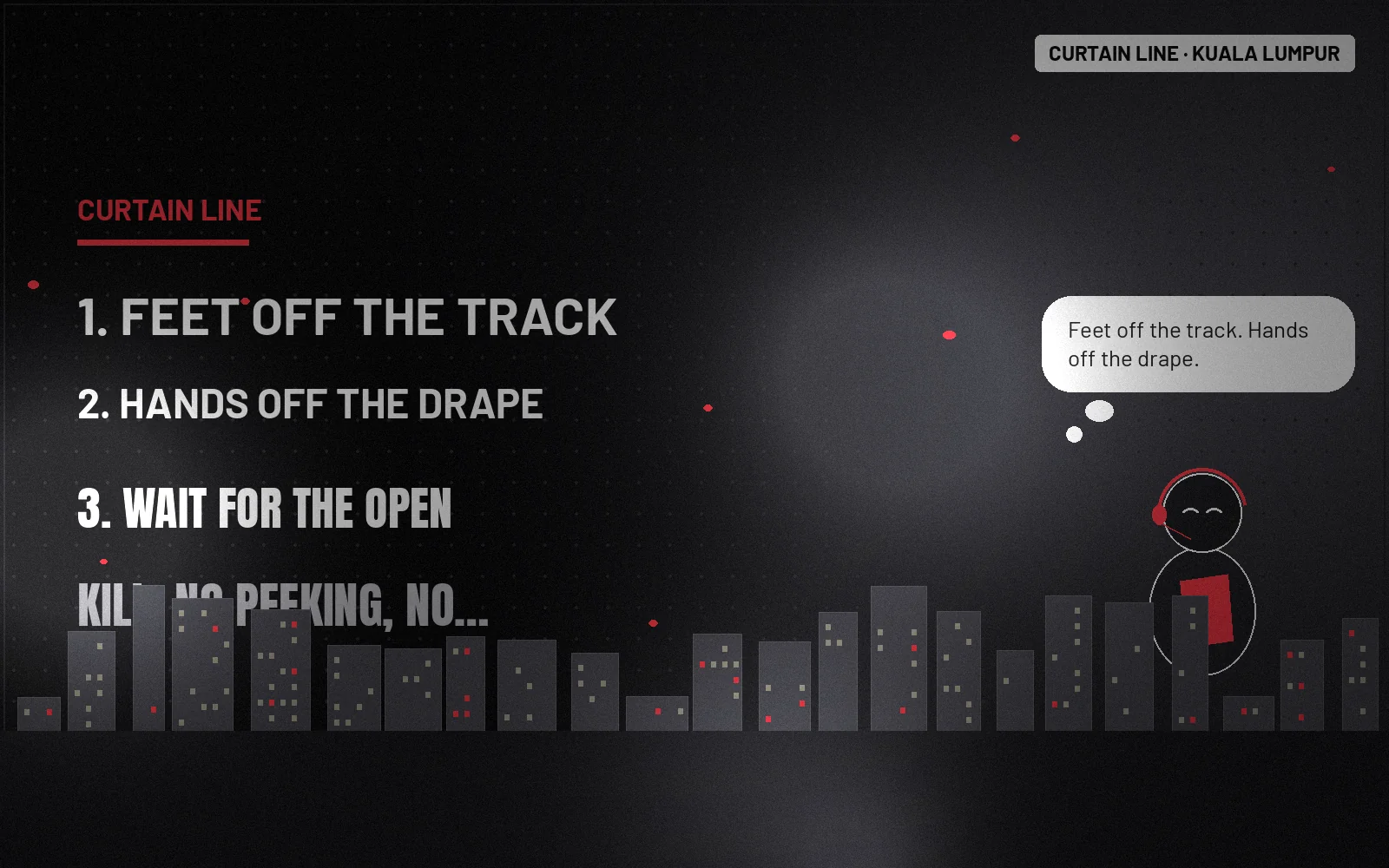
It is the stage manager’s three-part rule for anyone standing behind the main curtain. Feet off the track, hands off the drape, wait for the open. Said at the pre-show line-up and once more on standby.
1. Feet off the track. The curtain runs on a line on the floor. Shoes, bags and hems stay behind it.
2. Hands off the drape. No lifting, pulling or peeking. The audience sees every ripple.
3. Wait for the open. Walk on only when the curtain has fully opened and the cue is given.
The habit to break is the quick peek. One presenter lifts the edge to see the crowd, the others lean in, and the curtain snags on a foot just as it starts to open.
What should a stage manager stop saying behind the curtain?
Stop saying a quick look is fine. Give people the line-up spot instead, and tell them what they will see when it opens.
| Kill this | Say this (illustrative) | Why |
|---|---|---|
| Silip lang po tayo saglit, para makita po natin yung crowd. | Hands off the drape. | The audience sees the gap |
| Just push through the gap lah, faster than waiting. | Wait for the open. | The entrance is the cue |
| Diyan lang po kayo, kahit saan po basta likod ng tela. | Feet off the track. | Feet snag the curtain |
Lines in this table are illustrative, not quotes from real people.
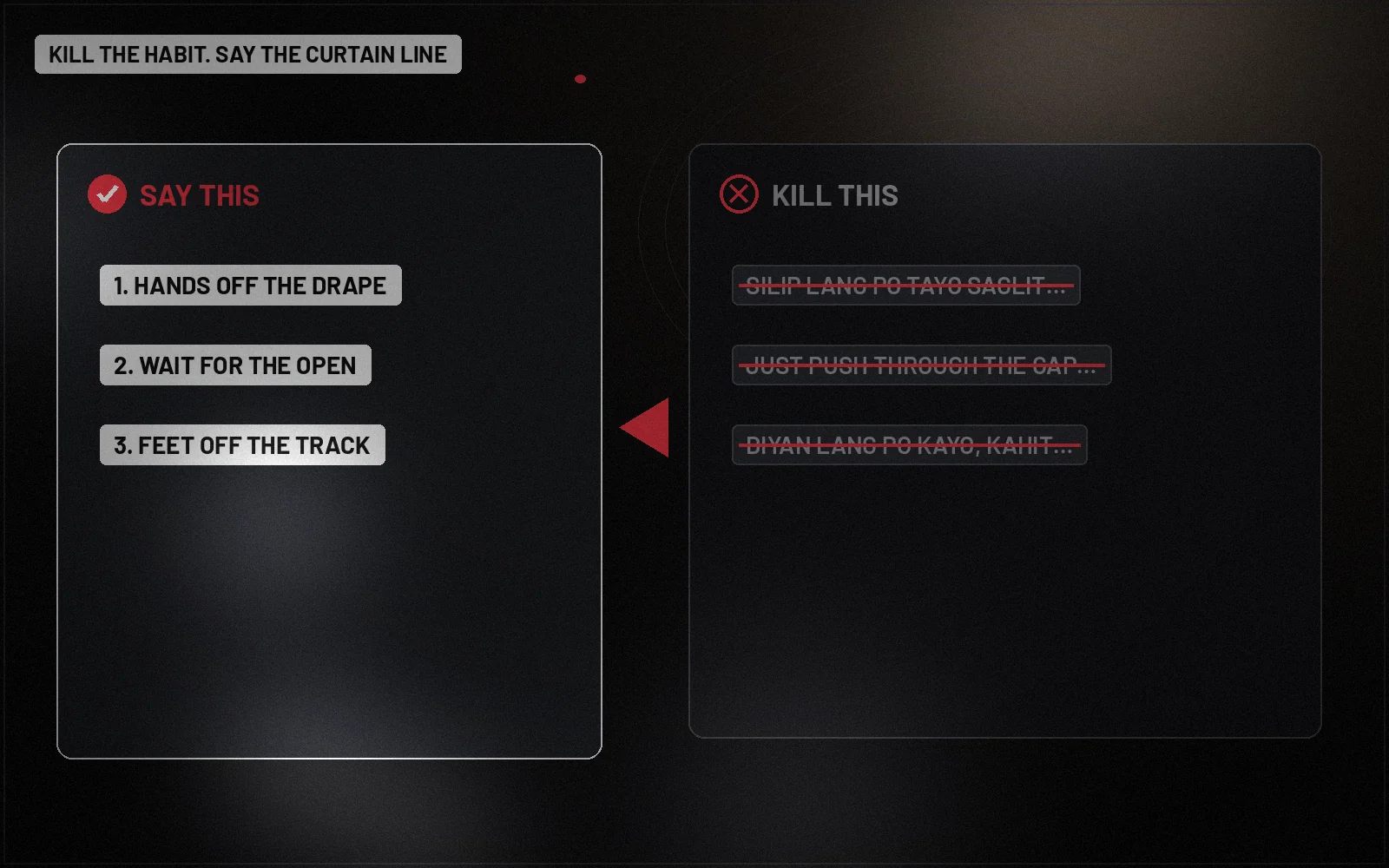
Say it low, at the line-up spot, before the house lights go down.
Who runs the curtain on a show night?
The stage manager calls it, and the fly or curtain operator runs it. The open is a cue in the show call, given on headset.
Presenters do not decide when the curtain moves. The stage manager places them, gives the standby, and tells them when to walk.
What if a VIP keeps peeking through the gap?
Move them back to their spot once, quietly, and tell the show caller. Do not pull their arm or argue in the dark.
This is the uncomfortable rung. The guest is senior, nervous, and used to doing what they like. The stage manager stays polite, repeats the line once, and keeps the cue on track.
PH / SG / Kuala Lumpur desk notes
Same three parts. Different desks.
Philippines desk. Polite and low. Feet off the track po, sir. Hands off the drape po, ma’am. Wait for the open po, salamat.
Singapore desk. Brisk, no filler. Feet off the track. Hands off the drape. Wait for the open. Point to the spot, then step back.
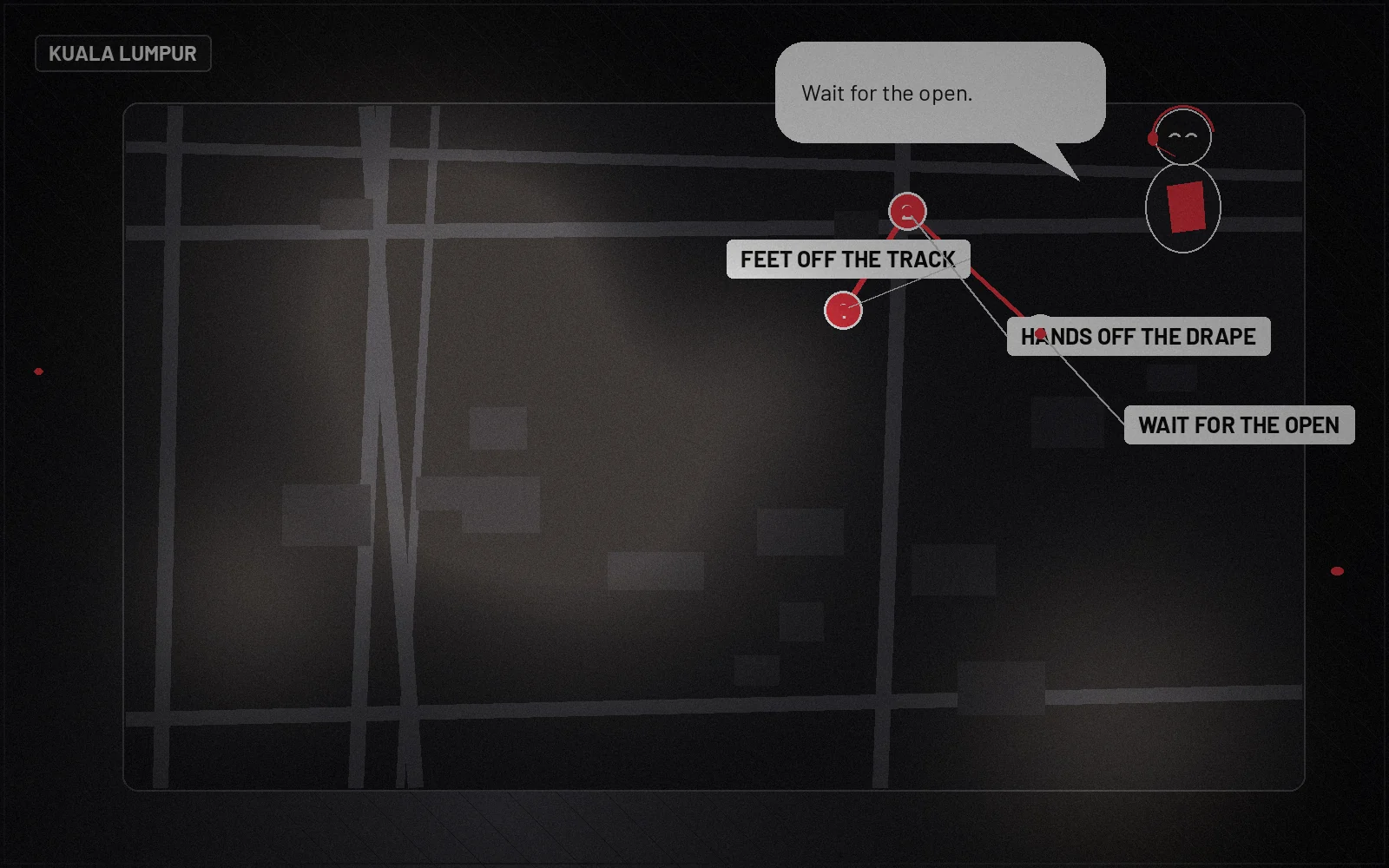
Kuala Lumpur desk. A quiet “encik” or “puan” if it fits, then the three parts in plain English. Point to the floor line and the spot so it lands fast.
Paste-ready lock
Speakable lock (illustrative): “Feet off the track, hands off the drape, wait for the open.”
Monday field kit
- Get the running order and the curtain cues from the stage manager.
- Tape a glow mark for each presenter, clear of the track.
- Brief presenters on the lock: feet off the track, hands off the drape, wait for the open.
- Agree who moves a presenter who drifts back to the curtain.
- Kill rule: no peeking, no pushing through the gap, no feet on the track.
Illustrative only. The stage manager’s show call comes first.
FAQs
What is a curtain line English APAC?
A curtain line English APAC is the stage manager’s rule for anyone waiting behind the main curtain: feet off the track, hands off the drape, wait for the open. Presenters stand clear of the floor track, never pull or peek through the cloth, and walk on only when the curtain is fully open.
What should a stage manager stop saying behind the curtain?
Stop saying a quick look is fine. Give people the line-up spot instead.
Who runs the curtain on a show night?
The stage manager calls it, and the curtain operator runs it. Presenters do not decide when the curtain moves.
What if a VIP keeps peeking through the gap?
Move them back to their spot once, quietly, and tell the show caller. Do not pull or argue in the dark.
Neuwark Communications builds event and campaign communications as part of our strategy and messaging work. More street-smart lines live in Insights.
Related: wing-clear line English APAC · blackout-cross line English APAC
Talk to us about your next event script.
Illustrative lines only. Communications craft, not legal advice.