
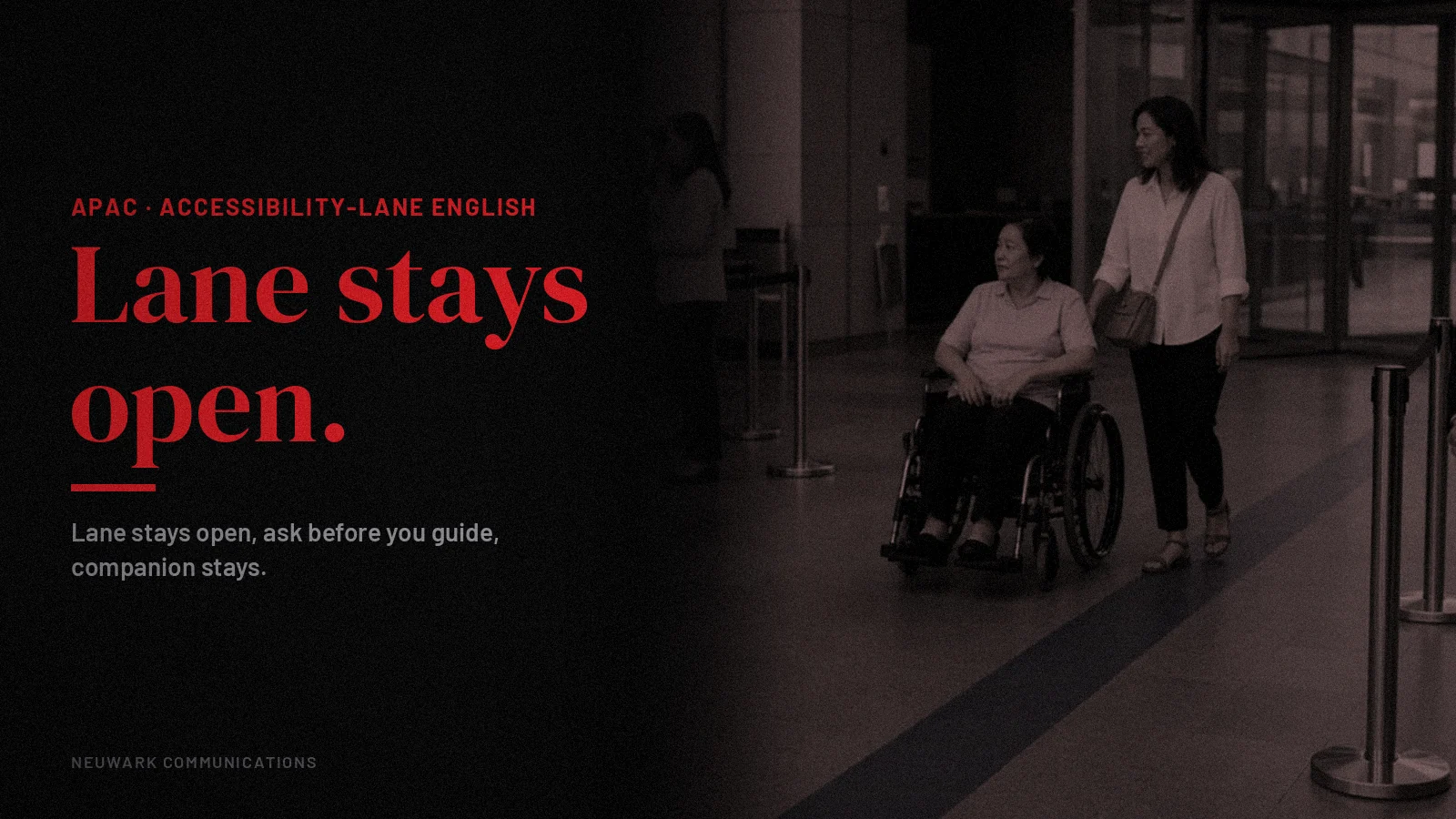
Lane stays open, ask before you guide, companion stays.
Street-smart APAC English: short sentences a tired operator can say out loud.
Quick answer: An accessibility-lane line English APAC is the usher’s entry rule: lane stays open, ask before you guide, companion stays. Keep the lane clear, offer help first, and never split a guest from their companion.
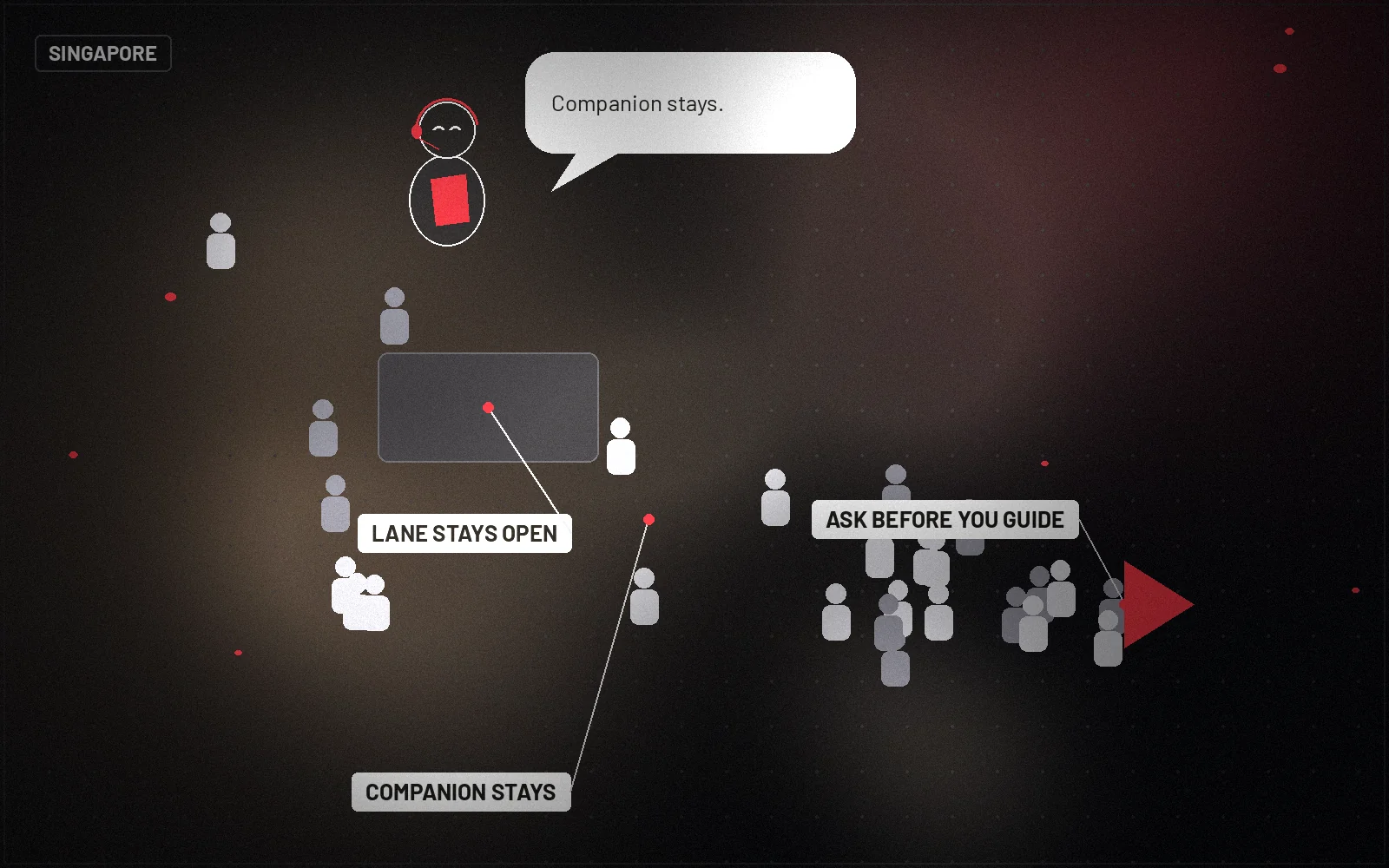
A Singapore convention entrance, morning doors, two queues side by side.
One is the main line. The other is a short lane with a blue floor stripe.
It only works if it stays empty until someone needs it.
Pair it with the accessibility-escort line English APAC for walking a guest to their seat and the accessibility note English APAC for the ramp, lift and help desk. Same craft: one short rule, said early and said the same way.
What is an accessibility-lane line English APAC?
It is the usher’s three-part rule at the accessible entry. Lane stays open, ask before you guide, companion stays. Ushers say it in the briefing and live it at the door.
1. Lane stays open. No boxes, no chatting guests and no overflow from the main queue. The lane is for wheelchair users, guests with canes or walkers, and anyone who asks for it.
2. Ask before you guide. Offer help in words first. Many guests know exactly how they want to move. Touching an arm, a chair or a cane without asking takes control away from them.
3. Companion stays. A guest’s companion, carer or family member comes through with them. Splitting them at the door to check passes separately creates stress for both.
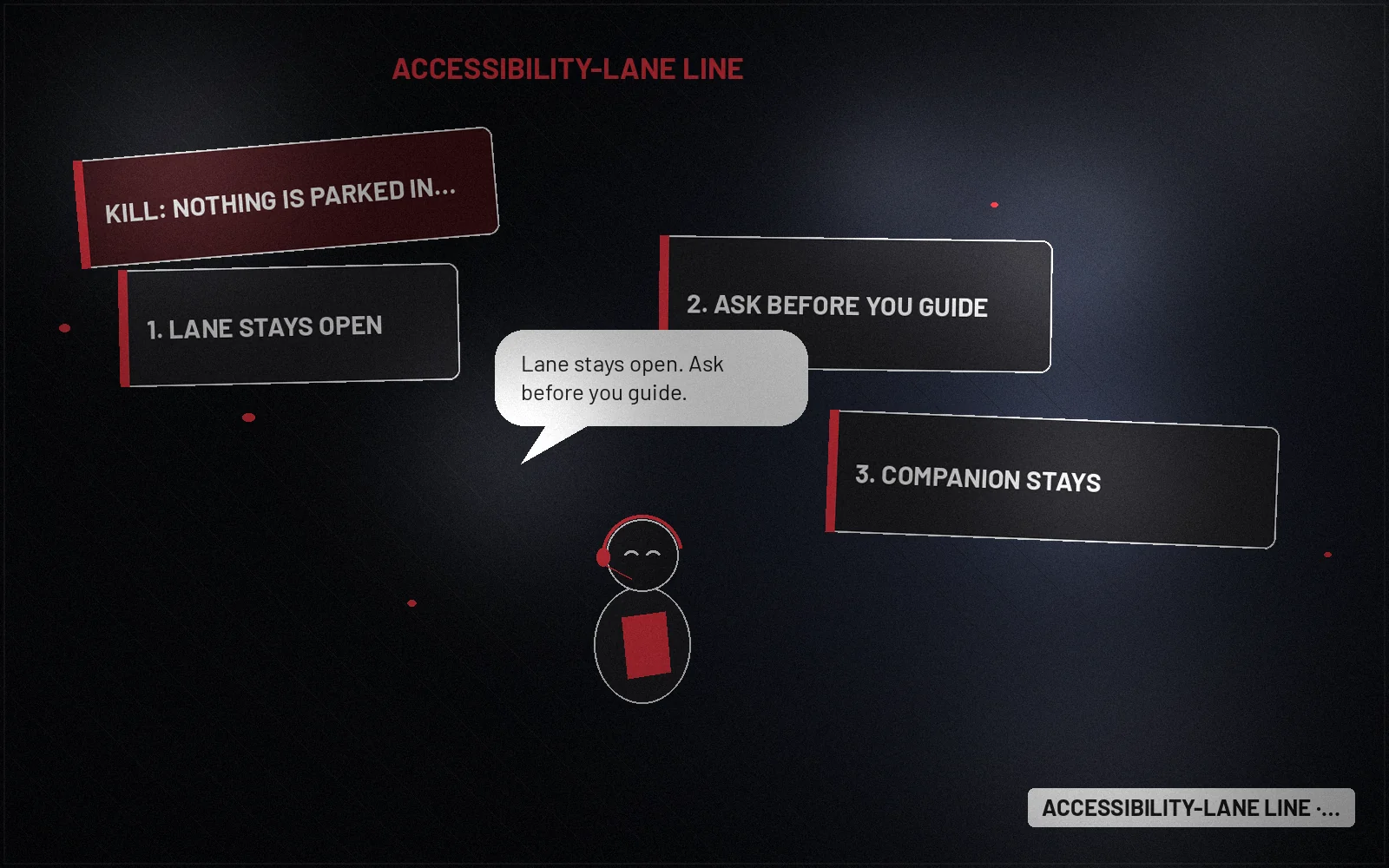
The habit to break is using the lane as spare space. A few boxes or a couple chatting seem harmless until a guest with a cane is stuck behind them.
What should an usher stop saying at the accessibility lane?
Stop parking things in the lane and stop grabbing before asking. Both feel helpful to the usher and are not helpful to the guest. Say the three parts, plainly and kindly.
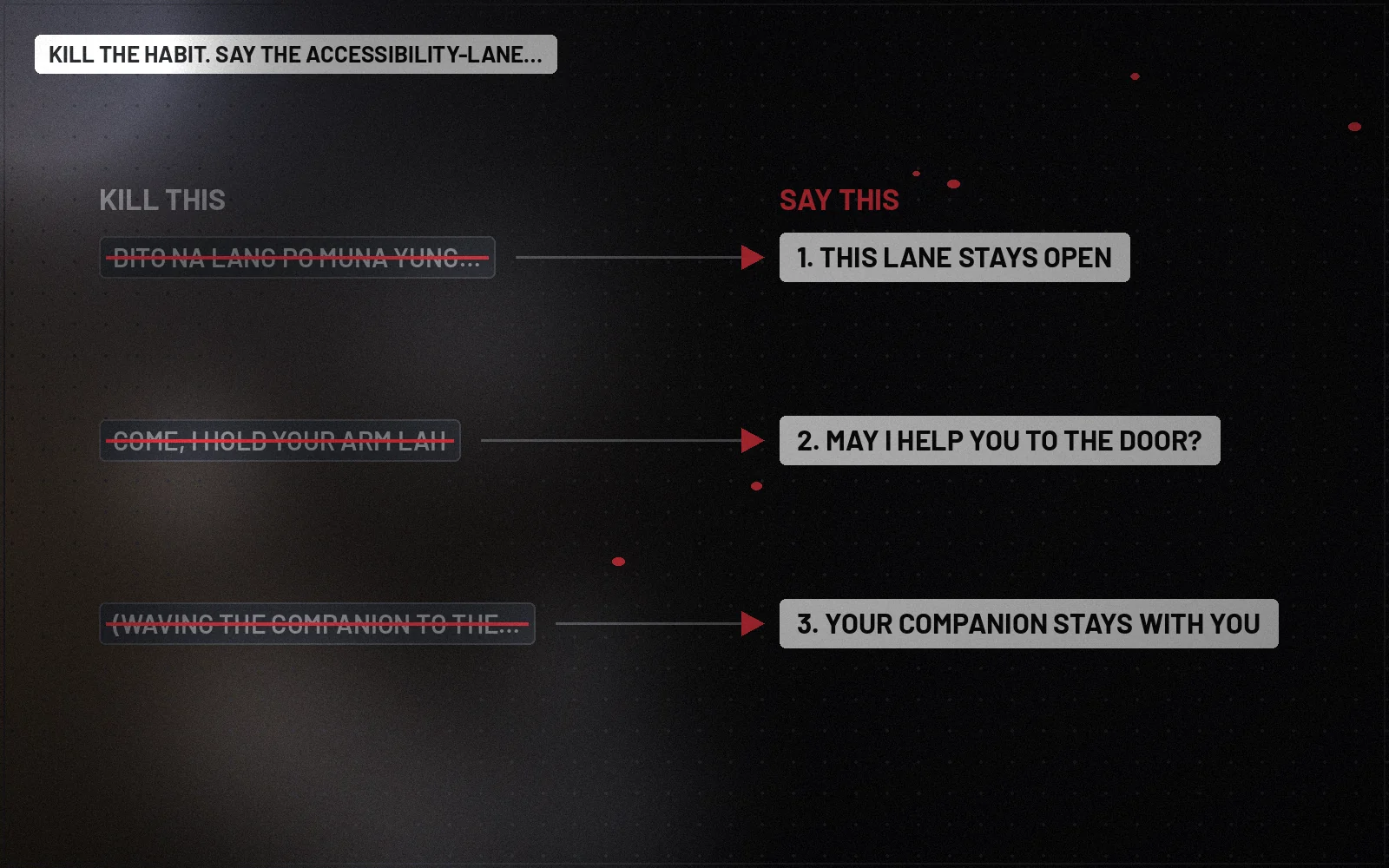
| Kill this | Say this (illustrative) | Why |
|---|---|---|
| Dito na lang po muna yung boxes. | This lane stays open. | The lane is not storage |
| Come, I hold your arm lah. | May I help you to the door? | The guest decides |
| (waving the companion to the main queue) | Your companion stays with you. | Never split a pair |
Lines in this table are illustrative, not quotes from real people.
Speak to the guest directly, at their eye level when that is natural, not only to the companion.
Who can use the accessibility lane?
Anyone who needs it or asks for it. That includes guests using wheelchairs, canes or walkers, older guests, parents with prams and people whose needs are not visible. Ushers do not ask for proof.
If the main queue spills over, the usher moves people back into it. The lane does not become a second main line.
What if someone without a visible need uses the lane?
Let them through and keep the lane moving. Not every need shows. Questioning a guest at the door is worse than letting one person through who did not strictly need to.
This is the uncomfortable rung. Ushers sometimes feel they must police the lane. The job is to keep it clear and kind. If misuse becomes a real crowd problem, raise it with the floor manager, not with the guest.
PH / SG / Bangkok desk notes
Same three parts. Different desks.
Philippines desk. Warmth matters, and so does respect for older guests. Use po and sir, ma’am: this lane stays open po. May I help you to the door, ma’am? Your companion stays with you, sir.
Singapore desk. Keep it brisk but gentle. This lane stays open. May I help you? Your companion comes with you. Point, then wait for the answer.
Bangkok desk. A slight bow and a calm voice set the tone. Say the three parts in plain English and let the guest set the pace.
Paste-ready lock
Speakable lock (illustrative): “Lane stays open, ask before you guide, and the companion stays.”
Monday field kit
- Mark the accessible lane with floor tape and keep stanchions wide enough for a wheelchair.
- Post one usher at the lane for the whole of doors.
- Brief every usher on the lock: lane stays open, ask before you guide, companion stays.
- Agree where companions show passes so they never leave the guest.
- Kill rule: nothing is parked in the lane, not even for a minute.
Illustrative only. The venue’s accessibility plan and the floor manager come first.
FAQs
What is an accessibility-lane line English APAC?
An accessibility-lane line English APAC is the usher’s entry rule: lane stays open, ask before you guide, companion stays. Keep the lane clear, offer help first, and never split a guest from their companion.
What should an usher stop saying at the accessibility lane?
Stop parking things in the lane and stop grabbing before asking. Say the three parts plainly and kindly.
Who can use the accessibility lane?
Anyone who needs it or asks for it, including people whose needs are not visible. Ushers do not ask for proof.
What if someone without a visible need uses the lane?
Let them through and keep the lane moving. Raise any real crowd problem with the floor manager, not the guest.
Neuwark Communications builds event and campaign communications as part of our strategy and messaging work. More street-smart lines live in Insights.
Related: accessibility-escort line English APAC · accessibility note English APAC
Talk to us about your next event script.
Illustrative lines only. Communications craft, not legal advice.