
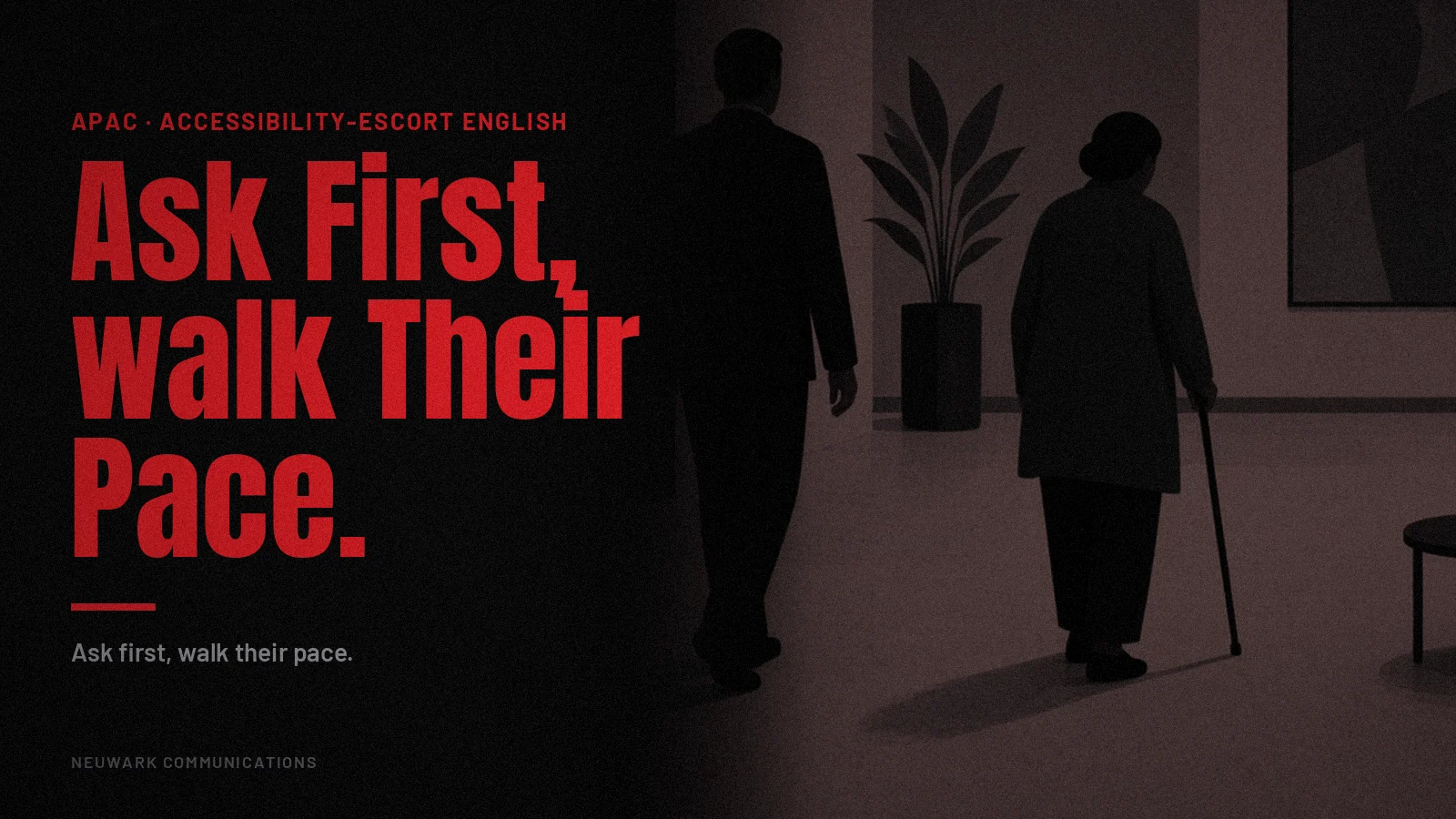
A forum in Quezon City, doors just opened. A guest with a cane pauses at the foot of the main stairs.
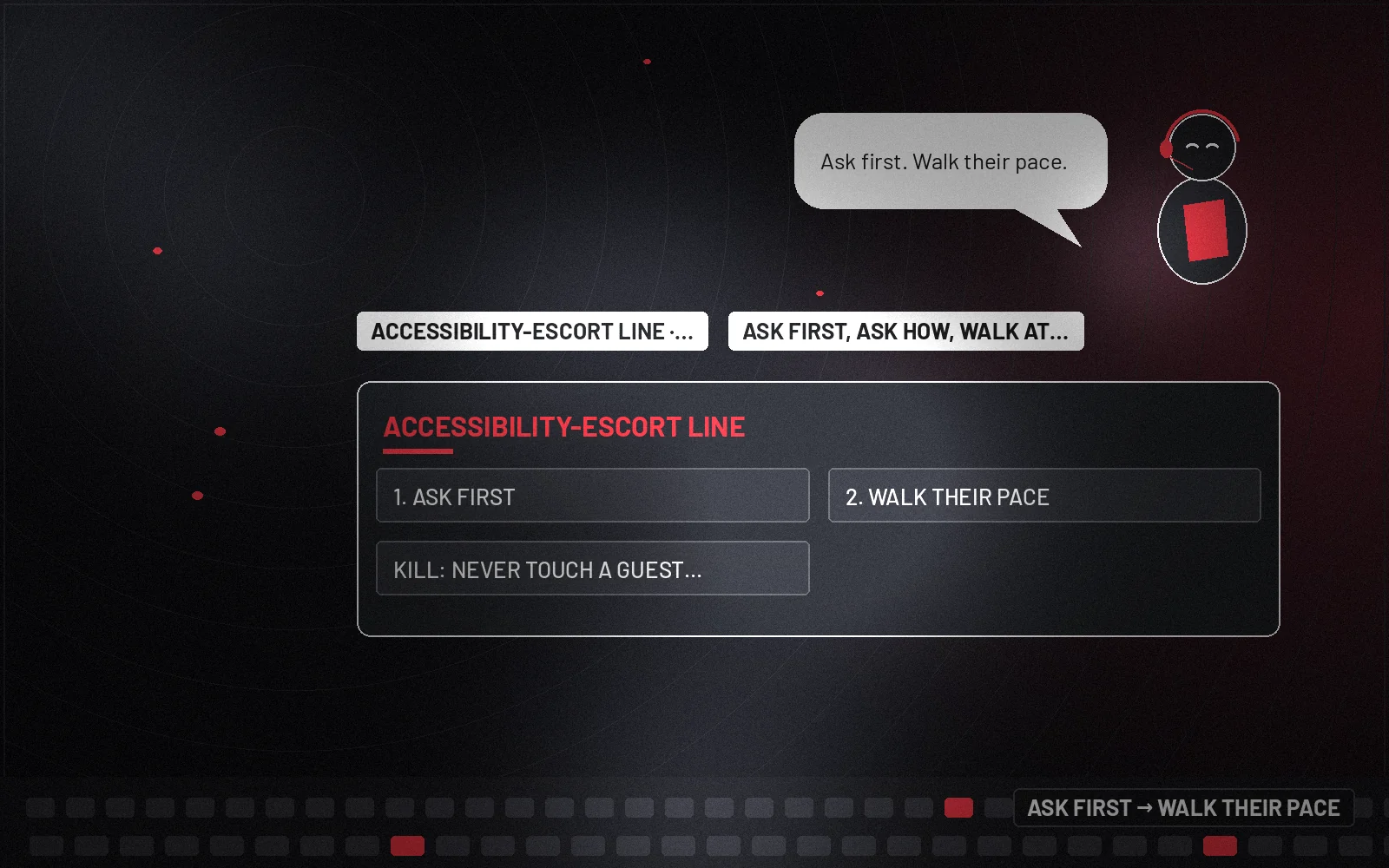
Accessibility-escort line English APAC is the short staff line for an assisted walk: ask first, ask how to help, walk at their pace.
Quick answer: An accessibility-escort line English APAC is what staff say when offering help to move through a venue: may I help, how would you like me to help, and we will take the lift or ramp at your pace. Ask before touching anyone or anything, follow the guest’s lead, and accept a no.
Street-smart APAC English: short sentences a tired operator can say out loud.
It is the spoken offer, not the written notice; the accessibility note English APAC tells guests about ramps and lifts before they arrive. If a guest asks for a calmer space on the way, the quiet-room line English APAC points the way.
What goes in an accessibility-escort line English APAC?
An accessibility-escort line English APAC has three parts: may I help, how would you like me to help, and the step-free route at your pace. Staff ask before touching a person, a wheelchair or a bag, then follow the guest’s instructions rather than their own idea of help.
Accessibility-escort line (illustrative):
“Hi, would you like a hand getting to the hall?”
“How would you like me to help?”
“The lift is just this way. We’ll go at your pace.”
How do I offer help without being pushy?
Offer once, clearly, and wait. If the guest says yes, ask how; if they say no, smile and point out the route. Respectful event language sees the guest as the expert on their own needs, so staff never take an arm, push a wheelchair or carry a bag unasked.
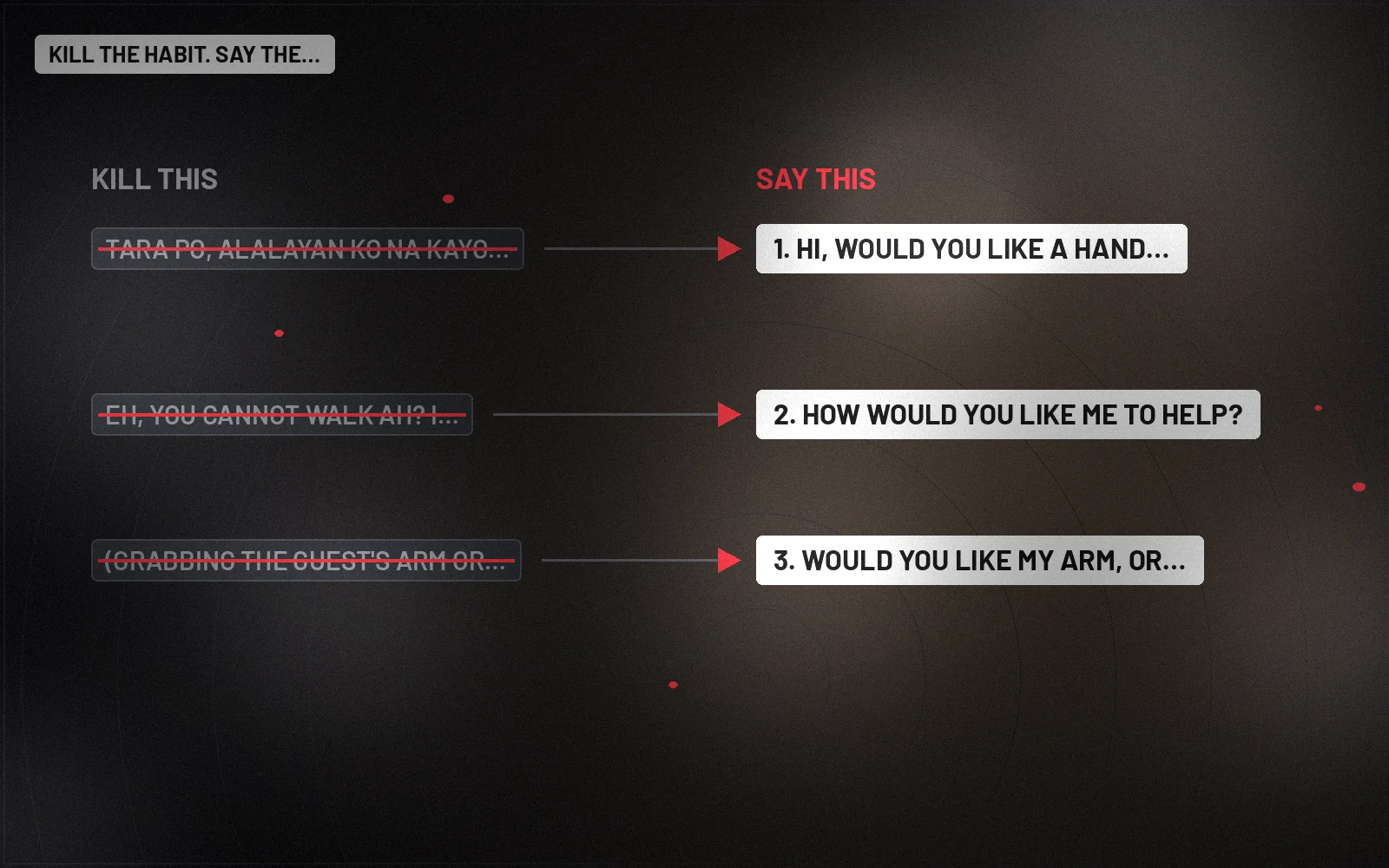
| Kill this | Say this (illustrative) | Why |
|---|---|---|
| Tara po, alalayan ko na kayo, dali! | Hi, would you like a hand getting to the hall? | Asks first |
| Eh, you cannot walk ah? I push for you lah. | How would you like me to help? | The guest decides |
| (grabbing the guest’s arm or wheelchair) | Would you like my arm, or shall I walk beside you? | Offers, does not take |
| Bilisan natin, magsisimula na. | We’ll go at your pace. The programme can wait a minute. | Their pace, not ours |
Which route should staff use for an assisted walk?
Use the step-free route the venue has confirmed: ramps, lifts and doors that open easily. Walk it before doors so you know the distances and any heavy doors. Tell the guest the route in one sentence before you set off, and offer seats or pauses along the way.
What if the guest says no thanks?
Accept it straight away and keep it light: no problem, the lift is just to the left if you need it. Do not follow or hover. Let the guest know where the help desk is, so they can ask later, and quietly brief the next marshal along the route without pointing.
How does this play out in PH and SG?
The three parts hold in both markets, but venues and habits differ. Use the desk notes below to adjust the wording, the route and the staff briefing for Philippine and Singapore events, and confirm the step-free route with the venue before the first guest arrives.
Philippines desk. In the Philippines, staff may help out of warmth before asking, and older guests may accept help just to be polite. Train staff to ask first, say the line in English or Filipino, and check that lifts are actually running on the day.
Singapore and wider APAC desk. In Singapore, many venues have step-free routes and accessible lifts, and guests often know them well. Keep the line in plain English, follow the guest’s lead, and keep campaign communications photography away from assisted walks unless the guest agrees.
Paste-ready lock
Speakable lock (illustrative): “Hi, would you like a hand getting to the hall, how would you like me to help, and we’ll take the lift at your pace.”
Monday field kit
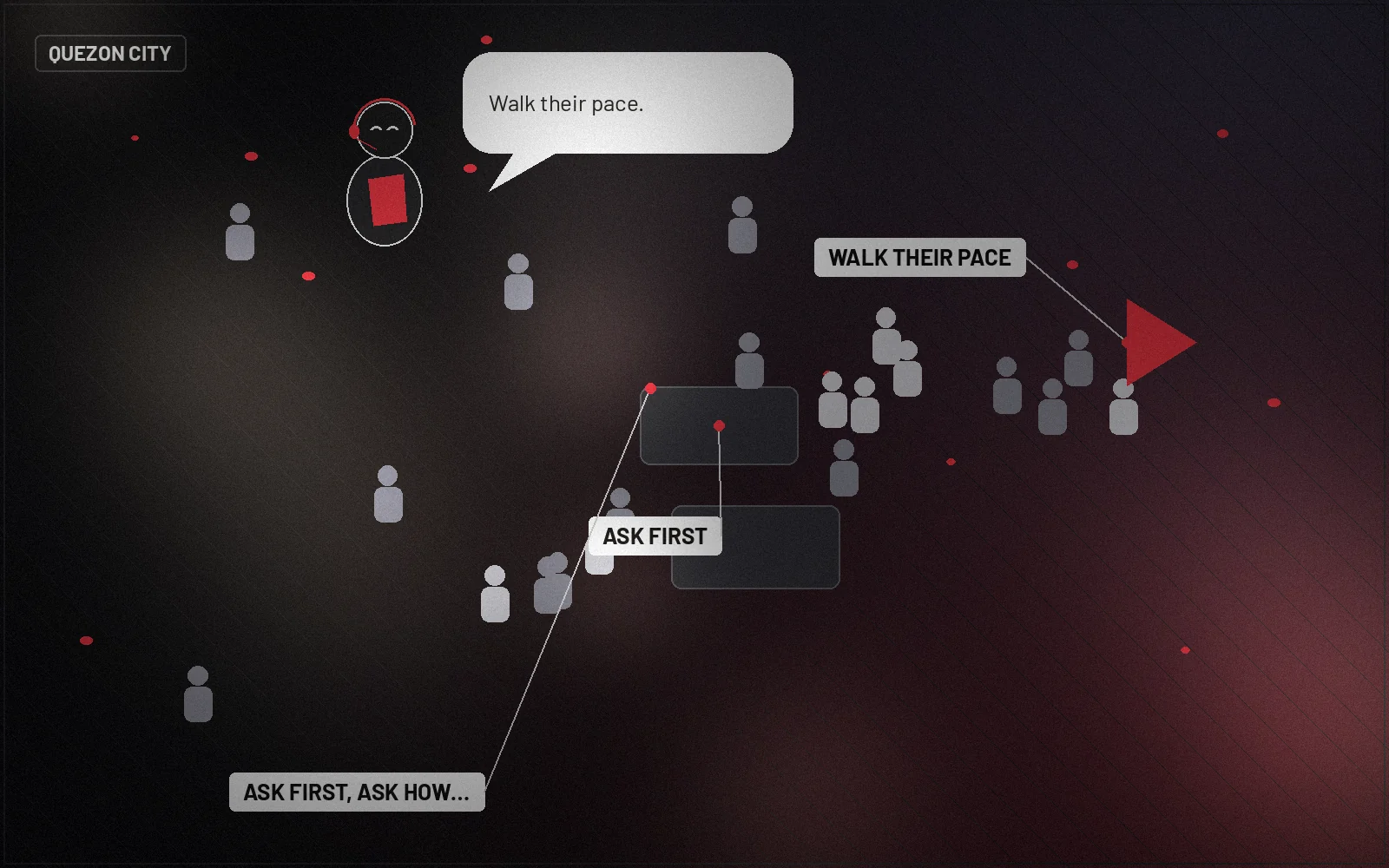
- Ask first, ask how, walk at their pace.
- A step-free route walked before doors.
- Lifts checked on the day.
- A help desk guests can come back to.
- Kill rule: never touch a guest, their wheelchair or their bag without asking first.
What to do this week
- Walk the step-free route with the venue.
- Note heavy doors and seats along the way.
- Write the line on staff cards.
- Brief staff to accept a no.
Kill rule: if the lift is out, tell guests at the entrance, not at the lift door.
FAQs
What is an accessibility-escort line English APAC?
An accessibility-escort line English APAC is the short staff line for offering an assisted walk. It asks first, asks how to help and walks at the guest’s pace.
How should staff offer help to a guest with a disability?
Staff should offer help to a guest with a disability by asking first and then asking how to help. The guest decides, and staff follow their lead.
Should staff push a wheelchair without asking?
Staff should never push a wheelchair without asking the person first. Ask, listen and follow their instructions.
What if a guest says no to help?
If a guest says no to help, accept it at once and point out the route. Tell them where the help desk is in case they want it later.
Neuwark Communications builds event scripts and campaign communications as part of our strategy and messaging work and wider services. More street-smart lines live in Insights.
Related: Accessibility note English APAC · Quiet-room line English APAC
Talk to us about your next event script.
Illustrative lines only. Communications craft, not legal advice.