
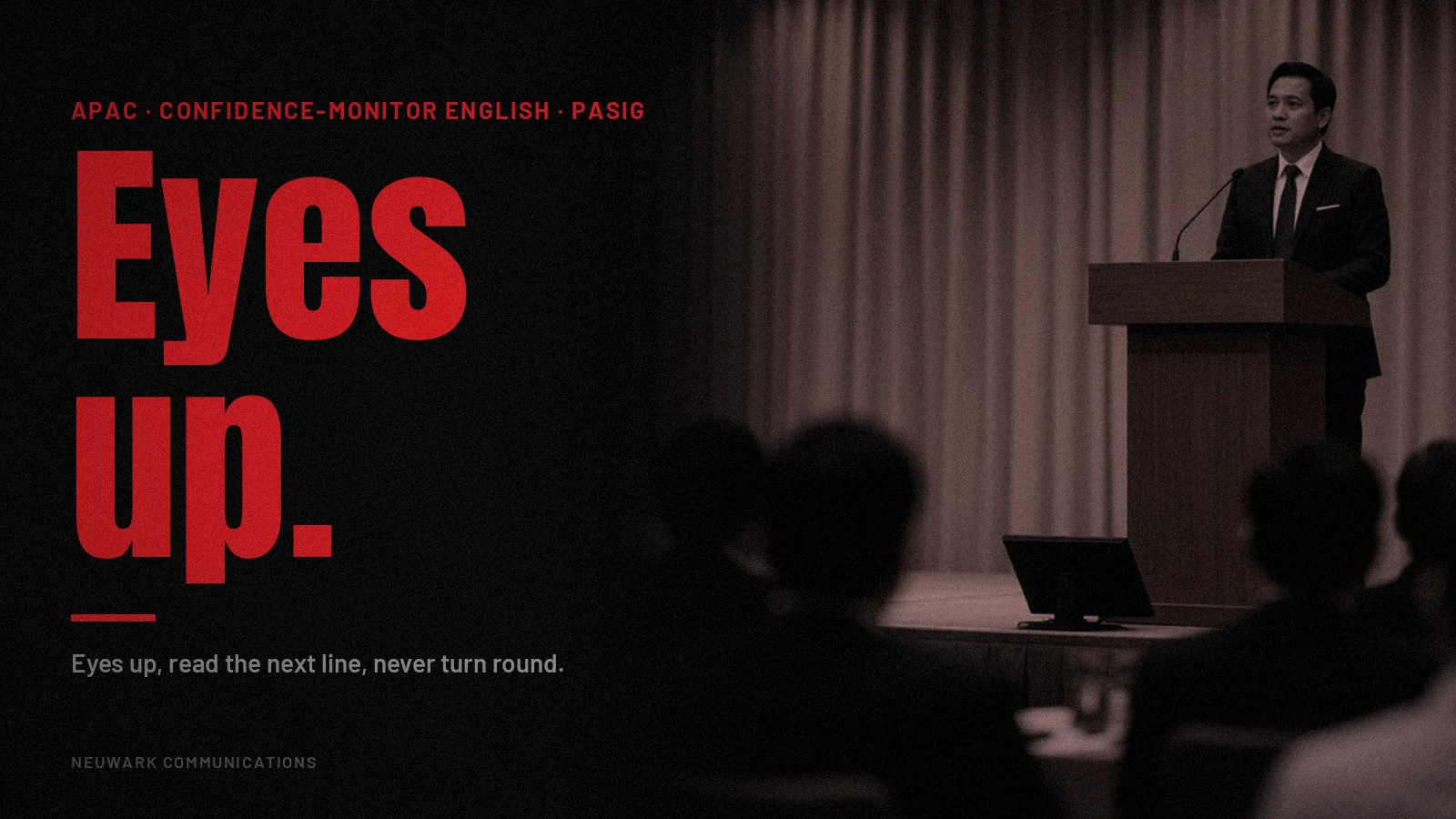
Confidence-monitor line English APAC is the short stage rule for presenters: eyes up, read the next line, never turn round.
Street-smart APAC English: short sentences a tired operator can say out loud.
A Singapore hotel ballroom ten minutes before the keynote.
The slides are on the big screen behind the lectern.
The speaker keeps half-turning to check them, back to the room.
Quick answer: A confidence-monitor line English APAC is the presenter rule: eyes up, read the next line, never turn round. Brief it at the lectern so speakers glance at the floor monitor instead of the big screen behind them.
Pair it with the teleprompter line English APAC for scripted speeches and the clicker-handoff line English APAC when the remote changes hands. Good event language at the lectern keeps a speaker facing the room, not the screen.
What goes in a confidence-monitor line English APAC?
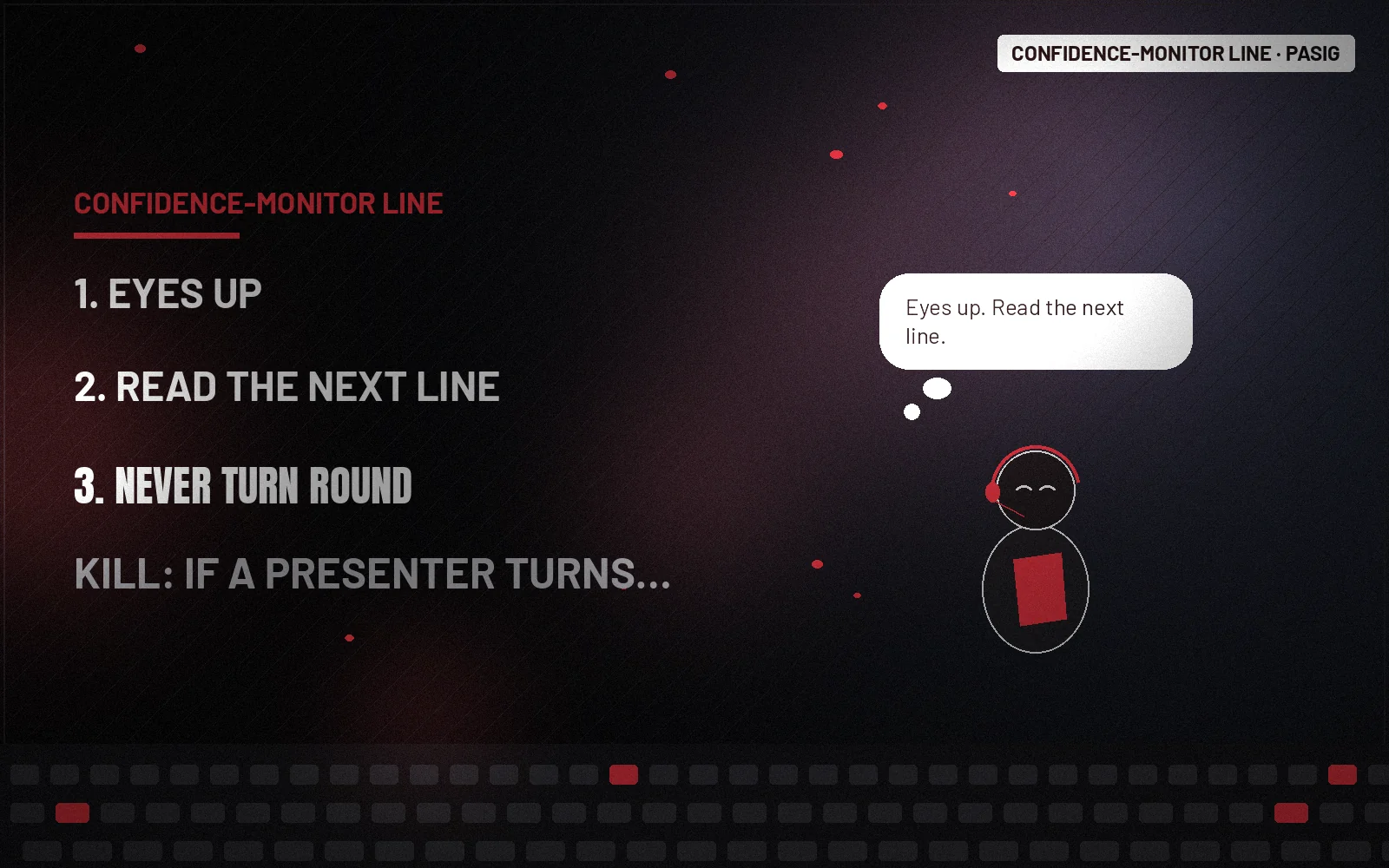
Three parts. Eyes up, read the next line, never turn round.
Confidence-monitor line (illustrative):
“Eyes up: the monitor on the floor shows what the room sees.”
“Read the next line or the next slide, not the whole page.”
“Never turn round to the big screen; the room is in front of you.”
Speakable lock (illustrative): “Eyes up, read the next line, never turn round to the screen.”
The turn is the habit to break. One look over the shoulder and the mic swings away and the voice drops.
What should the AV desk stop saying to presenters?
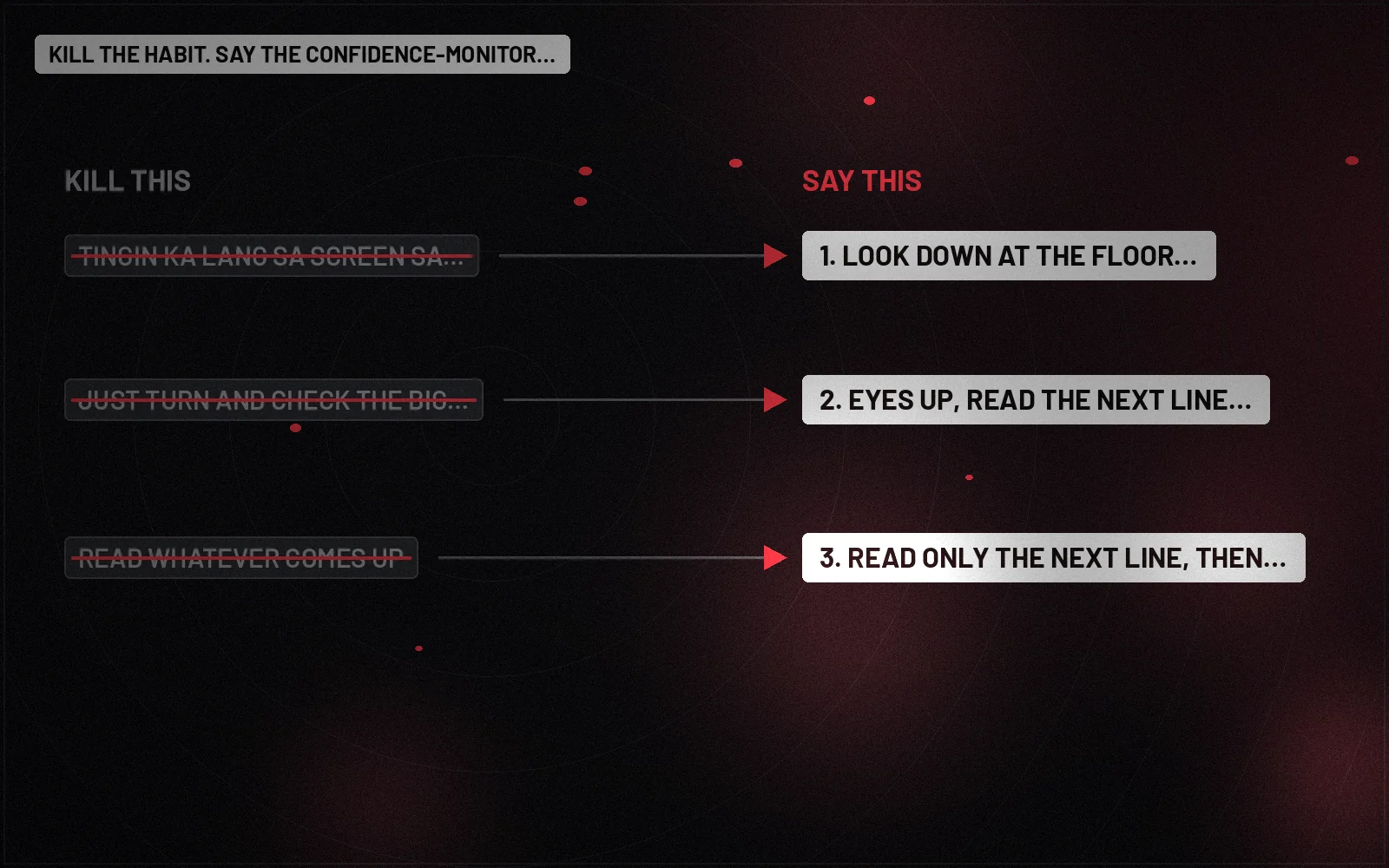
Stop saying the slides are behind you and start naming the floor monitor. Behind you is an instruction to turn. Point at the wedge on the floor, show the presenter the next-slide preview, and tell them it follows the clicker, so they never need the big screen.
| Kill this | Say this (illustrative) | Why |
|---|---|---|
| Tingin ka lang sa screen sa likod, ok lang. | Look down at the floor monitor; it shows what the room sees. | Right screen |
| Just turn and check the big screen lah. | Eyes up, read the next line on the monitor. | No turning |
| Read whatever comes up. | Read only the next line, then look at the room. | One line |
| Sige po, bahala na sa slides. | The monitor follows your clicker; trust it. | Named tool |
| Don’t worry about the screens. | Never turn round; the room is in front of you. | Clear rule |
Lines in this table are illustrative, not quotes from real people.
Who owns the confidence-monitor line before doors?
The show caller owns the brief, and the AV operator owns the angle. The caller says the line once at the lectern check. The operator tilts the wedge to the presenter’s eye line, confirms the next-slide preview is live, and checks that the monitor tracks the clicker before doors open.
What if the confidence monitor goes dark mid-talk?
Keep talking from the notes, and let the operator fix the feed without stopping the room. The presenter does not turn round to hunt for the slide. The operator swaps the feed while the speaker carries on, eyes up.
How does this play out on PH, SG and Bangkok desks?
Same three parts. Different desks.
Philippines desk. In Manila and Pasig function rooms, presenters often come straight from the office with a laptop deck. Brief it with respect: eyes up po, read the next line po, and please do not turn round to the screen. Show the floor wedge at the tech check.
Singapore desk. In Singapore, presenters expect a quick, direct tech check and a clear owner at the AV desk. Keep the line plain: eyes up, read the next line, never turn round. Name the operator who fixes the feed if the monitor stalls.
Bangkok desk. In Bangkok ballrooms, keep the line in plain, slow English at the lectern check, because many presenters speak English as a working language. Show the wedge and say the three beats once.
Monday field kit
- Place the floor monitor in the presenter’s eye line and confirm the next-slide preview is live.
- Test that the monitor follows the clicker for three slide changes.
- Brief every presenter at the lectern: eyes up, read the next line, never turn round.
- Agree one hand signal from the AV desk for a dark monitor.
- Kill rule: if a presenter turns to the big screen twice in rehearsal, re-angle the wedge and brief again before doors.
FAQs
What is a confidence-monitor line English APAC?
A confidence-monitor line English APAC is the short presenter rule: eyes up, read the next line, never turn round. It keeps speakers facing the room while the slides change behind them.
Why do presenters turn round to the big screen?
They turn because nobody showed them the floor monitor before doors. A short lectern brief with the confidence-monitor line fixes the habit in one rehearsal.
Who briefs presenters on the confidence monitor?
The show caller briefs the line, and the AV operator sets the monitor angle and preview. Presenters follow the rule; they do not rearrange the wedge themselves.
Neuwark Communications builds event and campaign communications as part of our strategy and messaging work. More street-smart lines live in Insights.
Related: teleprompter line English APAC · clicker-handoff line English APAC
Talk to us about your next event script.
Illustrative lines only. Communications craft, not legal advice.