
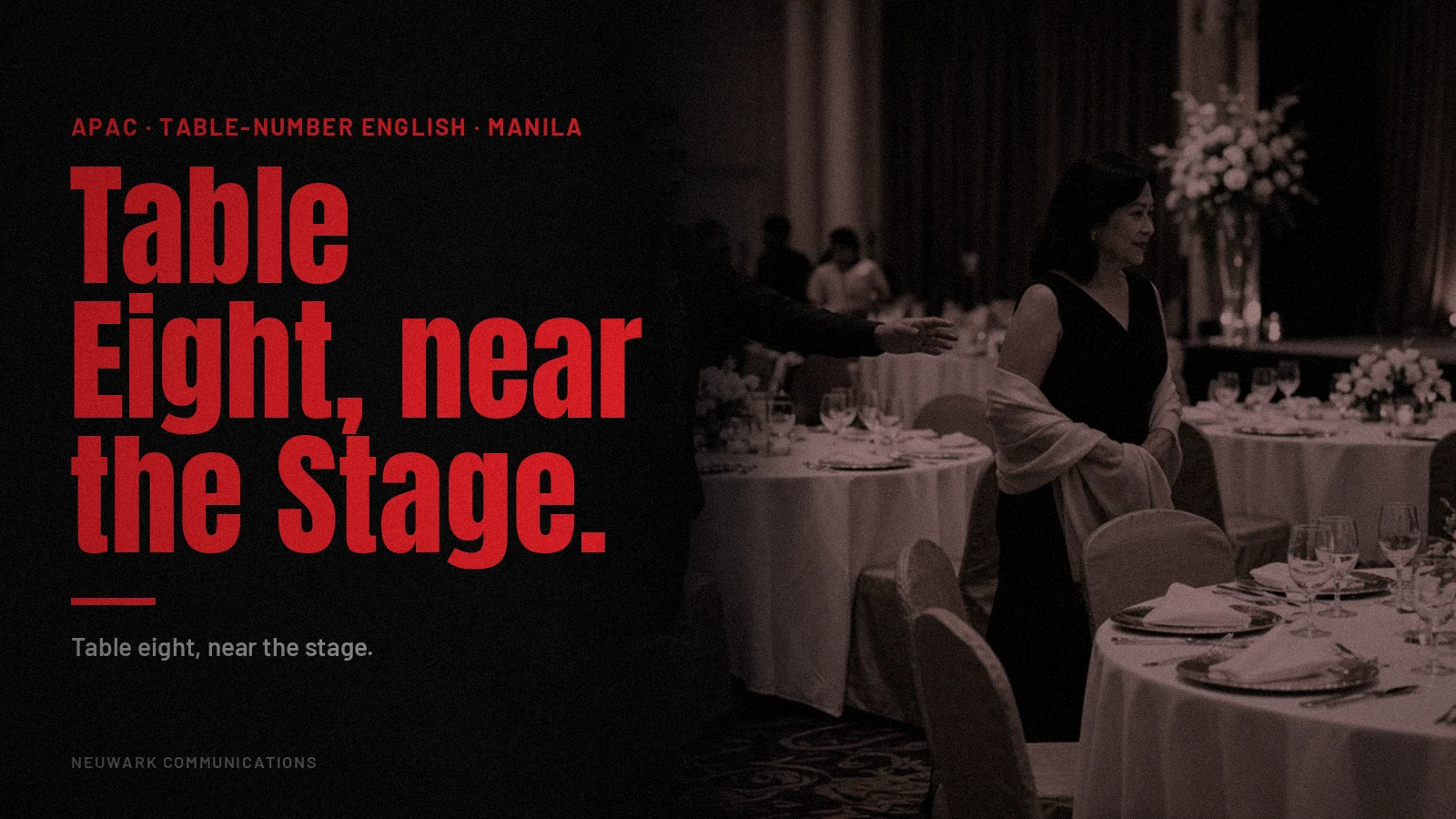
A hotel ballroom in Manila, doors just opened.
Every round table looks the same from the entrance.
Guests hold their invitations and look for help.
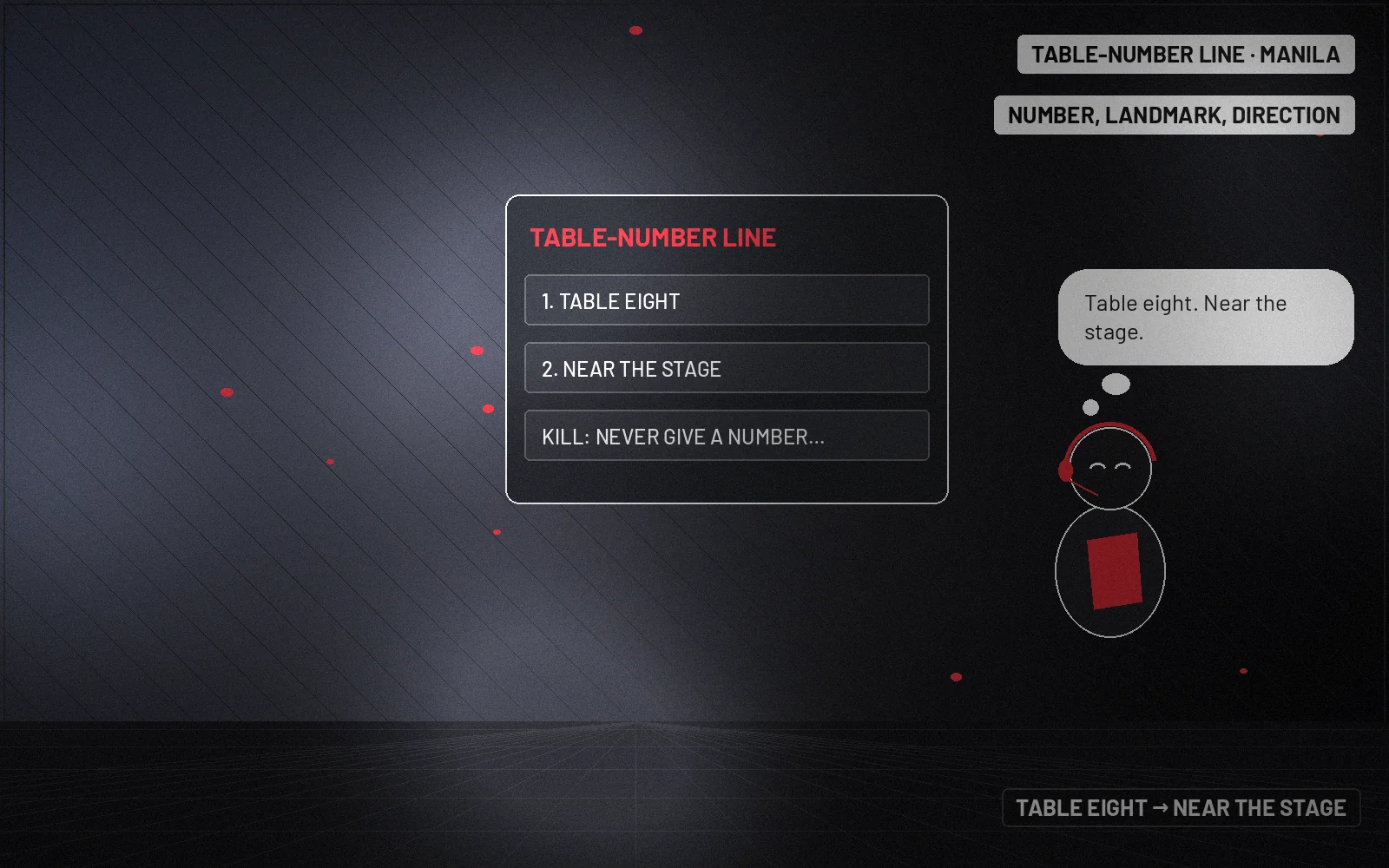
Table-number line English APAC is the short usher line that gives a guest their table number, one landmark and a direction: table eight, near the stage, this way.
Street-smart APAC English: short sentences a tired operator can say out loud.
Quick answer: A table-number line English APAC is what an usher says to seat a guest: table eight, near the stage, this way. Give the number first, add one landmark, then walk or point. It saves the guest from wandering a full ballroom looking for a stand.
Pair it with the buffet open line English APAC and the check-in greeting English APAC.
What goes in a table-number line English APAC?
A table-number line English APAC has three parts: the number, one landmark and a direction. The number comes first because that is what the guest is holding in their head. A landmark, like the stage or the bar, beats a grid reference. The direction closes it with a short walk or an open-hand point.
Table-number line (illustrative):
“Good evening, you’re at table eight.”
“It’s near the stage, on the right.”
“This way, please, I’ll walk you.”
Where should ushers stand to use the table-number line English APAC?
Stand just inside the ballroom door with the seating chart in hand, so guests reach you before they reach the tables. Check the name, say the line and point with an open hand. If the room is large, a second usher at the middle aisle repeats the same number and landmark.
Question ladder (illustrative):
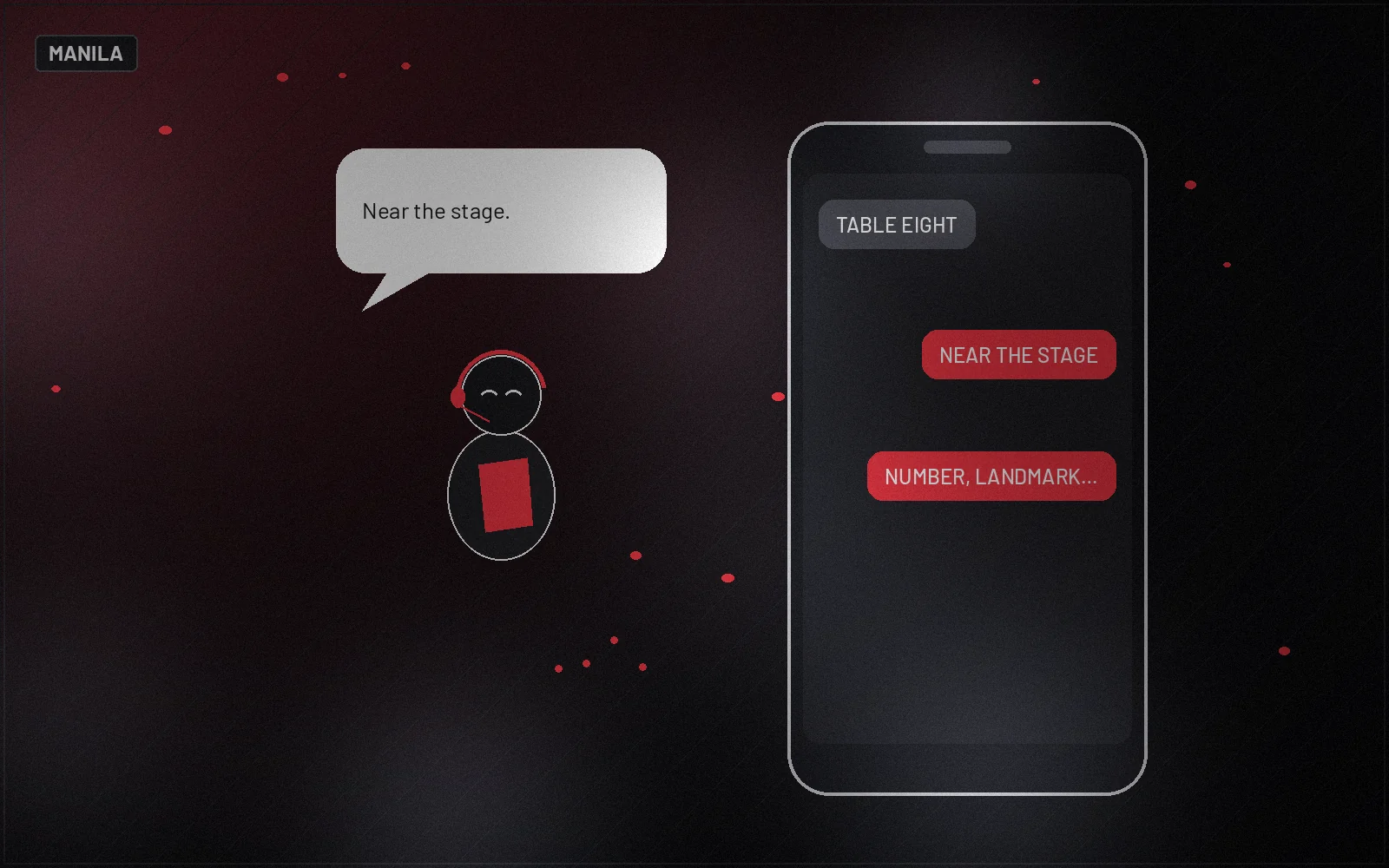
- Typed question: “Where is table eight?” Opener: “Near the stage, on the right.”
- Follow-up: “Is my name on the chart?” Opener: “Let me check, one moment.”
- Practical rung: “Can I sit with my friend?” Opener: “Let me ask the host for you.”
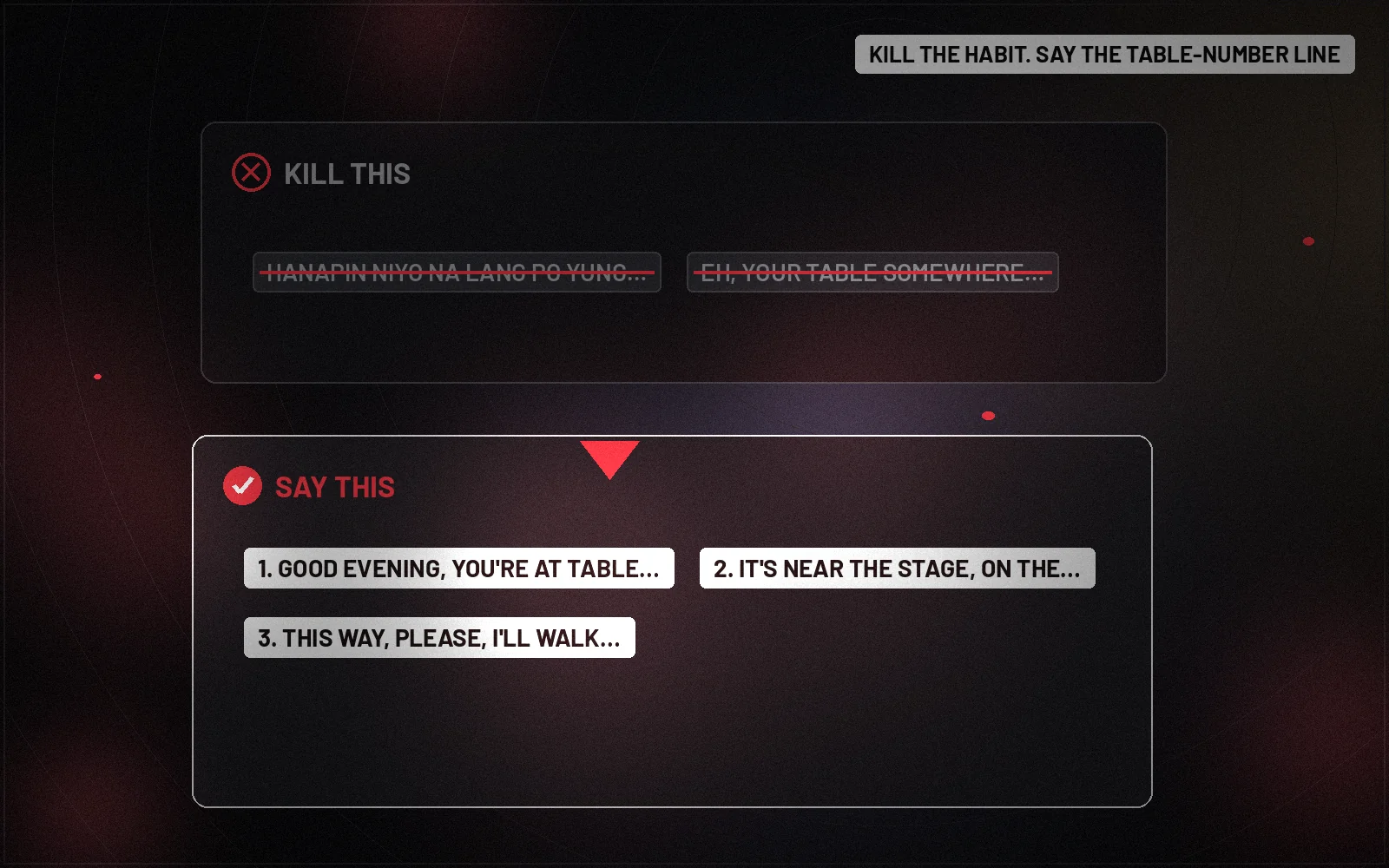
| Kill this | Say this (illustrative) | Why |
|---|---|---|
| Hanapin niyo na lang po yung table niyo, nandiyan lang! | Good evening, you’re at table eight. | Gives the number first |
| Eh, your table somewhere there lah, just find! | It’s near the stage, on the right. | One landmark, one side |
| (waving at the whole ballroom) | This way, please, I’ll walk you. | Closes the loop |
How does the table-number line English APAC handle a missing name?
Stay calm and keep the guest with you. Say you will check with the host, then radio the seating lead or check the spare chart. Offer a holding seat at a nearby open table while you sort it. Never say a guest is not on the list in front of others.
Why does this line work?
It answers the only question the guest has at the door: where do I sit? The number confirms they are expected, the landmark gives them something to walk toward, and the direction removes the guesswork. Nobody has to read a chart over an usher’s shoulder or circle a dim ballroom.
The line shifts in word choice only: in the Philippines, add po or sir and ma’am; in Singapore and Malaysia, keep it brisk and plain; in Indonesia, open with Bapak dan Ibu.
PH and SG desk notes
Philippines desk. In Manila, seating changes land late. Share the final chart in the Viber group.
Singapore and wider APAC desk. In Singapore, give campaign communications staff the same chart and one event language.
Paste-ready lock
Speakable lock (illustrative): “Good evening, you’re at table eight, near the stage on the right, this way please.”
Monday field kit
- Number, landmark, direction.
- Final seating chart in every usher’s hand.
- Three landmarks named before doors.
- A seating lead on the radio.
- Kill rule: never give a number without a landmark.
FAQs
What is a table-number line English APAC?
A table-number line English APAC is the short usher line that gives a guest their table number, one landmark and a direction. It helps guests find their table without wandering the room.
What should an usher say when seating gala guests?
An usher seating gala guests should give the table number, a landmark and a direction, using a table-number line English APAC. The usher should then walk or point the guest to the seat.
How do you seat guests quickly at a gala dinner?
Put the final chart in every usher’s hand and use a table-number line English APAC at each door. Quick, clear seating keeps guests happy and the dinner on time.
What to do this week
- Write the line on the usher card.
- Walk the room and pick three landmarks.
- Print the final seating chart.
- Name the seating lead.
Neuwark Communications writes event scripts through strategy and messaging and digital and social within our services. More lines live in Insights.
Related: Buffet open line English APAC · Check-in greeting English APAC
Talk to us about your next event script.
Illustrative lines only. Communications craft, not legal advice.