
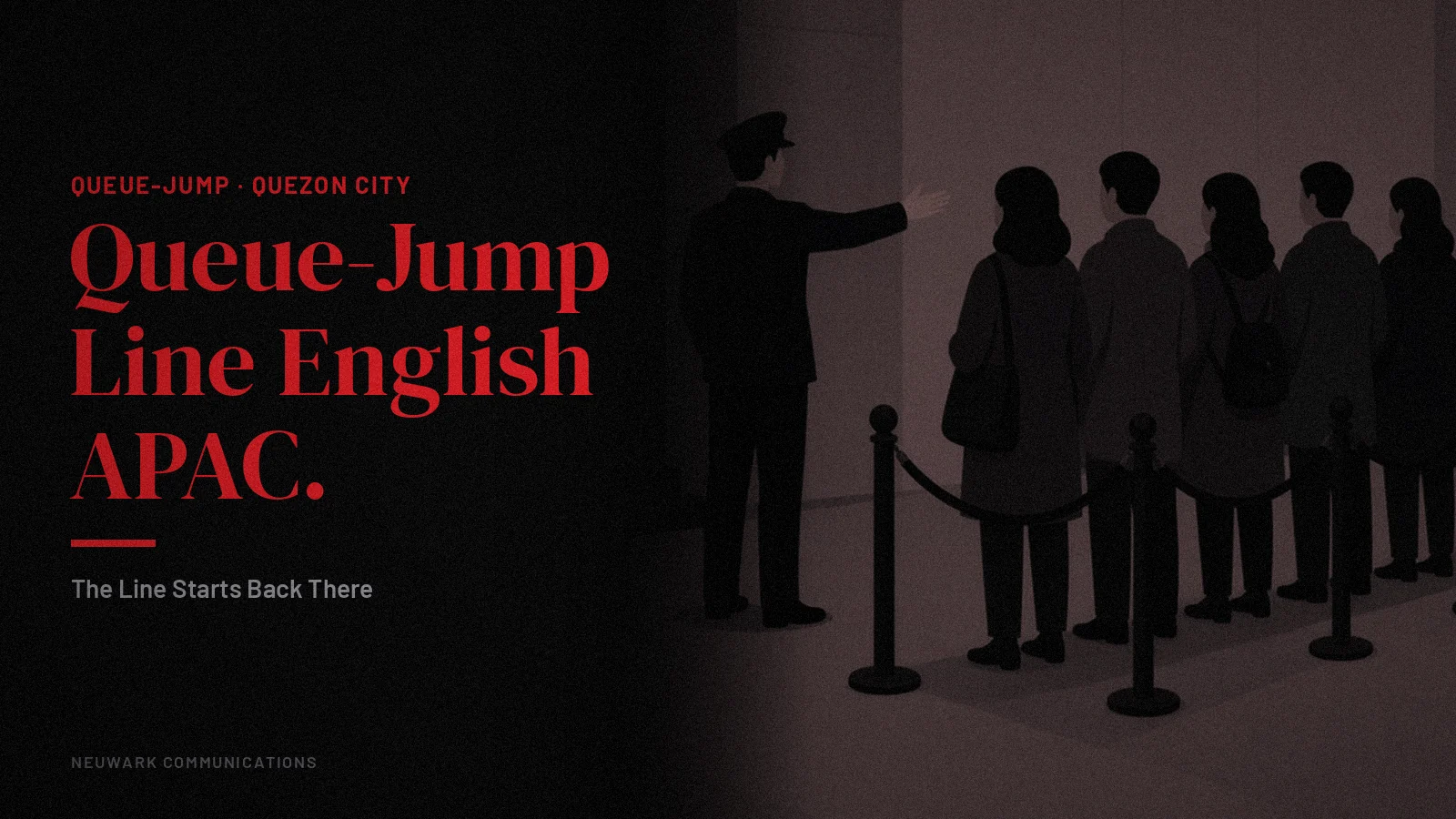
A forum gate in Quezon City, doors in five minutes. A guest walks past the queue and stands at the front.
Queue-jump line English APAC is the short marshal line for someone who cuts the queue: calm, no blame, the line starts back there.
Quick answer: A queue-jump line English APAC is what the marshal says when someone cuts in: hi, the line starts back there, by the blue sign, and it is moving quickly. Say it calmly, assume an honest mistake, point to the end of the line, and never argue in front of the queue.
Street-smart APAC English: short sentences a tired operator can say out loud.
It is a one-to-one line, not a PA message; the queue update announcement English APAC talks to the whole queue. It also differs from the queue-merge line English APAC, where two lines join fairly; here one person has skipped the line.
What goes in a queue-jump line English APAC?
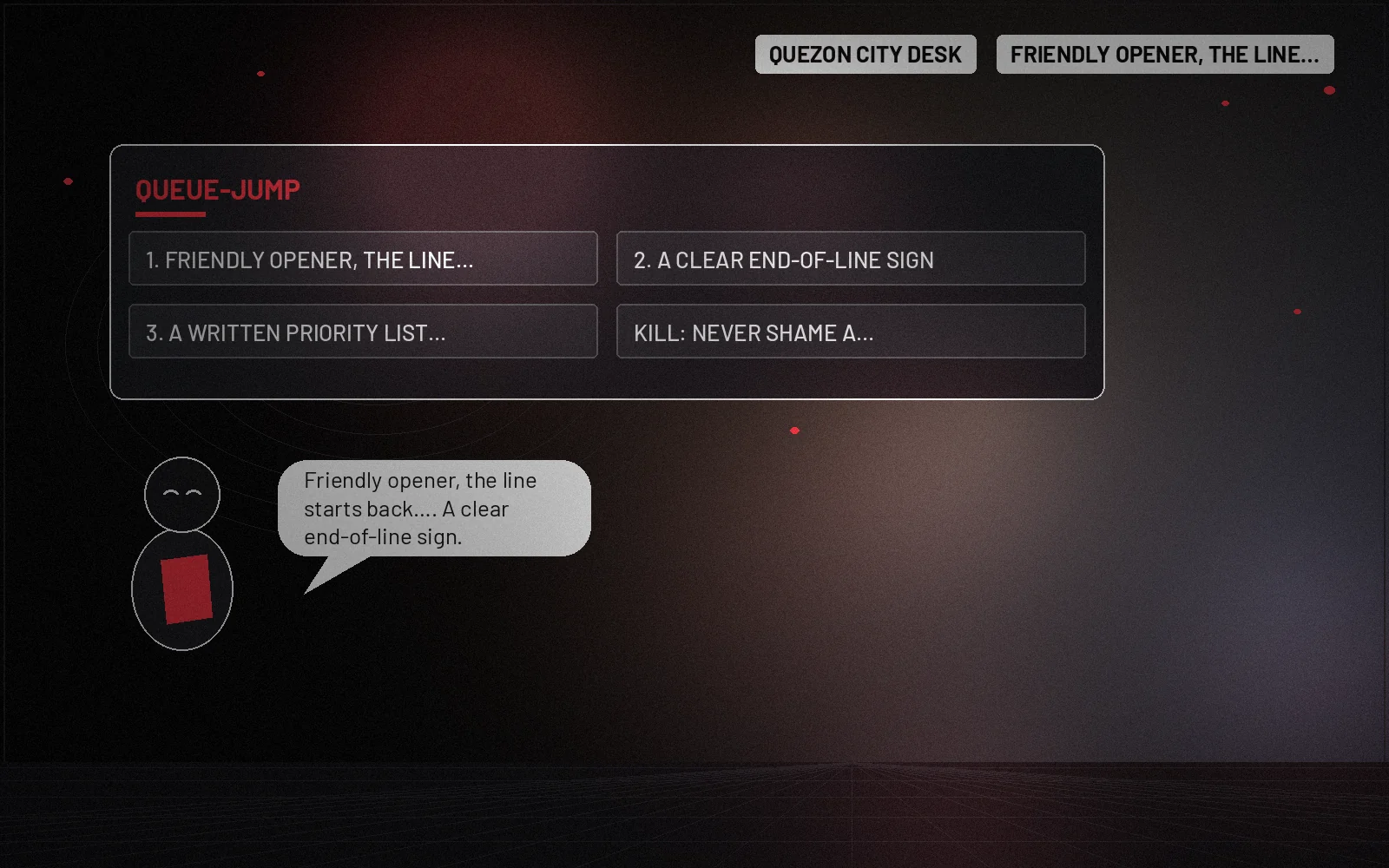
A queue-jump line English APAC has three parts: a friendly opener, where the line starts, and a reason to go there without fuss. The marshal assumes the guest simply missed the queue, points to the end of the line, and adds that it is moving, so stepping back feels easy rather than shameful.
Queue-jump line (illustrative):
“Hi, the line actually starts back there, by the blue sign.”
“It’s moving quickly, you’ll be in soon.”
“Thanks so much, I appreciate it.”
How do I tell someone they cut the queue without a scene?
Speak to them quietly, at their side rather than face to face, and keep your tone friendly. Give them an easy way out: maybe they did not see the queue. Calm event language protects their pride and the queue’s patience, which keeps one small cut from turning into a loud argument.
| Kill this | Say this (illustrative) | Why |
|---|---|---|
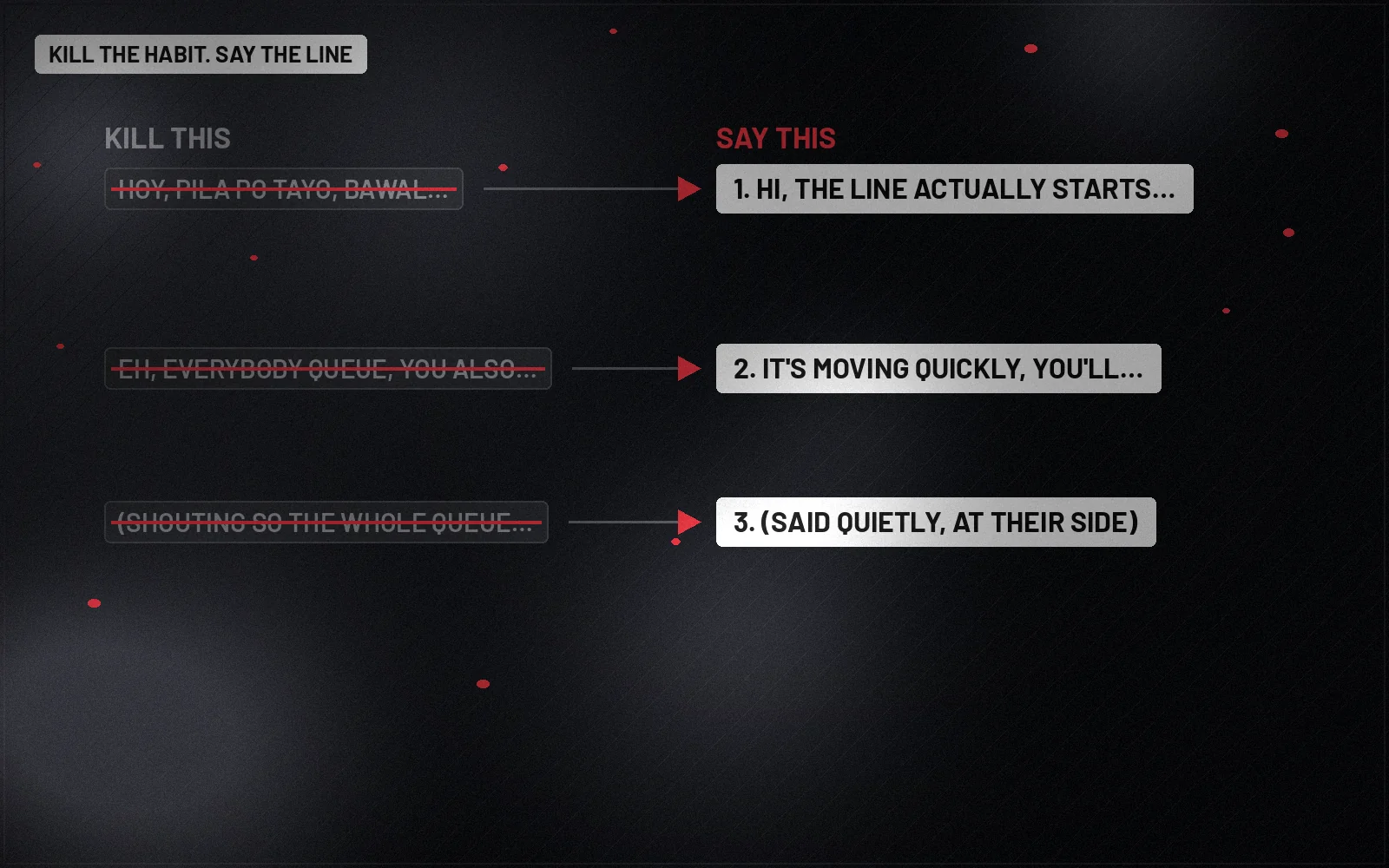
| Hoy, pila po tayo, bawal sumingit! | Hi, the line actually starts back there, by the blue sign. | Assumes a mistake |
| Eh, everybody queue, you also must queue lah. | It’s moving quickly, you’ll be in soon. | Gives a reason to go |
| (shouting so the whole queue hears) | (said quietly, at their side) | No public shaming |
| Sige, dito ka na lang, okay lang. | I’m sorry, everyone joins at the back, it’s only fair. | Holds the rule kindly |
What if the person refuses to go to the back?
Stay calm and repeat the line once, with the reason: everyone joins at the back. Do not touch, block or argue. If they still refuse, call the floor lead or security, and keep serving the queue. Most people step back once they see the rule applied to everyone.
When can someone skip the queue for a good reason?
Agree exceptions in advance, such as elders, guests with a disability, speakers or staff, and say them openly. Then a marshal can wave someone forward with a reason the queue can hear: this guest has a priority pass. Clear exceptions stop the queue assuming favouritism and keep the main rule fair.
How does this play out in PH and SG?
The three parts hold in both markets, but queue culture differs. Use the desk notes below to adjust the tone, the exceptions and the escalation for Philippine and Singapore queues, and brief marshals on the agreed priority list before doors open.
Philippines desk. In the Philippines, a guest may join a friend already in the queue, which others may see as cutting. Agree whether that is allowed, say it the same way at every gate, and use the line in English or Filipino.
Singapore and wider APAC desk. In Singapore, guests usually expect strict queuing and may speak up quickly about a cut. Keep the line in plain English, act early so others do not have to, and keep campaign communications staff in the same queue unless they have a pass.
Paste-ready lock
Speakable lock (illustrative): “Hi, the line actually starts back there by the blue sign, and it’s moving quickly, so you’ll be in soon.”
Monday field kit
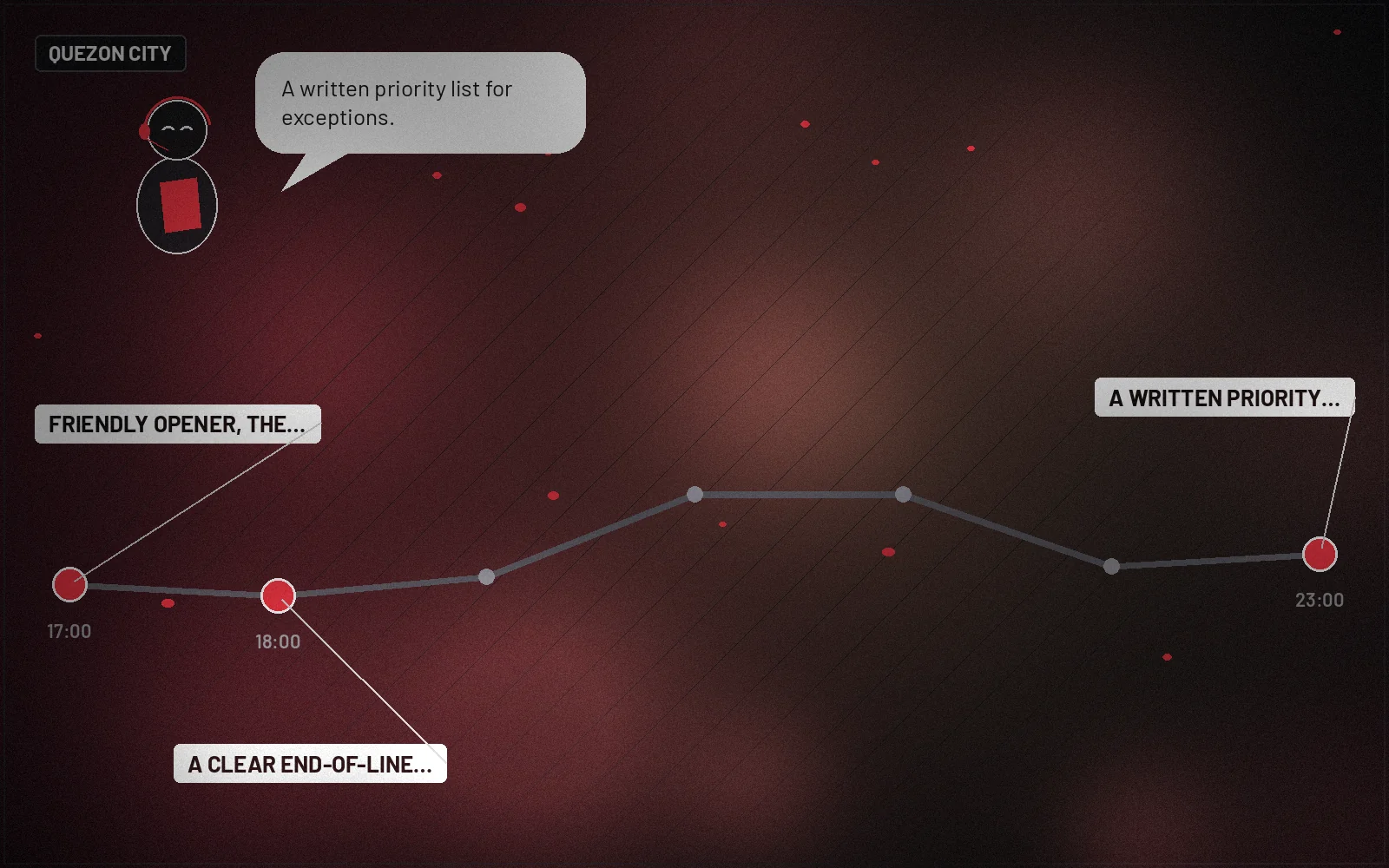
- Friendly opener, the line starts back there, it’s moving.
- A clear end-of-line sign.
- A written priority list for exceptions.
- A floor lead on radio for refusals.
- Kill rule: never shame a queue-jumper in front of the queue.
What to do this week
- Mark the end of the queue with a sign.
- Agree the priority list with the host organisation.
- Write the line on the marshal card.
- Agree the radio call for refusals.
Kill rule: if cutting keeps happening at one spot, fix the barrier, not just the line.
FAQs
What is a queue-jump line English APAC?
A queue-jump line English APAC is the short marshal line for someone who cuts the queue. It points them calmly to where the line starts, without blame.
How do you politely tell someone to go to the back of the line?
Politely tell someone the line starts back there, and add that it is moving quickly. Speak quietly at their side, and assume they missed the queue.
What if someone refuses to leave the queue?
If someone refuses to leave the queue, repeat the line once and explain that everyone joins at the back. Then call the floor lead rather than arguing.
Who can skip the queue at an event?
Only guests on the agreed priority list can skip the queue at an event, such as elders or speakers. Marshals say the reason openly so the queue sees it is fair.
Neuwark Communications builds event scripts and campaign communications as part of our strategy and messaging work and wider services. More street-smart lines live in Insights.
Related: Queue update announcement English APAC · Queue-merge line English APAC
Talk to us about your next event script.
Illustrative lines only. Communications craft, not legal advice.