
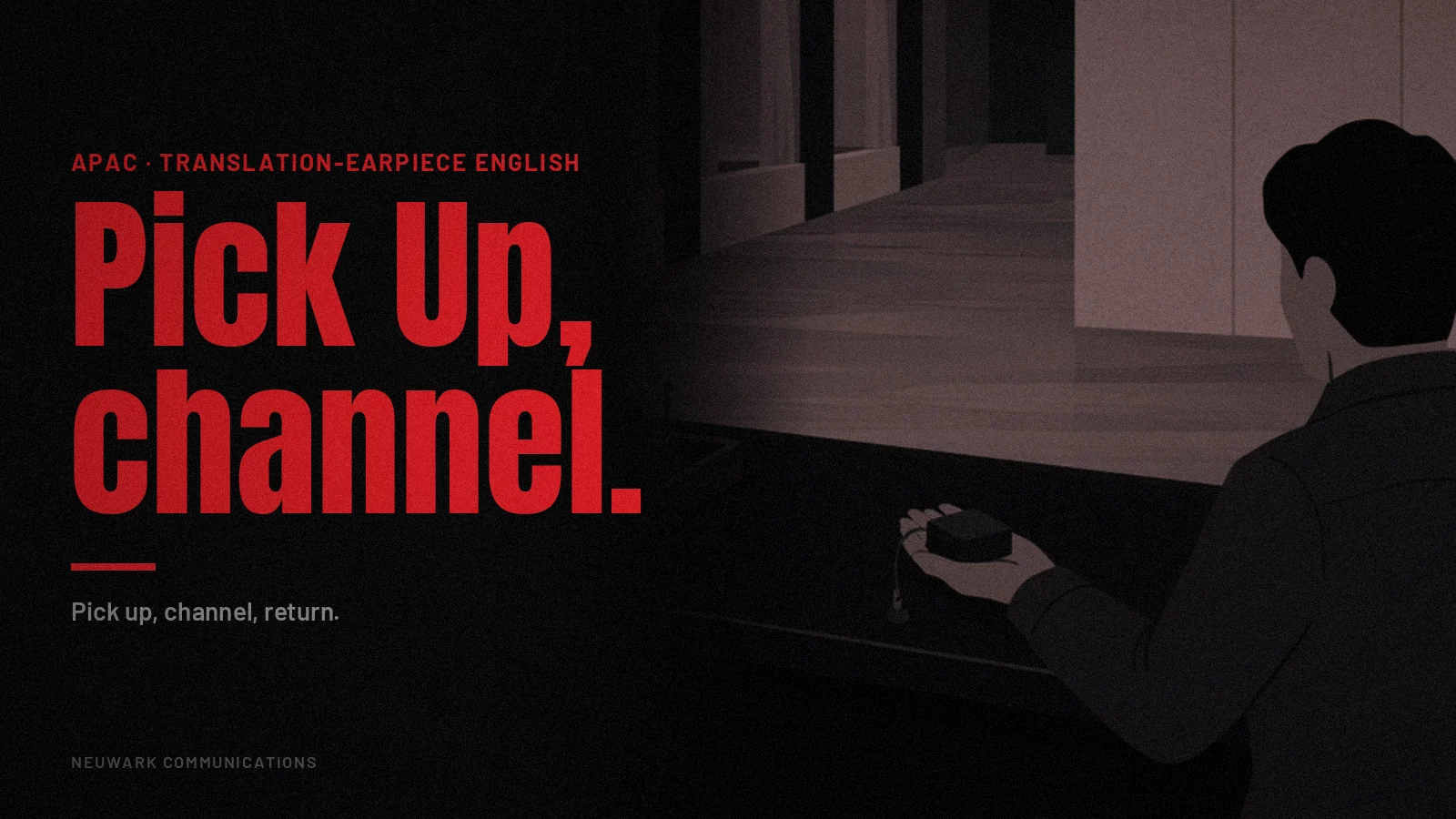
A bilingual policy forum in Pasay. The interpreters are in their booth, the first speaker is about to start in Filipino, and a queue at the side desk asks which button gives English.
Translation-earpiece line English APAC is the short desk line for interpretation receivers: leave an ID, pick your channel, return the set at the exit.
Street-smart APAC English: short sentences a tired operator can say out loud.
It is the desk’s job, not the stage’s; the interpreter handoff line English APAC covers the pause on stage. Behind both sits the translator brief English APAC, which the interpreters get well before doors.
Quick answer: A translation-earpiece line English APAC is the desk line that hands out interpretation receivers in three steps: leave an ID or badge for a set, choose the channel for your language, and return the set at the exit to get your ID back. Label the channels, test each set, and say it the same way every time.
What goes in a translation-earpiece line English APAC?
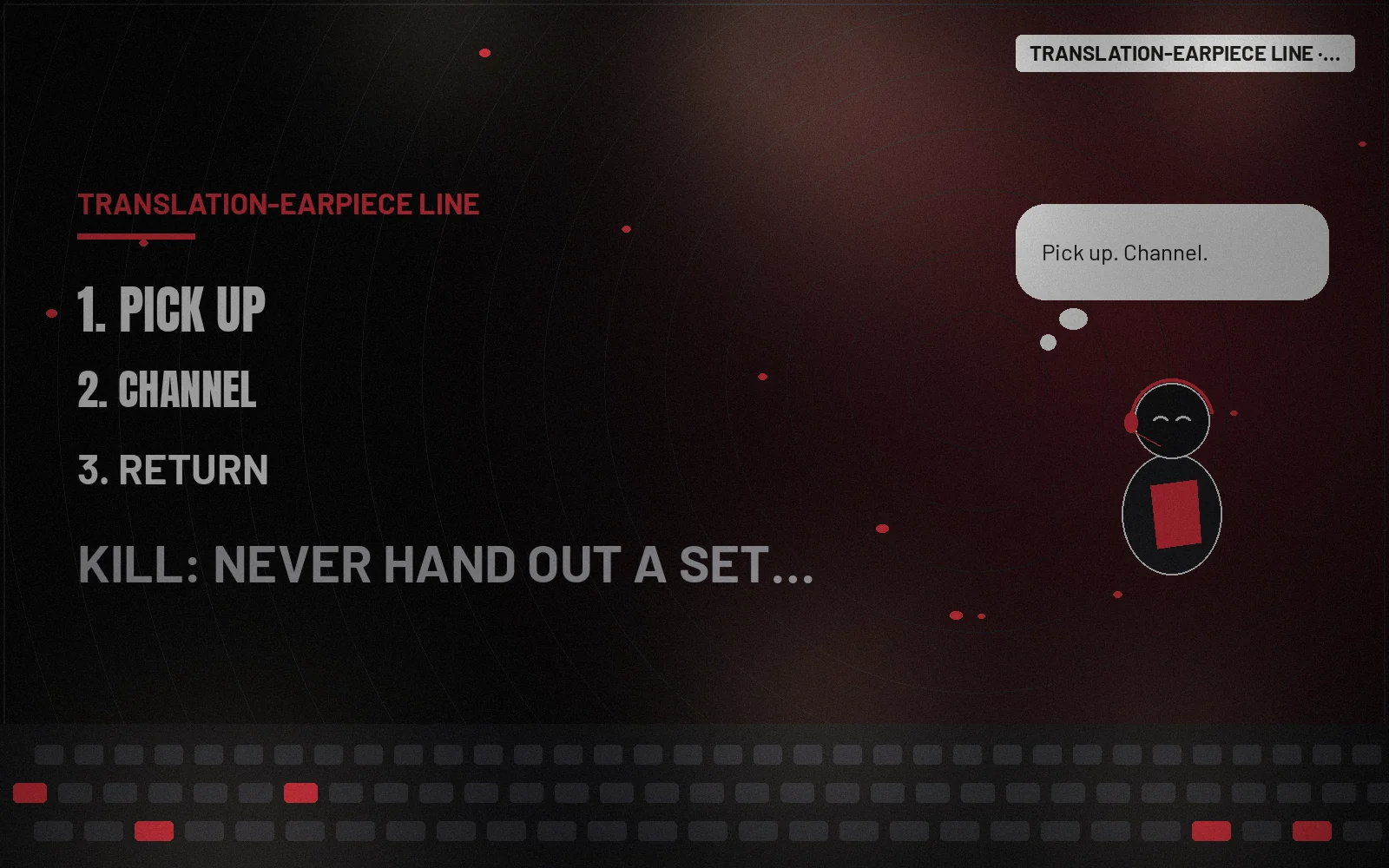
A translation-earpiece line English APAC has three parts: the swap, the channel and the return. Guests leave an ID or badge for a set, the desk says which channel carries which language, and the guest hears where to bring it back. The desk tests each set before it leaves the table.
Translation-earpiece line (illustrative):
“Hi, may I hold your ID or badge for a receiver?”
“Channel 1 is English, Channel 2 is Filipino.”
“Please return it here on your way out, and we’ll hand back your ID.”
How do I explain the channels quickly?
Say the channel numbers and languages once, slowly, while you hand over the set, and point to the label on the dial. Then ask the guest to try it. Simple event language works best here, because many guests at the desk are about to listen in their second or third language.
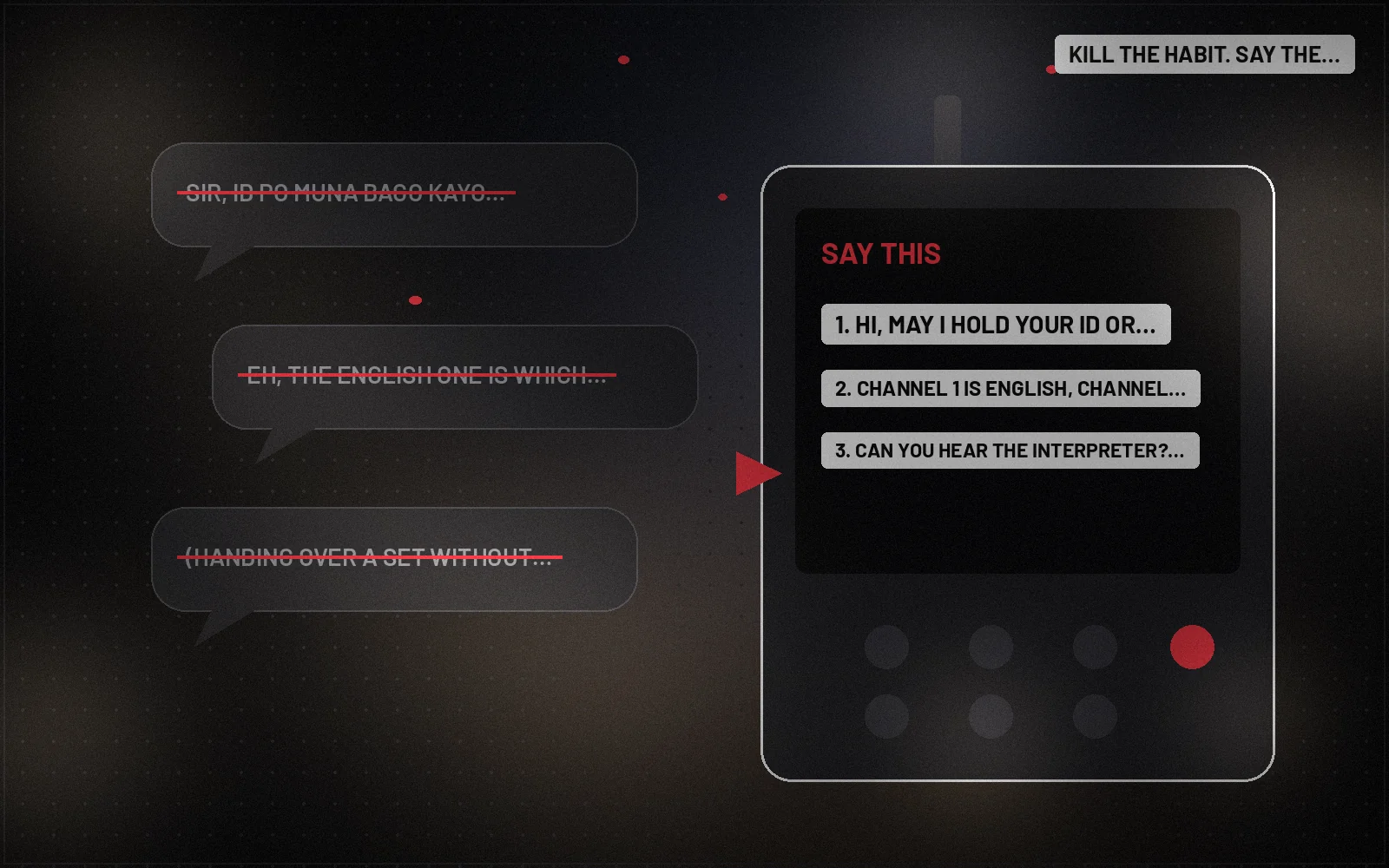
| Kill this | Say this (illustrative) | Why |
|---|---|---|
| Sir, ID po muna bago kayo kumuha ha. | Hi, may I hold your ID or badge for a receiver? | Asks, does not demand |
| Eh, the English one is which channel ah? Try lah. | Channel 1 is English, Channel 2 is Filipino. | Names both channels |
| (handing over a set without testing it) | Can you hear the interpreter? Good. | Tests before they sit |
| Ibalik niyo na lang kung saan-saan. | Please return it here on your way out. | One return point |
What should the desk do with guests’ IDs?
Keep IDs out of sight in a closed box sorted by set number, and hand each one back only against its set. Collect nothing else. If a guest prefers not to leave an ID, offer a badge swap or a simple sign-out log instead, and let the host organisation decide the policy before the event.
What if a receiver stops working mid-session?
Swap it at once rather than troubleshooting at the seat. Keep a few spare, tested sets at the desk and a marshal ready to walk them in quietly. Check the old set later, away from the room, and note its number so it does not go back out until it is fixed.
How does this play out in PH and SG?
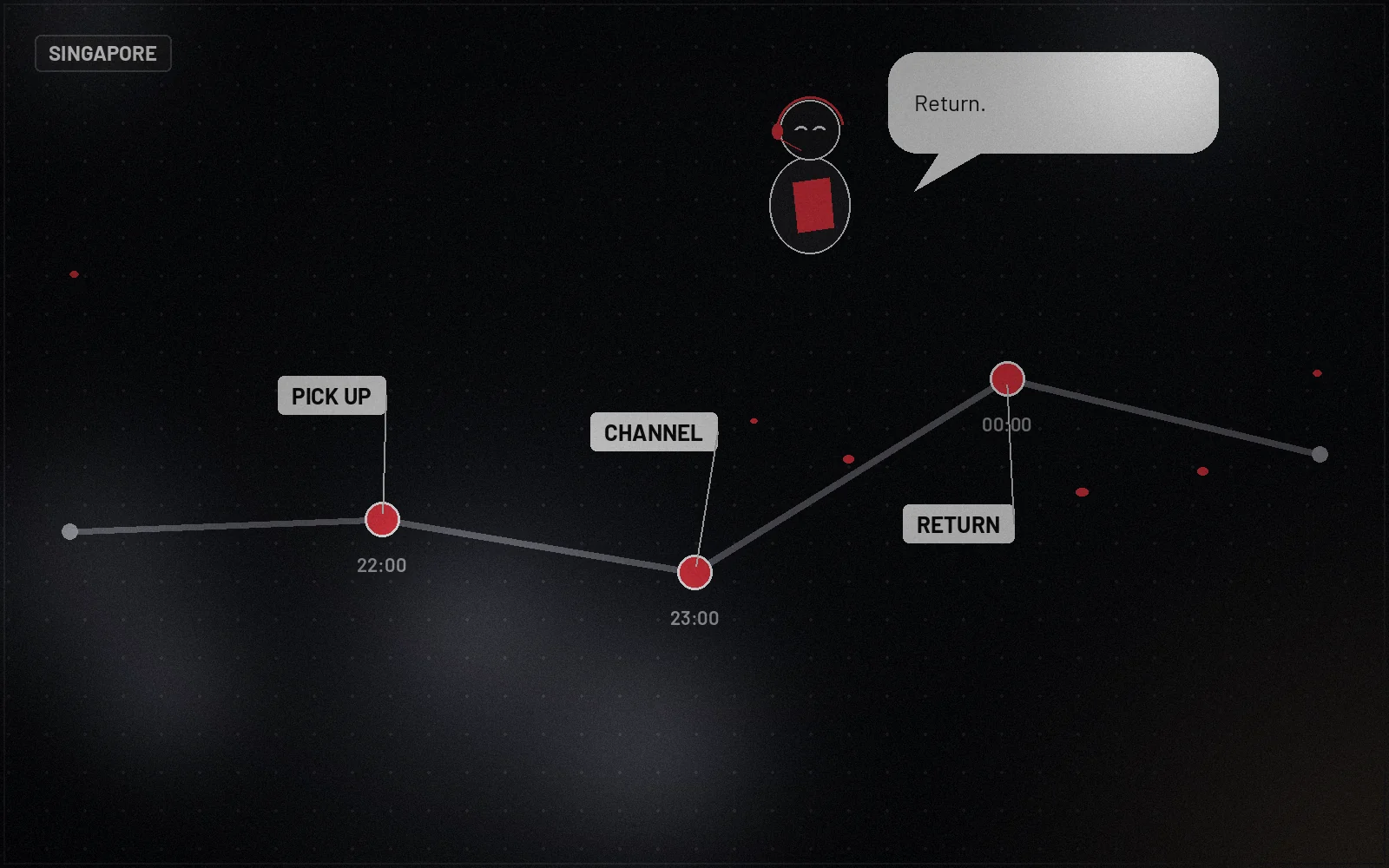
The three parts stay the same in both markets, but the languages and the desk set-up change. Use the desk notes below to adjust the channel list, the ID swap and the return point for Philippine and Singapore events, and agree all of it with the interpretation provider.
Philippines desk. In the Philippines, the usual pair is English and Filipino. Label each channel clearly on the dial and on a desk card, say the line in English or Filipino, and put the return desk at the main exit.
Singapore and wider APAC desk. In Singapore, events may run channels for English, Mandarin, Malay or Tamil. Keep the line in plain English, list the channels on a desk card, and keep campaign communications handouts away from the receiver table.
Paste-ready lock
Speakable lock (illustrative): “Hi, may I hold your ID or badge for a receiver, Channel 1 is English and Channel 2 is Filipino, and please return it here on your way out.”
Monday field kit
- ID or badge for a set, your channel, return at the exit.
- Channel labels on every dial and desk card.
- Each set tested before it leaves the desk.
- Spare sets and a closed ID box.
- Kill rule: never hand out a set without saying the channel and the return point.
What to do this week
- Get the channel list from the interpretation provider.
- Print a desk card with every channel.
- Set up a closed ID box sorted by set number.
- Plan spare sets and a return desk at the exit.
Kill rule: if the ID box is not ready, do not start the swap; use a badge log instead.
FAQs
What is a translation-earpiece line English APAC?
A translation-earpiece line English APAC is the short desk line for handing out interpretation receivers. It covers the ID swap, the channel and the return.
How do interpretation receivers work at an event?
Interpretation receivers pick up the interpreter’s voice on a set channel at the event. Guests pick their language’s channel and listen through an earpiece.
Why do events ask for an ID for a receiver?
Events ask for an ID so each receiver comes back at the end. The desk keeps IDs in a closed box and hands each back against its set.
What if a receiver stops working?
If a receiver stops working, swap it for a spare, tested set at once. Check the old set later, away from the room.
Neuwark Communications builds event scripts and campaign communications as part of our strategy and messaging work and wider services. More street-smart lines live in Insights.
Related: Interpreter handoff line English APAC · Translator brief English APAC
Talk to us about your next event script.
Illustrative lines only. Communications craft, not legal advice.