
The statement goes to the translator at 9pm with one line: “Pls translate, urgent.”
It comes back accurate and wrong. A policy term is translated literally. The tone is stiff where the Manila audience expected warmth. A key name is spelled two ways.
Translator brief English APAC is the one-page note a translator or interpreter gets before the first line: the audience, what the text must do, the key terms and the words to avoid.
Street-smart APAC English: short sentences a tired operator can say out loud.
It sits on top of the English source described in our English spine for multilingual advocacy piece. If the job is live interpretation at a hearing, pair it with hearing testimony English APAC.
What goes in a translator brief English APAC?
Five fields on one page. Audience, purpose, key terms, words to avoid, deadline and contact.
Translator brief (illustrative):
“Audience: residents of riverside barangays, mostly reading on phones.”
“Purpose: explain the drainage petition and ask for one signature.”
“Key terms: keep ‘drainage fix’ plain, not technical. Keep the group name in English.”
“Avoid: words that sound like a government notice.”
“Deadline and contact: Thursday noon. Questions to Jo on Viber.”
The translator does not need your strategy deck. They need the five things they would otherwise guess.
Why does a correct translation still go wrong?
Because translators fix words, not context they never got. Tone, audience and loaded terms live in your head, not in the source text.
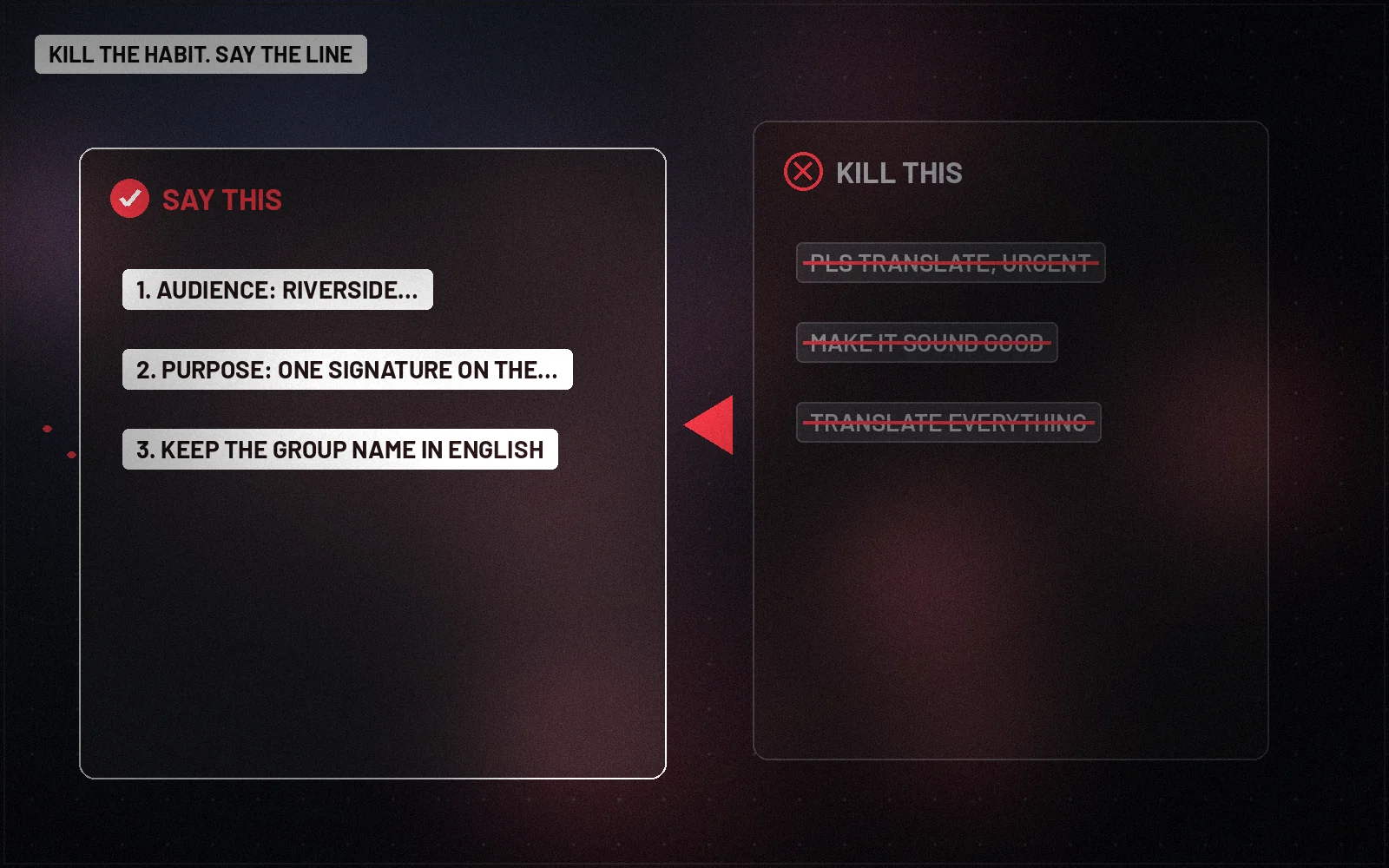
| Kill this | Say this (illustrative) | Why |
|---|---|---|
| Pls translate, urgent | Audience: riverside residents, on phones. | Context first |
| Make it sound good | Purpose: one signature on the petition. | A job, not a mood |
| Translate everything | Keep the group name in English. | Says what stays |
| You’ll know what to avoid | Avoid words that sound like a government notice. | Names the risk |
| ASAP | Thursday noon. Questions to Jo on Viber. | A time and a person |
Is a brief for an interpreter different?
Same five fields, plus names and numbers said aloud. Interpreters work in real time, so they need pronunciation and the running order.
For a forum or hearing, send speaker names with pronunciation, the agenda, any figures that will be read out, and every acronym spelled out. Share prepared remarks in advance. A booth with no brief turns every acronym into a pause.
Who answers the translator’s questions?
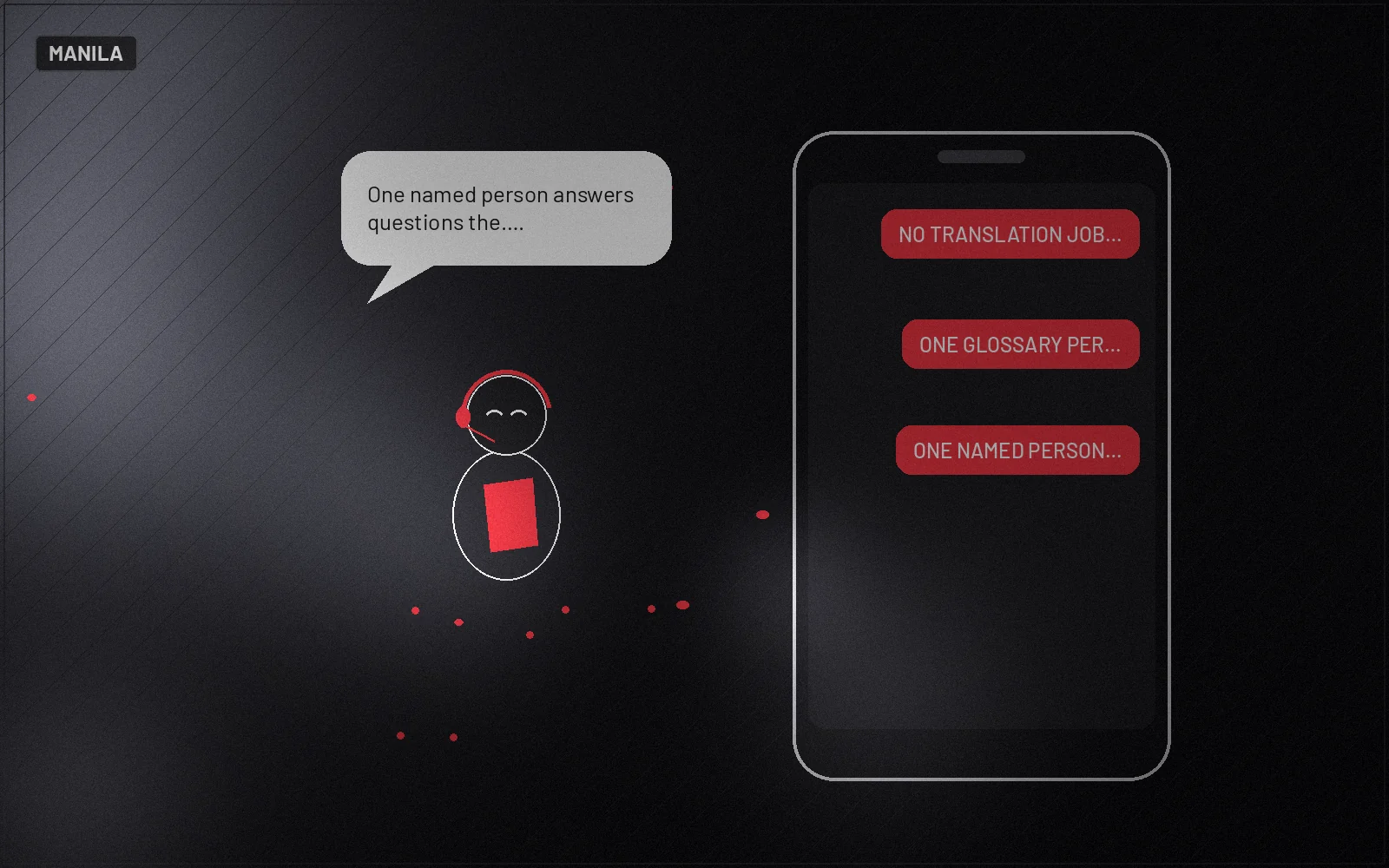
One named person who knows the content and replies the same day. Not a shared inbox.
A translator who asks questions is doing the job well. Say which channel to use, often WhatsApp or Viber, and the hours you answer. If a term has no good equivalent, decide together and add it to a running glossary.
How does this play out in PH and SG?
Same five fields. Different language mixes.
Philippines desk. Many audiences read Taglish more easily than formal Filipino. Say which register you want. For regional languages, name the specific language and area, not just “local dialect.” Keep policy terms consistent with earlier translations.
Singapore and wider APAC desk. Audiences may need Chinese, Malay and Tamil versions alongside English. Brief each translator the same way, with one shared glossary, so every version says the same thing. Check names and honorifics for each community.
Paste-ready lock
Three lines to paste at the top of any translation request.
Paste-ready lock (illustrative):
“Audience: who reads this, and on what screen.”
“Purpose: the one thing this text must get readers to do.”
“Keep, avoid, deadline: terms that stay as they are, words to avoid, and who answers questions by when.”
Monday field kit
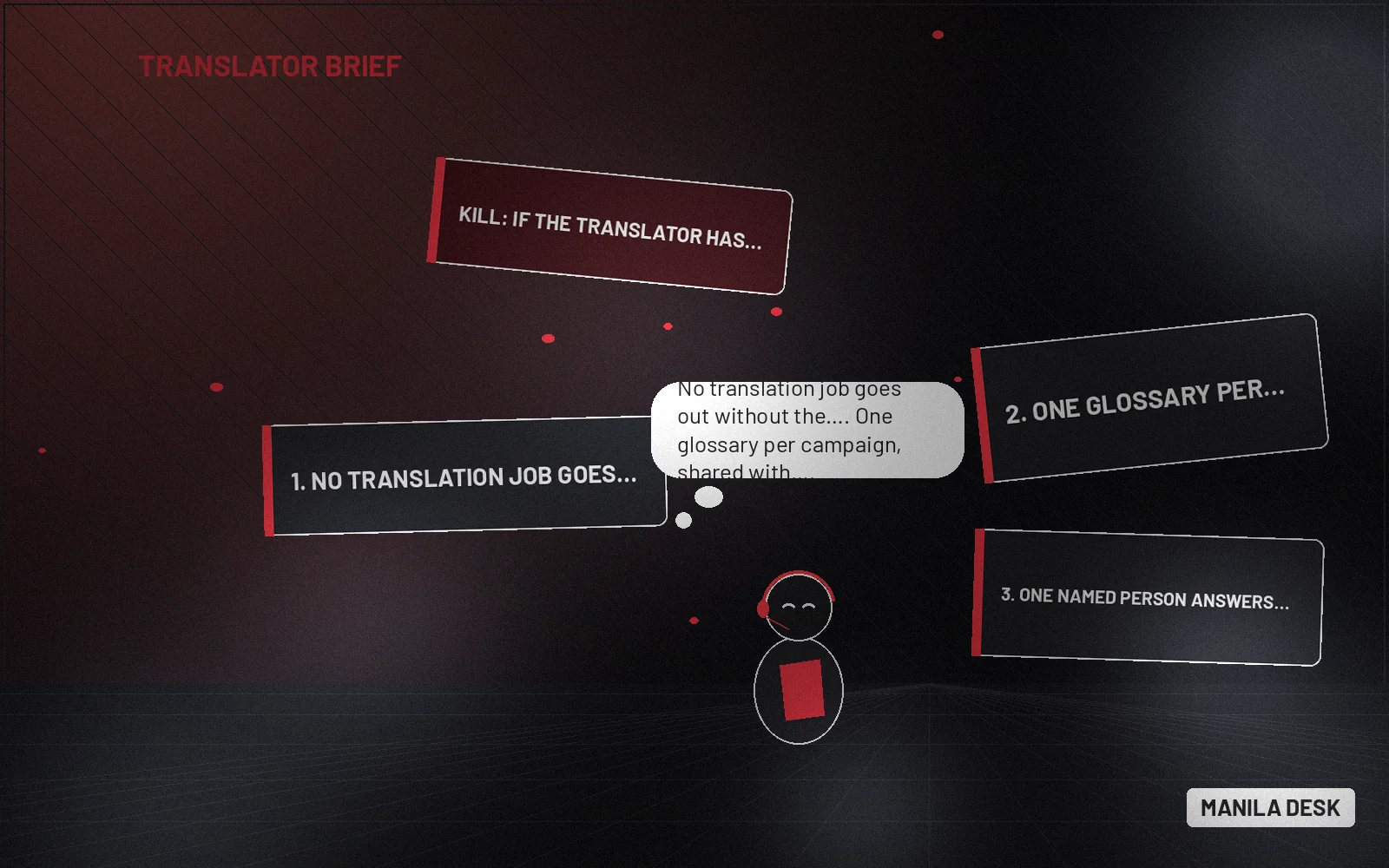
- No translation job goes out without the five fields.
- One glossary per campaign, shared with every translator.
- One named person answers questions the same day.
- Interpreters get names, pronunciation and running order.
- Kill rule: if the translator has to guess the audience, the brief failed. Send it again before they start.
What to do this week
- Write a one-page brief template with the five fields.
- Start a glossary of key terms and how each is translated.
- Name who answers translator questions.
- Send the brief with your next job and ask the translator what was missing.
Kill rule: if two versions of the same text use different words for the same thing, fix the glossary first.
FAQs
What is translator brief English APAC?
Translator brief English APAC is the one-page note a translator or interpreter gets before the first line: the audience, what the text must do, the key terms and the words to avoid. It works because translators fix words, not missing context. It does not replace a native-speaker review.
How long should a translator brief English APAC be?
One page. Anything longer belongs in the glossary.
Should we ask for a back-translation?
For high-stakes text, yes, if time and budget allow. It shows where meaning shifted, not whether the tone is right.
Can machine translation replace the brief?
No. Machine output still needs a native speaker to check it, and the brief tells that reviewer what to look for.
Neuwark Communications builds multilingual messaging as part of our services, including Strategy & Messaging. If your translations come back accurate but off, talk to us at Contact. More language companions live in Insights.
Communications craft, not legal advice. Counsel checks election-period, consent and platform rules, plus any translation requirements for official or legal text, before translated material is published.
Related: English spine for multilingual advocacy · Hearing testimony English APAC