
A policy forum in a Singapore hotel ballroom. The video, the lights and the walk-up music all need to land on the same beat, and three operators are waiting on one voice in their headsets.
Standby-cue line English APAC is the short stage manager call on headset: standby for the cue, wait for the reply, then go, one cue at a time.
Street-smart APAC English: short sentences a tired operator can say out loud.
It is the call to the tech team, not to the speaker; for the speaker, use the time check cue English APAC. It sits inside the run-of-show cue English APAC, which moves the stage from one segment to the next.
Quick answer: A standby-cue line English APAC is the stage manager’s two-step call on headset: standby names the department and cue number, the operator answers, and go fires it on the beat. Keep one voice on the channel, number every cue, wait for the reply, and never say go without a standby first.
What goes in a standby-cue line English APAC?
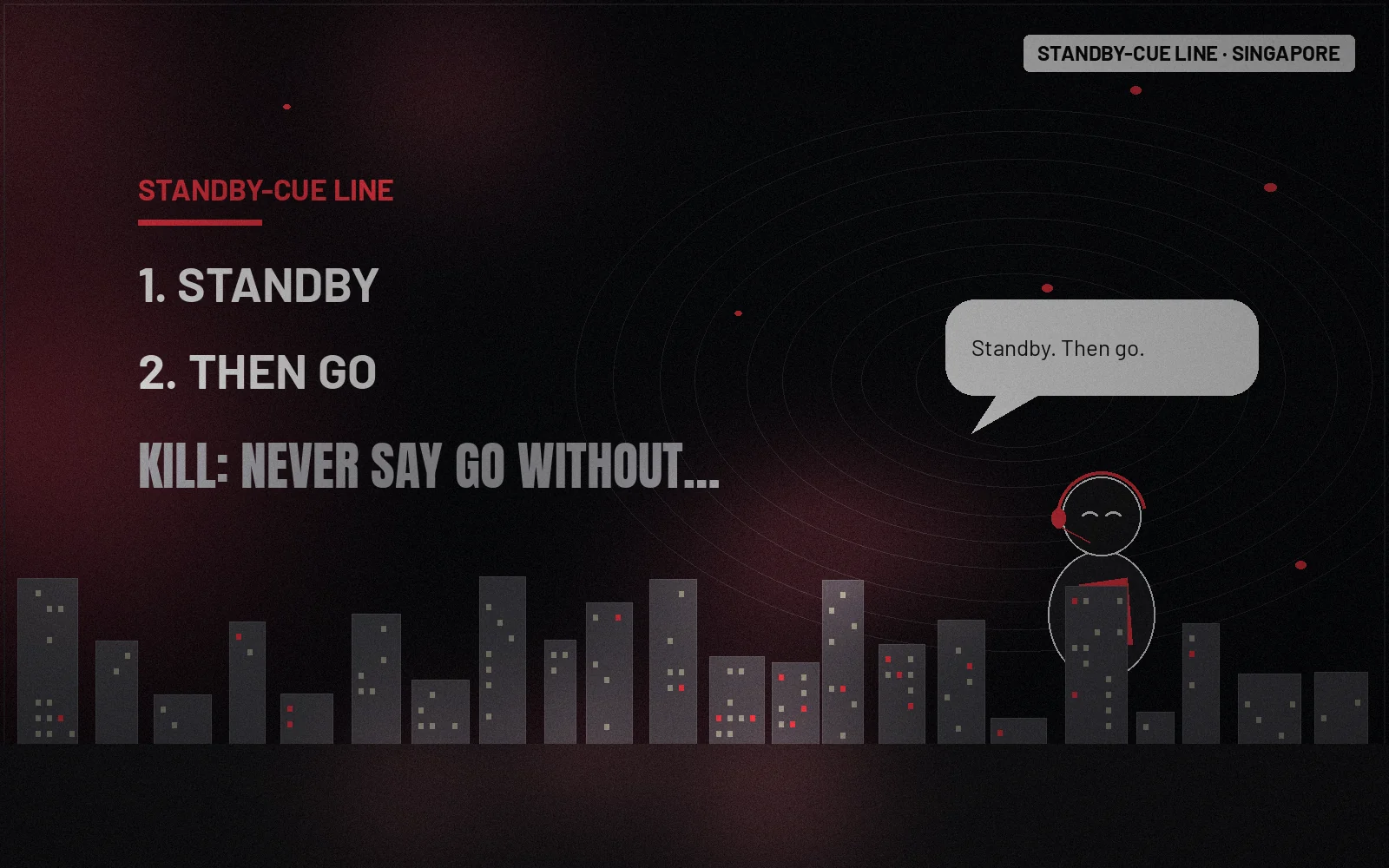
A standby-cue line English APAC has three parts: the department and cue number, the word standby, and the word go. The operator answers standing by after the standby, and the stage manager says go on the exact beat. Nothing else goes on the channel between the standby and the go.
Standby-cue line (illustrative):
“Lights cue twelve and video cue four, standby.”
“Lights and video, standing by.” (operators reply)
“Lights twelve, video four, go.”
How should a stage manager call standby and go?
Call the department first, then the cue number, then standby, and wait for each operator to answer. Give the go on the beat, with the department and number again. Clear event language on headset means nobody fires early, and every operator knows exactly which cue belongs to them.
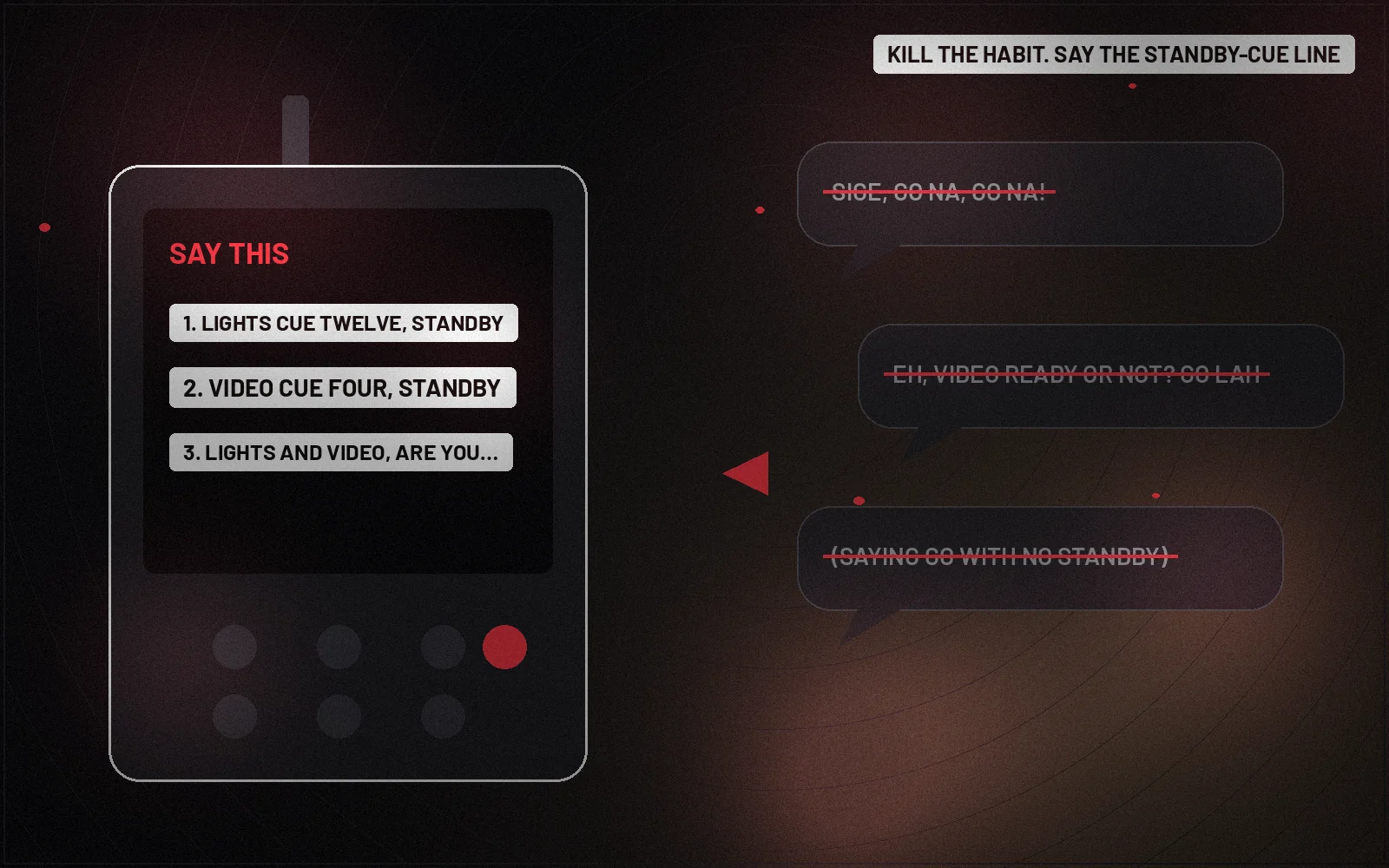
| Kill this | Say this (illustrative) | Why |
|---|---|---|
| Sige, go na, go na! | Lights cue twelve, standby. | Warns before it fires |
| Eh, video ready or not? Go lah. | Video cue four, standby. | Names the department |
| (saying go with no standby) | Lights and video, are you standing by? | Waits for the reply |
| Okay na ‘yan, sabay-sabay na lang. | Lights twelve, video four, go. | Numbers, one beat |
| (chatting on the channel during a cue) | Hold, hold. That standby is cancelled. | A clean stop if needed |
Why wait for standing by before calling go?
The reply tells you the operator heard the right cue and is ready. Without it, you might call go into silence, or an operator might fire the wrong cue. If someone does not answer, repeat the standby once, then hold the cue and sort it out off the beat.
What if a cue goes wrong mid-show?
Stay calm and keep the channel clean. Say hold to stop anything still pending, then call the next standby as normal. Talk through the mistake after the show, not on headset during it. The room rarely notices a small miss, but it always notices panic on the stage.
How does this play out in PH and SG?
The call structure stays the same in both markets, but crews and habits differ. Use the desk notes below to adjust the language on the channel, the cue sheet and the tech run for Philippine and Singapore crews, and agree the format before the first rehearsal.
Philippines desk. In the Philippines, crews may mix English and Filipino on the channel, and many operators move between events and stage managers. Agree the call format at the tech run, keep cue words in English, and confirm every operator has the same cue sheet.
Singapore and wider APAC desk. In Singapore, crews often work to a tight, formal cue structure. Keep the line in plain English, number every cue on the sheet, and keep campaign communications staff off the tech channel unless they are calling a cue.
Paste-ready lock
Speakable lock (illustrative): “Lights cue twelve and video cue four, standby, and when both are standing by, lights twelve and video four, go.”
Monday field kit
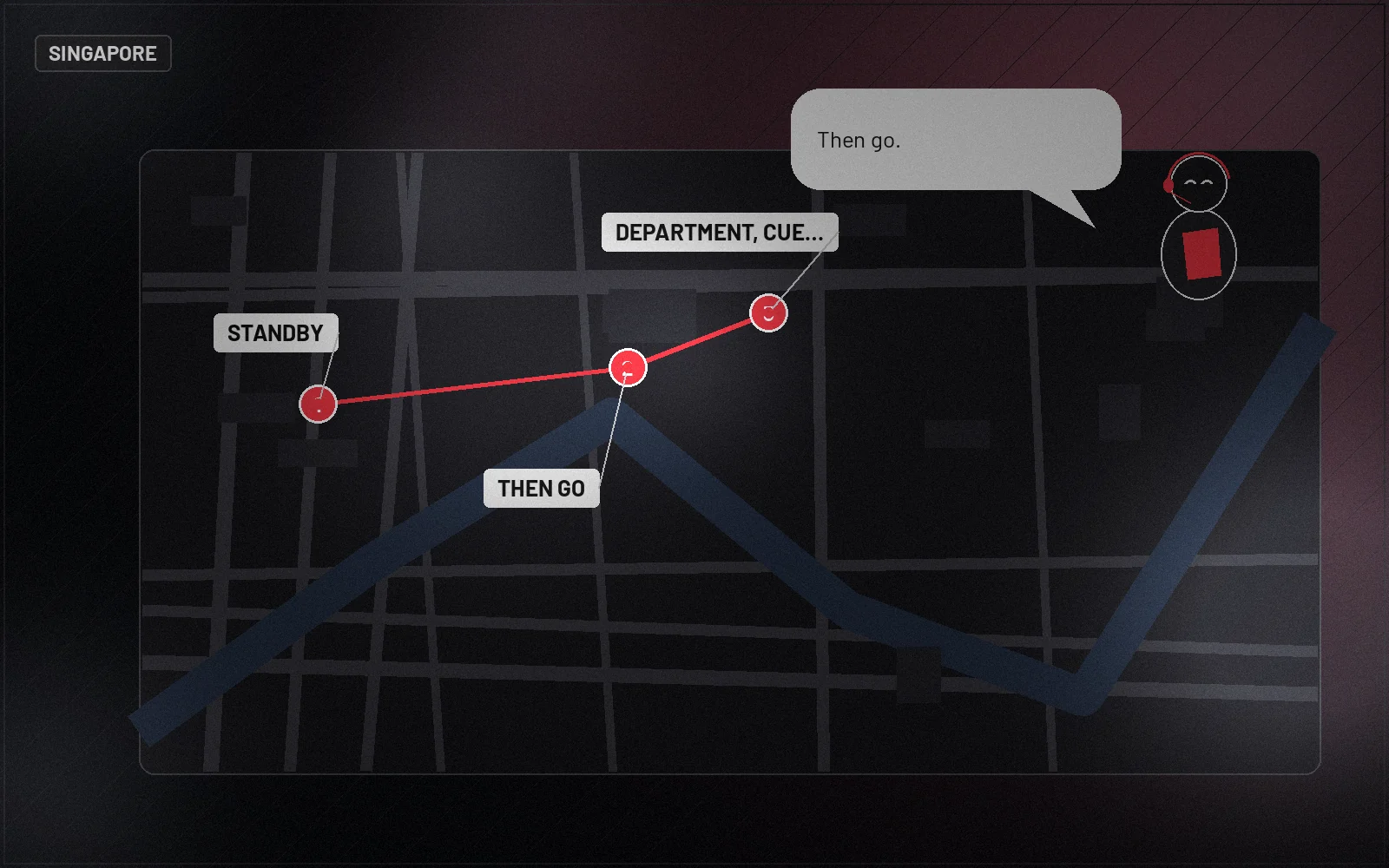
- Department, cue number, standby; wait for the reply; go.
- A numbered cue sheet for every operator.
- One voice on the channel.
- A hold word everyone knows.
- Kill rule: never say go without a standby and a reply.
What to do this week
- Number every cue on the cue sheet.
- Agree the call format at the tech run.
- Write the hold word on every sheet.
- Rehearse the standby and go rhythm once.
Kill rule: if an operator does not answer, hold the cue rather than calling go.
FAQs
What is a standby-cue line English APAC?
A standby-cue line English APAC is the short stage manager call on headset that warns, then fires, each cue. It names the department and cue number, waits for a reply, then says go.
What does standby mean in stage management?
In stage management, standby means get ready because the next cue is coming. The operator answers standing by, then waits for go.
Why do stage managers say standby before go?
Stage managers say standby before go so operators are ready and the cue is confirmed. It stops anyone firing early or firing the wrong cue.
What if a cue goes wrong mid-show?
If a cue goes wrong mid-show, say hold to stop anything pending, then call the next standby. Talk through the mistake after the show.
Neuwark Communications builds event scripts and campaign communications as part of our strategy and messaging work and wider services. More street-smart lines live in Insights.
Related: Time check cue English APAC · Run-of-show cue English APAC
Talk to us about your next event script.
Illustrative lines only. Communications craft, not legal advice.