
A volunteer briefing in a Quezon City barangay hall. The sign-in sheet has nine columns, the queue is out the door, and someone asks why the sheet wants their home address.
Sign-in sheet line English APAC is the short desk line for attendance: name, contact number, initial, and what the sheet is for.
Street-smart APAC English: short sentences a tired operator can say out loud.
It runs alongside our check-in greeting English APAC at the desk, and it records the people our volunteer shift confirm English APAC brought in.
Quick answer: A sign-in sheet line English APAC asks each volunteer or guest for three things: name, contact number and initial, and says what the sheet is for. Ask for nothing more than you need, keep the sheet out of the queue’s view, and make sure counsel checks Data Privacy Act/PDPA obligations before the event.
What goes in a sign-in sheet line English APAC?
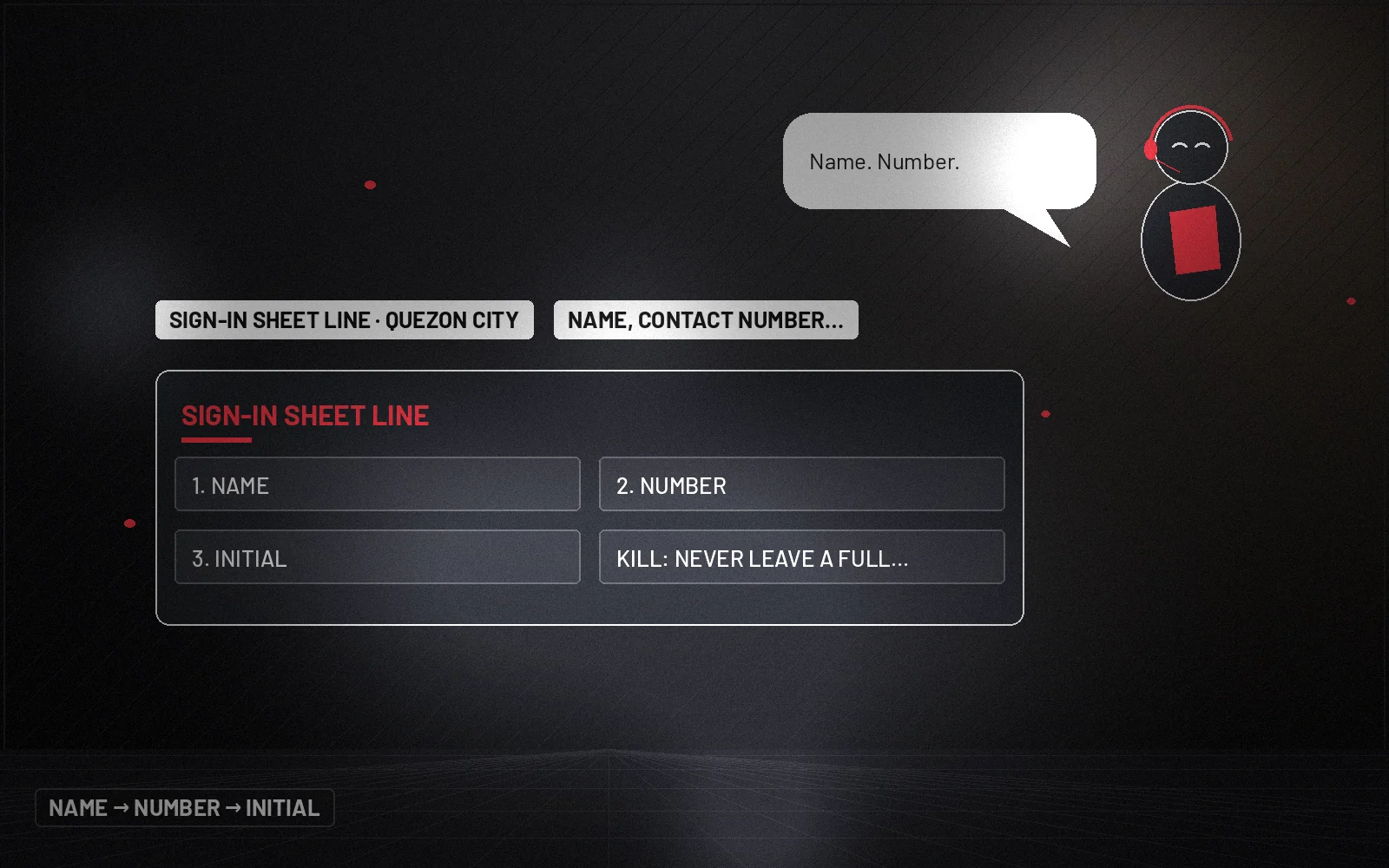
A sign-in sheet line English APAC has three parts: please write your name, your contact number and your initial, and here is what the sheet is for. The desk volunteer says it the same way to everyone, points to the right row, and keeps the clipboard facing the person signing.
Sign-in sheet line (illustrative):
“Hi, please sign in here: name, contact number and initial.”
“We use it to confirm attendance and contact you about your next shift.”
What should a sign-in sheet ask for?
Ask only for what you will use: usually name, contact number and an initial to confirm attendance. Every extra column slows the queue and raises questions. If you need more, such as emergency contacts for a field shift, collect it separately and privately, after counsel checks Data Privacy Act/PDPA obligations for your event.
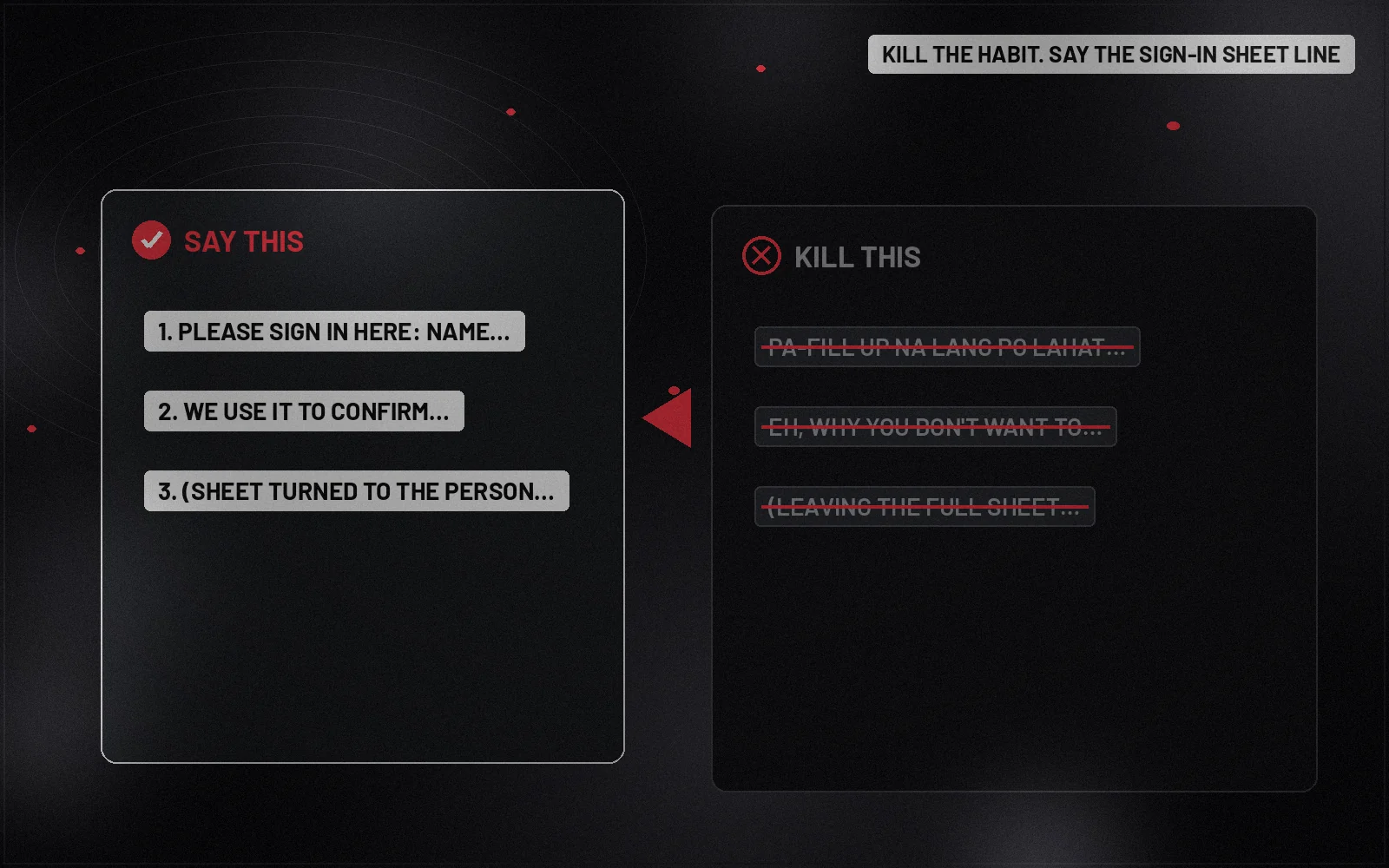
| Kill this | Say this (illustrative) | Why |
|---|---|---|
| Pa-fill up na lang po lahat ng columns. | Please sign in here: name, contact number and initial. | Three things only |
| Eh, why you don’t want to give address? Must one leh. | We use it to confirm attendance and contact you about your next shift. | Says what it is for |
| (leaving the full sheet face-up for the queue) | (sheet turned to the person signing) | Others’ details stay private |
| Sige, sulat na lang kahit saan. | Your row is here. Thank you. | Neat, one row each |
| Hindi ko alam saan mapupunta ‘yan. | The team lead keeps the sheet after the event. | Someone owns it |
How do I keep sign-in details private at the desk?
Turn the clipboard toward the person signing and cover completed rows with a blank sheet. Do not photograph the sheet on a personal phone or post it in a chat group. At the end of the shift, hand it to the named team lead, who stores it as the organiser has agreed.
What do I say if someone asks why we need their number?
Answer in one honest sentence: what the number is for and who keeps it. If they would rather not give it, offer another way to confirm attendance, such as an initial only. Never pressure someone into writing details down, and pass any further questions to the team lead.
How does this play out in PH and SG?
The three parts stay the same in both markets, but expectations about personal data differ. Use the desk notes below to adjust the sheet and the line, and have counsel confirm what the organiser may collect and keep in each market before printing anything.
Philippines desk. In the Philippines, volunteers often sign in as a group and may write for each other. Ask each person to write their own row, and say the line in plain event language, in English or Filipino.
Singapore and wider APAC desk. In Singapore, guests often ask what their details are for before writing them down. Keep the line in plain English, and keep campaign communications sign-ups on a separate form.
Paste-ready lock
Speakable lock (illustrative): “Hi, please sign in here with your name, contact number and initial, which we use to confirm attendance and contact you about your next shift.”
Monday field kit
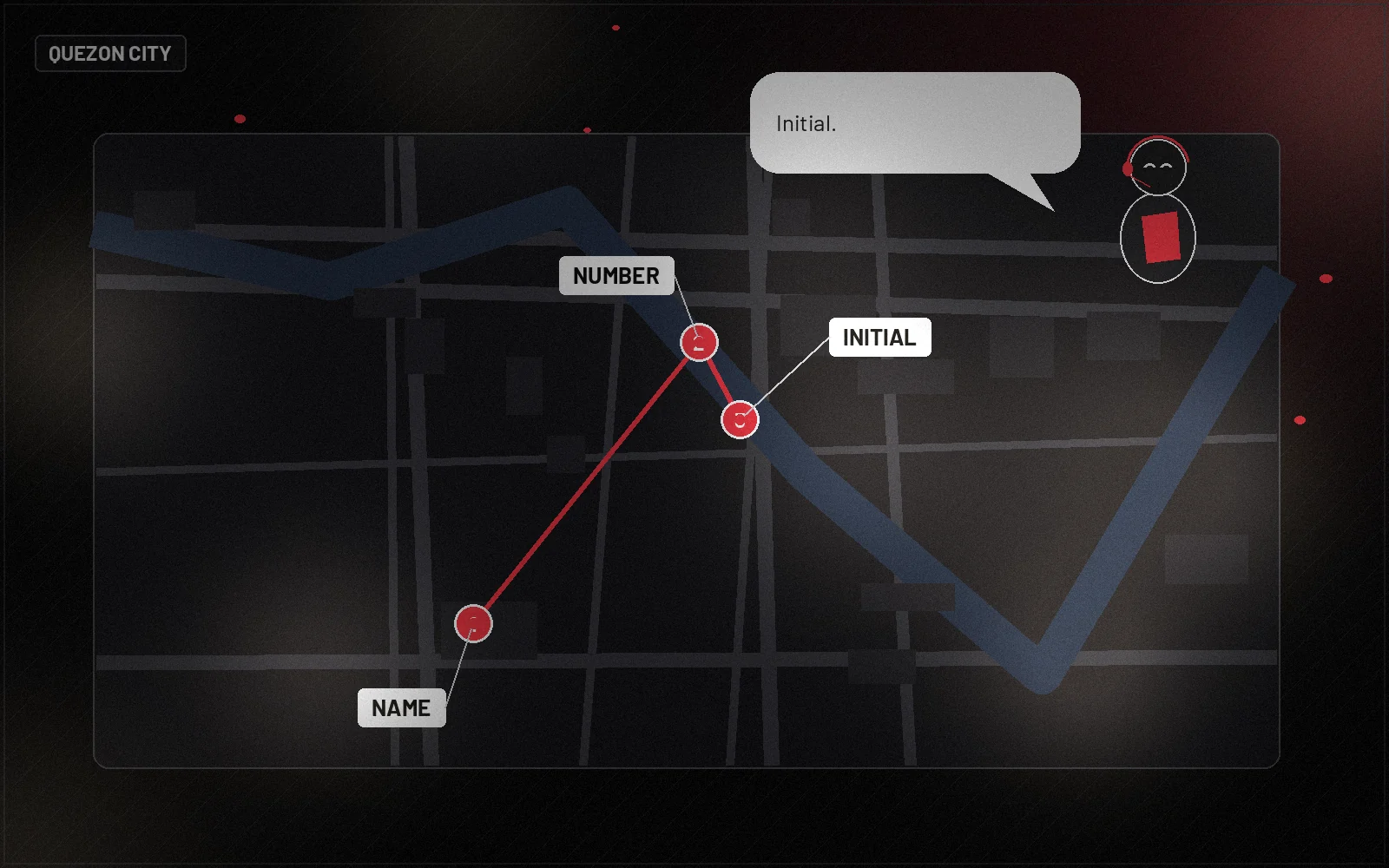
- Name, contact number, initial, and what the sheet is for.
- Only the columns you will use.
- Clipboard turned to the signer; completed rows covered.
- Sheet handed to a named team lead at the end of the shift.
- Kill rule: never leave a full sign-in sheet face-up or photograph it on a personal phone.
What to do this week
- Cut the sign-in sheet to three columns.
- Write the line and the purpose sentence on the desk card.
- Name the team lead who keeps the sheet.
- Make sure counsel checks Data Privacy Act/PDPA obligations.
FAQs
What is a sign-in sheet line English APAC?
A sign-in sheet line English APAC is the short desk line for attendance: name, contact number, initial, and what the sheet is for. The desk volunteer says it the same way to everyone.
What should a volunteer sign-in sheet ask for?
A volunteer sign-in sheet should ask for name, contact number and an initial only. Anything more should be collected separately after counsel checks the rules.
How do you keep sign-in sheet details private?
To keep sign-in sheet details private, turn the clipboard to the signer and cover completed rows. Hand the sheet to a named team lead at the end of the shift.
What if someone asks why we need their number?
If someone asks why we need their number, say what it is for and who keeps it. Offer another way to confirm attendance if they prefer.
Neuwark Communications builds event and campaign communications as part of our public affairs and crisis and rapid response work. More street-smart lines live in Insights.
Related: Check-in greeting English APAC · Volunteer shift confirm English APAC
Talk to us about your next event script.
Illustrative lines only. Communications craft, not legal advice.