
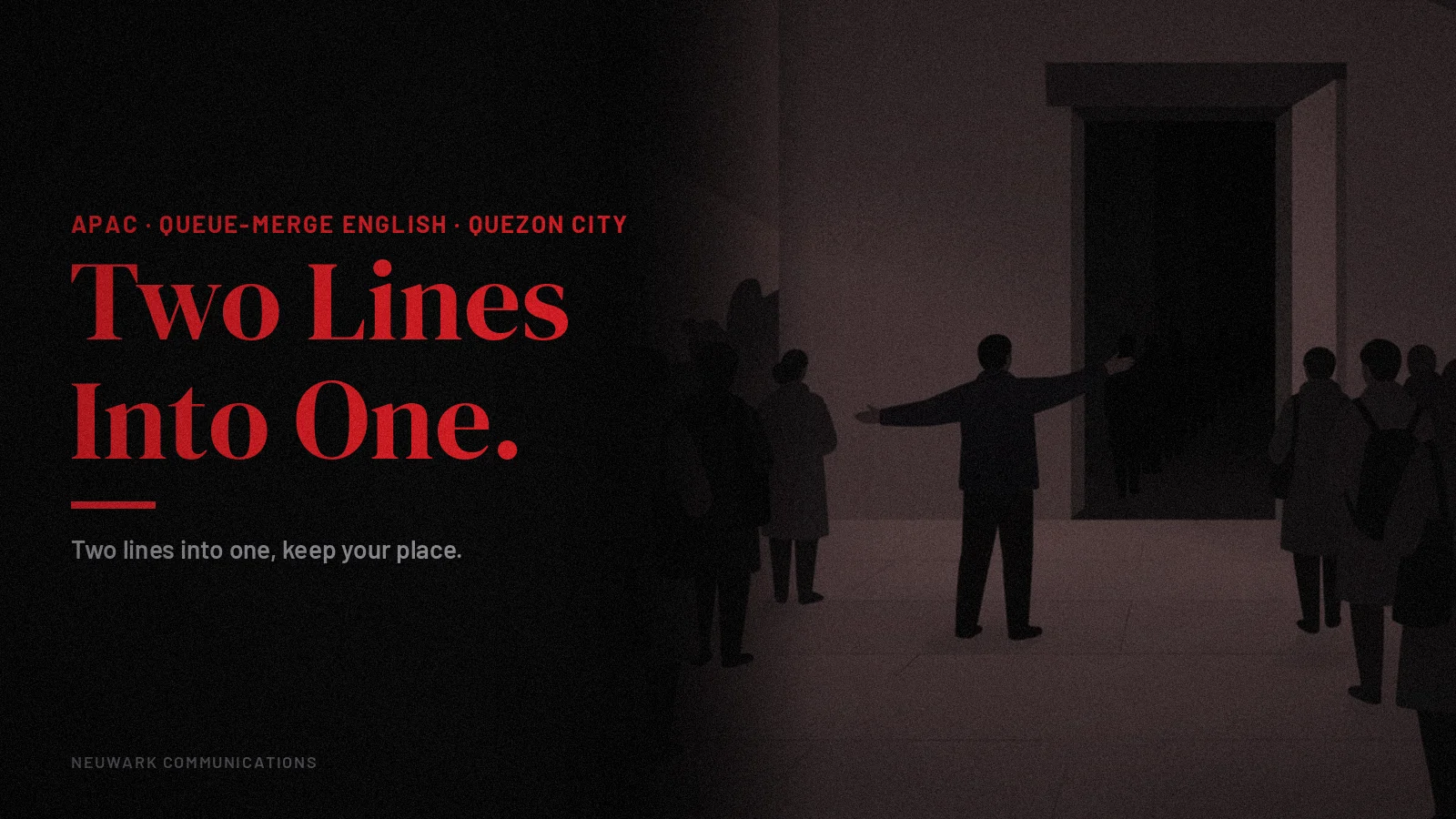
A forum entrance in Quezon City, ten minutes before doors. The registered queue and the walk-in queue meet at one gate, and both sides start edging forward at once.
Queue-merge line English APAC is the short marshal line at a merge point: two lines into one, one from each side, everyone keeps their place.
Street-smart APAC English: short sentences a tired operator can say out loud.
It is the marshal’s line at the merge point, not a PA update; for that, use our queue update announcement English APAC. It usually runs just before the doors open announcement English APAC.
Quick answer: A queue-merge line English APAC is what the marshal says where two queues become one: we are merging into one line, one from each side, and everyone keeps their place. Say it before tempers rise, show the alternate with your hands, and repeat it every few minutes while the merge runs.
What goes in a queue-merge line English APAC?
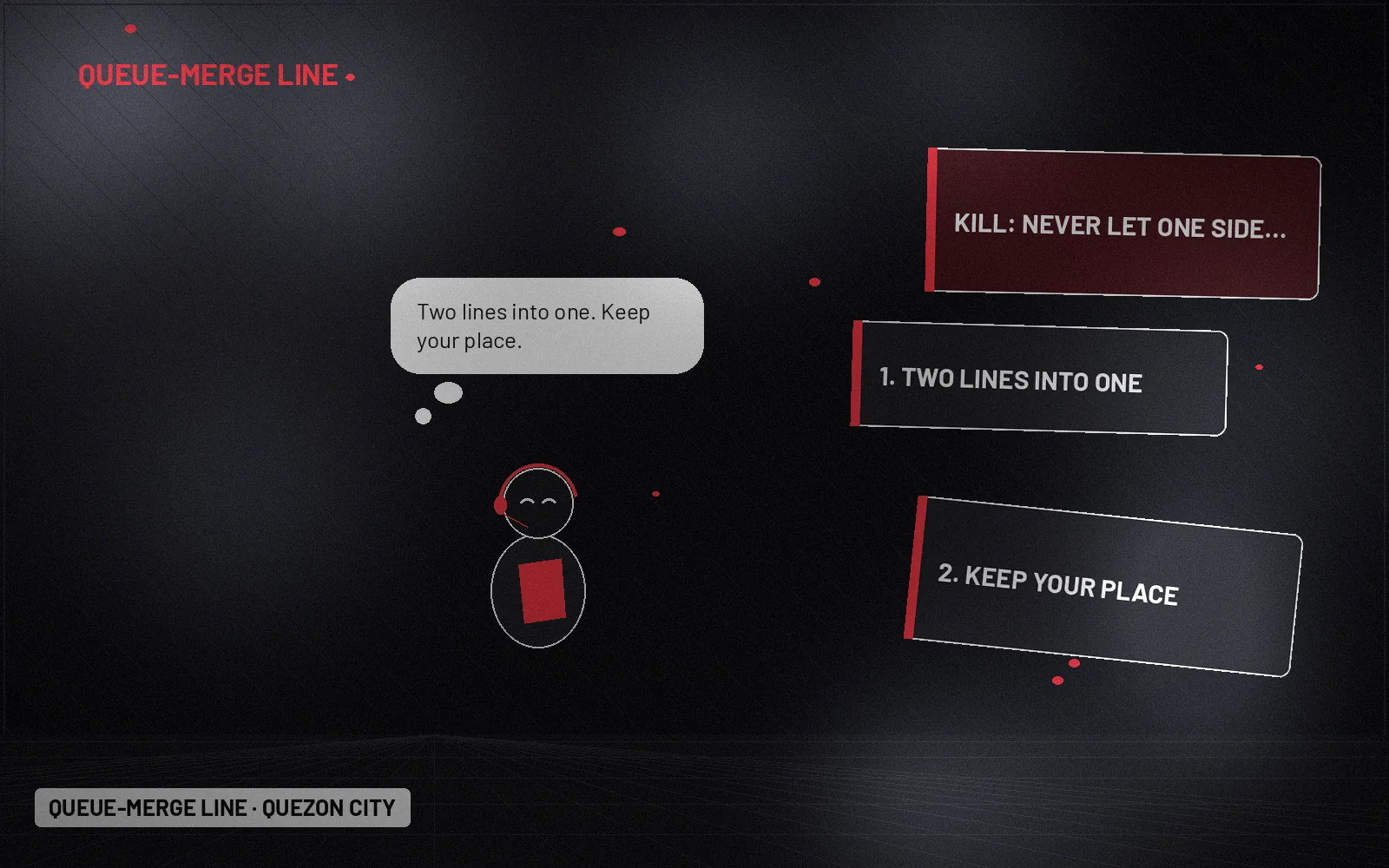
A queue-merge line English APAC has three parts: we are merging into one line, one from each side, and everyone keeps their place. The marshal says it at the merge point, in the same words each time, and backs it with a clear hand signal so both lines see the rule working.
Queue-merge line (illustrative):
“We’re merging into one line here.”
“One from this side, then one from that side.”
“Everyone keeps their place. Thank you for your patience.”
What do I say when two queues merge into one?
Tell both lines what is happening, how it works and that nobody loses their place. Then let your hands run it: one from the left, one from the right. Calm event language at the merge stops the edging and the arguments before they start, and keeps the marshal out of side-taking.
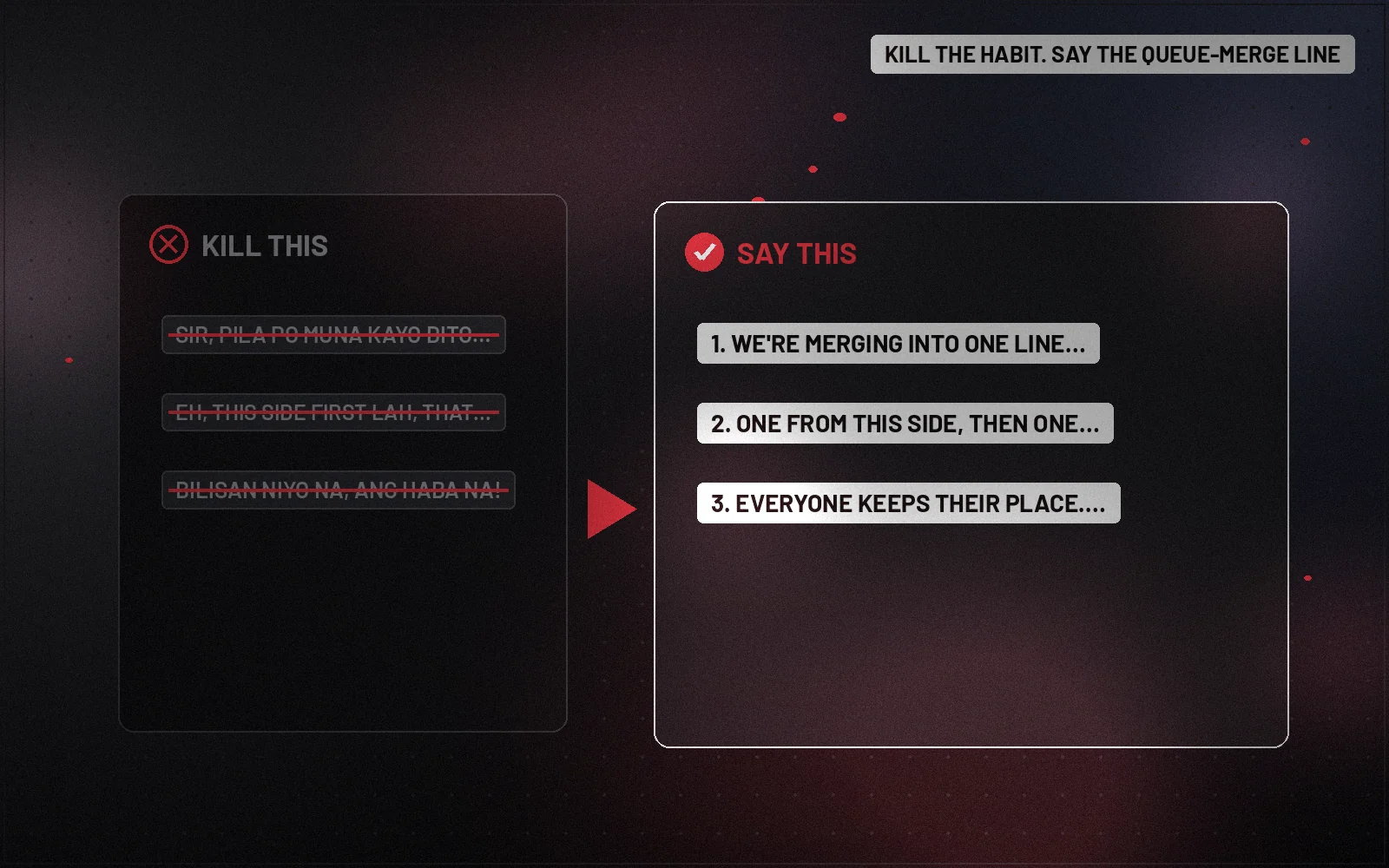
| Kill this | Say this (illustrative) | Why |
|---|---|---|
| Sir, pila po muna kayo dito ha, wag sumingit. | We’re merging into one line here. | Explains, does not accuse |
| Eh, this side first lah, that side wait. | One from this side, then one from that side. | Fair to both lines |
| Bilisan niyo na, ang haba na! | Everyone keeps their place. Thank you for your patience. | Calm over speed |
| (waving everyone through at once) | (alternate hand signal, one at a time) | The rule you can see |
| Bahala na kayo diyan. | I’ll stay here until the lines are through. | Someone owns the merge |
Where should the marshal stand at a queue merge?
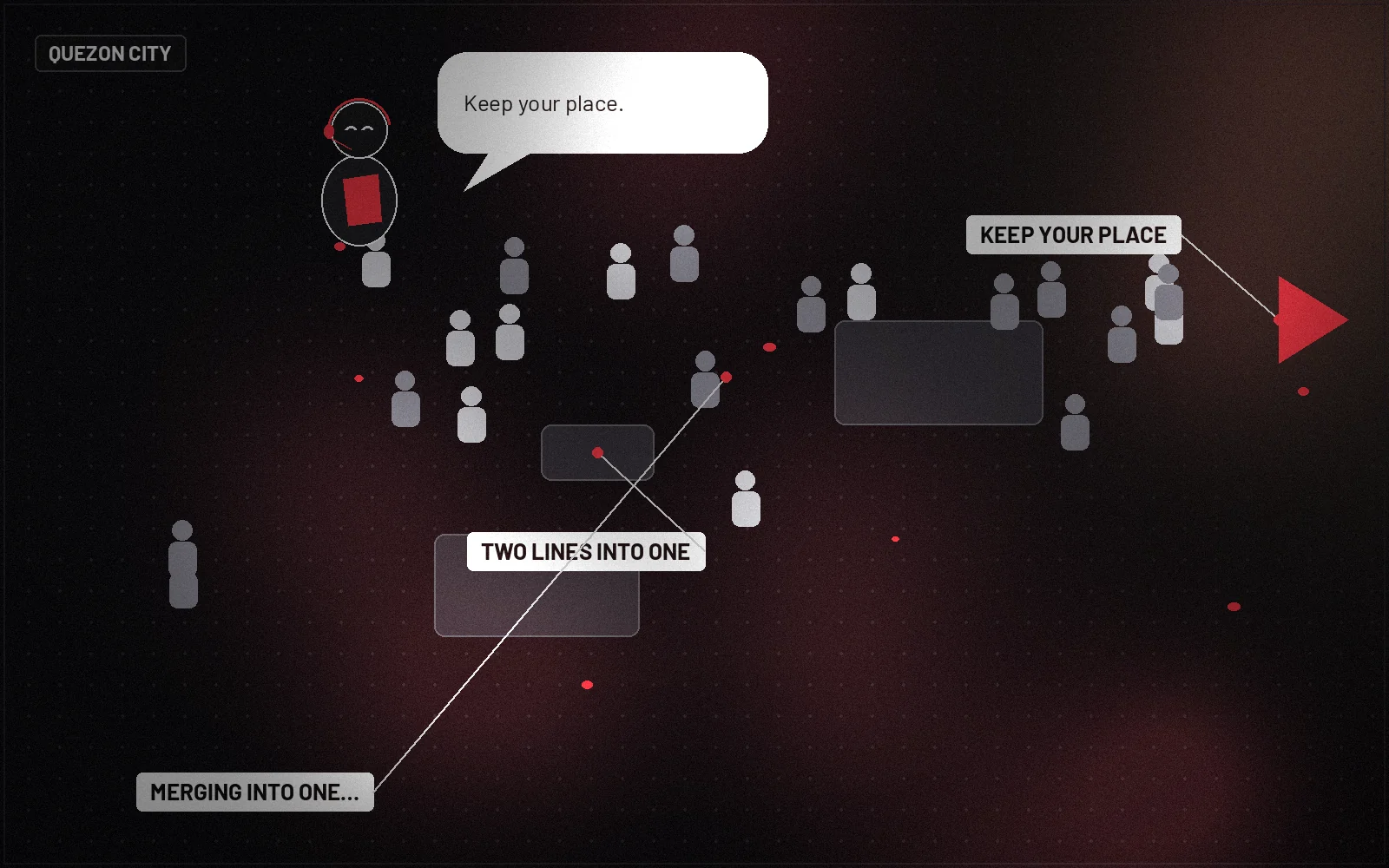
Stand right at the merge point, slightly ahead of both lines, where each line can see you. Use belt stanchions to shape two lanes into one, so the layout does half the work. Stay there until the lines clear, and radio the floor manager if either queue keeps growing.
What if someone pushes in at the merge?
Stay calm and use the rule, not blame. Say, “We’re going one from each side; you’re next after this guest,” and signal the order. If they refuse, call the floor lead rather than arguing. Most people accept a fair rule once they can see it applied to both lines equally.
How does this play out in PH and SG?
The three parts stay the same in both markets, but the queues behave differently. Use the desk notes below to adjust the language, the hand signals and the layout for Philippine and Singapore crowds, and agree the merge point with the venue before doors.
Philippines desk. In the Philippines, queues may include groups who want to stay together and elders who need a seat. Let groups merge as a unit, offer priority to those who need it, and say the line in English or Filipino.
Singapore and wider APAC desk. In Singapore, guests often expect a clear, orderly queue and accept a fair merge rule. Keep the line in plain English, use belts to mark the lanes, and keep campaign communications materials away from the merge point.
Paste-ready lock
Speakable lock (illustrative): “We’re merging into one line here, one from this side and then one from that side, and everyone keeps their place.”
Monday field kit
- Merging into one line, one from each side, everyone keeps their place.
- Belt stanchions shape two lanes into one.
- Marshal stands at the merge point, visible to both lines.
- A floor lead on radio for push-ins and long queues.
- Kill rule: never let one side through in a block; alternate one from each side.
What to do this week
- Mark the merge point on the floor plan.
- Order belts to shape two lanes into one.
- Write the line on the marshal’s card.
- Agree the radio call for a growing queue.
FAQs
What is a queue-merge line English APAC?
A queue-merge line English APAC is the short marshal line at a merge point: two lines into one, one from each side, everyone keeps their place. The marshal says it in the same words each time.
What should a marshal say when two queues merge?
When two queues merge, the marshal should say they are merging into one line, one from each side. The marshal should add that everyone keeps their place.
Where should the marshal stand at a queue merge?
The marshal should stand at the queue merge point, slightly ahead of both lines. Belt stanchions help shape the two lanes into one.
What if someone pushes in at the merge?
If someone pushes in at the merge, repeat the one-from-each-side rule and tell them when they are next. Call the floor lead rather than arguing.
Neuwark Communications builds event and campaign communications as part of our public affairs and crisis and rapid response work. More street-smart lines live in Insights.
Related: Queue update announcement English APAC · Doors open announcement English APAC
Talk to us about your next event script.
Illustrative lines only. Communications craft, not legal advice.