
A town hall in a Cebu city gym. The guest speaker talks for four minutes without stopping. The interpreter, seated at the edge of the stage, has kept only the first line.
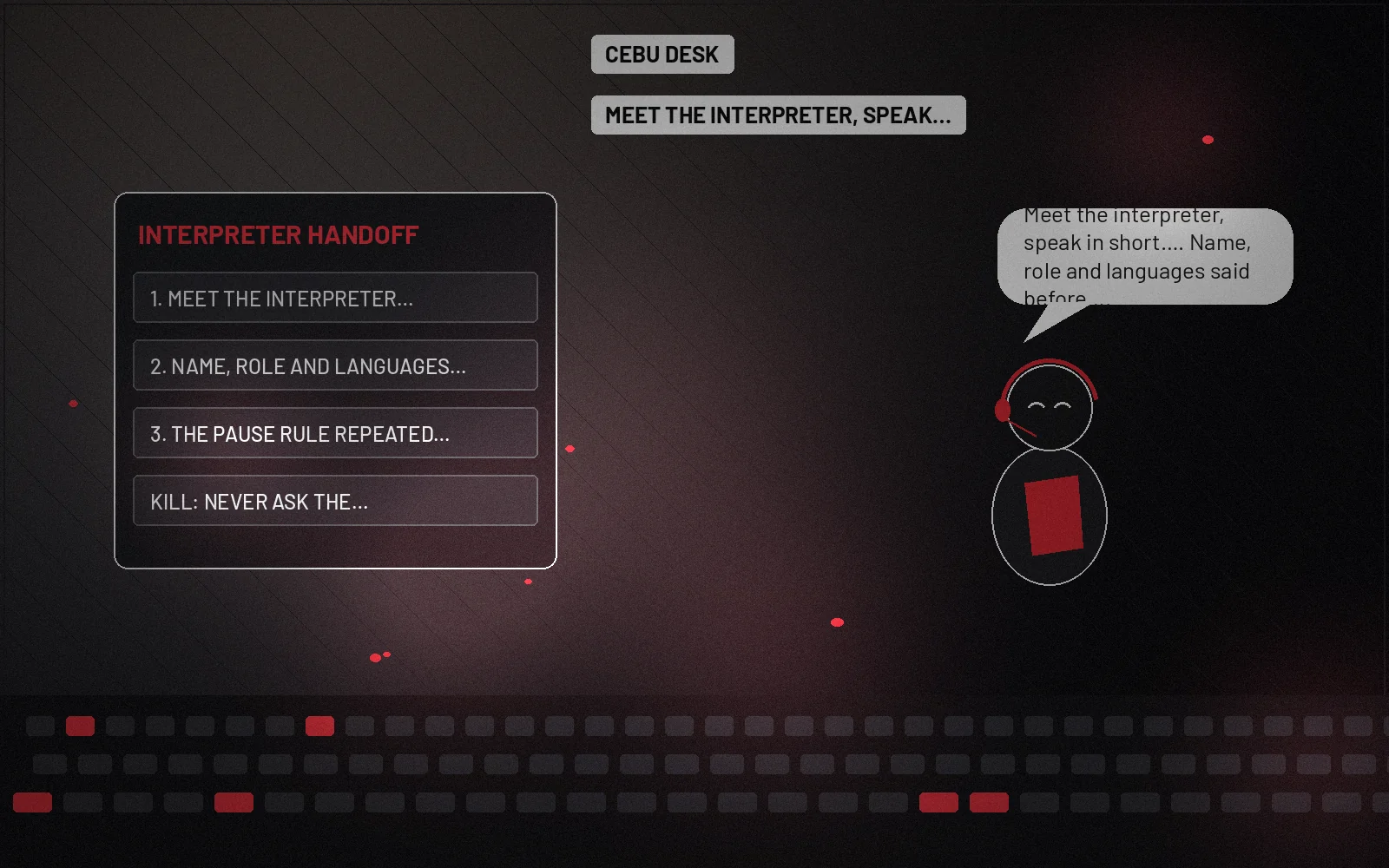
Interpreter handoff line English APAC is the short host line on stage: meet the interpreter, speak in short chunks, pause for translation.
Street-smart APAC English: short sentences a tired operator can say out loud.
It comes after our translator brief English APAC, which prepares the interpreter backstage. This one is said out loud, on stage, so speakers and the audience know the rule.
Quick answer: An interpreter handoff line English APAC is the host’s short introduction on stage: who the interpreter is, which language they will interpret, and the pause rule for speakers and questions. Say it before the first speaker, repeat it before Q&A, and show the pause with your own speaking so the room follows it.
What goes in an interpreter handoff line English APAC?
Three parts. Meet the interpreter, speak in short chunks, pause for translation.
Interpreter handoff line (illustrative):
“Today our interpreter, Ms Reyes, will interpret between English and Cebuano.”
“Speakers, please talk in short chunks, then pause so she can interpret.”
“In Q&A, ask your question in either language. She will interpret it for the panel.”
Say the interpreter’s name and role. It tells the room to wait for them, and it treats them as part of the programme, not a side service.
How do I introduce an interpreter at an event?
Name them, name the languages, and set the rule, in that order. Then hand over with a short sentence and a pause of your own, so the room hears the rhythm before the first speaker starts.
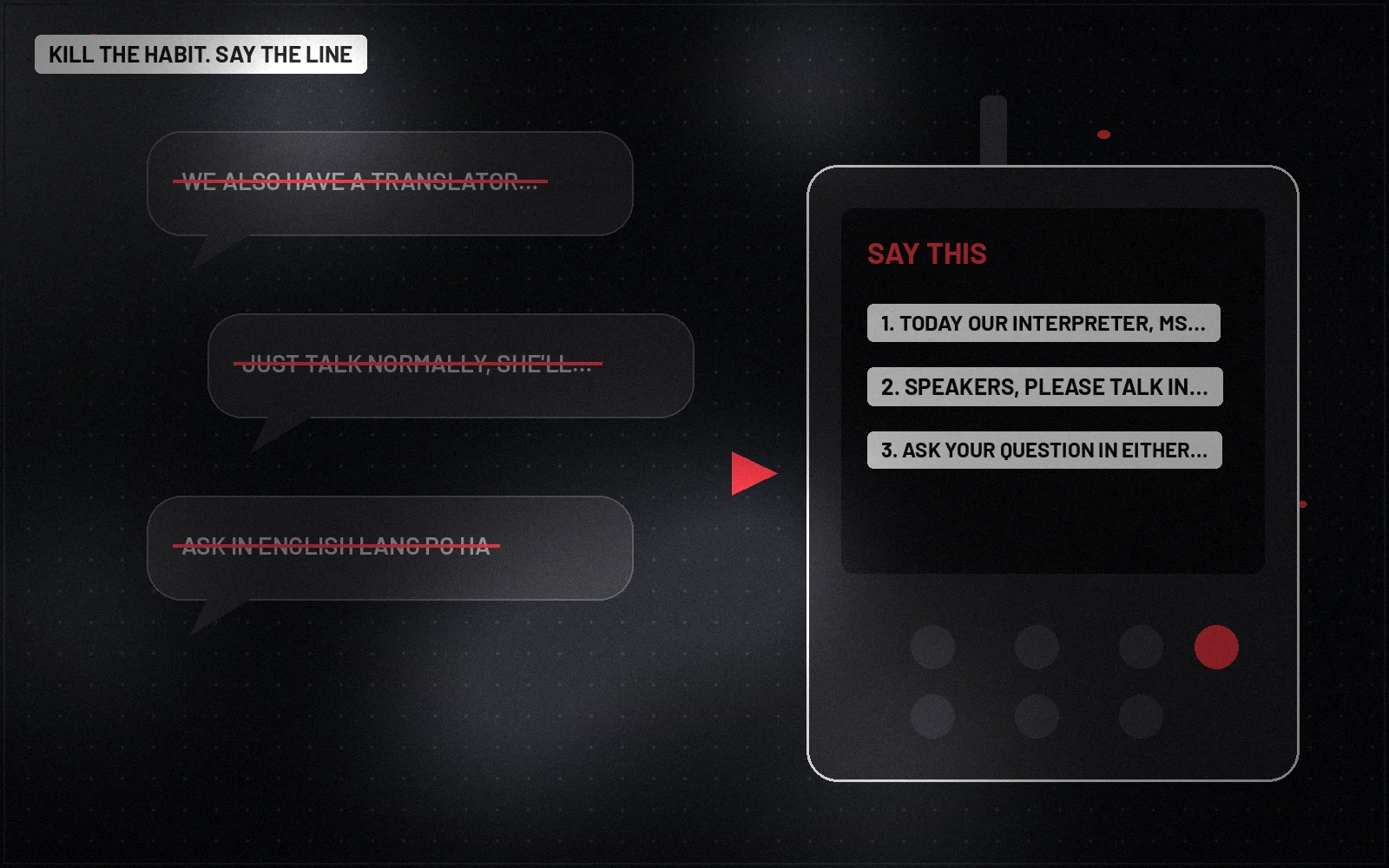
| Kill this | Say this (illustrative) | Why |
|---|---|---|
| We also have a translator there on the side. | Today our interpreter, Ms Reyes, will interpret between English and Cebuano. | Name, role, languages |
| Just talk normally, she’ll catch up. | Speakers, please talk in short chunks, then pause. | The rule, said once |
| Ask in English lang po ha. | Ask your question in either language. | Nobody is shut out |
| (host talking over the interpretation) | (host pauses after each short chunk) | Show the rule |
| Can she go faster? | Thank you. Let’s give her a moment to finish. | Respect the handoff |
How long should a speaker talk before pausing for the interpreter?
A sentence or two, then pause. Agree the chunk length with the interpreter in the brief, and tell speakers before they go on. If a speaker forgets, the host can step in gently: “Let’s pause there so the interpretation can catch up.”
How do I run Q&A with an interpreter?
Repeat the pause rule before the first question. Ask people to say their question in short parts, and give the interpreter a mic of their own. The panel waits for the interpretation before answering. Keep one question per person so the interpreter can keep up.
What should the interpreter have on stage?
A seat with a clear view of the speaker, a working microphone, water and a copy of the running order. If the interpretation is through headsets, tell the audience where to collect them and which channel to use before the session starts.
Check the setup at the tech run, not five minutes before doors. Sit in the interpreter’s chair, listen through their headset, and make sure they can see the speaker’s face and slides. Agree a small hand signal they can give the host if a speaker needs to slow down.
How does this play out in PH and SG?
Same three parts. Different languages.
Philippines desk. At Philippine town halls, interpretation may be between English and Filipino or a regional language such as Cebuano or Ilocano. Name the languages clearly, and let people ask questions in any of them. Put the interpreter’s name in the programme and in the Viber or WhatsApp event notice.
Singapore and wider APAC desk. At Singapore community or regional forums, interpretation may be between English and Mandarin, Malay or Tamil, sometimes by headset. Keep the host line in plain English, say which channel carries which language, and repeat the pause rule before Q&A.
Paste-ready lock
Speakable lock (illustrative): “Today our interpreter, Ms Reyes, will interpret between English and Cebuano, so speakers, please talk in short chunks and then pause for her.”
Monday field kit
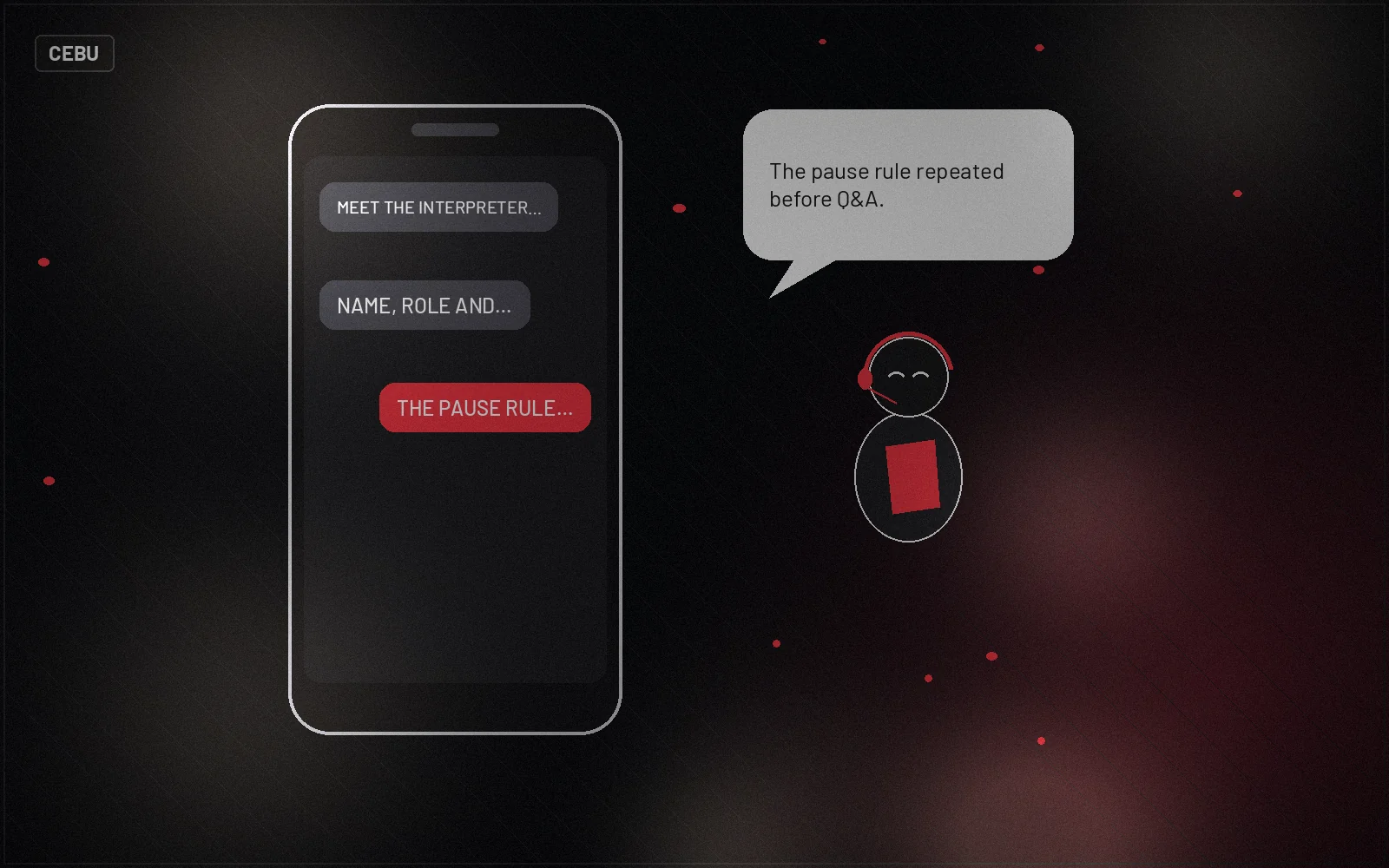
- Meet the interpreter, speak in short chunks, pause for translation.
- Name, role and languages said before the first speaker.
- The pause rule repeated before Q&A.
- Interpreter has a seat, a mic and a clear view of the speaker.
- Kill rule: never ask the interpreter to speed up on stage; slow the speaker down instead.
What to do this week
- Agree the chunk length with the interpreter.
- Write the handoff line into the host script.
- Brief speakers on the pause rule before they go on.
- Check the interpreter’s mic and seat at the tech run.
FAQs
What is an interpreter handoff line English APAC?
It is the short host line on stage: meet the interpreter, speak in short chunks, pause for translation. The host says it before the first speaker.
How do you introduce an interpreter on stage?
Say the interpreter’s name, the languages they will interpret and the pause rule. Then pause yourself, so the room hears the rhythm.
How do you run Q&A with interpretation?
Repeat the pause rule before questions and let people ask in either language. The panel waits for the interpretation before answering.
Neuwark Communications plans event and field messaging as part of our services, including Strategy and Messaging for host scripts and multilingual events. Before the event, use the translator brief English APAC. Interpretation that keeps falling behind? Talk to us at Contact. More language companions live in Insights.
Related: Translator brief English APAC
Illustrative lines only. Communications craft, not legal advice.