
Speaker swap notice English APAC is the short announcement for a change of speaker: who is speaking now, on what, and a warm welcome.
Name the new speaker, keep the topic, and never explain why the first speaker is not there.
A policy forum in a Singapore hotel. The emcee steps up and says, “Unfortunately our speaker cannot make it, something came up, so sorry, so we have a replacement.” The replacement walks on to polite, puzzled silence.
Street-smart APAC English: short sentences a tired operator can say out loud.
It starts in the wings, with our green room call English APAC, and it changes the running order in our run-of-show cue English APAC.
Quick answer: A speaker swap notice English APAC tells the room who is speaking now, on what topic, and welcomes them warmly, with no apology spiral and no reason given. Update the running order, the emcee script and the screen first, then say the swap once, plainly, as if it were the plan all along.
What goes in a speaker swap notice English APAC?
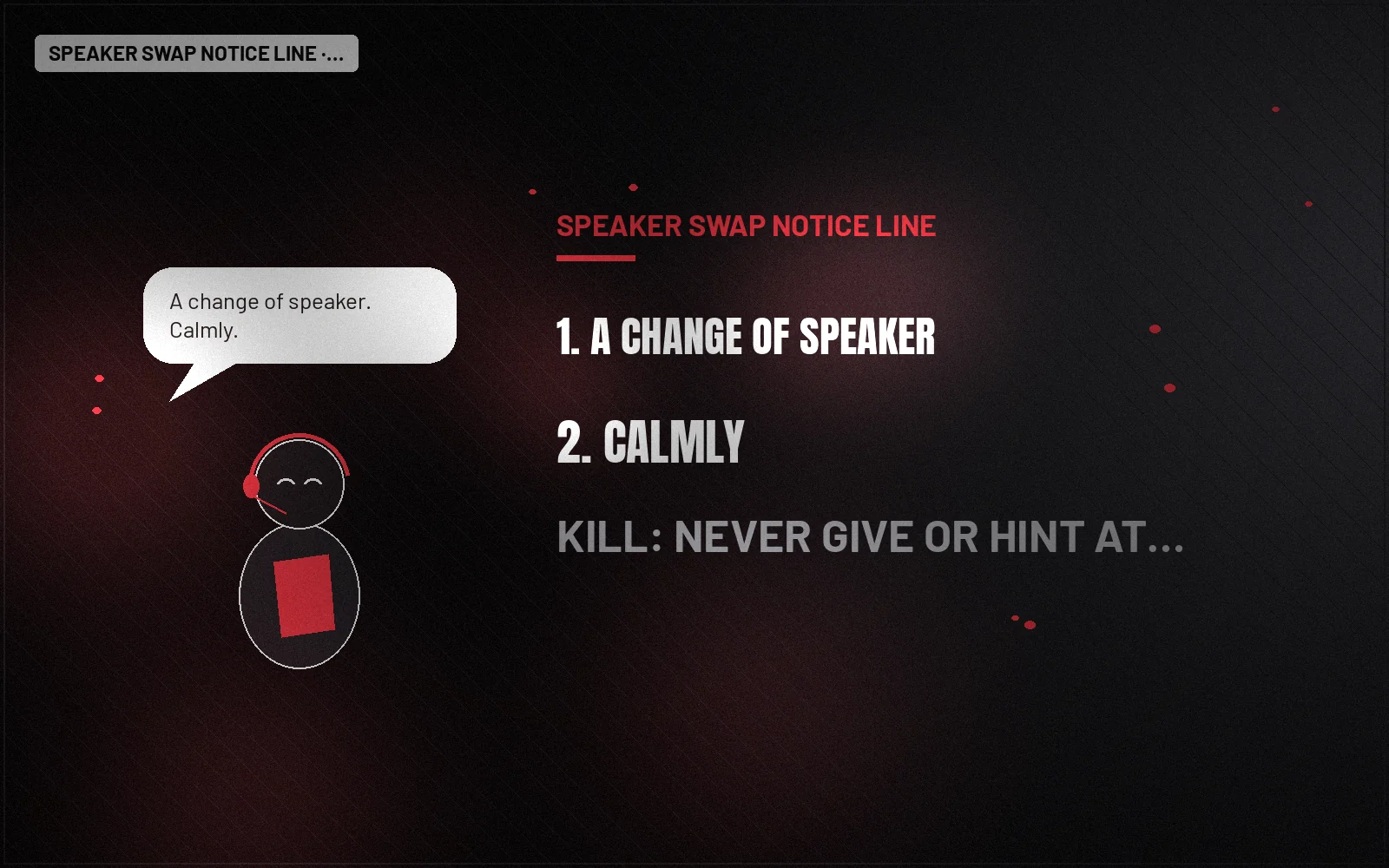
Three parts. Who is speaking now, on what, a warm welcome.
Speaker swap notice (illustrative):
“A change to our programme: speaking for the ministry this morning is Ms Lim, director of planning.”
“She will cover the same topic, the transport plan for next year.”
“Please welcome Ms Lim.”
That is the whole notice. The room wants to know who is on stage and whether the topic changed.
Why not explain why the speaker changed?
Because any reason you give becomes the story. “Something came up” invites guesses. The original speaker’s reasons are theirs to share, not yours. And a long apology makes the new speaker look like second prize.
If the original speaker’s office has issued a short line, the emcee can read it word for word. Otherwise, say nothing about the reason.
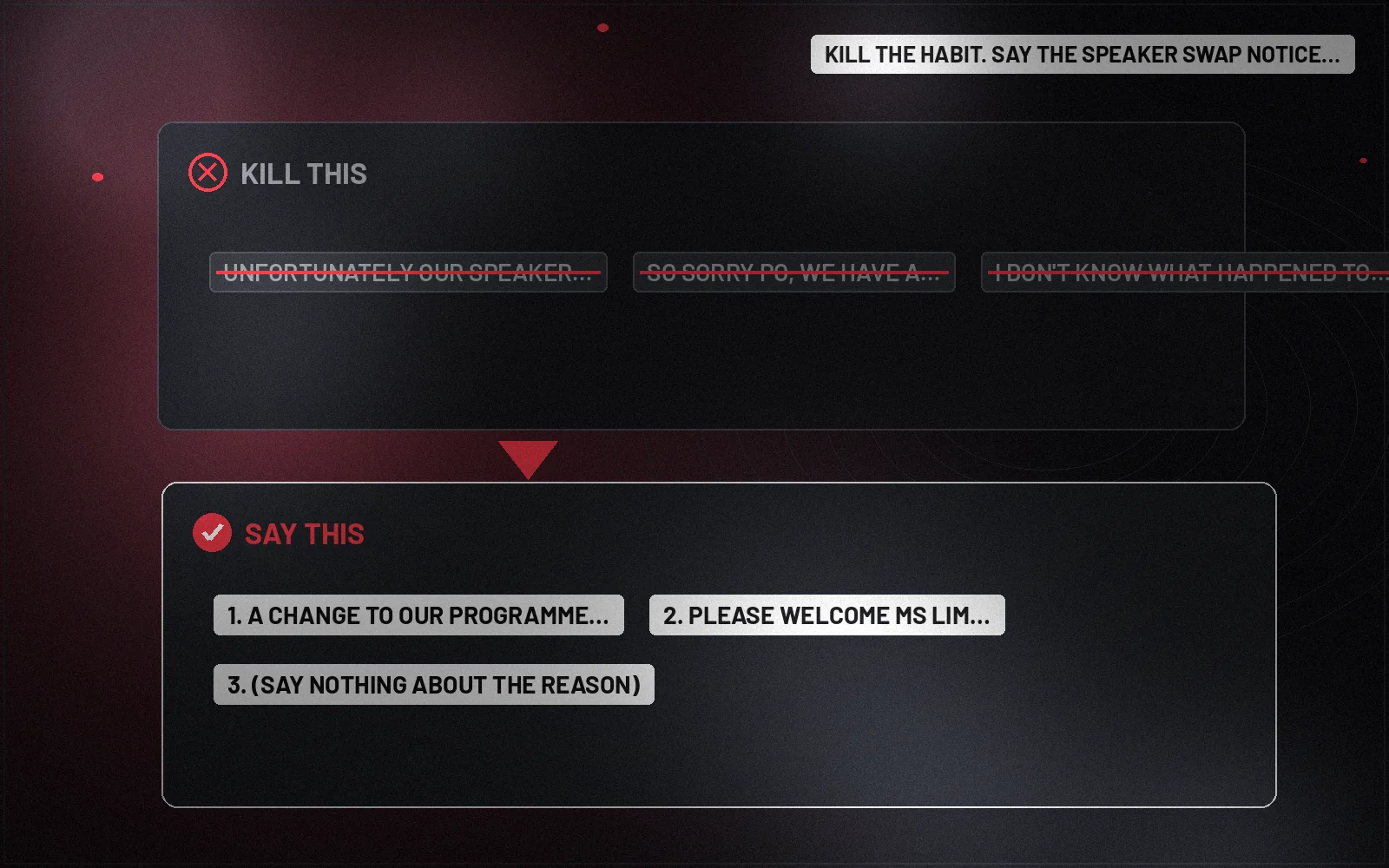
| Kill this | Say this (illustrative) | Why |
|---|---|---|
| Unfortunately our speaker can’t make it, something came up. | A change to our programme: speaking this morning is Ms Lim. | No reason, no guessing |
| So sorry po, we have a replacement. | Please welcome Ms Lim, director of planning. | She is the speaker, not a stand-in |
| I don’t know what happened to him. | (say nothing about the reason) | Not yours to explain |
| The topic might be a bit different. | She will cover the same topic, the transport plan. | Tells the room what to expect |
| (old name still on the screen) | (new name on the screen before the notice) | Screen and voice agree |
What has to change before the emcee speaks?
The running order, the emcee’s script and the screen. Change them in that order, and confirm each one with the stage manager. A notice that names the new speaker while the old photo is still on the screen undoes the calm.
Check the new speaker’s name and title with them directly, in person if you can. Ask how they pronounce their name.
What if the swap happens after the programme was printed?
Say it once at the start of the session and once just before the speaker. Do not reprint. If you have a digital programme or an event chat, update it with one plain line: “Change of speaker: Ms Lim, director of planning, will speak at 10:30.” No reason, no apology.
What if someone in the room asks why?
The emcee or press officer says, “We are glad to have Ms Lim with us today,” and moves on. If a reporter presses, the press officer says the organisers have nothing further and offers to pass the question to the speaker’s office.
How does this play out in PH and SG?
Same three parts. Different stages.
Philippines desk. At a Philippine forum, an official may send a deputy at short notice, and the audience may expect the official. Name the deputy’s role clearly, “speaking on behalf of the mayor,” and give their full title. Post the change in the Viber or WhatsApp group as a single line.
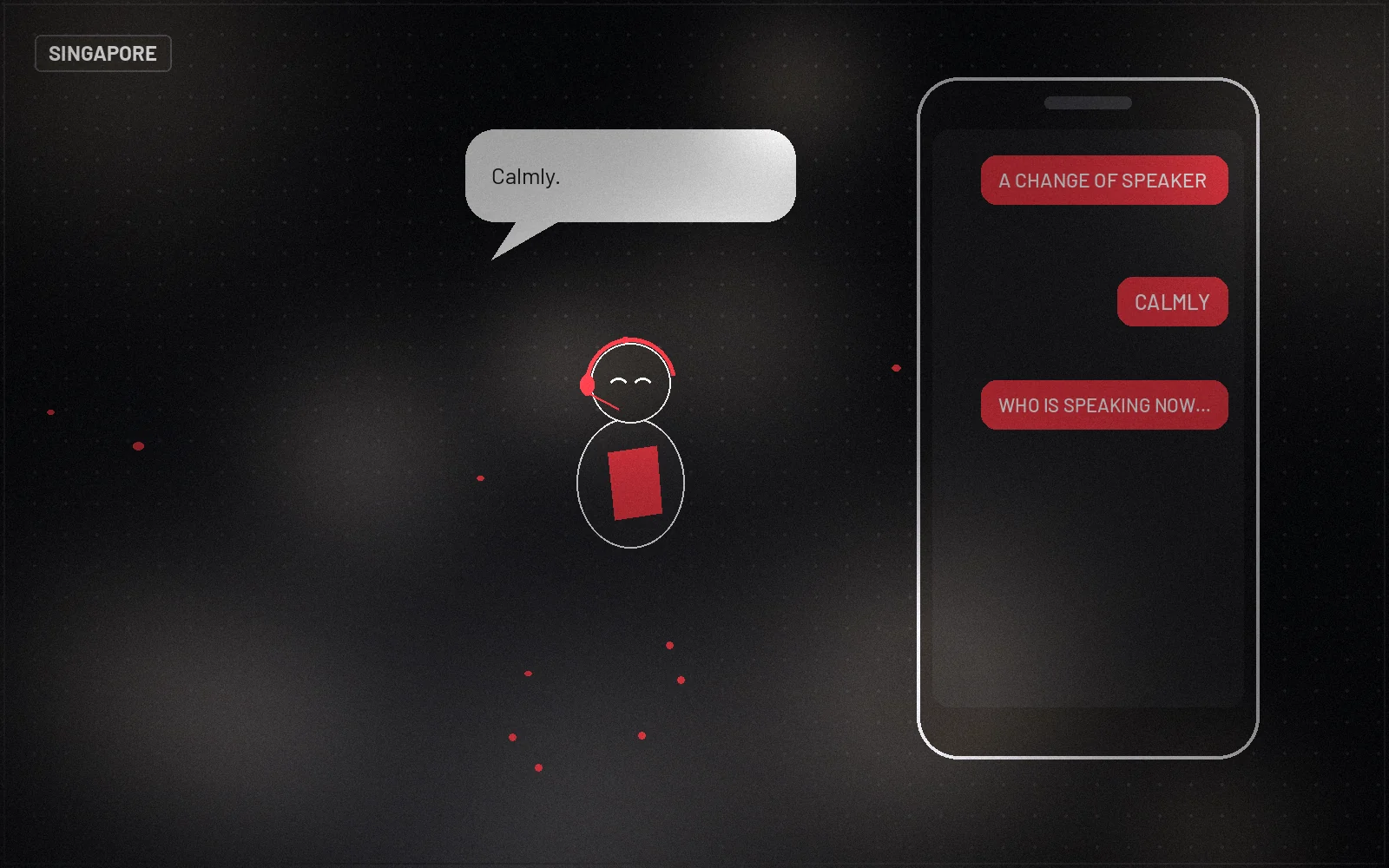
Singapore and wider APAC desk. At a Suntec or Marina Bay conference, a sponsor or ministry may swap speakers late. Keep the notice in plain English, check the new speaker’s title for the screen, and keep the session time unchanged where you can.
Paste-ready lock
Speakable lock (illustrative): “A change to our programme: speaking this morning on the transport plan is Ms Lim, director of planning, so please welcome Ms Lim.”
Monday field kit
- Who is speaking now, on what, a warm welcome.
- Running order, script and screen changed before the notice.
- New speaker’s name, title and pronunciation confirmed in person.
- One plain line in the digital programme or event chat.
- Kill rule: never give or hint at a reason for the swap; it is not yours to tell.
What to do this week
- Write a blank swap notice into the emcee script.
- Agree who approves a late change of speaker.
- Ask each speaker’s office for a named backup.
- Prepare a placeholder slide for the screen.
FAQs
What is a speaker swap notice English APAC?
It is the short announcement for a change of speaker: who is speaking now, on what, and a warm welcome. It gives no reason for the change.
How do you announce a replacement speaker?
Name the new speaker and their title, confirm the topic, and welcome them warmly. Update the screen and the script before you say it.
Should you explain why the original speaker is absent?
No, because any reason becomes the story and may not be yours to share. Only read a line the speaker’s office has approved, word for word.
Neuwark Communications plans event and field messaging as part of our services, including Strategy and Messaging for emcee scripts and programme changes. Last-minute speaker changes turning into apologies? Talk to us at Contact. More language companions live in Insights.
Illustrative lines only. Communications craft, not legal advice; counsel checks election-period and platform rules.
Related: Green room call English APAC · Run-of-show cue English APAC