

The phone rings out. Beep. The volunteer panics and talks for a full minute about the campaign, the event and the traffic.
The number at the end is too fast to write down. Nobody calls back.
Voicemail drop English APAC is the short scripted message a caller leaves when nobody picks up: who is calling, why, and one way to call back, in about twenty seconds.
Street-smart APAC English: short sentences a tired operator can say out loud.
It is the outgoing twin of our hotline greeting English APAC: the greeting answers incoming calls, the voicemail drop covers outgoing calls nobody picked up. For reporters, use the press holding line English APAC instead.
What goes in a voicemail drop English APAC?
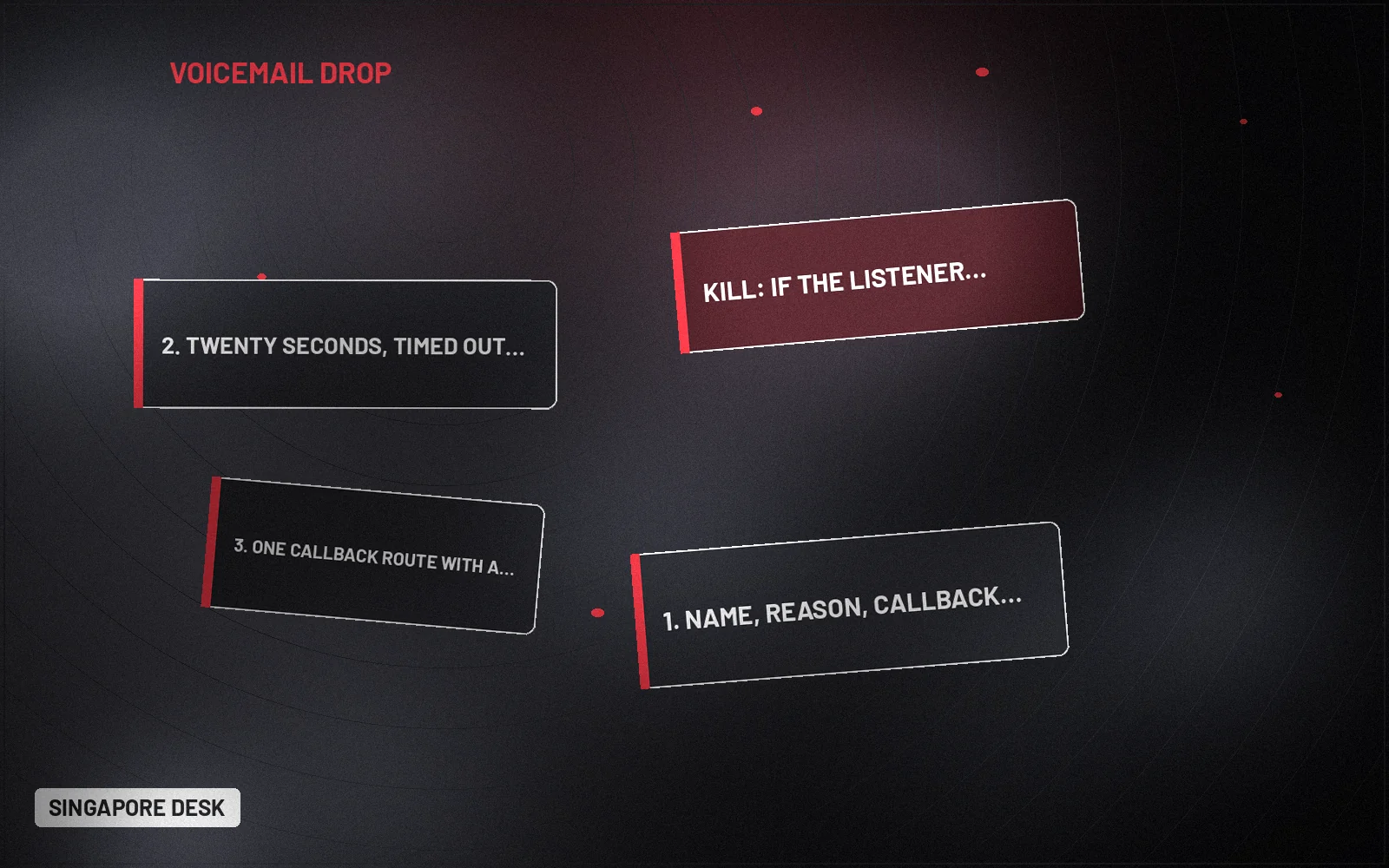
Name, reason, callback. Then your name again. That is the whole message.
Voicemail (illustrative):
“Hi, this is Jo from Riverside Neighbours Network.”
“I’m calling about Saturday’s cleanup. Nothing urgent.”
“Call or text me back on this number. Again, this is Jo.”
“This number” works only if your caller ID shows a real line that someone answers. If not, say the number slowly, twice.
Why only twenty seconds?
Because people check voicemail between other things, and long messages get skipped. Twenty seconds is a target, not a rule.
Time your script out loud. If it runs long, cut the reason to one clause. The callback route is the part you never cut.
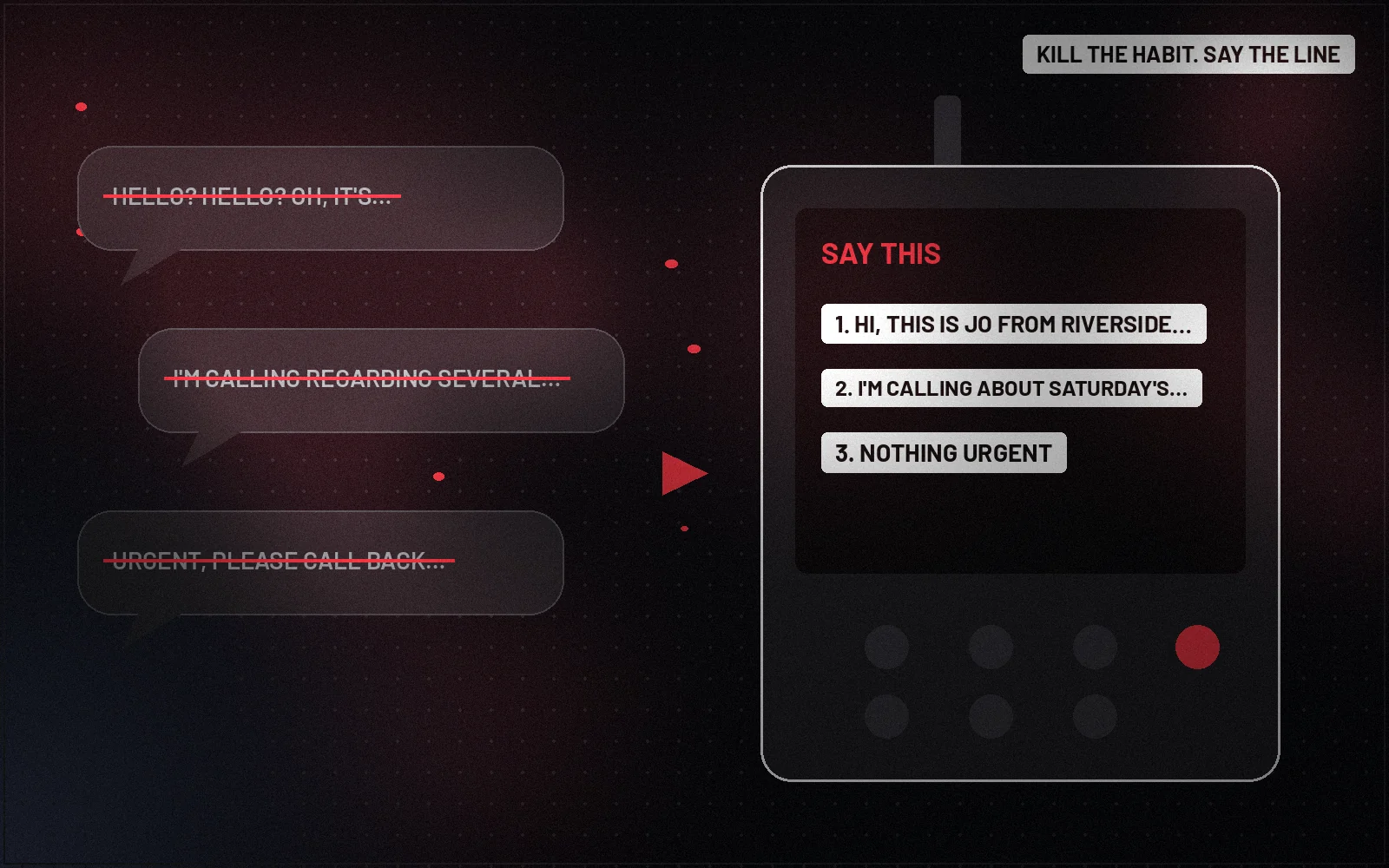
| Kill this | Say this (illustrative) | Why |
|---|---|---|
| Hello? Hello? Oh, it’s voicemail… | Hi, this is Jo from Riverside Neighbours Network. | Start clean |
| I’m calling regarding several matters | I’m calling about Saturday’s cleanup. | One reason |
| URGENT, please call back immediately! | Nothing urgent. | No false alarm |
| A phone number rattled off once, fast | Call me back on this number. | A route they can use |
| No name at the end | Again, this is Jo. | They remember who called |
Should the message be live or pre-recorded?
Live is safer and warmer. A pre-recorded drop saves time, but counsel decides whether and how you can use one in your market.
Most teams can read the script live from the call sheet so each message sounds human. If you are considering a recorded version, ask counsel first about consent, caller ID and automated-calling rules. Do not assume another market’s rules apply.
What should the callback route be?
One route the team actually answers. A staffed number during stated hours, or an SMS line someone reads.
Do not offer three routes. Pick the one with a person behind it. If the callback hits another voicemail, your next message will be ignored.
How does this play out in PH and SG?
Same three parts. Different phone habits.
Philippines desk. Some contacts never check voicemail and reply by text instead. Pair the voicemail with a short SMS or chat message from the same number, same name, same reason. Use the language you normally use with that contact, often Taglish.
Singapore and wider APAC desk. Calls from unknown numbers can be mistaken for scams. Say the organisation name clearly, never ask for personal details in a voicemail, and offer a route the person can verify, such as your official website or hotline.
Paste-ready lock
Two lines to tape to the call sheet. Replace the name and reason.
Paste-ready lock (illustrative):
“Hi, this is Jo from the field team, calling about Saturday. Nothing urgent.”
“Call or text me back on this number. Again, this is Jo.”
Monday field kit
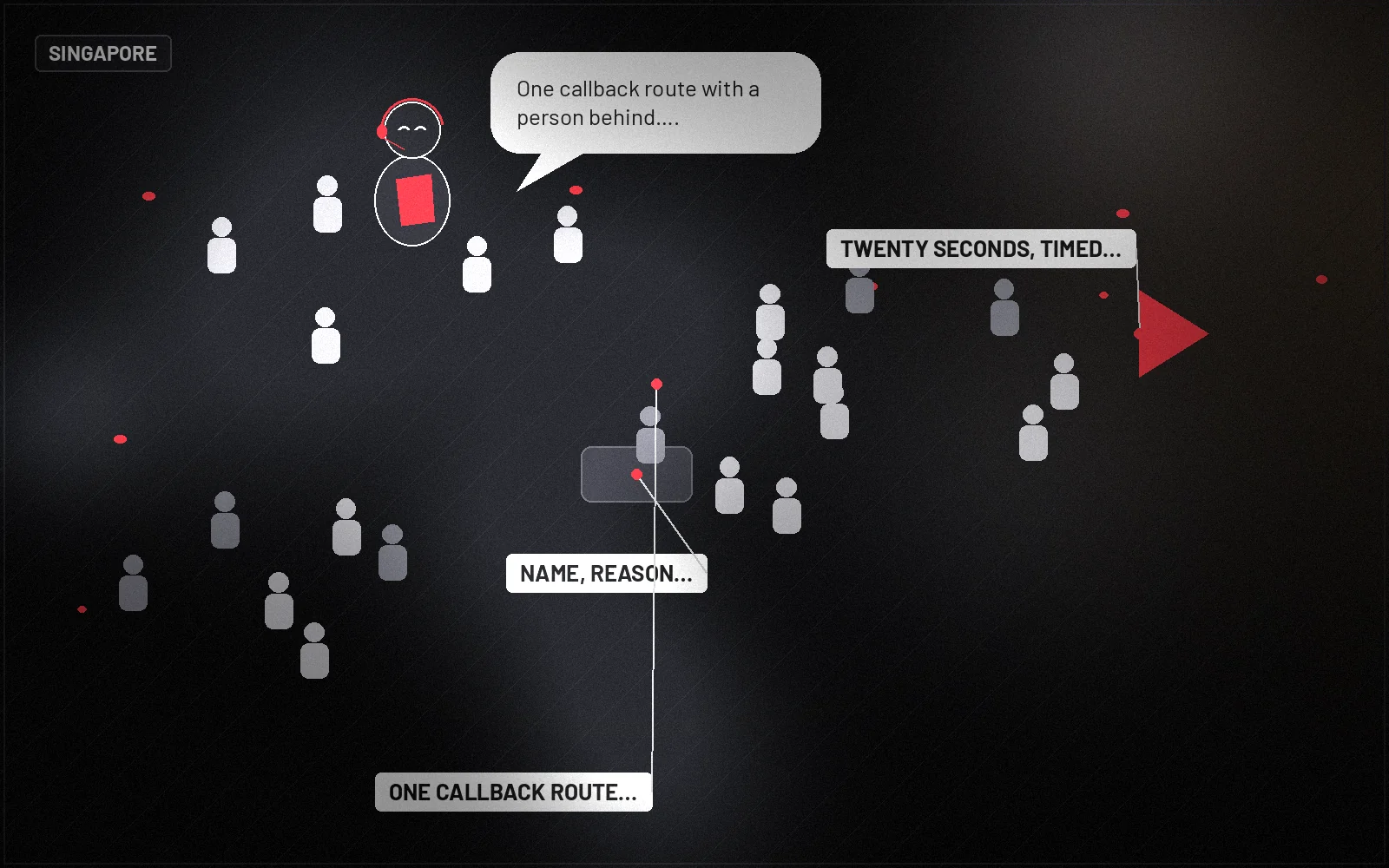
- Name, reason, callback, name again.
- Twenty seconds, timed out loud.
- One callback route with a person behind it.
- Never ask for personal details in a voicemail.
- Kill rule: if the listener cannot note how to reach you on one hearing, say it again, slower.
What to do this week
- Write your voicemail script in four short lines.
- Time it out loud and cut it to twenty seconds.
- Check the callback number reaches a person during stated hours.
- Write a matching SMS for contacts who do not check voicemail.
Kill rule: if a callback reaches another voicemail, fix the route before the next call session.
FAQs
What is voicemail drop English APAC?
Voicemail drop English APAC is the short scripted message a caller leaves when nobody picks up: who is calling, why, and one way to call back, in about twenty seconds. It works because short messages get heard to the end. It is not a pitch or a press statement.
Should we leave a voicemail every time?
Leave one, then switch to text. Repeated voicemails feel like pressure.
Can volunteers call from personal phones?
Only if your team policy allows it and the callback still reaches the team. A personal number that goes quiet after the campaign breaks trust.
Should the voicemail make the case for the issue?
No. Name the organisation and the reason plainly. Keep persuasion for the live conversation.
Neuwark Communications writes call-time and outreach scripts as part of our services, including Strategy & Messaging. If your voicemails never get a callback, talk to us at Contact. More language companions live in Insights.
Communications craft, not legal advice. Counsel checks election-period, consent and platform rules, plus calling hours and any rules on recorded or automated calls, before a voicemail script is used.
Related: Hotline greeting English APAC · Press holding line English APAC