
The volunteer lifts the camera. A mother at the front pulls her kid behind her. The shot is gone, and so is her trust.
Nobody told her who was filming, where the photos would go, or that she could say no.
Photo consent line English APAC is the short spoken line before the camera rolls: who is shooting, where the pictures will go, and how anyone can say no.
Street-smart APAC English: short sentences a tired operator can say out loud.
It comes before our image caption English APAC piece in the workflow. The caption is what the public reads later. The consent line is what the people in the frame hear first.
What does a photo consent line English APAC say?
Three things. Who is shooting, where the photos go, how to say no. Said out loud, before the first frame.
Consent line (illustrative):
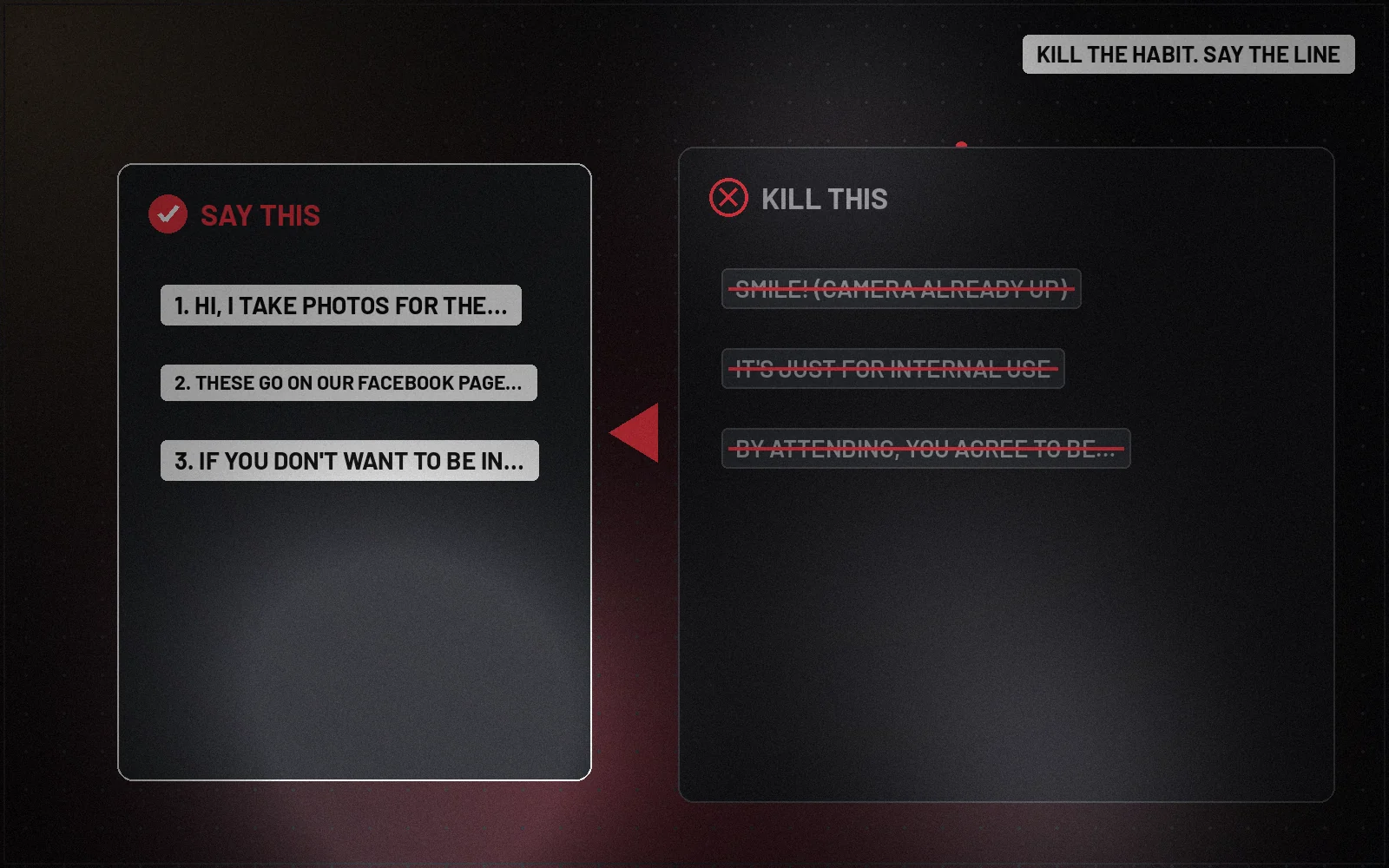
“Hi, I’m Jo. I take photos for Riverside Neighbours Network.”
“These go on our Facebook page and in our newsletter.”
“If you don’t want to be in them, tell me or take a blue sticker from the table, and I’ll keep you out.”
The blue sticker is one example of an opt-out marker. Use whatever your team can see from across a court. The point is that saying no is easy and visible.
When do you say it?
Before the camera leaves the bag. At the start of the event, and again to anyone you are about to photograph up close.
Say it once to the room at the start, or have the emcee say it. Then say a short version to each person or group before a close-up. Never ask after the shutter, when the photo already exists and saying no feels rude.
| Kill this | Say this (illustrative) | Why |
|---|---|---|
| Smile! (camera already up) | Hi, I take photos for the network. Okay if you’re in one? | Ask before, not during |
| It’s just for internal use | These go on our Facebook page and newsletter. | Say where it really goes |
| By attending, you agree to be photographed | If you don’t want to be in photos, tell me. | An easy no, said out loud |
| Don’t worry, nobody will see it | I’ll show you the shot. Say if you want it deleted. | No promise you can’t keep |
| Can I get the kids in front? | Let me check with the parent first. | Minors go through the adult |
What about children and close-ups?
Ask the parent or guardian, not the child, and follow whatever counsel has set for minors. If there is any doubt, leave the face out.
Counsel confirms the consent and minors rules for each market and event type before your team writes the line. The comms job is to say those rules in words a parent understands on one hearing. For close-up portraits and interviews, ask counsel whether a spoken line is enough or whether they want a signed form on the clipboard.
What happens when someone says no?
You say thank you, you keep them out of frame, and you delete any shot they are already in. No argument, no “just one.”
Opt-out line (illustrative):
“No problem. I’ll keep you out. If you’re in any shot, I’ll delete it now.”
Delete in front of them if they ask. Tell the editor, so the photo does not come back from a backup folder. The person who said no and saw you respect it is now on your side.
How does this play out in PH and SG?
The line is the same. The language, the setting and the rules counsel applies change.
Philippines desk. Covered courts, barangay halls and plazas are busy, open spaces where people drift in and out. Say the line over the sound system at the start and again when the crowd changes. Use Filipino or the local language for the spoken version, with the English line as the base so the team checks one script.
Singapore and wider APAC desk. Indoor forums and community centre events often have a registration desk. Put the consent line on a sign there and say it at the start. Counsel confirms the consent and minors rules for each market before the line is printed. Do not copy another market’s wording.
What to do this week
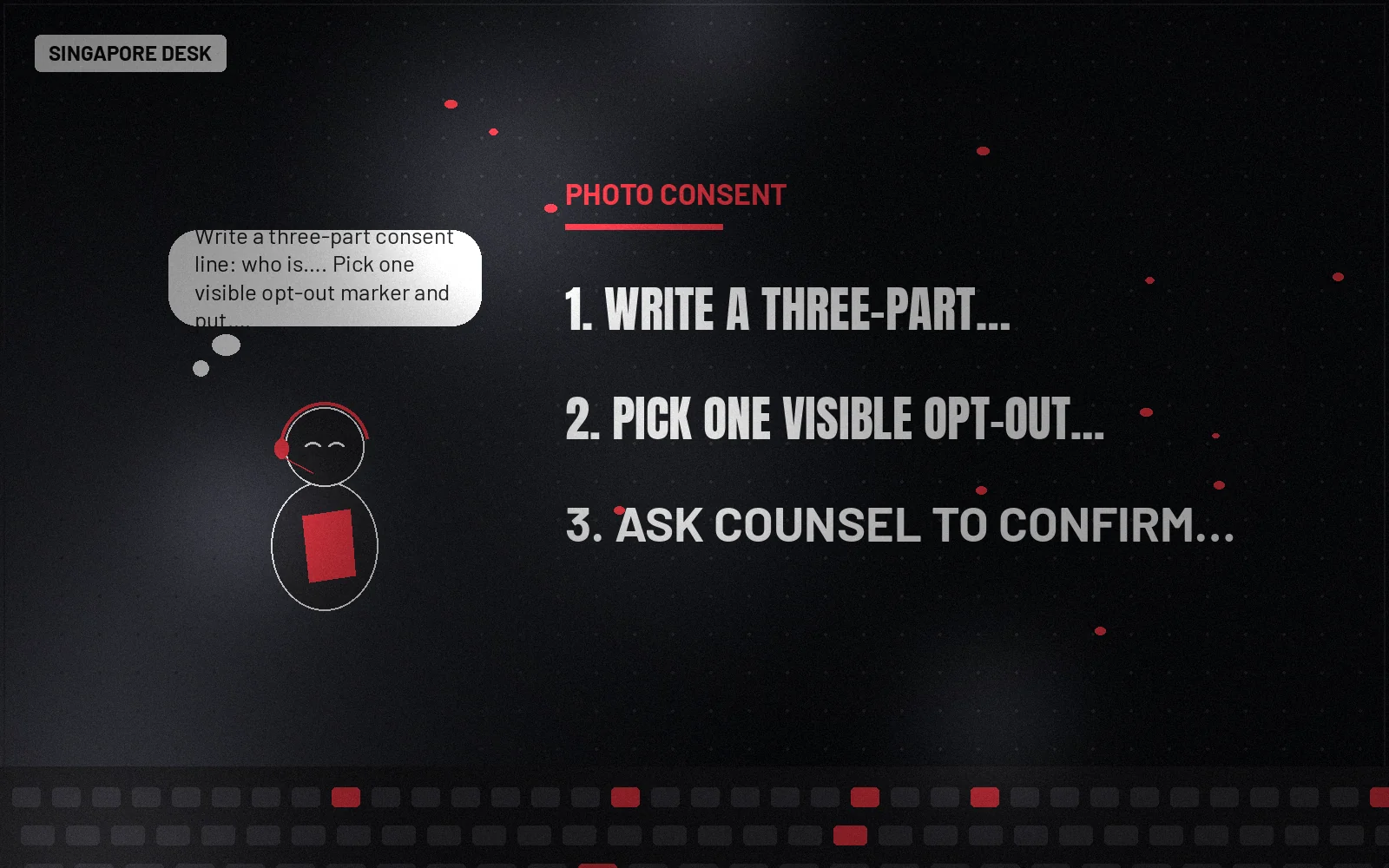
- Write a three-part consent line: who is shooting, where it goes, how to say no.
- Pick one visible opt-out marker and put it on the registration table.
- Ask counsel to confirm the consent and minors rules for your next event, in writing.
- Brief every photographer, and every volunteer with a phone camera.
- Set a rule for deleting shots of anyone who opts out, backups included.
Kill rule: if the camera came out before the line was said, those frames stay on the card and off the feed.
FAQs
What is photo consent line English APAC?
Photo consent line English APAC is the short spoken line before the camera rolls: who is shooting, where the pictures will go, and how anyone can say no. It comes before the shot, not after.
Does a sign at the door replace the spoken line?
A sign helps, but people miss signs. Say the line out loud as well, and ask counsel whether the sign alone meets your consent rules.
Can volunteers take photos on their own phones?
Only if they are briefed on the consent line and the deletion rule. Brief them like any photographer.
What should we do with photos of children?
Ask the parent or guardian first and follow the minors rules counsel has confirmed. If in doubt, leave the face out.
Neuwark Communications sets field photo and video standards as part of our services, including Creative & Brand. If your team shoots first and asks later, talk to us at Contact. Our volunteer shift confirm English APAC note covers what volunteers hear before they arrive. More language companions live in Insights.
Communications craft, not legal advice. Counsel checks election-period, consent and platform rules, including the rules for minors, before a photo consent line is used.
Related: Image caption English APAC · Volunteer shift confirm English APAC