
The caller is already stressed. The greeting either calms them down or makes them repeat themselves.
Most hotline greetings were written by someone who never answered the phone. They are long, polite and useless. The caller waits through a welcome speech, then has to ask if they called the right place.
Hotline greeting English APAC is the line an operator says when the call connects: who you reached, what this line handles, and the one thing we need from you first.
Street-smart APAC English: short sentences a tired operator can say out loud.
It is the inbound twin of our call time script English APAC note. That one is for when you dial. This one is for when they do.
What are the three lines of a hotline greeting English APAC?
Who you reached. What this line handles. What we need first. Said in about ten seconds, which is our desk’s working target, not a standard.
Hotline greeting (illustrative):
“Flood relief hotline, this is Mae.”
“We log reports of flooded streets and families who need pickup.”
“What barangay are you calling from?”
The caller now knows they reached the right place, what it can do and what to say next. The operator has the first field for the call log.
Why ask a question instead of saying “How can I help”?
Because “How can I help” invites a five-minute story. A specific first question gets the one fact the desk needs, then the story can follow.
Pick the field that routes the call. Location for field response. Ticket or reference number for follow-ups. Outlet name for media calls that land on the wrong line. Whatever your desk sorts by comes first.
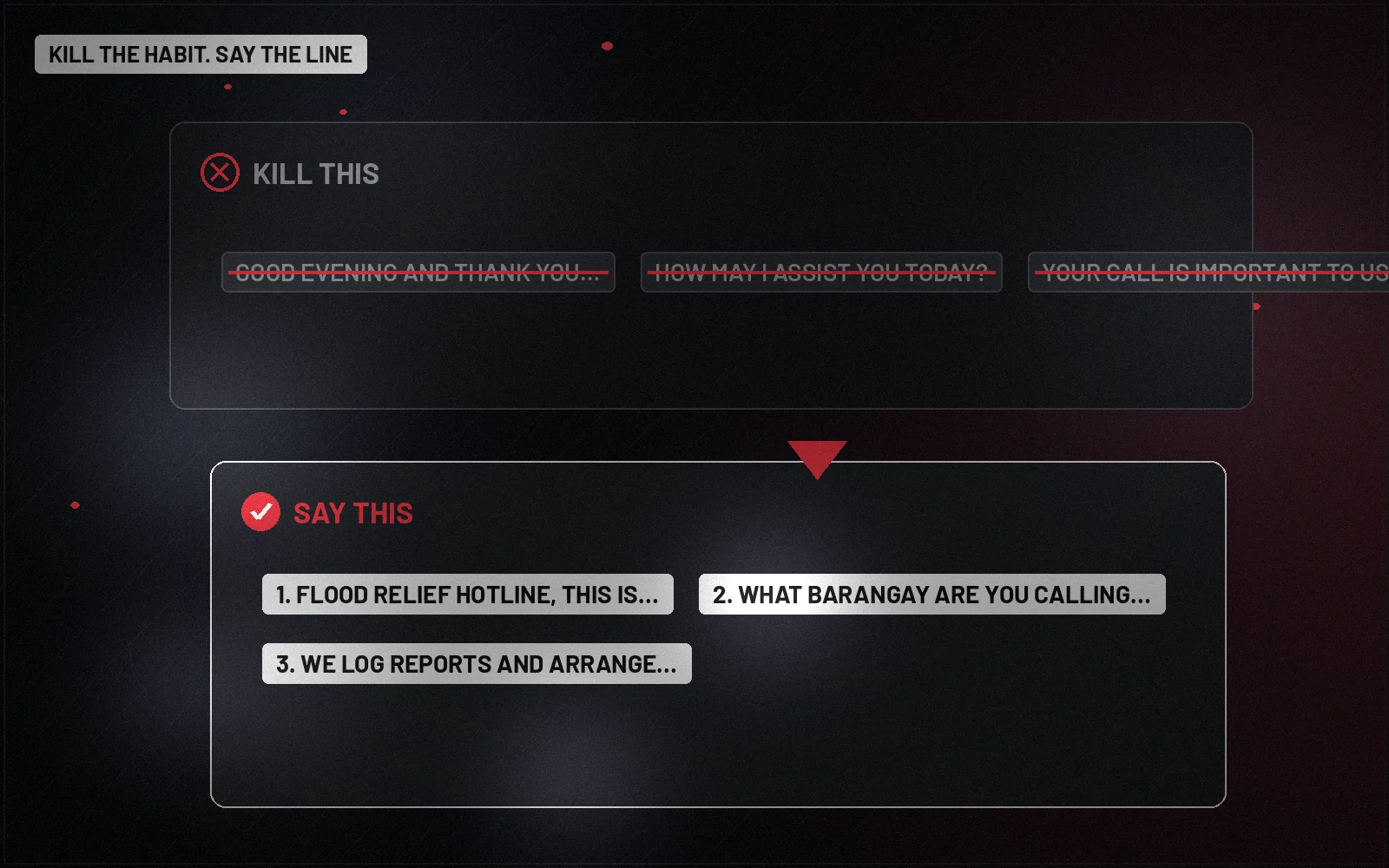
| Kill this | Say this (illustrative) | Why |
|---|---|---|
| Good evening and thank you for calling… | Flood relief hotline, this is Mae. | Gets to the point |
| How may I assist you today? | What barangay are you calling from? | Routes the call |
| Your call is important to us | We log reports and arrange pickup. | Says what the line does |
| Please hold | I’m putting you through to the field desk now. Stay on the line. | Says what happens next |
| We’ll get back to you | The field desk will call this number back tonight. | A promise you can keep |
What does the operator say when the call is not for this line?
A handoff line. Name the right place, give the route, and end kindly. Do not try to answer what your desk cannot verify.
Handoff line (illustrative):
“This line handles flood reports. For questions about the relief budget, the spokesperson’s office takes media and policy calls. I can text you their contact now.”
Reporters will call the hotline when the press line is busy. Give operators one sentence for that, and route them to the press holding line desk. Operators do not give quotes.
Why does this matter for PH and SG hotlines?
Because the calls arrive in more than one language, on bad lines, often during a storm or a story. Clarity beats warmth.
In the Philippines, callers switch between English, Filipino and a regional language in one sentence. Train operators to answer in the caller’s language after the first line. The greeting stays short so it survives a dropped signal and a repeat.
In Singapore, callers expect a clean, quick answer and a clear next step. A long greeting reads as stalling. A plain three-line greeting reads as competent.
In both markets, the hotline number gets screenshotted and forwarded. Whoever reaches it will judge your whole operation by the first ten seconds.
What should never be in the greeting?
Promises, numbers and claims the operator cannot check. The greeting is not the place for the campaign message.
No “help is on the way” unless dispatch is confirmed. No casualty, damage or budget figures. No partisan lines. If someone asks for a figure, the operator says the official update is on the crisis dark site page and that numbers there are dated.
If you record calls, counsel writes the recording notice. Do not improvise that sentence.
How do you keep the greeting the same across shifts?
Print it. Tape it to the desk. Make every new operator say it out loud three times before the first live call.
Write it on a card with the handoff lines underneath. Shift leads listen in for the first hour and correct drift. When the greeting changes, the card changes, with the date on it.
What to do this week
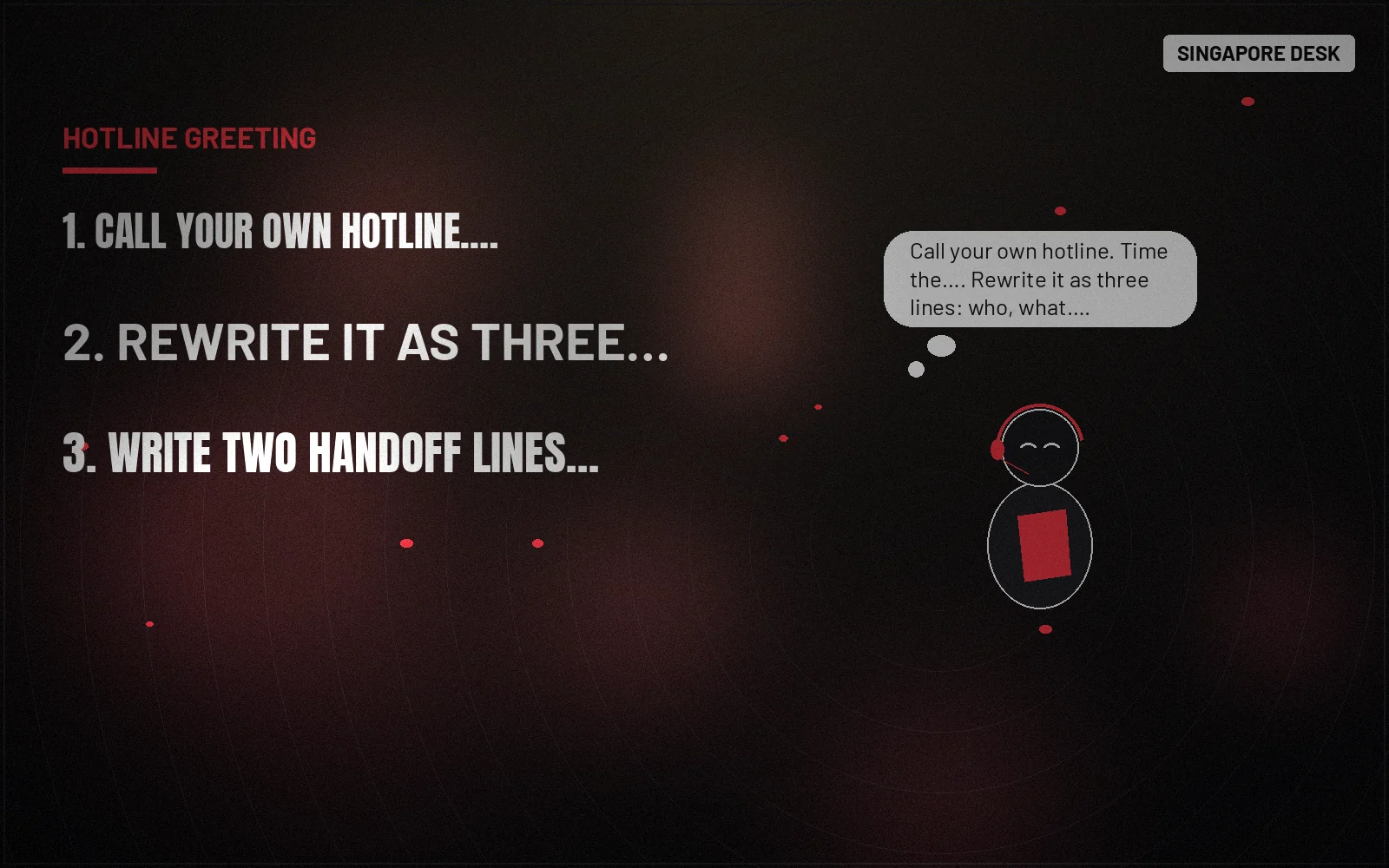
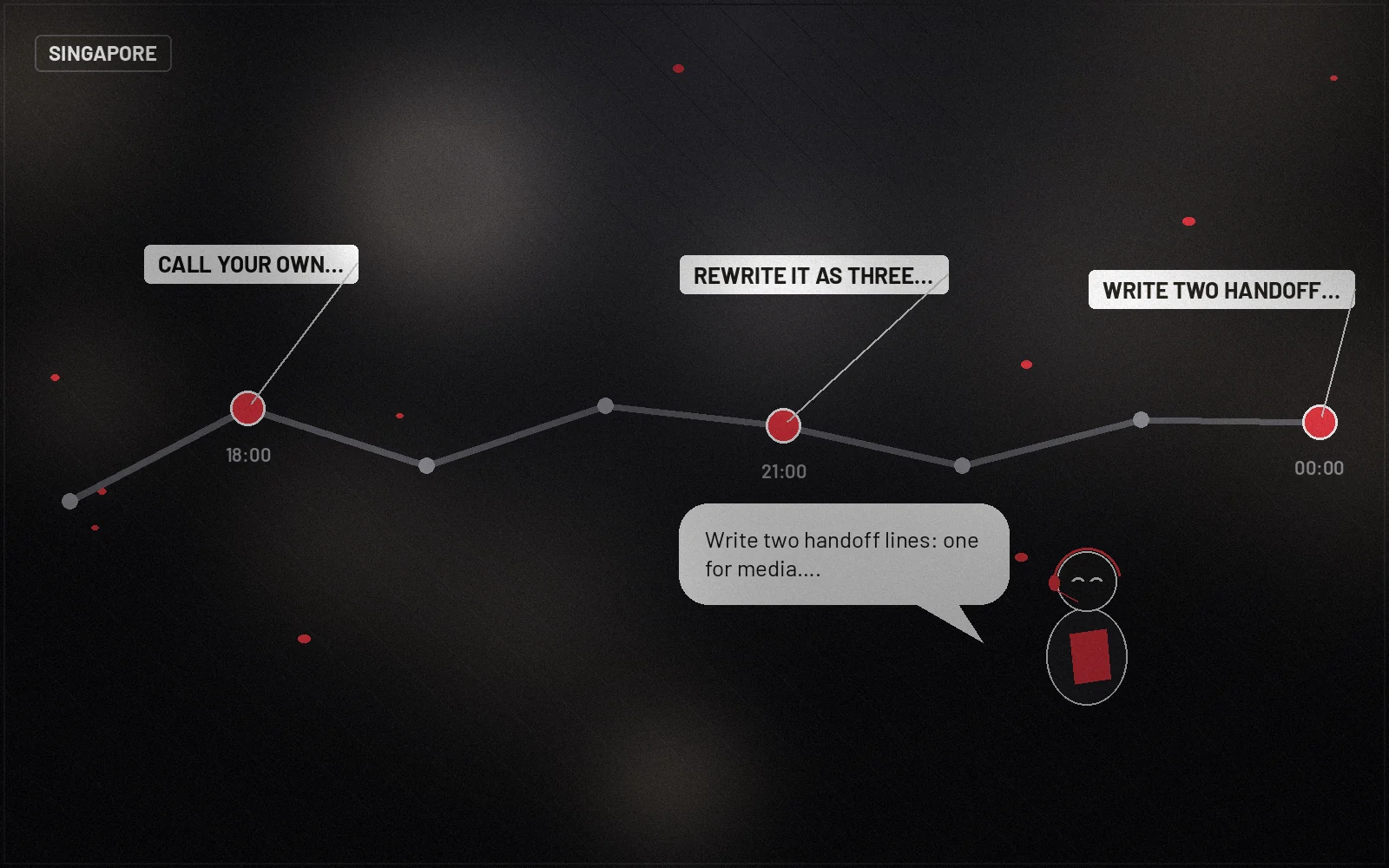
- Call your own hotline. Time the greeting. Write down the first question you are asked.
- Rewrite it as three lines: who, what, first question.
- Write two handoff lines: one for media, one for calls outside your scope.
- Print the card for every desk. Date it.
- Add the first-question field to the top of the call log.
FAQs
What is hotline greeting English APAC?
Hotline greeting English APAC is the short script an operator says when a call connects: who the caller reached, what the line handles and the first thing the desk needs. It is built to be said the same way on every shift.
Should operators use their real names?
A first name is enough and helps trust. Agree the policy with your safety lead and counsel first.
What if the caller is angry?
Say the greeting anyway, then let them speak. The first question can wait one breath.
Can we use a recorded greeting instead?
A recording can say who you reached and route the call. A person still needs the first question, because recordings cannot hear what the caller says back.
Neuwark Communications builds hotline and rapid-response scripts under Crisis & Rapid Response and Strategy & Messaging. If your hotline greeting is a welcome speech, talk to us at Contact. More language companions live in Insights.
Communications craft, not legal advice. Counsel checks election-period rules, call-recording and data-privacy duties, and any platform or carrier rules before the hotline goes live.
Related: Call time script English APAC · Press holding line English APAC · Crisis dark-site English APAC · Spokesperson intro English APAC