
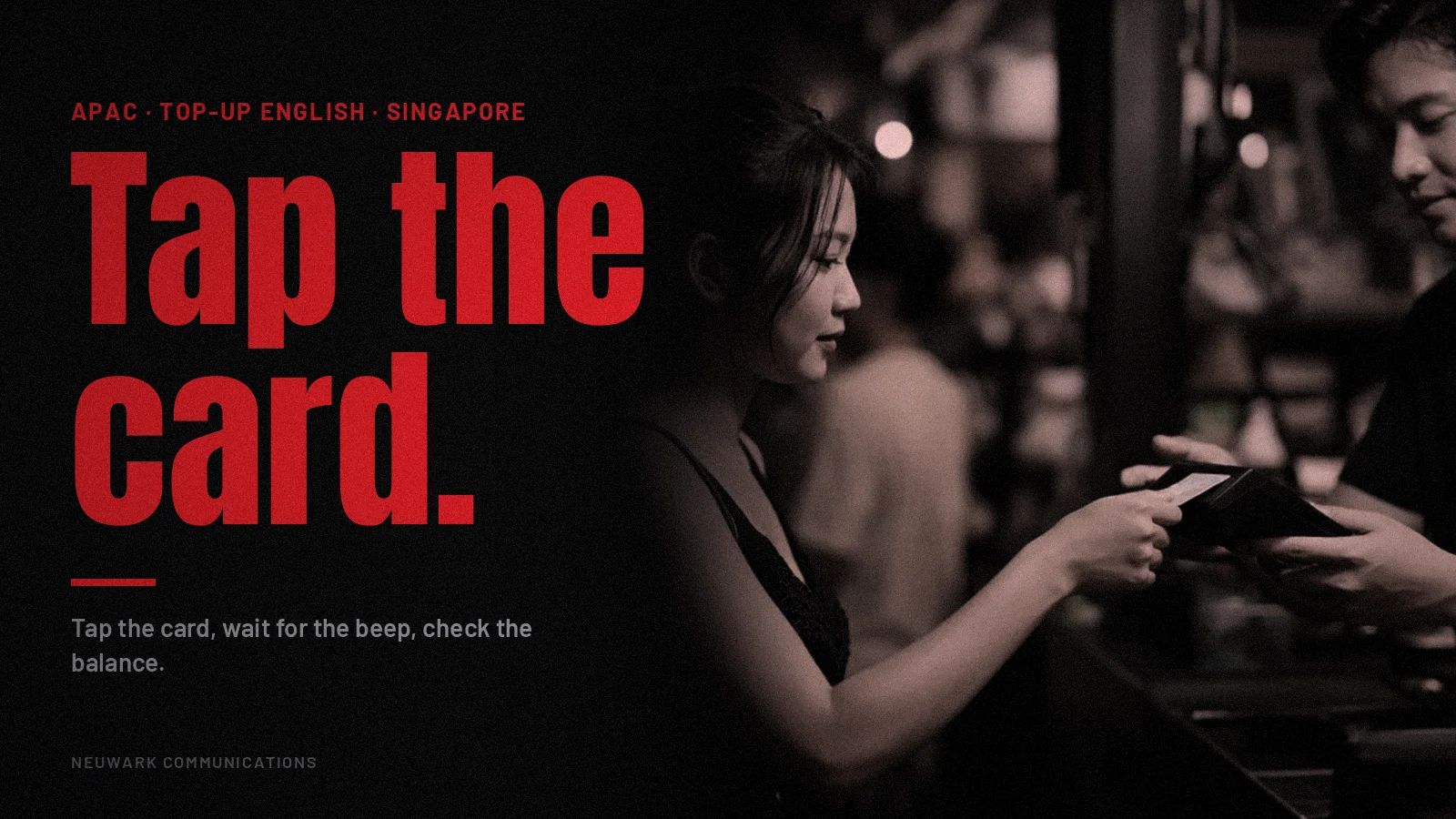
Tap the card, wait for the beep, check the balance.
Street-smart APAC English: short sentences a tired operator can say out loud.
Quick answer: A top-up line English APAC is the cashless booth crew’s rule at a festival top-up point: tap the card, wait for the beep, check the balance. The guest taps their own card once, nobody taps again until the reader beeps, and both sides read the new balance before the guest walks off.
Bangkok, a night festival, and the top-up booth queue is longer than the stage queue. A crew member takes a guest’s card, taps it twice because the screen looks slow, and hands it back without a word. Ten minutes later the guest is back, sure they paid twice.
The card is the guest’s, so the guest taps it, and the beep is the only receipt anybody trusts at that hour. Read it alongside the token exchange line English APAC and the lunch voucher line English APAC.
What is a top-up line English APAC?
It is a top-up booth crew member’s three-part rule at a festival top-up booth. Tap the card, wait for the beep, check the balance. Card first, beep second, balance last.
1. Tap the card. The guest holds their own card flat on the reader. Crew point at the reader; they do not take the card.
2. Wait for the beep. Nobody taps twice. If the screen is slow, both hands stay still until the reader beeps or shows an error.
3. Check the balance. Crew turn the screen so the guest can read the new balance, then say it out loud before the next person steps up.
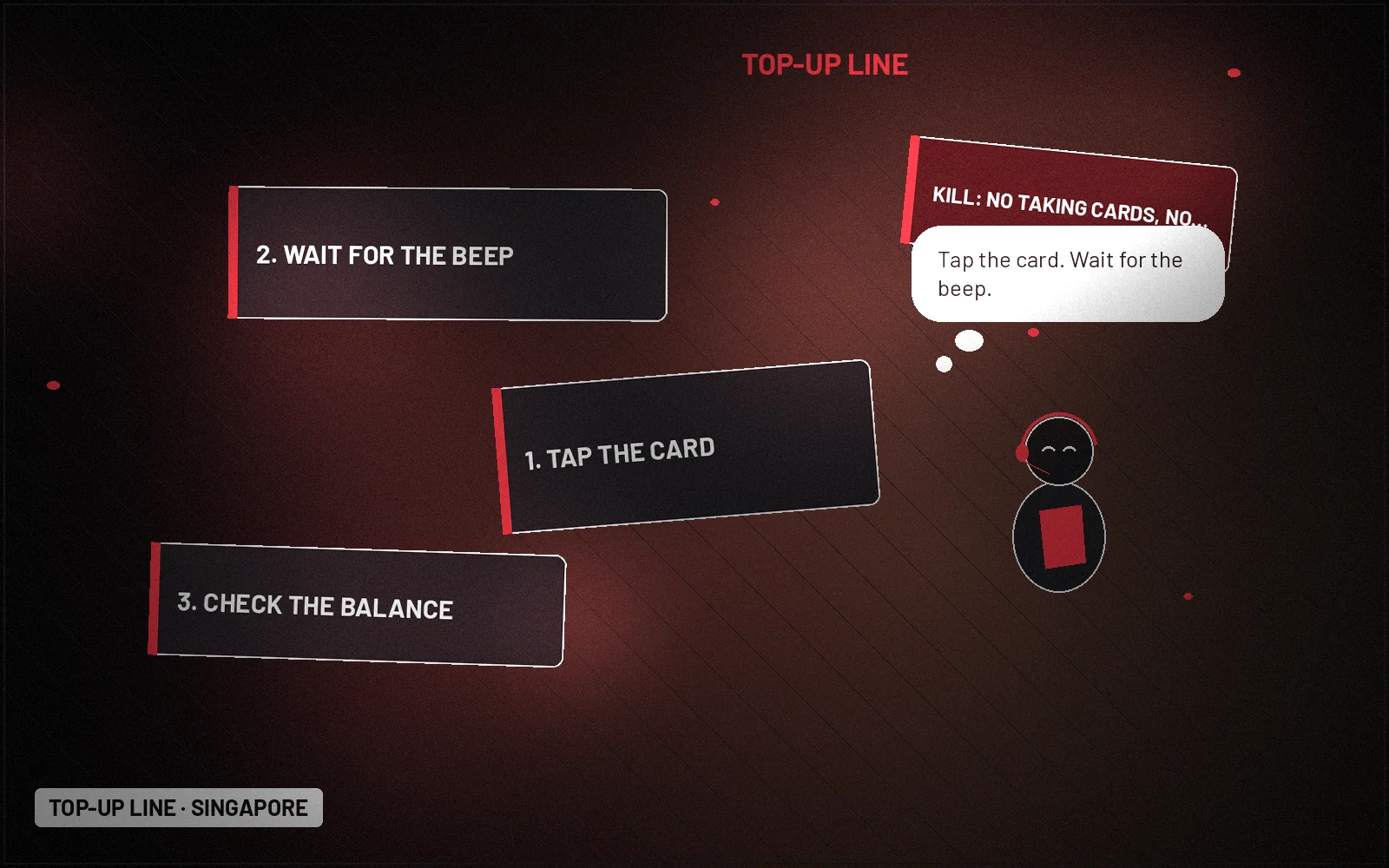
The habit to break is the helpful takeover. Crew take the card to save time, tap it at an angle, and tap again when nothing happens. The guest sees none of it and blames the booth later.
What should a top-up booth crew member stop saying at the top-up booth?
Stop taking the card, and stop tapping again because the screen feels slow. Say the three booth parts instead, one per tap.
| Kill this | Say this (illustrative) | Why |
|---|---|---|
| Ibigay niyo na lang po sa akin, ako na ang mag-tap. | Tap the card. | The card never leaves the guest’s hand (PH Tagalog habit) |
| Just tap again and again lah, sure got one. | Wait for the beep. | A second tap is how double charges start (SG lah habit) |
| Udah, Mas, saldonya nanti cek sendiri aja. | Check the balance. | Reading the screen together ends the argument early (Jakarta Bahasa habit) |
Lines in this table are illustrative, not quotes from real people.
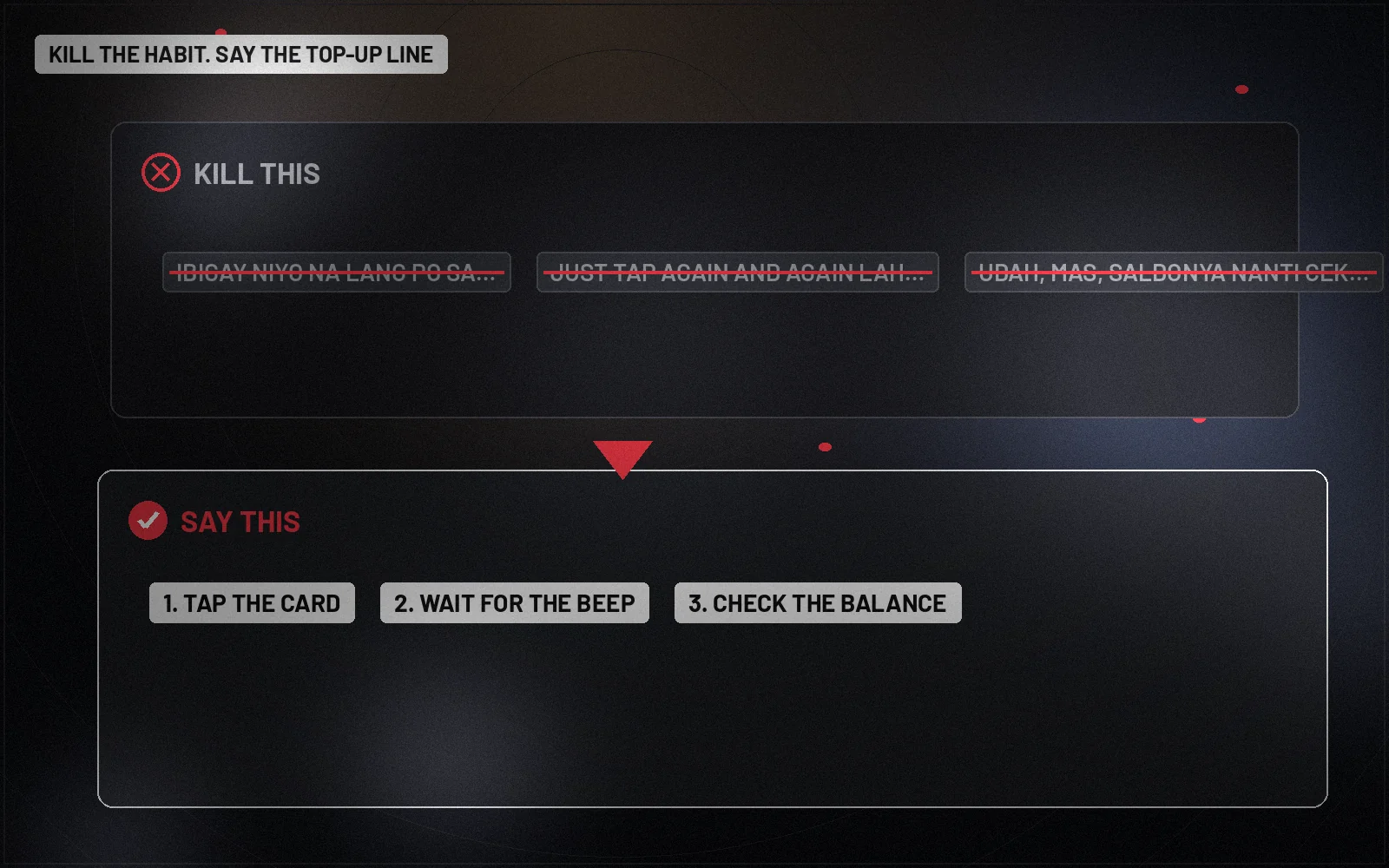
The kill lines all come from wanting to be fast. The say lines are faster, because nobody comes back to argue.
What if the reader takes the money but shows an error?
Do not tap again, and do not promise a refund on the spot. Say the plain thing: the reader showed an error, we will check it, please wait here a moment.
Then call the booth lead, who has the transaction log and the authority to decide. The guest keeps the card, and the queue moves to the second reader if there is one. Trust breaks not at the error but at the guess, the second tap, the made-up promise.
Who plans the top-up booth script before gates open?
The cashless lead plans it with the festival operations lead, before the crew briefing. They decide how many readers run, where errors go and who checks the log.
Crew leads brief the three parts in the same order on every shift. A new crew member at peak hour gets the line as the handover, not a speech over the noise.
PH / SG / Jakarta desk notes
Same three parts. Different desks.
Philippines desk. Polite and clear. Tap the card po, sir. Wait for the beep po. Check the balance po, ma’am, salamat.
Singapore desk. Brisk and even. Tap the card. Wait for the beep. Check the balance. Next.
Jakarta desk. Jakarta festival crews often switch between Bahasa and English at the booth. Keep the three parts in English and add Bapak or Ibu only if the house style asks for it.
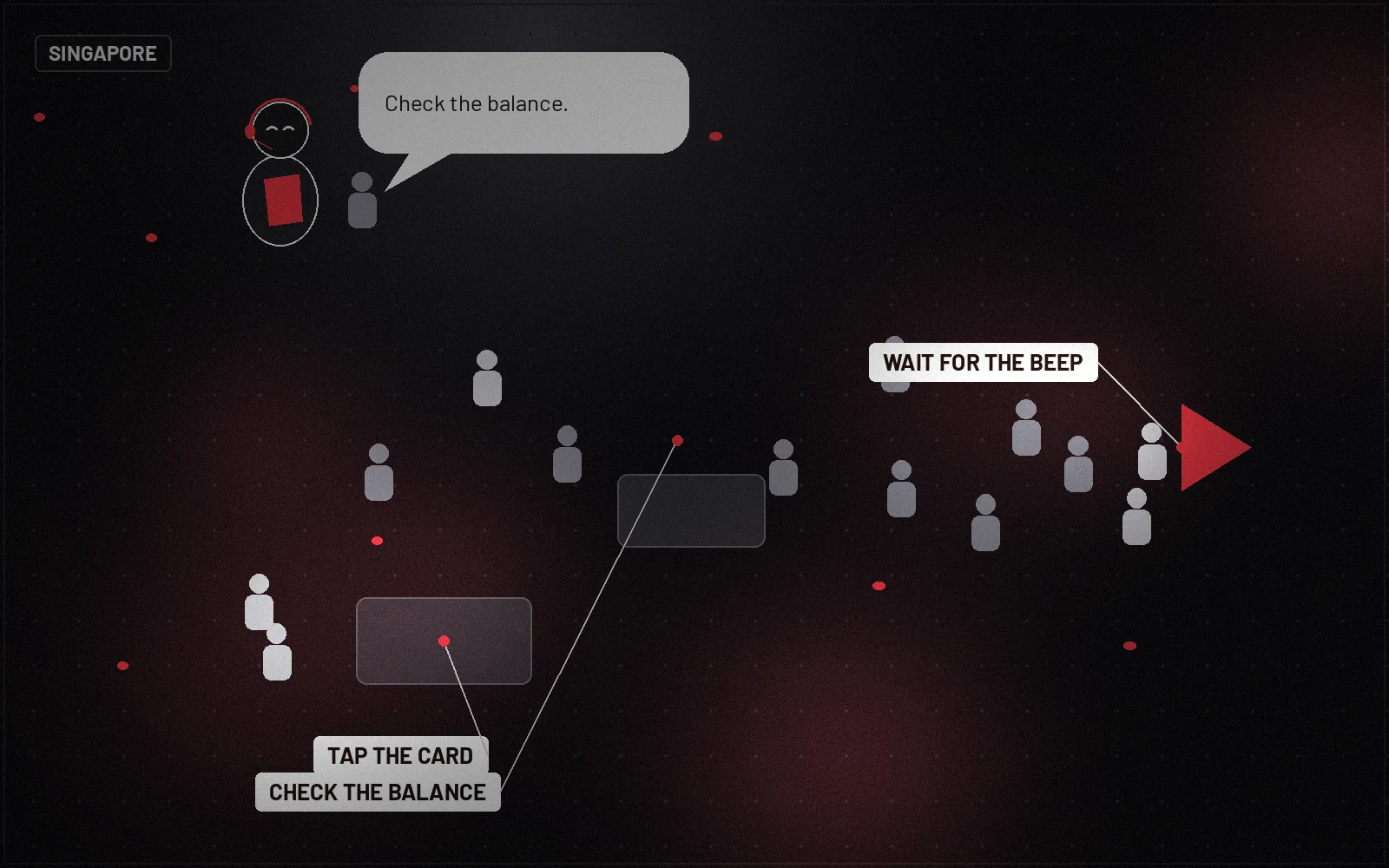
Monday field kit
- Confirm reader count, error route and log access with the cashless lead.
- Mark where the guest stands so the screen faces them.
- Brief crew on the lock: tap the card, wait for the beep, check the balance.
- Practise one error moment: no second tap, call the booth lead.
- Kill rule: no taking cards, no double taps, no silent hand-backs.
Illustrative only. Change the wording only if your cashless provider uses different screen prompts.
FAQs
What is a top-up line English APAC?
A top-up line English APAC is the cashless booth crew’s rule at a festival top-up point: tap the card, wait for the beep, check the balance. The guest taps their own card once, nobody taps again until the reader beeps, and both sides read the new balance before the guest walks off.
What should a top-up booth crew member stop saying at the top-up booth?
Stop taking the card, and stop tapping again because the screen feels slow. Say tap, beep, balance, in that order.
What if the reader takes the money but shows an error?
Do not tap again, and send the guest to the booth lead, who checks the log and decides. Crew never promise a refund on the spot.
Who plans the top-up booth script before gates open?
The cashless lead plans it with festival operations before the crew briefing. Crew leads then brief the same three parts on every shift.
What to do this week
Speakable lock (illustrative): “Tap the card, wait for the beep, check the balance.”
Stand at the booth for one rush with your crew lead and listen for the second tap. We draft booth wording like this at our Manila HQ in Makati and check it with the account team at MBFC Tower 2 in Singapore before crews say it.
Neuwark Communications builds event and campaign communications as part of our strategy and messaging work. More street-smart lines live in Insights.
Related: token exchange line English APAC · lunch voucher line English APAC
Talk to us about your next event script.
Illustrative lines only. Communications craft, not legal advice.