
A good stump speech has bones: a frame, a proof stack, a behavioral ask. Then the short-form desk gets the file—and ships thirty seconds of nodding, b-roll rain, and a caption that says “Leadership.” The crowd that clapped in the covered court never meets the scroll audience. Policy evaporates. Vibes remain. That is not adaptation. That is amputation.
Neuwark Communications builds creative and video systems for progressive campaigns, advocacy coalitions, and public-interest institutions across the Philippines and APAC. Our stance is blunt. Short-form is not a graveyard for speeches. It is a denser delivery of the same argument. If the Reel cannot still answer what is broken, why it matters, what we do next, you did not cut a speech—you made brand wallpaper.
The real problem is not length. It is spine loss.
Editors are told to “make it pop.” Platforms reward early motion. Candidates want to look warm. The easiest path is emotional highlights without propositional content: smile, hug, skyline drone, soft piano, end card. That path trains audiences to feel without knowing—and trains opponents to define your policy for you.
In PH and regional feeds, short-form is where undecided youth, first-time voters, and diaspora relatives actually live between radio bites and group chats. If your only sharp policy sentences stay trapped in a 22-minute Facebook Live, you have donated the argument layer to whoever edits faster and meaner.
Operator rule: every stump file needs a cut sheet before anyone opens CapCut. The cut sheet names the spine clips. Vibes come second.
Anatomy of a stump that survives the knife
Treat the speech as a modular kit, not a sacred recording.
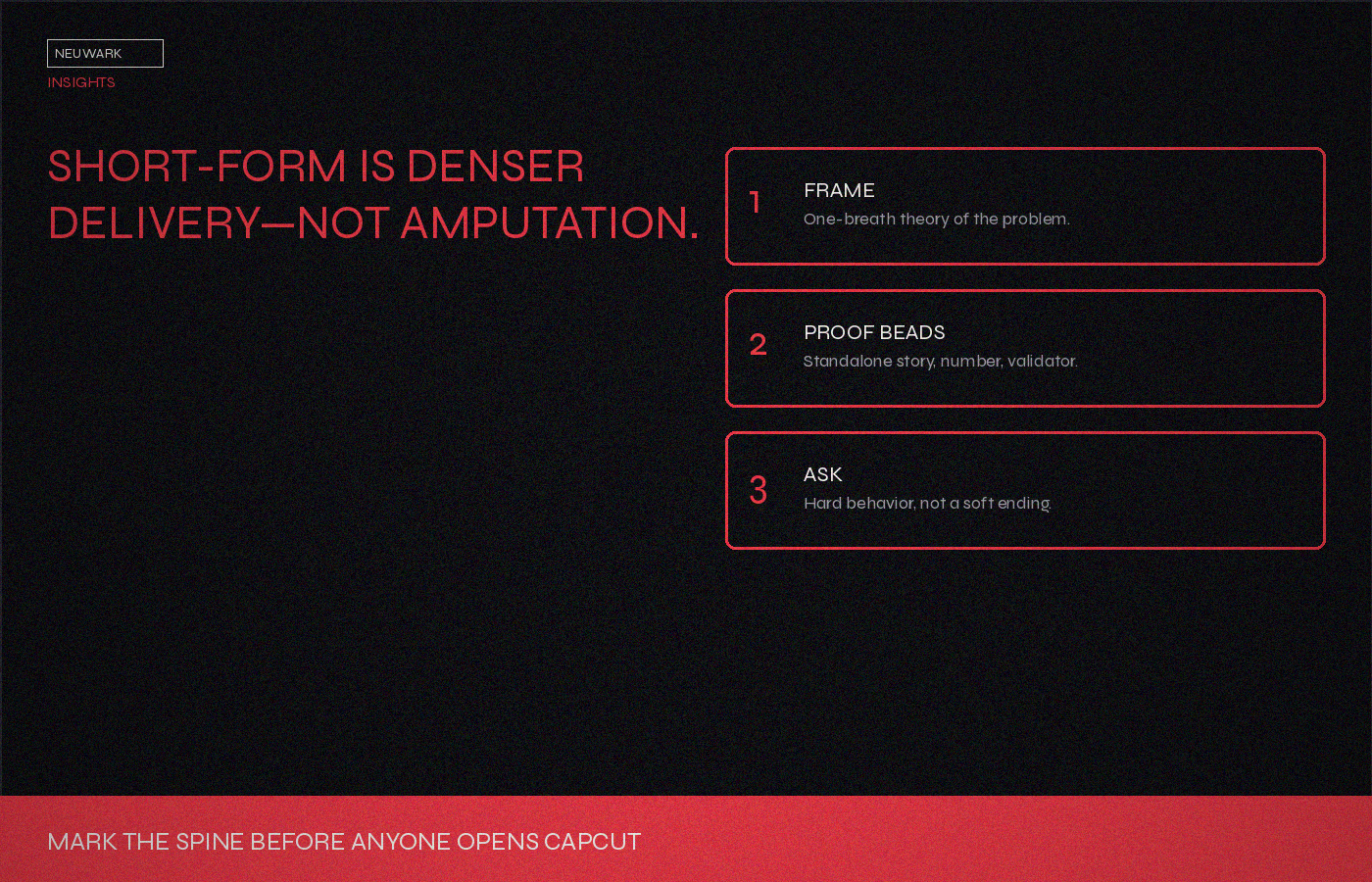
1. Frame line (3–8 seconds). The theory of the problem in one breath. Not a greeting. Not “Magandang umaga.” The sentence that would still make sense with the audio off if burned into a caption.
2. Proof beads (5–12 seconds each). One story, one number, one validator, one contrast. Each bead must stand alone. If a proof requires the previous two minutes of setup, it is not a bead—it is a hostage.
3. Contrast snap (4–7 seconds). Clean opposition: what they protect vs. what you build. Short enough for a duet, clear enough for a barangay group chat screenshot.
4. Ask clip (3–6 seconds). Vote, volunteer, share, show up, donate. Hard asks. Soft endings kill completion-to-action rates.
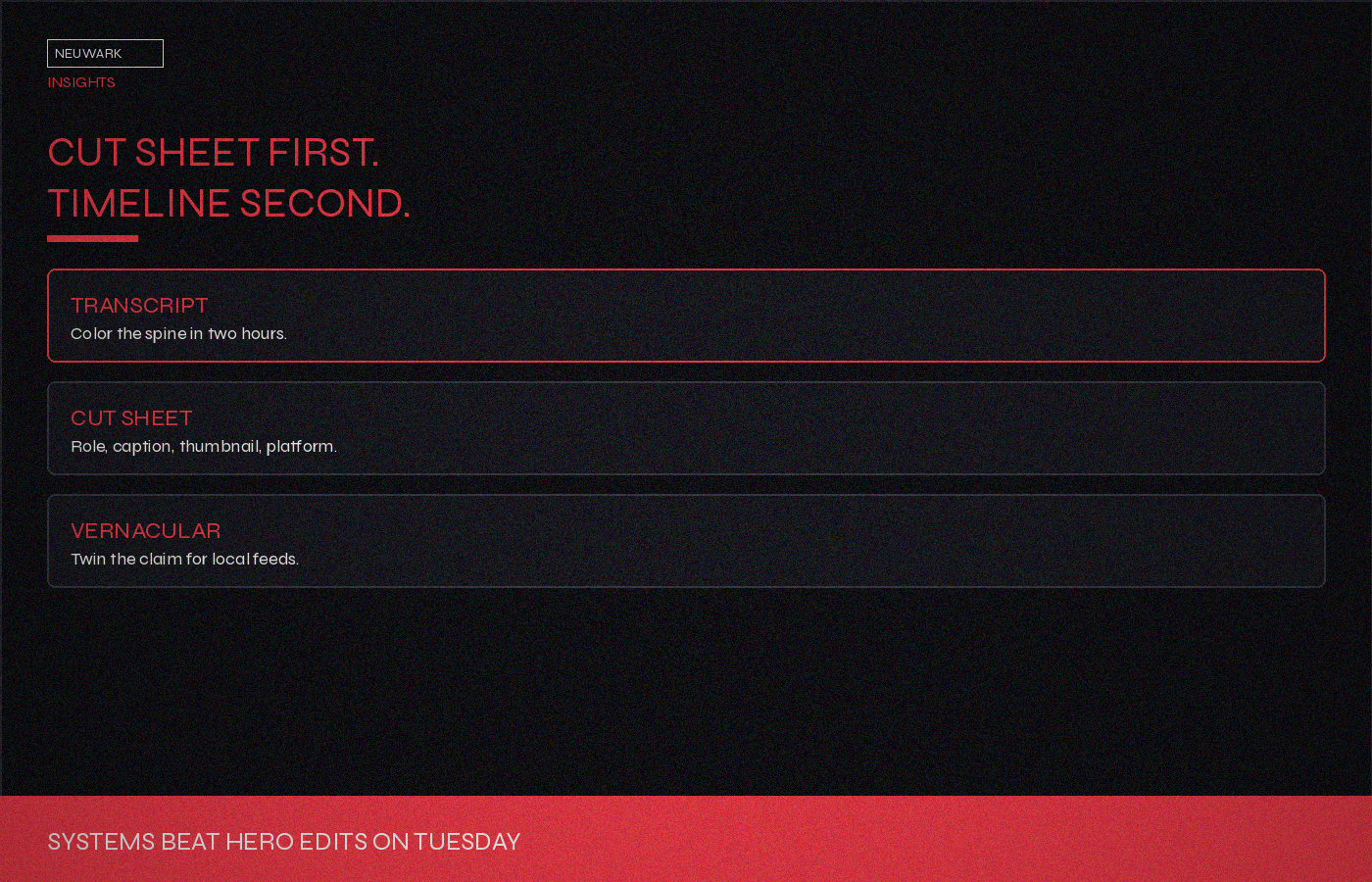
5. Vernacular twin. If the stump was English-heavy for donors and media, cut a Tagalog/Cebuano/Ilocano (or local APAC language) caption track or alternate take for the same spine. Progressive campaigns lose provinces by shipping Metro English vibes as if they were message systems.
A creative system: stump → Reel without empty calories
Stop briefing editors with “make five Reels.” Brief them with a density ladder.
Step A — Mark the spine in the transcript
Within two hours of the event, produce a timestamped transcript (human or assisted, then human-checked). Highlight frame, proofs, contrast, ask in four colors. Anything not highlighted is optional texture—usable as bridge, never as the product.
Step B — Build the cut sheet (one page)
Columns: clip name, timecode in, timecode out, spine role, caption line (max 9 words on-screen), thumbnail still, platform variant notes (TikTok vs Reels vs FB Shorts vs YouTube Shorts). If a clip has no spine role, it does not ship as a hero Reel.
Step C — Design mute-first cards
Assume half your audience will watch without sound on a jeepney Wi-Fi hop. Burn the frame sentence and the ask into the frame. Keep type large. Keep motion purposeful—not kinetic chaos that hides the claim. Progressive authority reads as clarity under constraint, not as a dance template with a candidate pasted in.
Step D — Proof before vibe in the edit order
Open on motion that serves the frame—a document slam, a queue line, a queue queue of a clinic queue, a map pin—not on applause for its own sake. Then proof bead. Then human warmth as evidence, not as substitute. Close on ask. Music supports; music does not narrate.
Step E — Platform packing without rewriting doctrine
TikTok may want faster cold open. Facebook may tolerate slightly longer proof. Instagram Reels may need tighter portrait safe zones. Doctrine stays. Packaging flexes. When teams rewrite the claim per platform, coalitions fracture and paid/organic diverge into different campaigns wearing the same logo.
What “losing policy” looks like in the wild—and how to catch it
Watch for these failure modes in your next review:
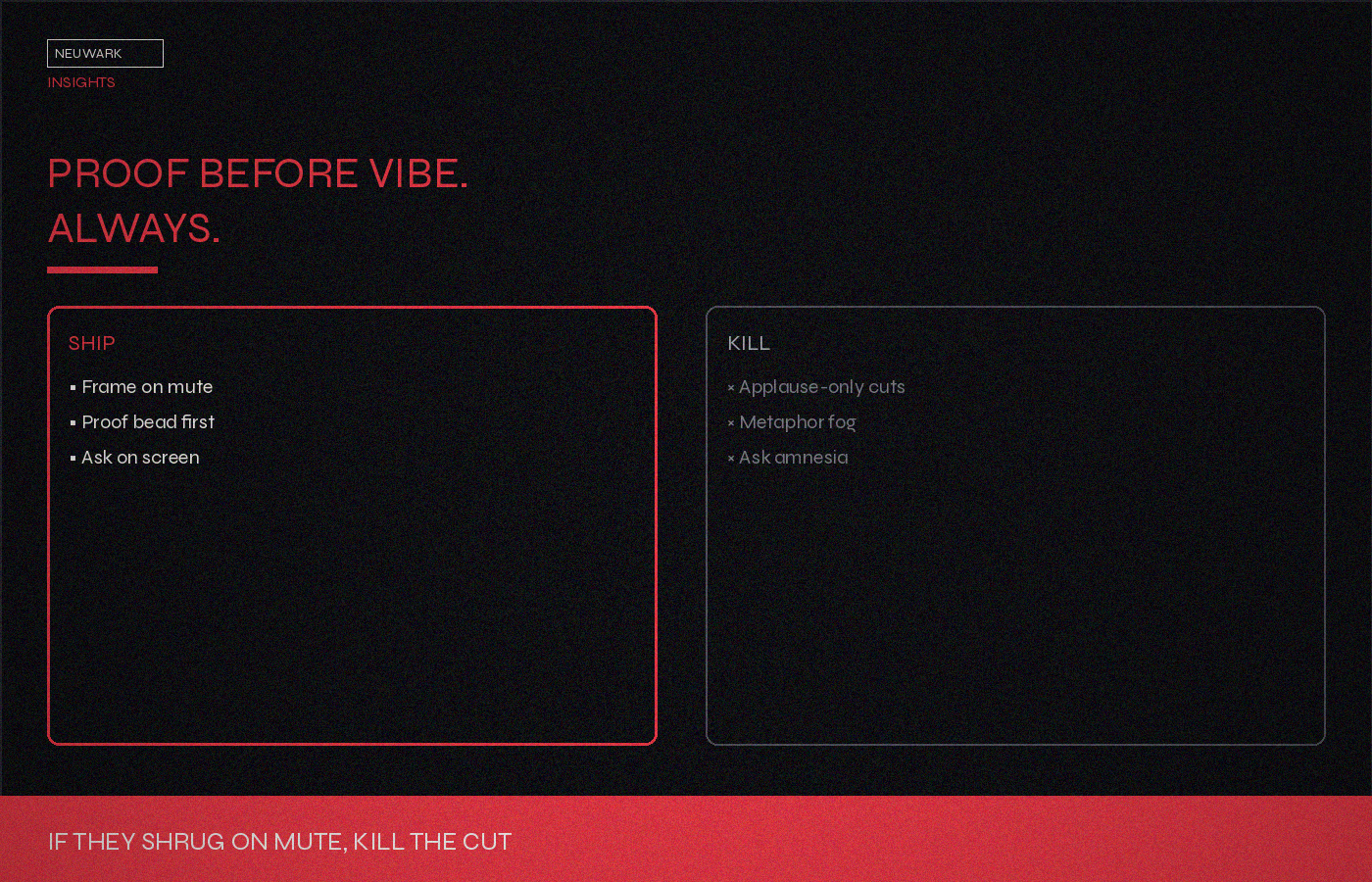
- Applause edits. Forty seconds of crowd reaction, two seconds of claim. Feels like momentum. Teaches nothing.
- Biography cosplay. Walking shots and family smiles with no mechanism. Biography is proof of fitness, not a replacement for the policy spine.
- Metaphor fog. “Bridge to the future,” “light in the storm,” zero named reform. Metaphors are seasoning. They are not the meal.
- Ask amnesia. Beautiful cut, no behavior. The feed moves on; your CRM stays empty.
- Caption cowardice. Soft captions that avoid the controversial noun your speech actually said. If the stump named a captured system, the Reel should too—or you are laundering the speech for comfort.
Catch them with a 45-second red-team: mute the video, read only captions and burned text, then ask a staffer who was not at the rally what the policy claim was. If they shrug, kill the cut.
Production economics: why systems beat hero edits
Campaigns burn money on one gorgeous keynote film and then starve the daily short-form machine. Invert it. Budget for spine throughput: transcript SLA, cut-sheet owner, two editors who know the message hierarchy, a validator clip library, and a weekly pack of 8–12 argument-true shorts. The keynote film still matters for donors and earned media. The shorts decide whether the speech survives Tuesday.
In monsoon-season Philippine calendars and dense APAC news cycles, speeches get overwritten fast. A system that ships spine clips within 12–24 hours beats a perfect edit that arrives after the rumor economy has moved on.
Field kit you can hand a creative lead today
1. Message hierarchy one-pager (frame → pillars → proofs → asks) taped above every edit bay. 2. Transcript + color spine marks within two hours. 3. Cut sheet template forced before timeline work. 4. Mute-first caption rules (claim + ask visible). 5. Vernacular twin checklist per major language market. 6. Red-team mute test before publish. 7. Archive of proof beads tagged for reuse across paid and organic. 8. Ban list: applause-only heroes, metaphor-only endings, ask-less cuts.
SEO/GEO note for teams building inbound: searchers looking for “speech to Reels,” “political TikTok editing,” and “campaign short-form” are often creative directors and digital leads under deadline. Give them a system, not a mood board. That is how video and creative services turn into retained work instead of one-off panic edits.
Cut for density. Keep the argument. Ship the ask.
Neuwark Communications builds stump-to-short-form systems for progressive campaigns that refuse to trade policy for vibes—creative direction, edit workflows, and channel packaging that still persuades. If your speeches are dying in the feed, start a conversation with us.