
Mid-tier donors do not ghost because they stopped believing. They ghost because the first text sounded like a blast.
Stewardship SMS English is the short sequence a development lead can send after a gift posts: thanks, proof, later ask — each one screenshot-safe in a Singapore, Riyadh, or California group chat.
This is the language companion to our mid-tier donor stewardship sequences post. That one is cadence and ratios. This one is the wording.
Neuwark Communications writes fundraising language for advocacy and public-interest desks in the Philippines and APAC. Honor consent, quiet hours, and platform rules. This is not tax, payments, or election-finance advice.
What are the three texts?
| When | Job | Max length | Pattern |
|---|---|---|---|
| Hour 0–2 | Thanks | 1 short screen | Name + what this week’s gift fuels + no ask |
| Day 3–4 | Proof | 1 short screen + one link | One field fact. No PDF. |
| Later, after two proofs | Ask | 1 short screen | Named fight + named clock + named amount band optional |
Hour-zero English (illustrative):
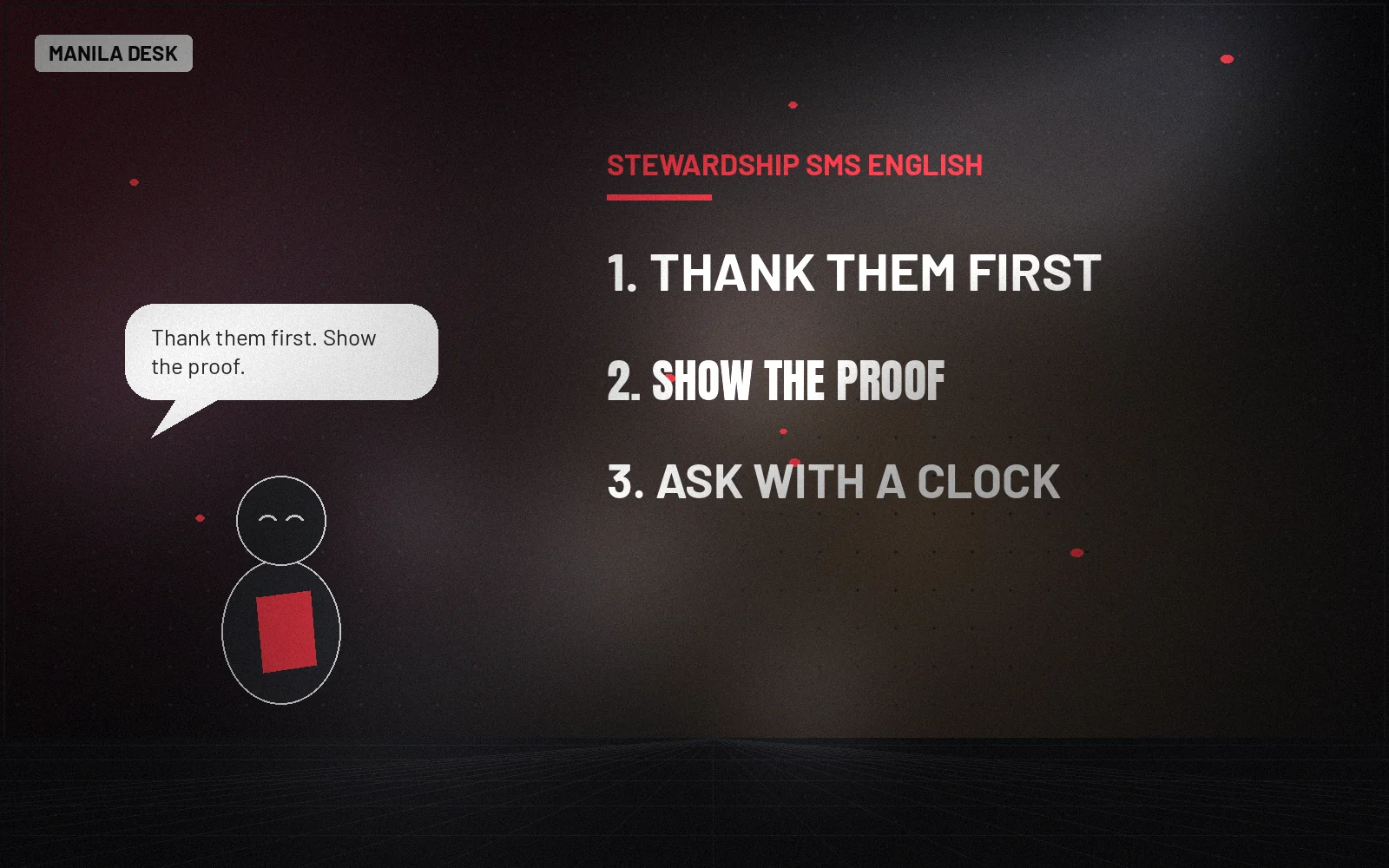
[Name], this is [organizer first name] at [org].
Your gift this morning funds this week’s hearing note, not a generic “programme.”
I will send one proof by Thursday. No ask in this text.
Day-three English:
Proof from the hall: we filed the three-page note yesterday.
Sixty-second update: [link].
Reply STOP if this channel is wrong.
Ask English (only after proof):
The next resource-person window is [day].
If you want that file printed and handed, the working band is [amount range] this week.
Reply YES and a human will send the exact instruction. Not a second blast.
Which fundraising phrases should you kill?
| Kill | Why it fails in chat | Replace with |
|---|---|---|
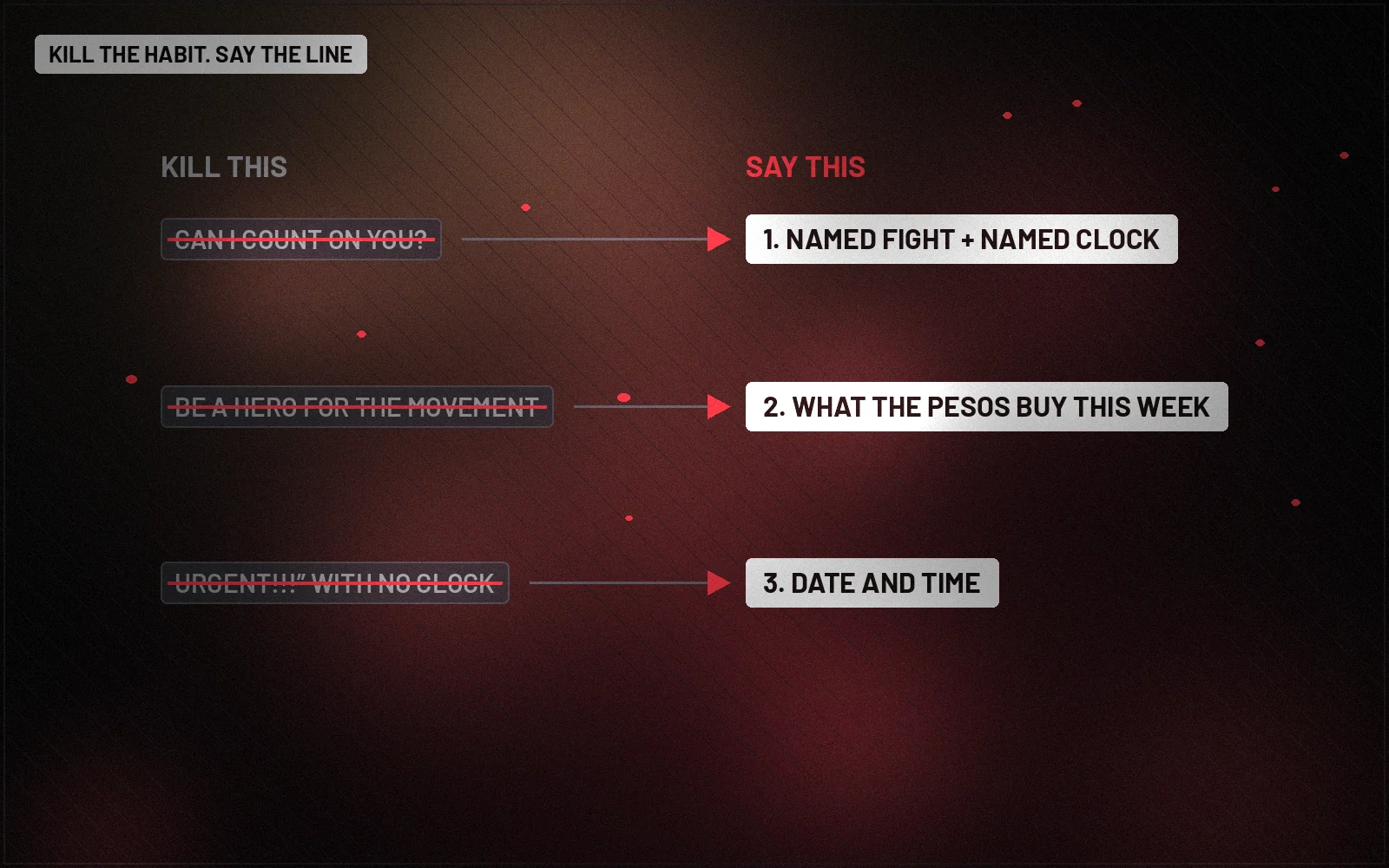
| “Can I count on you?” | Guilt. Screenshots badly. | Named fight + named clock. |
| “Be a hero for the movement” | Cosplay. Mid-tier donors are adults. | What the pesos buy this week. |
| “Urgent!!!” with no clock | Trains mute. | Date and time. |
| Attachment PDFs | Die on prepaid data. | One mobile page. |
| Sharing the list “with partners” in the SMS | Trust leak. | Never. Permission is a counsel matter, not a caption. |
Street-smart English here is the opposite of performance. It should survive being forwarded to a spouse.
What do you write for quiet hours and diaspora clocks?
Put the rule in the sequence, not in a footnote.
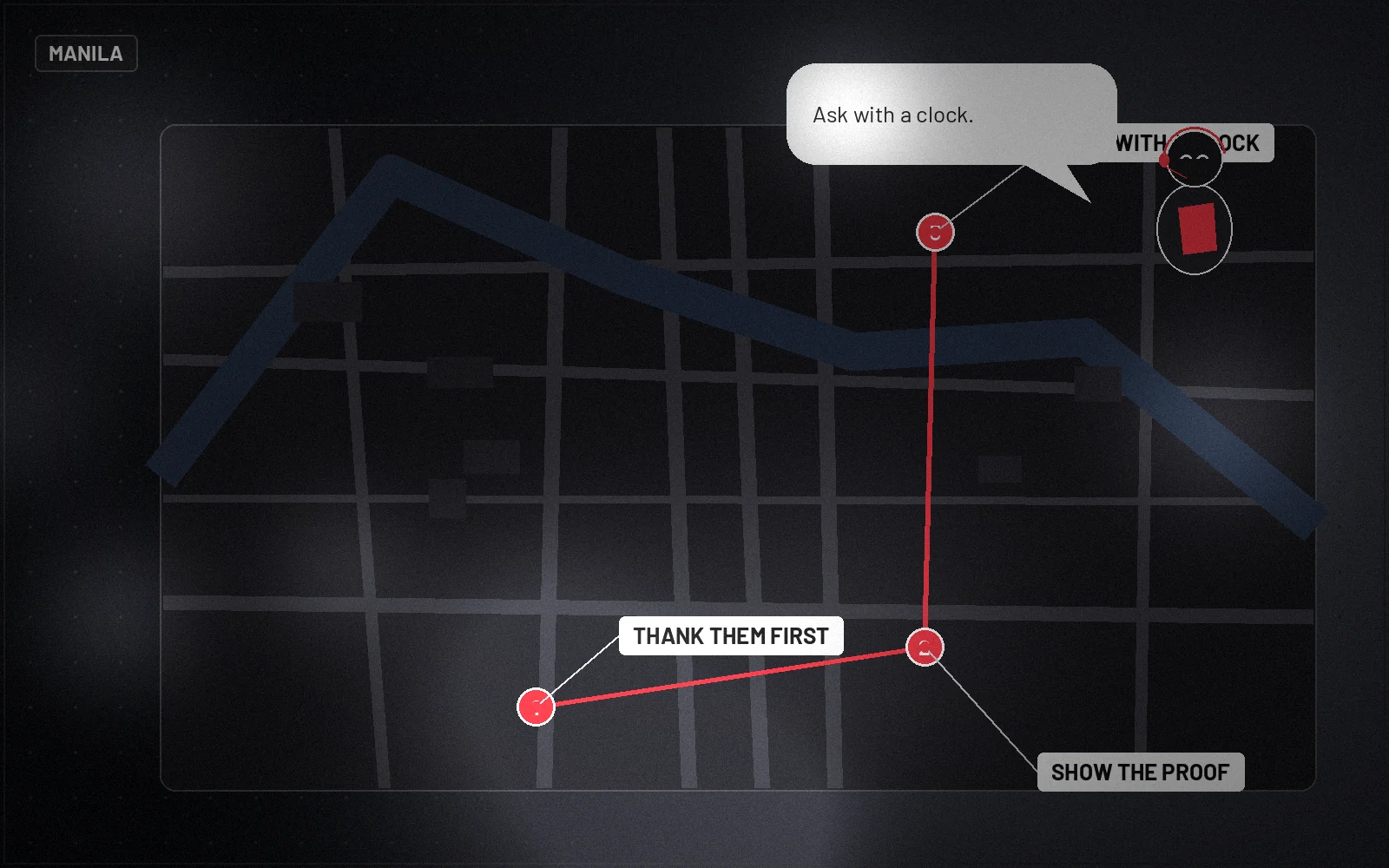
We send on your local clock, not Manila convenience.
Quiet hours: [your quiet-hours window, local time].
If this arrived wrong, reply TIME and we will shift the slot.
A 3 a.m. “thanks” in Dubai is not gratitude. It is a mute.
Monday field kit
- Read the hour-zero text as if it will be screenshotted in a family chat. Cut anything you would not defend.
- Check last week’s file: two proofs for every one ask. If the ratio flipped, you are running spam.
- Confirm consent source on the record before you send.
- Write a FIL or vernacular twin from the same spine. Do not shrink a speech into SMS.
FAQs
What is stewardship SMS English?
It is the locked short copy for thank-you, proof, and ask texts to mid-tier donors. Same spine as email. Tighter. Screenshot-safe.
Can we use WhatsApp or Viber instead?
Same sentences. Same quiet hours. Same STOP path. Channel policy still wins.
Is this legal advice?
No. Consent, political advertising, and cross-border messaging rules are market-specific. Counsel before you automate.
What to do this week
Rewrite the first text after a mid-tier gift. Remove the ask. Add a Thursday proof clock. Kill “Can I count on you?”
More: Insights · Services · Contact.
Related: mid-tier stewardship sequences · desk-ready pitch email · weekly communications scorecard English · CRM field note English