
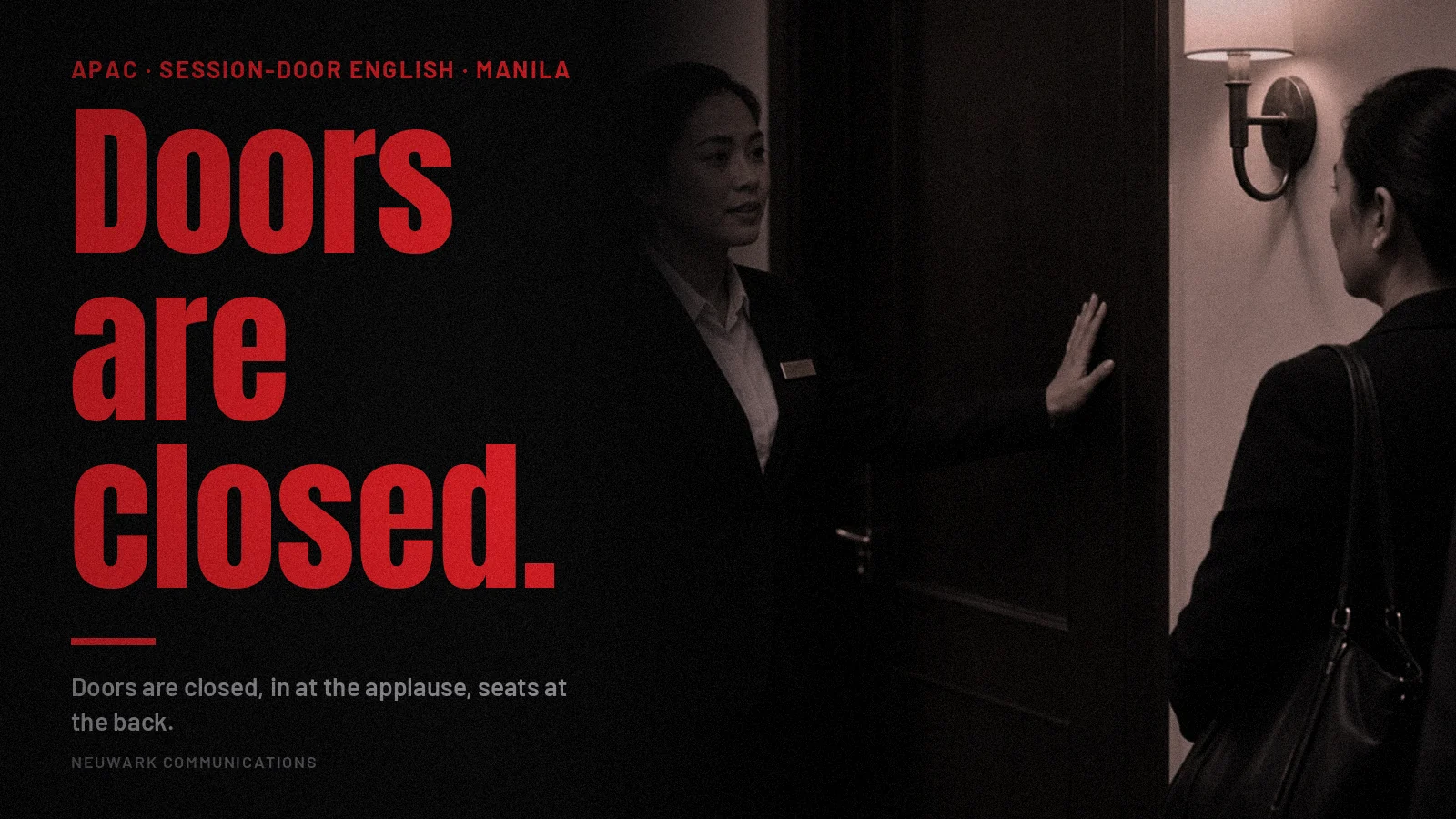
Session-door line English APAC is the door marshal’s short line at a closed session door: doors are closed, in at the applause, seats at the back.
Street-smart APAC English: short sentences a tired operator can say out loud.
A Manila hotel function room, the keynote ten minutes in.
Latecomers push the doors open one by one, and each time the hallway noise spills in.
The speaker loses her place twice.
Quick answer: A session-door line English APAC is what the door marshal says to latecomers during a talk: doors are closed, in at the applause, seats at the back. Say it the same way to everyone, so the room stays quiet and nobody is turned away.
Pair it with the late-arrival text English APAC that tells latecomers where to go and the usher-torch line English APAC that walks them to a seat. Good event language at the door protects the speaker and still welcomes the guest.
What goes in a session-door line English APAC?
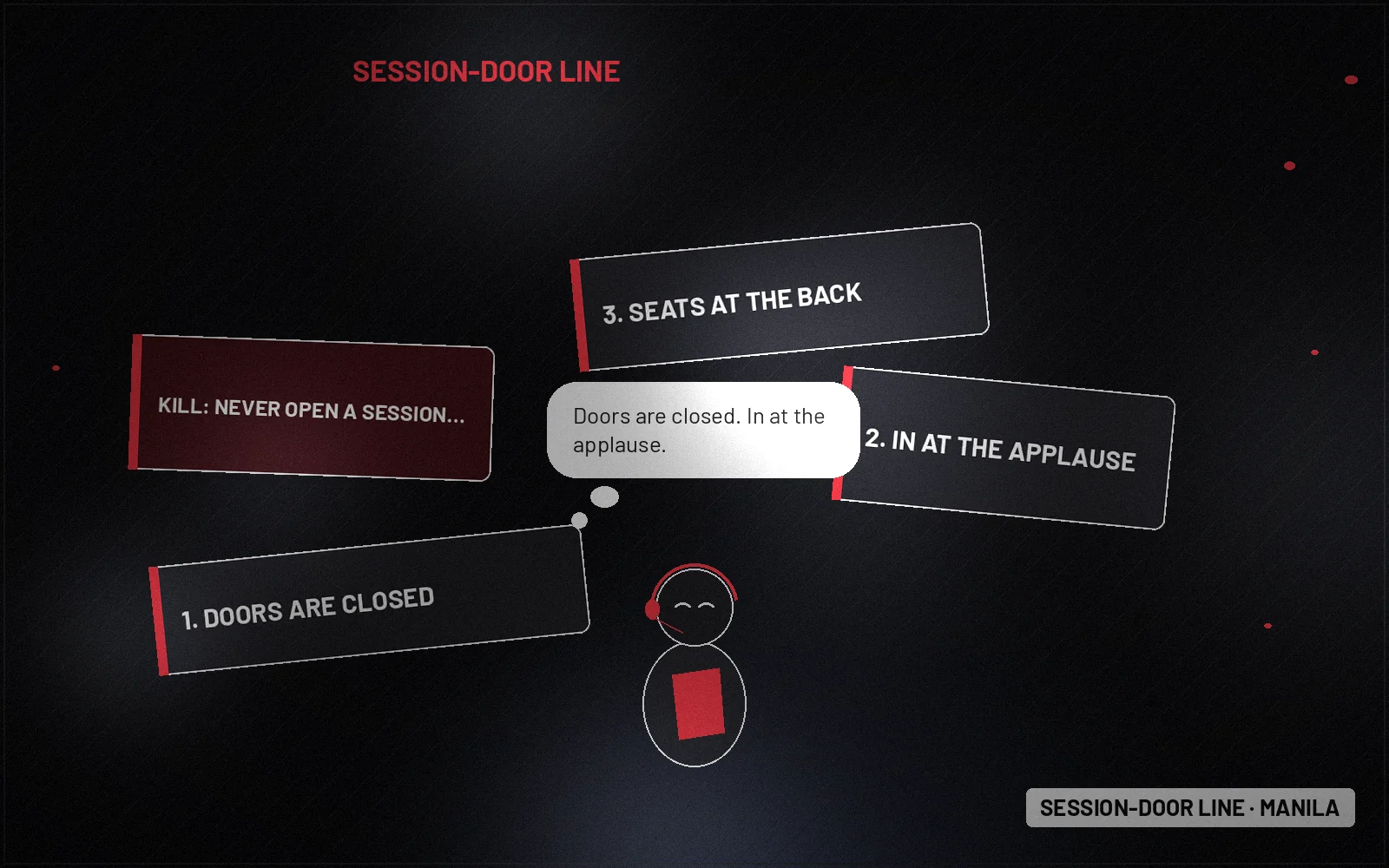
Three parts. Doors are closed, in at the applause, seats at the back.
Session-door line (illustrative):
“Good morning. The doors are closed while our speaker is on.”
“I’ll bring you in at the next applause.”
“Seats are at the back on the left. The usher will show you.”
Speakable lock (illustrative): “The doors are closed for the talk, I’ll bring you in at the applause, and seats are at the back.”
In at the applause matters most. Guests wait calmly when they know exactly when they will go in, and the applause covers the sound of the door.
What should the door marshal stop saying to latecomers?
Stop saying you can’t go in and start saying when they can. A closed door with no time feels like a rejection. Give the reason, the moment and the seat in one breath, and stay with the guest until the applause.
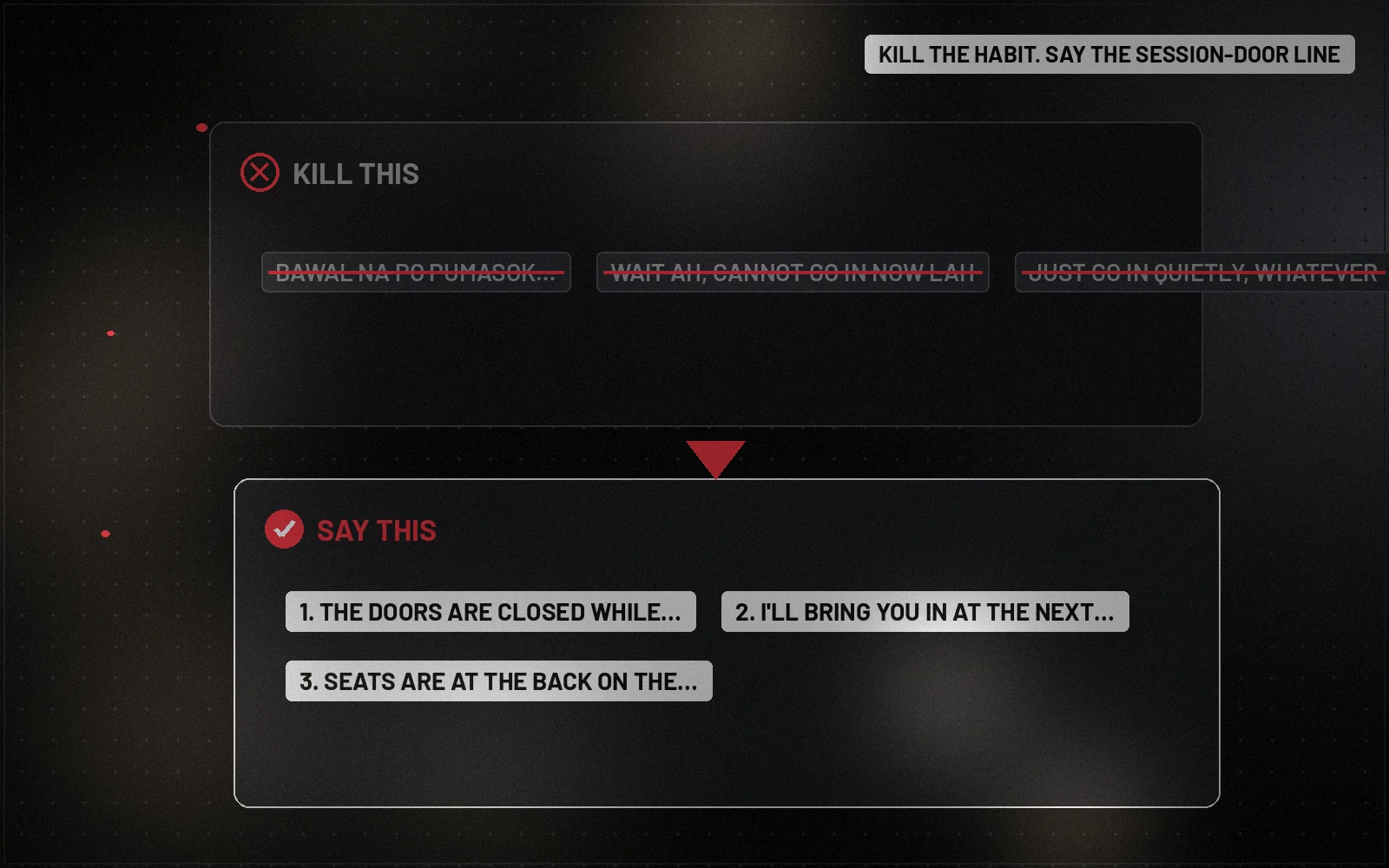
| Kill this | Say this (illustrative) | Why |
|---|---|---|
| Bawal na po pumasok, nagsimula na. | The doors are closed while our speaker is on. | A reason, not a wall |
| Wait ah, cannot go in now lah. | I’ll bring you in at the next applause. | A clear moment |
| Just go in quietly, whatever. | Seats are at the back on the left. The usher will show you. | A place to go |
| Sige, pasok na lang po kayo, bilisan niyo. | Please wait with me. It won’t be long. | Stay together |
| Maybe later can. | We’ll go in together at the applause. | Same promise every time |
Lines in this table are illustrative, not quotes from real people.
When should latecomers be let into a session?
At the first applause, between speakers or at an agreed break. Agree the moments with the stage manager before doors. The marshal listens for the cue, then opens one door, slowly, and lets the waiting group in together.
What if a latecomer insists on going in now?
Repeat the line once, calmly, and offer something to do now. Point to the screen in the foyer if there is one, or offer the programme to read while they wait. If they still insist, call the floor lead. The marshal never argues at the door.
How does this play out on PH, SG and Bangkok desks?
Same three parts. Different desks.
Philippines desk. In Manila, guests often arrive in groups after traffic, and some are senior guests used to walking straight in. Say it warmly, with po and sir or ma’am: sandali lang po, sir, papasok tayo sa applause. Agree the reserved back seats with the usher team.
Singapore desk. In Singapore, latecomers usually expect to wait for a break. Keep the line in plain English, give the moment clearly, and point to the back seats before the door opens.
Bangkok desk. In Bangkok, a calm tone and a small polite gesture matter as much as the words. Keep the three beats short, add a polite khrap or kha, and stay with the guest until the applause.
Monday field kit
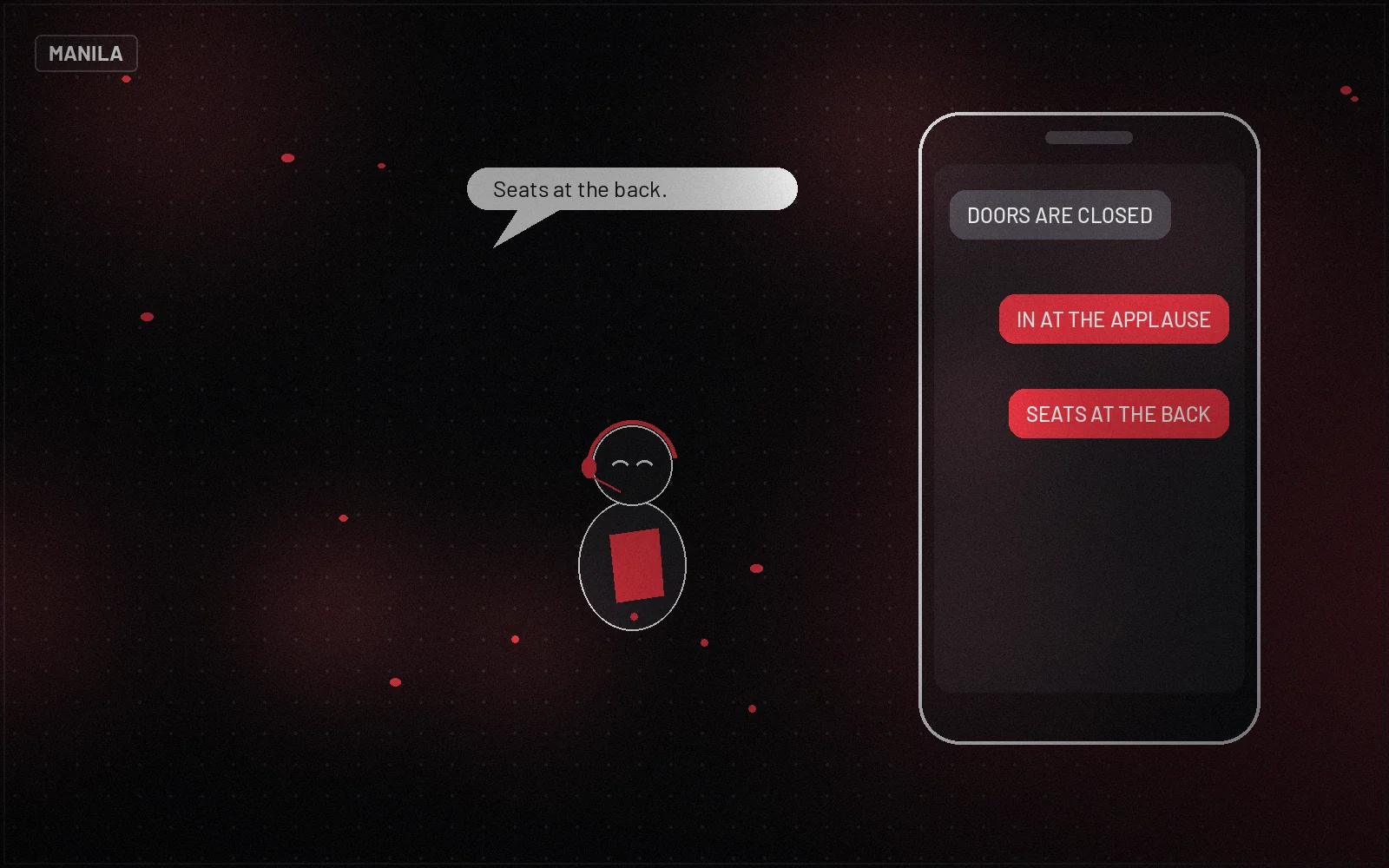
- Doors are closed, in at the applause, seats at the back.
- Entry moments agreed with the stage manager.
- Back seats held for latecomers with the usher team.
- One door used for entry, opened slowly.
- Kill rule: never open a session door in the middle of a speaker’s sentence.
FAQs
What is a session-door line English APAC?
A session-door line English APAC is the door marshal’s line for latecomers: doors are closed, in at the applause, seats at the back. Every guest hears the same words.
Can you enter a conference session late?
Usually yes, at the next applause or break, guided by the door marshal. Latecomers sit at the back so the speaker is not interrupted.
What should a door marshal say to latecomers?
Say the doors are closed while the speaker is on, that you will bring them in at the applause, and where the seats are. Then stay with them until the moment comes.
Neuwark Communications builds event and campaign communications as part of our public affairs work. More street-smart lines live in Insights.
Related: late-arrival text English APAC · usher-torch line English APAC
Talk to us about your next event script.
Illustrative lines only. Communications craft, not legal advice.