
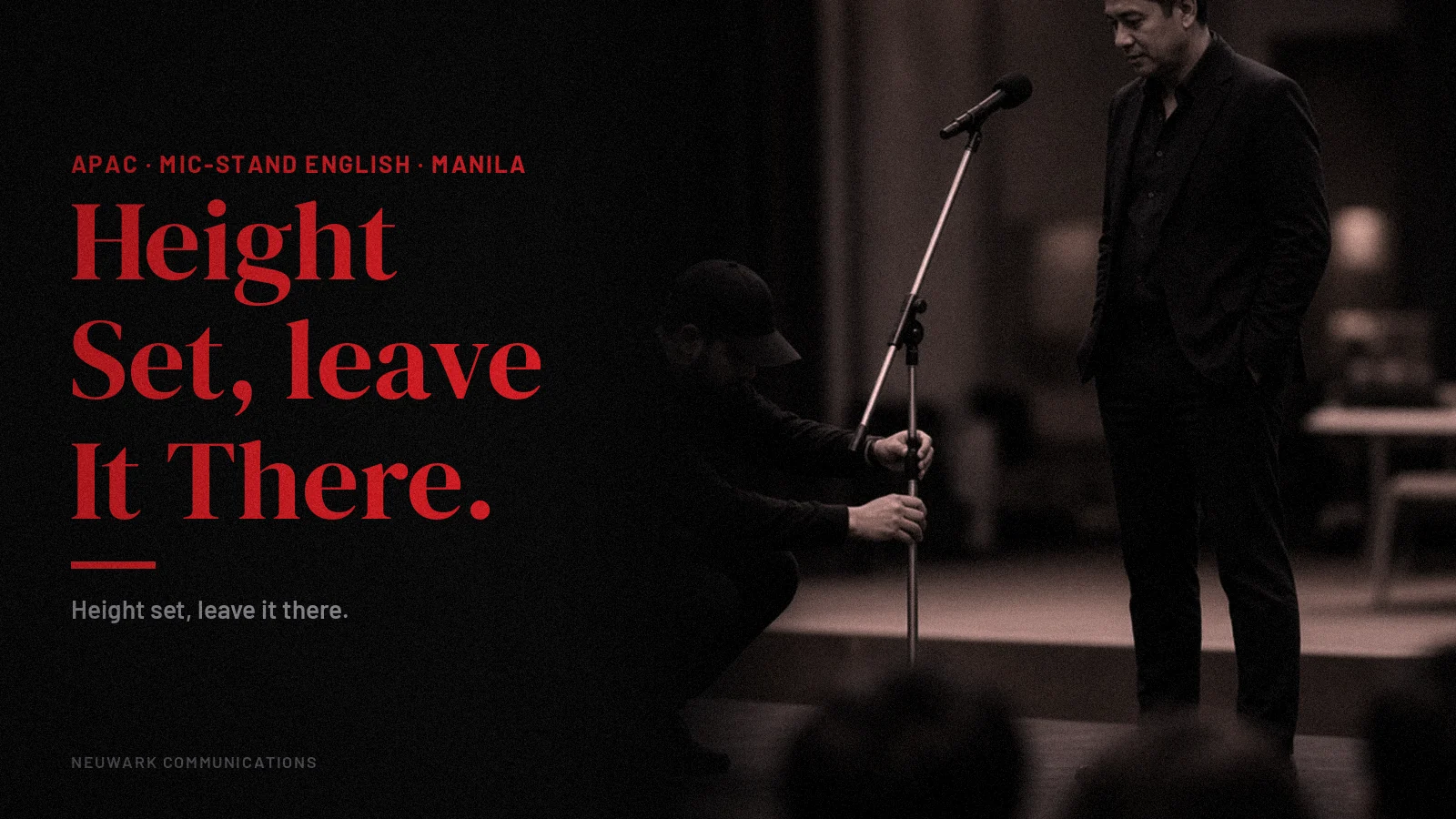
Quick answer: A mic-stand line English APAC is what the stagehand says after setting the stand for each speaker: height set, leave it there. Speak one fist from the mic and the desk does the rest. Keep campaign communications and event language identical on PH and SG desks.
Mic-stand line English APAC is the short stagehand line at a changeover: height set, leave it there, speak one fist from the mic.
Street-smart APAC English: short sentences a tired operator can say out loud.
A Singapore conference stage, panel changeover.
The next speaker reaches for the mic stand clamp.
The stand drops with a thud the whole house hears.
Pair it with the emcee-handoff line English APAC and the lapel-mic line English APAC.
What goes in a mic-stand line English APAC?
A mic-stand line English APAC has three parts: the set, the hands-off and the gap. Height set tells the speaker the work is done. Leave it there stops a clamp wrestle in front of the room. The gap, one fist from the mouth, gives the desk clean sound without pushing the level.
Mic-stand line (illustrative):
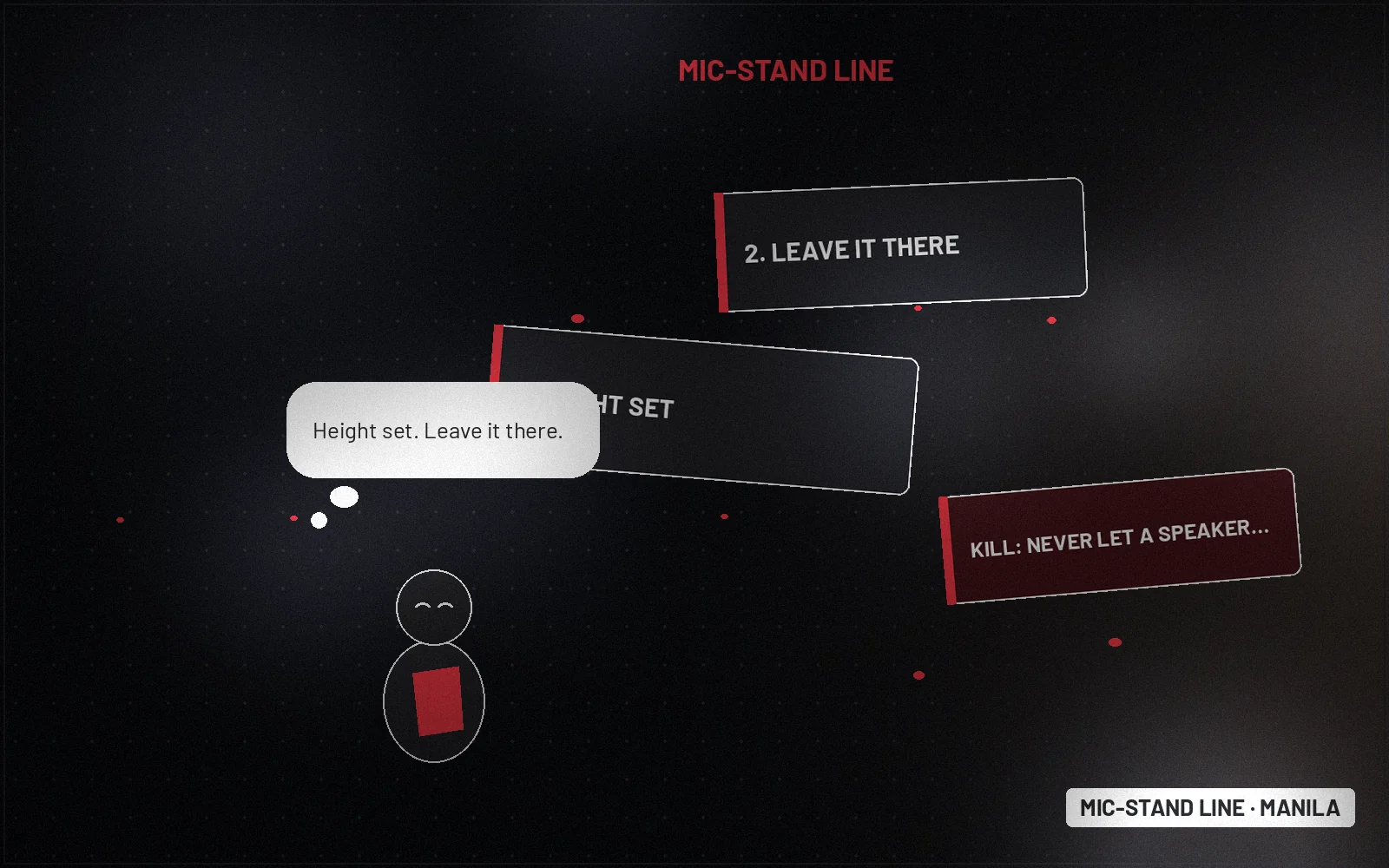
“Wait on the mark. I’ll set it for you.”
“Height set. Leave it there.”
“One fist from the mic. Over to you.”
How close should the speaker be in a mic-stand line English APAC?
About one fist between mouth and microphone, measured with the speaker’s own hand if they like. Closer brings pops on hard sounds. Further away and the desk has to push the level, which invites feedback. Show the fist gap once, smile, and step back to the wing.
Question ladder (illustrative):
- Typed question: “Can I hold it?” Opener: “Of course. I’ll take the stand away.”
- Follow-up: “It feels high.” Opener: “Tell me now. I’ll reset it.”
- Practical rung: “Should I tap it?” Opener: “No tapping. It’s live.”
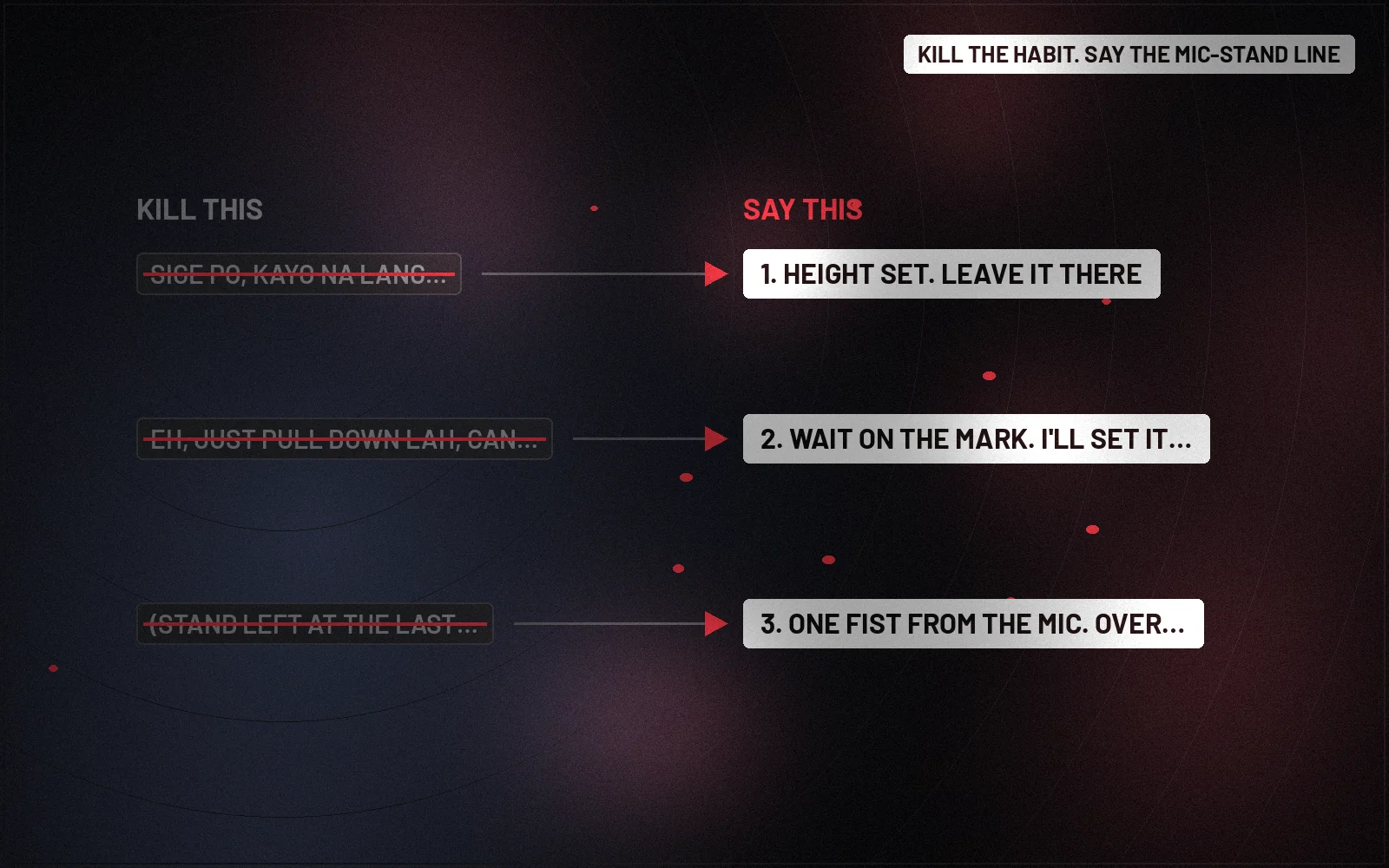
| Kill this | Say this (illustrative) | Why |
|---|---|---|
| Sige po, kayo na lang mag-adjust. | Height set. Leave it there. | The stagehand owns the clamp |
| Eh, just pull down lah, can one. | Wait on the mark. I’ll set it for you. | Holds the speaker still |
| (stand left at the last speaker’s height) | One fist from the mic. Over to you. | Gives clean sound |
What if the speaker moves the stand after the mic-stand line English APAC?
Leave it there is a request, not a rule. If the speaker adjusts anyway, let them; they own the stage once the first word lands. If the clamp slips mid-talk, wait for a pause, walk on low, fix it in one move and leave. Note the height for any repeat.
Why does this line work?
It answers what a speaker worries about at the stand: will I look clumsy, and will they hear me? Height set takes the hardware off their hands, leave it there removes the urge to fiddle, and the fist gap is a measure anyone can check without a sound engineer.
The line shifts in word choice only: in the Philippines, add po or sir and ma’am; in Singapore and Malaysia, keep it brisk and plain; in Indonesia, open with Bapak dan Ibu.
PH and SG desk notes
Philippines desk. In Manila venues, speakers wave off help out of politeness. Add po and sir or ma’am: height set po, leave it there. Keep heights in the crew Viber group.
Singapore and wider APAC desk. In Singapore, panels change fast. Keep it brisk: height set, leave it there, one fist.
Paste-ready lock
Speakable lock (illustrative): “Height set, leave it there, and speak one fist from the mic.”
Monday field kit
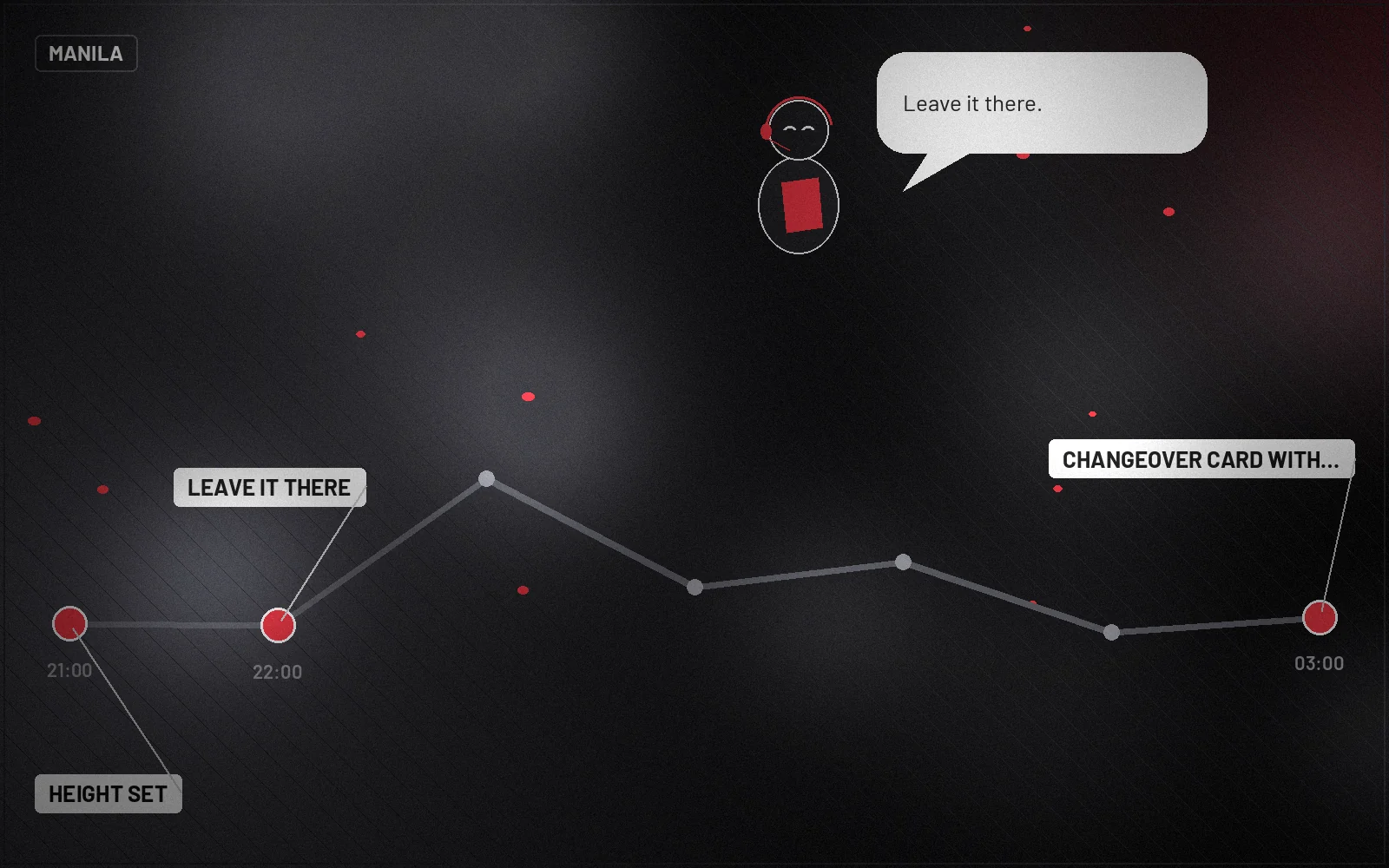
- Changeover card with heights from rehearsal.
- Floor mark where the speaker waits.
- Clamps tightened before doors.
- Stagehand at the wing during talks.
- Kill rule: never let a speaker wrestle the clamp in front of the room.
FAQs
What is a mic-stand line English APAC?
A mic-stand line English APAC is the short stagehand script at a changeover: height set, leave it there, speak one fist from the mic. It keeps hands off the clamp and the sound clean.
When do you say the mic-stand line English APAC?
Say the mic-stand line as each speaker reaches the mark. Say it once, quietly, and step off the stand.
Who owns the mic-stand line English APAC on stage?
The stagehand owns the spoken mic-stand line on stage and the height at every changeover. The stage manager owns the cue, so the speaker hears one voice per step.
What to do this week
- Record heights at rehearsal.
- Tape a floor mark beside the stand.
- Tighten every clamp before doors.
- Rehearse the fist-gap line.
- Print the kill rule on the changeover card.
Neuwark Communications writes event scripts through public affairs, crisis and rapid response, strategy and messaging and digital and social within our services. More lines live in Insights.
Related: Emcee-handoff line English APAC · Lapel-mic line English APAC
Talk to us about your next event script.
Lines are illustrative communications craft, not legal advice.