
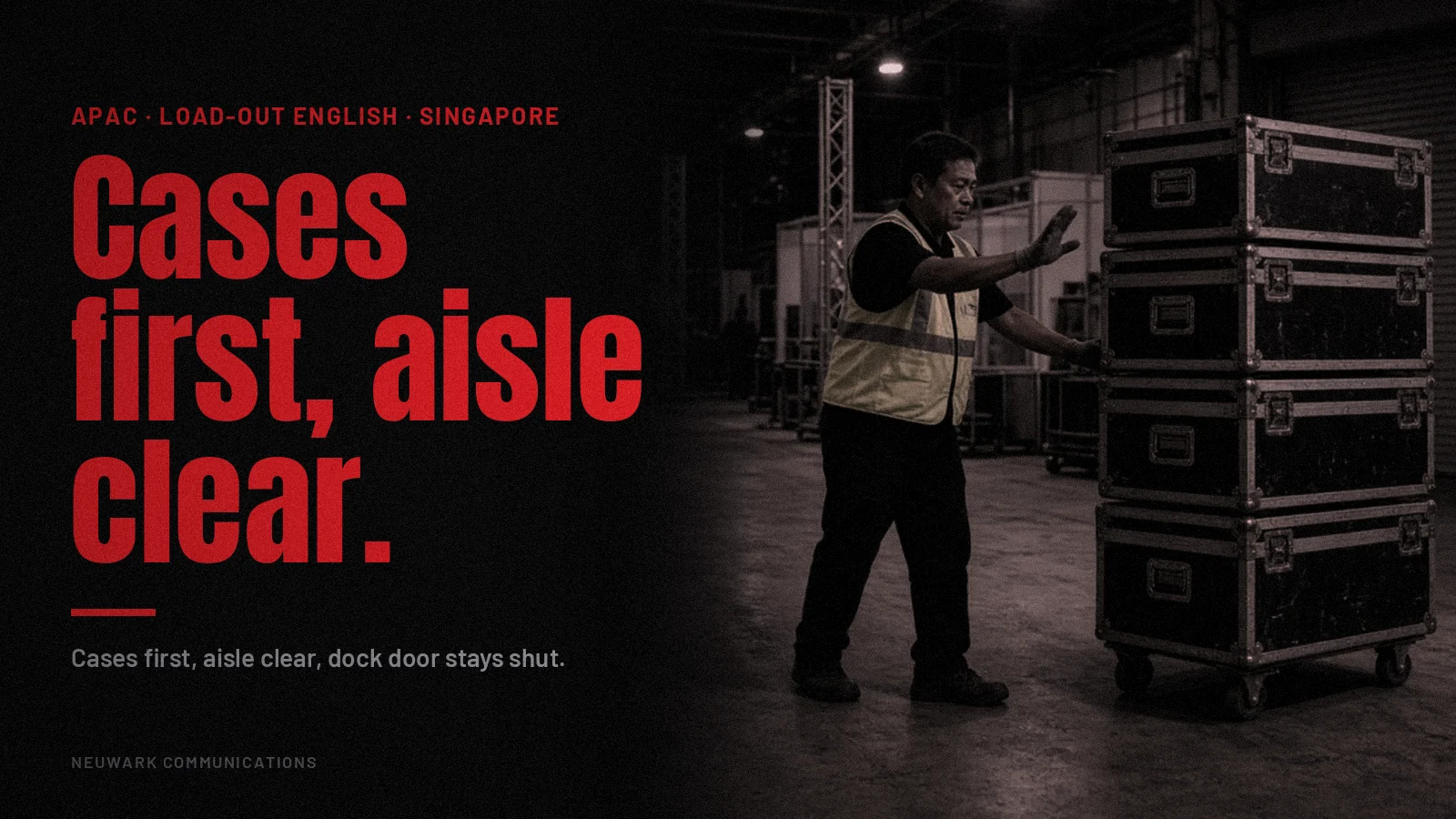
Cases first, aisle clear, dock door stays shut.
Street-smart APAC English: short sentences a tired operator can say out loud.
Quick answer: A load-out line English APAC is the crew chief’s teardown rule: cases first, aisle clear, dock door stays shut. Pack the gear, keep the path open, and open the dock only on the call.
A Pasay exhibition hall, ten at night, the last delegates gone.
Booth crews want to be out before midnight and trucks are queuing outside.
Everyone wants to carry something at once.
Pair it with the load-out ticket line English APAC for the truck side and the loading-dock line English APAC for reversing at the bay. Same craft: one short rule, said early and said the same way.
What is a load-out line English APAC?
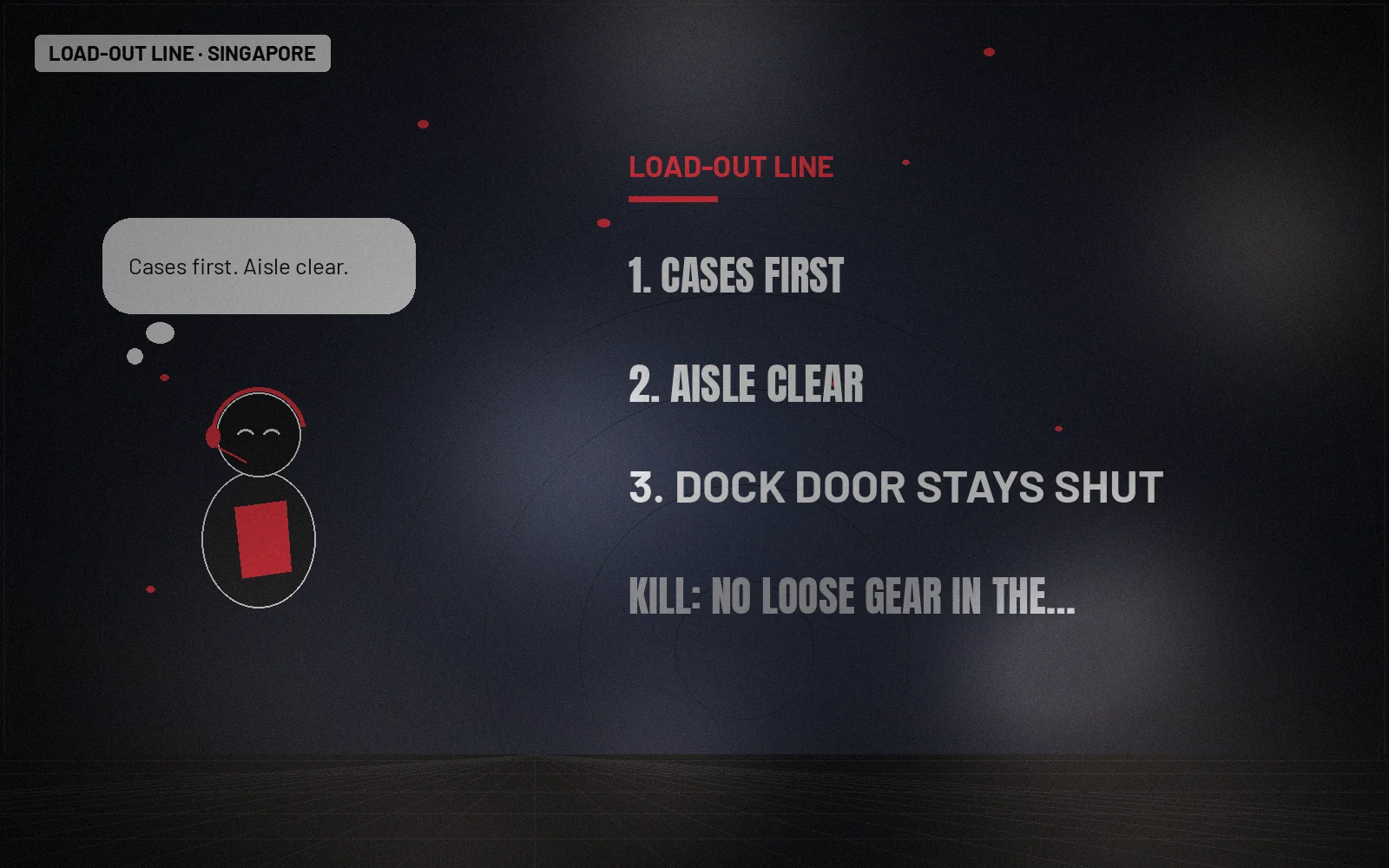
It is the crew chief’s three-part rule for teardown. Cases first, aisle clear, dock door stays shut. The crew chief says it at the start of load-out and again whenever a new crew walks in.
1. Cases first. Gear goes into its road cases before anything moves. Loose screens, cables and lamps carried by hand are what get dropped and lost.
2. Aisle clear. The hall aisle is the only route to the dock. Panels, pallets and coiled cable stay off it. If it is in the aisle, it is in someone’s way.
3. Dock door stays shut. The roller door opens when the crew chief calls a truck in. An open door in the rain wets the floor, lets in strangers and tempts crews to rush.
The habit to break is the everyone-carry rush. It feels fast. It ends with a blocked aisle, a pallet jack wedged sideways and a wet floor by the open door.
What should a crew chief stop saying at load-out?
Stop saying run and carry everything, and stop opening the door to save time. Both trade order for speed you never get. Say the three parts, crew by crew.
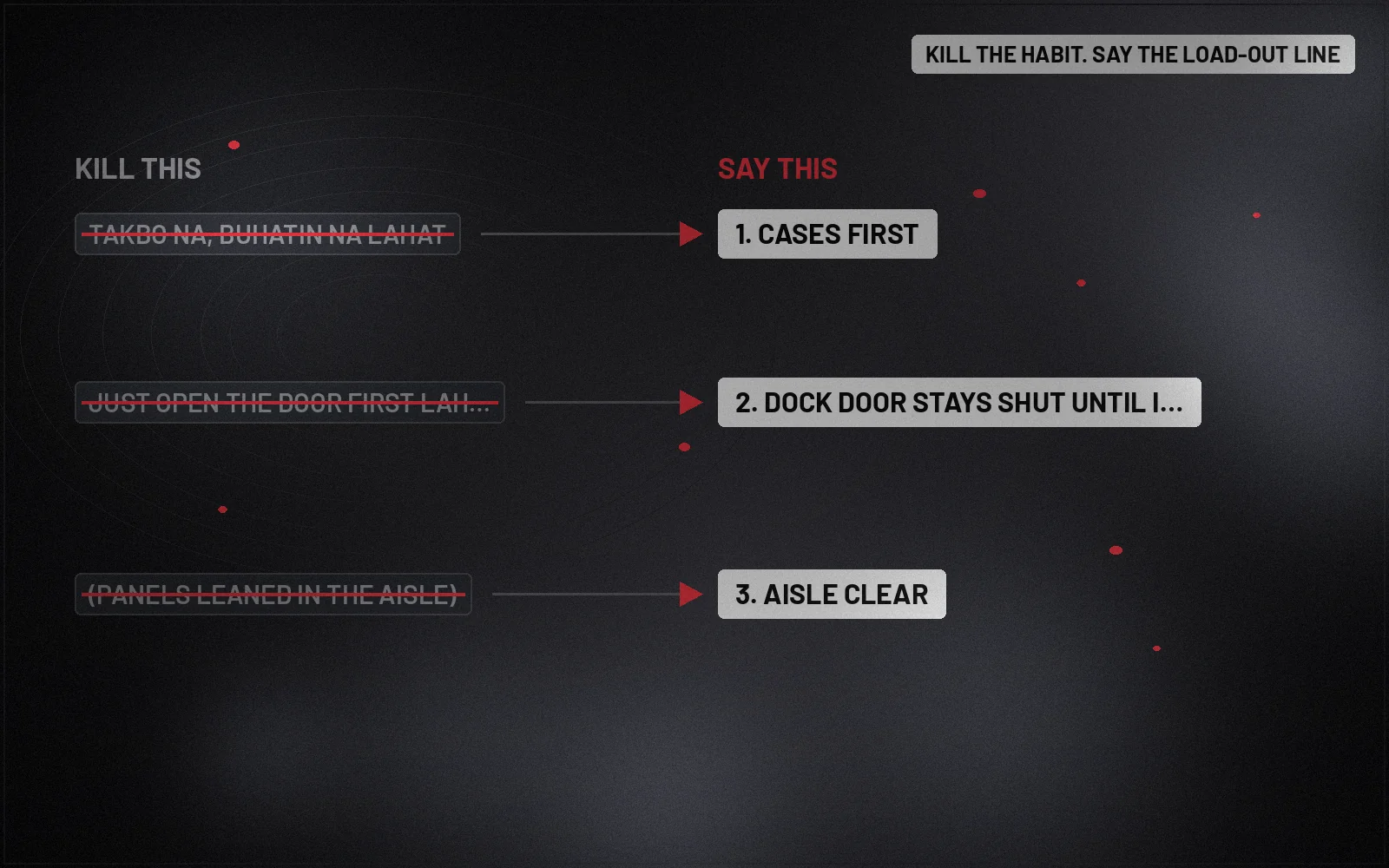
| Kill this | Say this (illustrative) | Why |
|---|---|---|
| Takbo na, buhatin na lahat. | Cases first. | Packed gear moves safely |
| Just open the door first lah, faster. | Dock door stays shut until I call it. | One truck, one call |
| (panels leaned in the aisle) | Aisle clear. | One route to the dock |
Lines in this table are illustrative, not quotes from real people.
Say it on the radio and face to face, at the start of every crew’s shift.
Who calls the dock door open at load-out?
The crew chief calls it, with the dock marshal outside. The dock marshal knows which truck is next at the bay. The crew chief checks that cases are ready and the aisle is clear, then calls the door.
Booth crews do not open the door themselves, even when their truck is outside. One person calls it, so trucks and people never meet at the bay by surprise.
What if a booth crew starts moving before cases are packed?
Say the line again, then stop that crew’s move until the cases are closed. Do not argue across the hall. Walk over, say cases first, and hold their slot.
This is the uncomfortable rung. Crews are tired and paid to finish. Holding one crew feels unfair, but a dropped screen in the aisle stops everyone. The venue’s load-out plan and the crew chief come first.
PH / SG / Bangkok desk notes
Same three parts. Different desks.
Philippines desk. Crews respond to respect and a little warmth. Use po with senior crew and sir, ma’am with booth owners: cases first po, aisle clear, sir. The dock door stays shut until I call it.
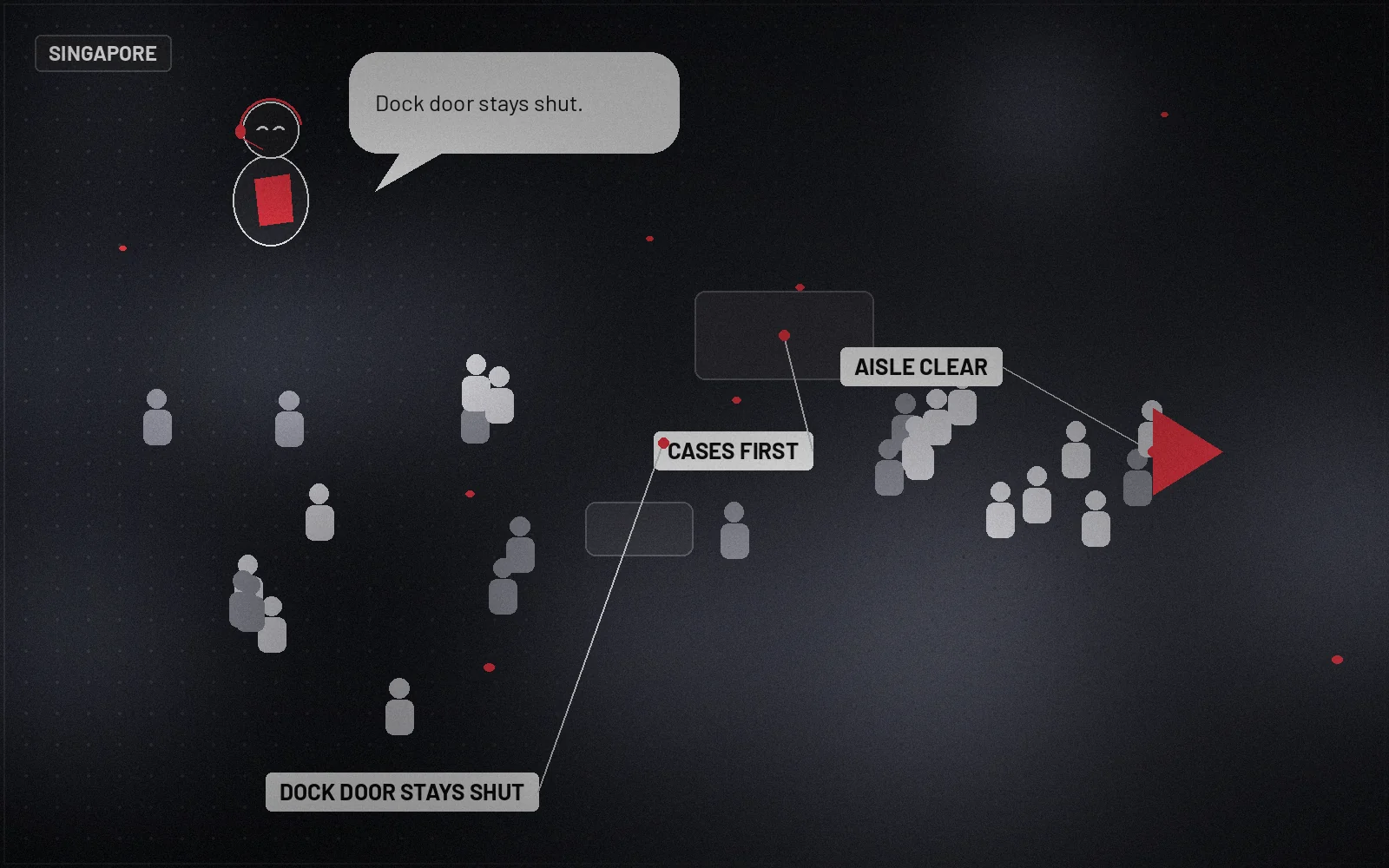
Singapore desk. Keep it brisk and on the radio. Cases first, aisle clear, dock door stays shut. Name the crew and the time slot, nothing more.
Bangkok desk. Many crews share the same dock. Say the three parts in plain English, point to the aisle tape and keep one hand signal for door open.
Paste-ready lock
Speakable lock (illustrative): “Cases first, aisle clear, and the dock door stays shut.”
Monday field kit
- Tape the aisle from the hall to the dock and mark it no-park.
- Agree the truck order with the dock marshal before doors close to the public.
- Brief every crew lead on the lock: cases first, aisle clear, dock door stays shut.
- Pick one radio call for door open and one for door shut.
- Kill rule: no loose gear in the aisle, ever.
Illustrative only. The venue’s load-out plan and the crew chief come first.
FAQs
What is a load-out line English APAC?
A load-out line English APAC is the crew chief’s teardown rule: cases first, aisle clear, dock door stays shut. Pack the gear, keep the path open, and open the dock only on the call.
What should a crew chief stop saying at load-out?
Stop saying run and carry everything, and stop opening the door to save time. Say the three parts crew by crew.
Who calls the dock door open at load-out?
The crew chief calls it with the dock marshal outside. Booth crews never open the door themselves.
What if a booth crew starts moving before cases are packed?
Say the line again and hold that crew’s move until the cases are closed. A dropped screen in the aisle stops everyone.
Neuwark Communications builds event and campaign communications as part of our strategy and messaging work. More street-smart lines live in Insights.
Related: load-out ticket line English APAC · loading-dock line English APAC
Talk to us about your next event script.
Illustrative lines only. Communications craft, not legal advice.