
Pouch closed, cable looped, return to rack.
Street-smart APAC English: short sentences a tired operator can say out loud.
Quick answer: A headset-pouch line English APAC is the comms runner’s rule at a headset handback: pouch closed, cable looped, return to rack. The pouch stays shut, the cable is looped neat, and every set goes back to the rack instead of a chair or pocket.
Bangkok, a ballroom show mid changeover, and headsets pile on a chair with open pouches and tangled leads. One runner stuffs a cable into a pocket. The next cue needs a clean set and nobody can find which pouch still has a working earpiece.
A headset pouch only protects the kit if it stays closed, the cable is looped and every set returns to the rack. Read it alongside the headset check line English APAC and the radio check line English APAC.
What is a headset-pouch line English APAC?
It is a comms runner’s three-part rule at a headset handback at the rack. Closed first, looped second, rack third.
1. Pouch closed. Close the pouch before you walk away. An open pouch drops the earpiece on the floor.
2. Cable looped. Loop the cable neat beside the set. Do not stuff a knot into the pouch.
3. Return to rack. Return every set to the rack. Chairs and pockets are not handback points.
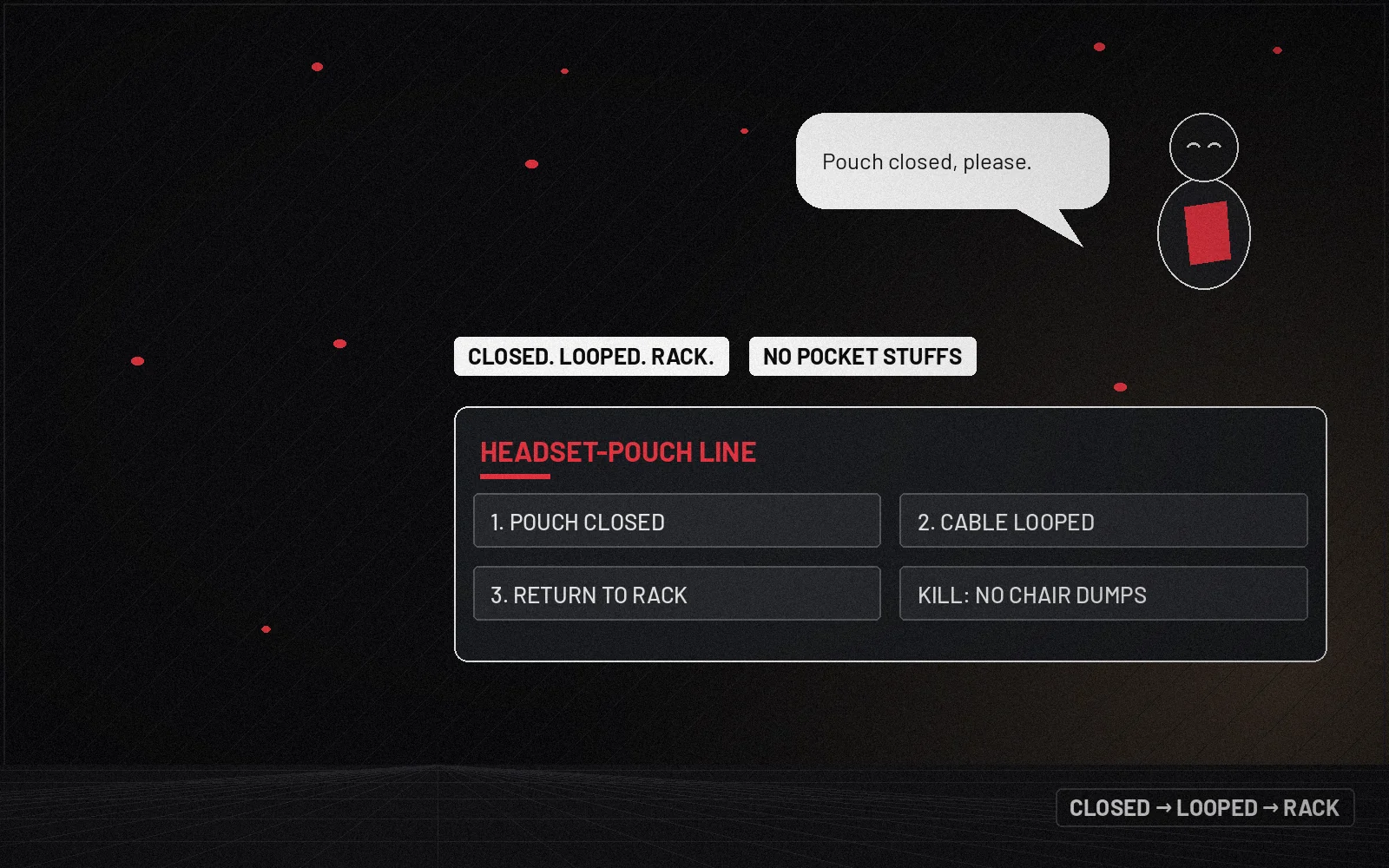
The habit to break is the chair dump. Runners leave open pouches on seats and promise to rack them after the cue.
What should a comms runner stop saying at headset handback?
Stop dumping open pouches on chairs, and stop stuffing knotted cables into pockets. Say the three pouch parts at the comms brief instead.
| Kill this | Say this (illustrative) | Why |
|---|---|---|
| Iwan na lang po sa upuan, babalikan ko. | Pouch closed. | A closed pouch stops the earpiece falling out (PH Tagalog habit) |
| Just stuff the cable in lah, close later. | Cable looped. | A looped cable packs without knots (SG lah habit) |
| Simpan di saku aja dulu, Mas, nanti dikembalikan. | Return to rack. | The rack is where the next runner finds a working set (Jakarta Bahasa habit) |
Lines in this table are illustrative, not quotes from real people.
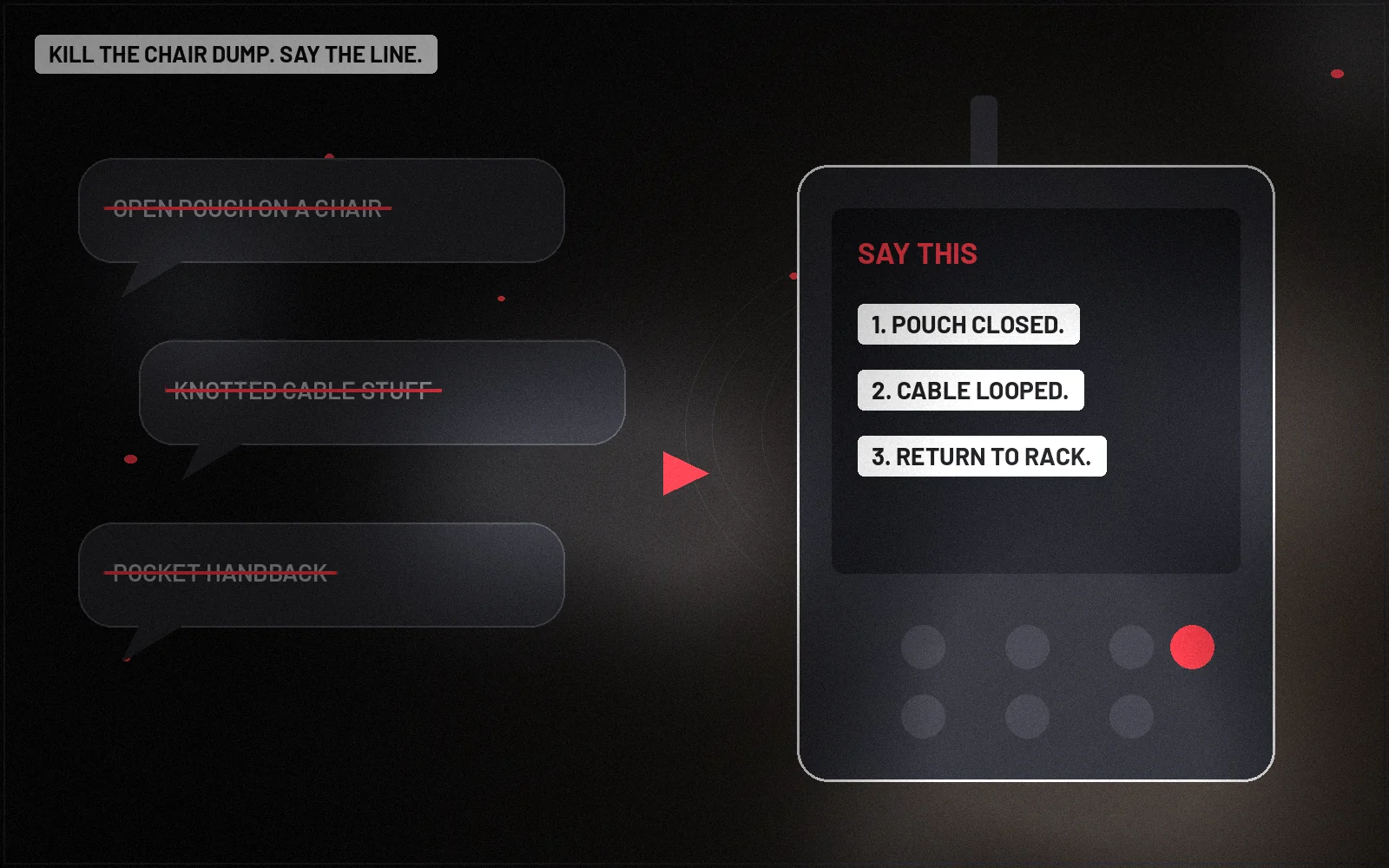
Say the line at the comms brief, before the first headset goes out.
What if a headset fails mid-show and the pouch is still on a chair?
Do not dig through a chair pile in the guest path. Radio the comms lead, pull a labelled spare from the rack and collect the failed set into a closed pouch for the fault bin.
Who plans headset-pouch handback before doors?
The production manager plans it with the comms lead, using the show plot. They agree rack location, spare count and who walks the handback line after each segment.
PH / SG / Jakarta desk notes
Same three parts. Different desks.
Philippines desk. Warm and clear. Pouch closed po. Cable looped po, sir. Return to rack po, salamat.
Singapore desk. Brisk and even. Pouch closed. Cable looped. Return to rack. Thank you.
Jakarta desk. Jakarta touring crews often mix Bahasa with English. Keep the three parts in English for mixed teams and add Bapak or Ibu only if the house style asks for it.
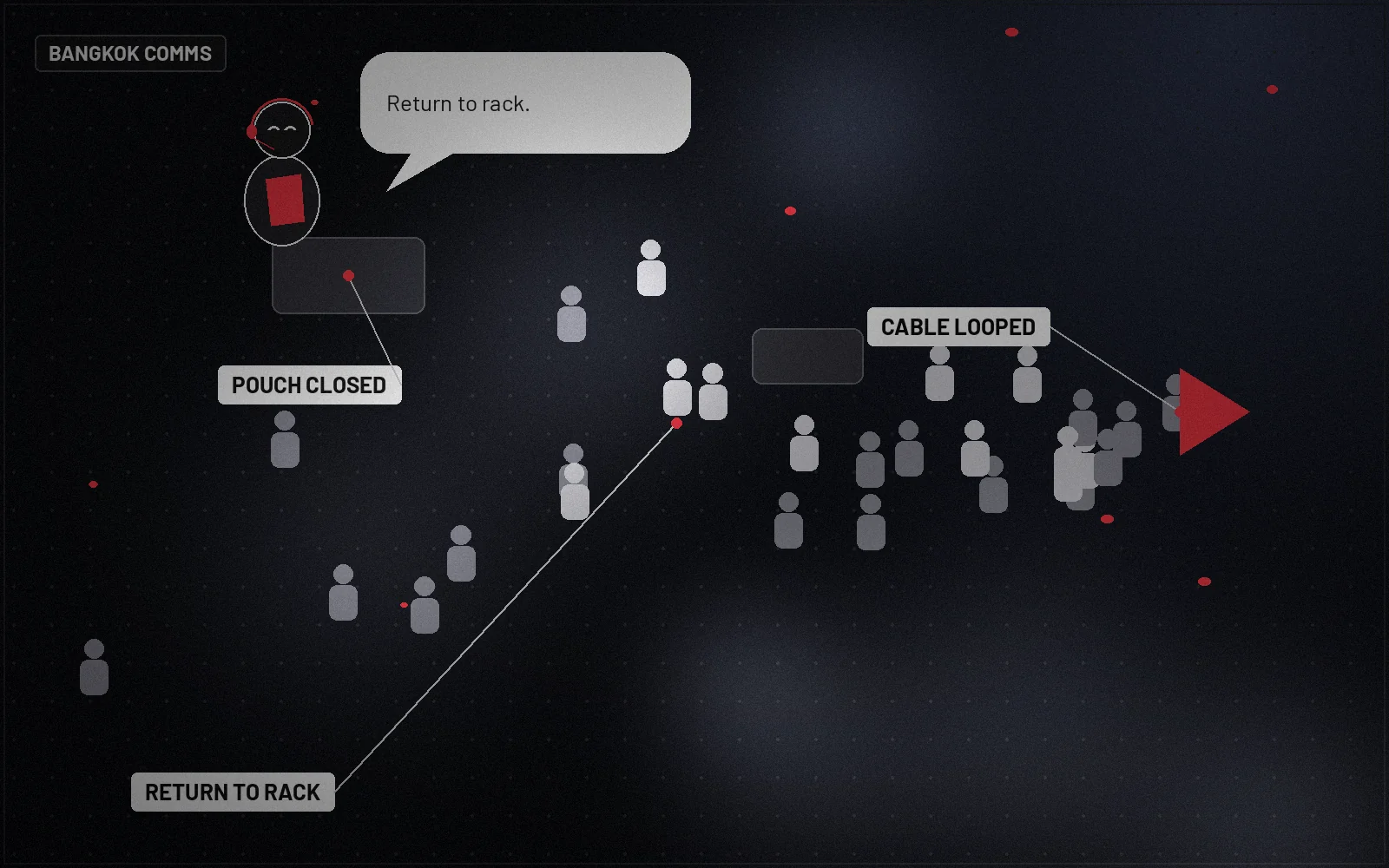
Monday field kit
- Confirm rack location and spare count with the comms lead.
- Label pouches and agree the fault-bin point.
- Brief runners on the lock: pouch closed, cable looped, return to rack.
- Practise one mid-show spare pull from the rack.
- Kill rule: no chair dumps, no pocket stuffs, no open pouches on the floor.
Illustrative only. Follow the show’s own comms plan; this wording is a template.
FAQs
What is a headset-pouch line English APAC?
A headset-pouch line English APAC is the comms runner’s rule at a headset handback: pouch closed, cable looped, return to rack. The pouch stays shut, the cable is looped neat, and every set goes back to the rack instead of a chair or pocket.
What should a comms runner stop saying at headset handback?
Stop dumping open pouches on chairs, and stop stuffing knotted cables into pockets. Say pouch closed, cable looped, return to rack, in that order.
What if a headset fails mid-show and the pouch is still on a chair?
Pull a labelled spare from the rack and pouch the failed set for the fault bin. Never dig through a chair pile in the guest path.
Who plans headset-pouch handback before doors?
The production manager plans pouch handback with the comms lead on the show plot. Runners brief the line before doors.
What to do this week
Speakable lock (illustrative): “Pouch closed, cable looped, return to rack.”
Stand at the rack for one changeover with your comms lead and count pouches still left on chairs. We draft comms wording like this at our Manila HQ in Makati and check it with colleagues at MBFC Tower 2 in Singapore before runners use it.
Neuwark Communications builds event and campaign communications as part of our strategy and messaging work. More street-smart lines live in Insights.
Related: headset check line English APAC · radio check line English APAC
Talk to us about your next event script.
Illustrative lines only. Communications craft, not legal advice.