
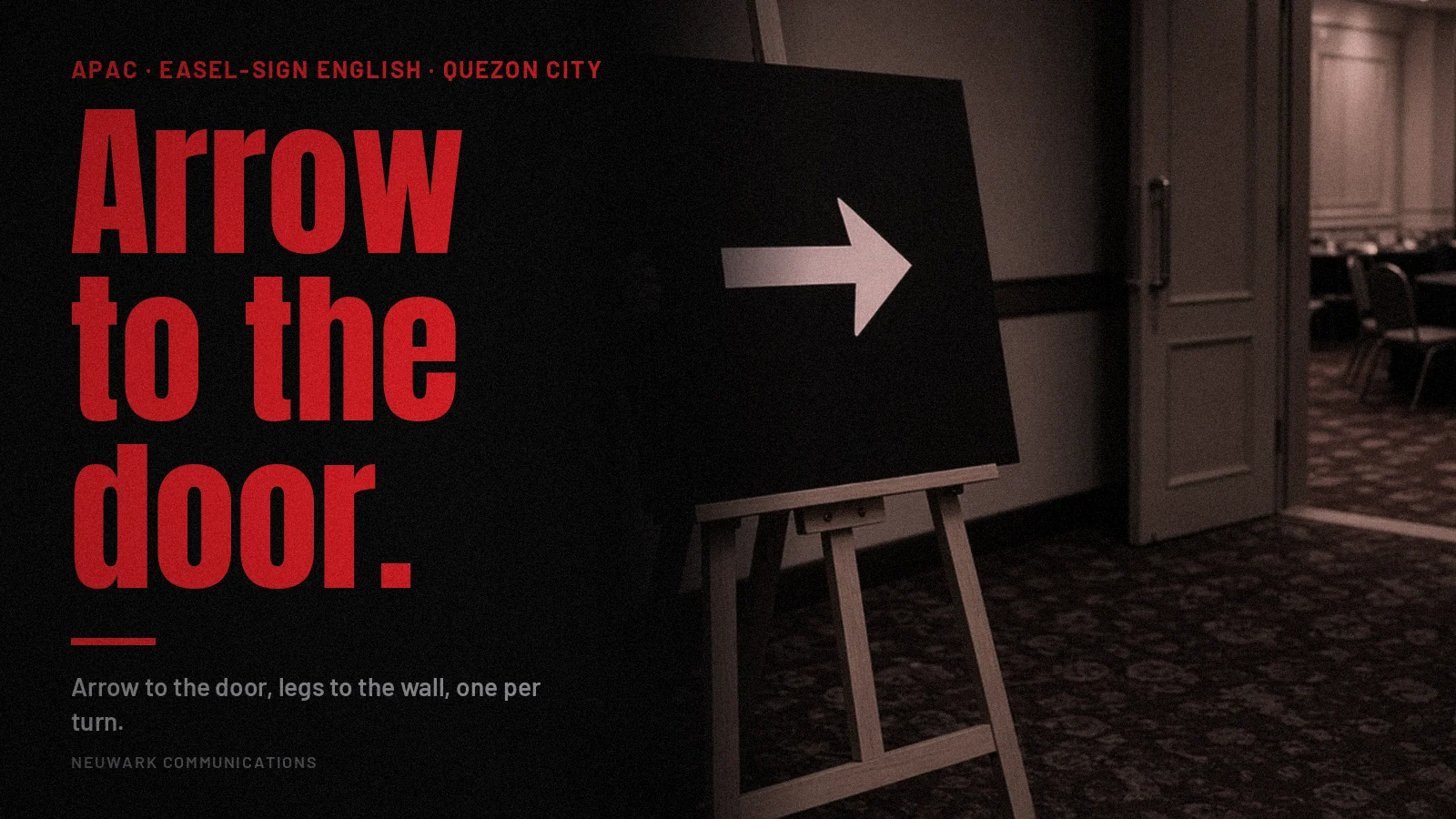
“Arrow to the door, legs to the wall, one per turn.”
Street-smart APAC English: short sentences a tired operator can say out loud.
A Quezon City convention corridor, three breakout halls, doors opening in ten minutes.
Two easels at the first turn point opposite ways, and one stands in the walkway.
Guests stop, read both, and ask the nearest crew member anyway.
Quick answer: An easel-sign line English APAC is the wayfinding lead’s short setup rule for floor signs: arrow to the door, legs to the wall, one per turn, so every sign points somewhere real and the corridor stays clear. The lead says it to crew at setup and on every check walk.
Pair it with the wrong-hall line English APAC and the cable-cover line English APAC for more event language on the floor. Signs do the talking so crew can do the helping.
What goes in the easel-sign line English APAC?
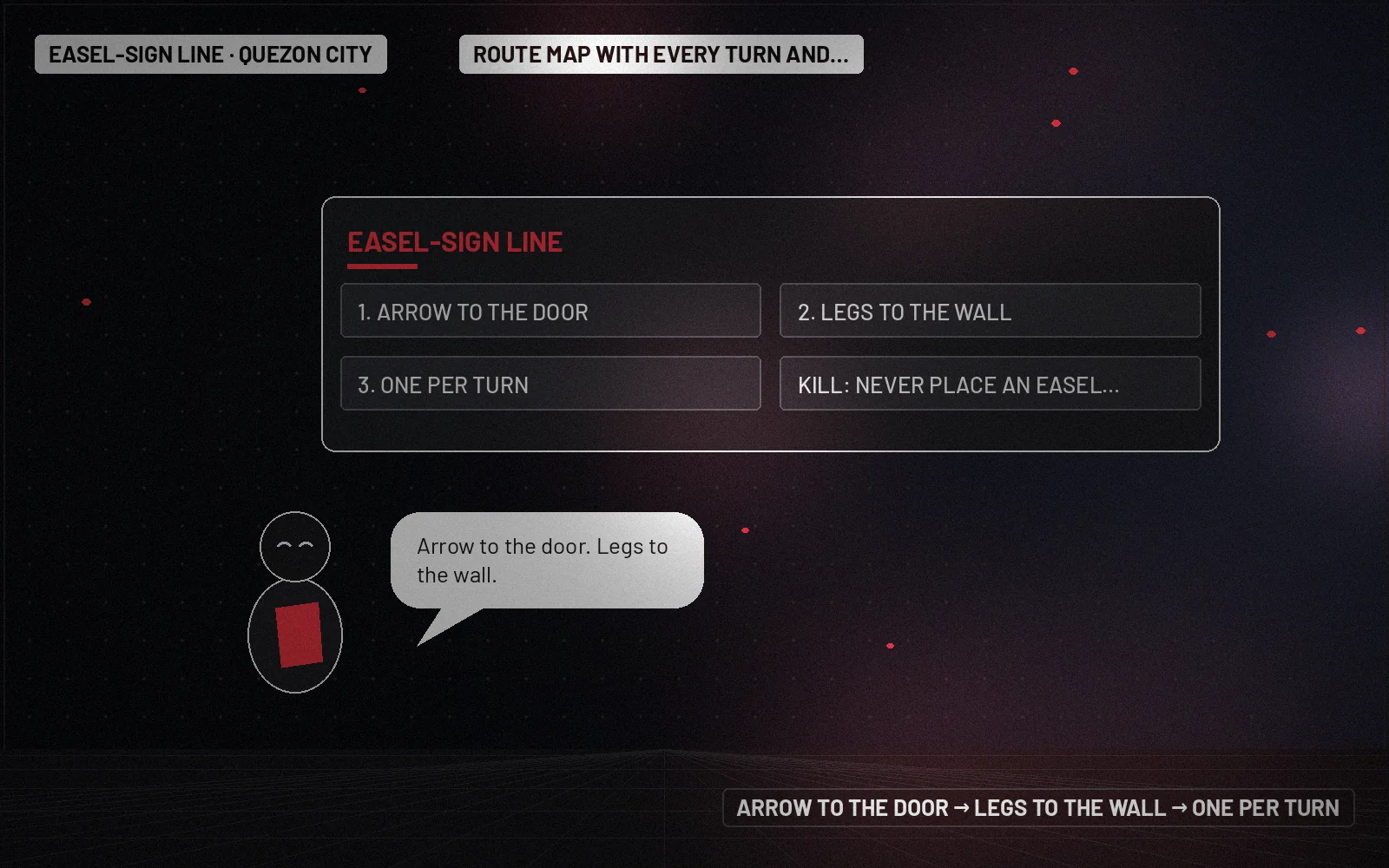
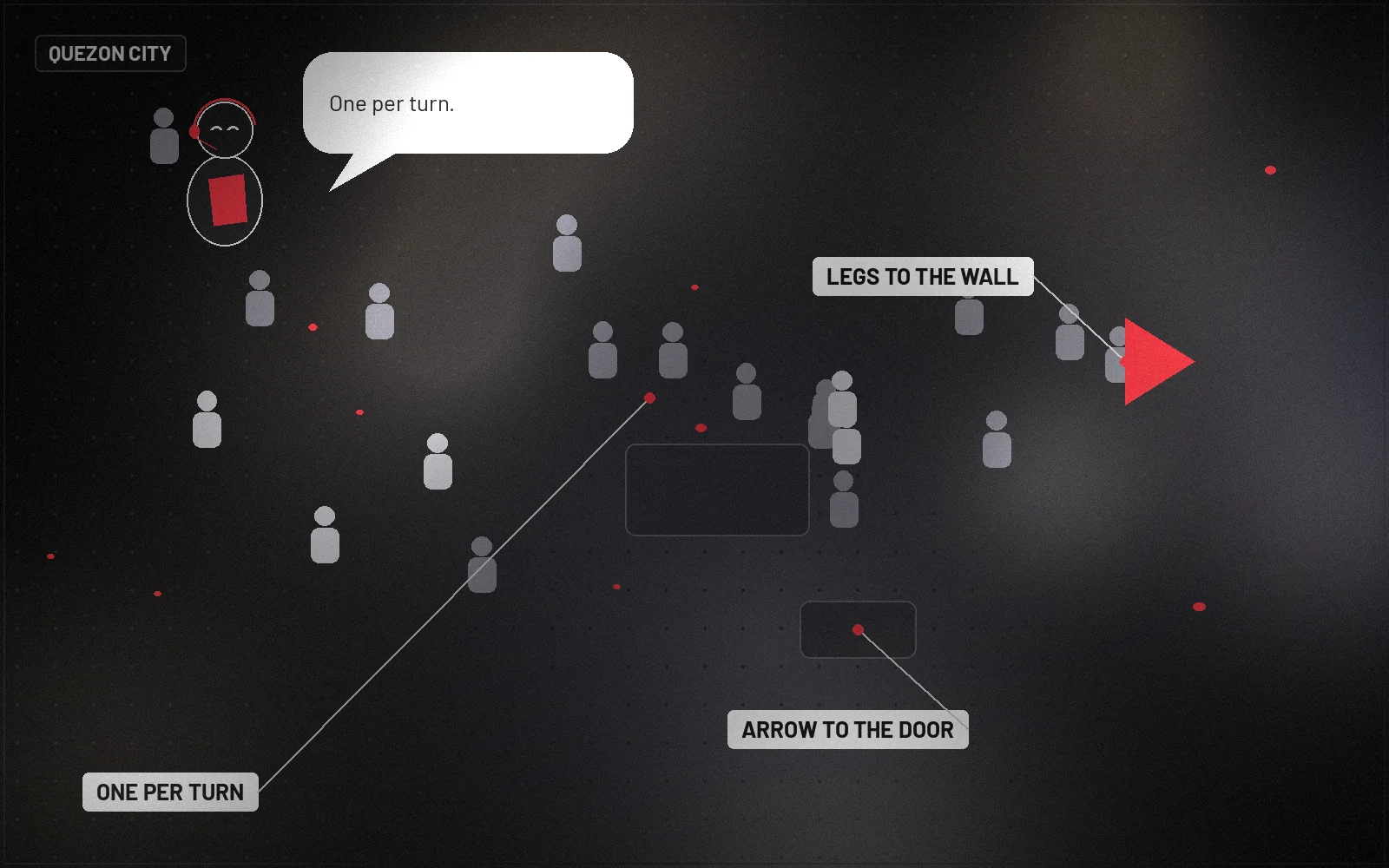
The easel-sign line English APAC has three parts: the arrow, the legs and the count. Arrow to the door means every arrow points at the actual door, not roughly toward a wing. Legs to the wall means the easel stands tucked against the wall, out of the walking line. One per turn means a single sign at each corridor turn, so guests never read two arrows that disagree.
Easel-sign line (illustrative):
“Arrow to the door, not just the direction.”
“Legs to the wall, corridor clear.”
“One sign per turn. Extras back to the store.”
Speakable lock (illustrative): “Arrow to the door, legs to the wall, one per turn.”
Say it at setup, then again on every check walk. Arrow, legs, count: three checks per easel.
When should the floor lead give the easel-sign line?
At setup, before doors, while the crew carries easels out from storage. Walk the guest route from the entrance to each hall, placing signs as you go. Repeat the line on the check walk after each session break, when easels get moved by guests and crew.
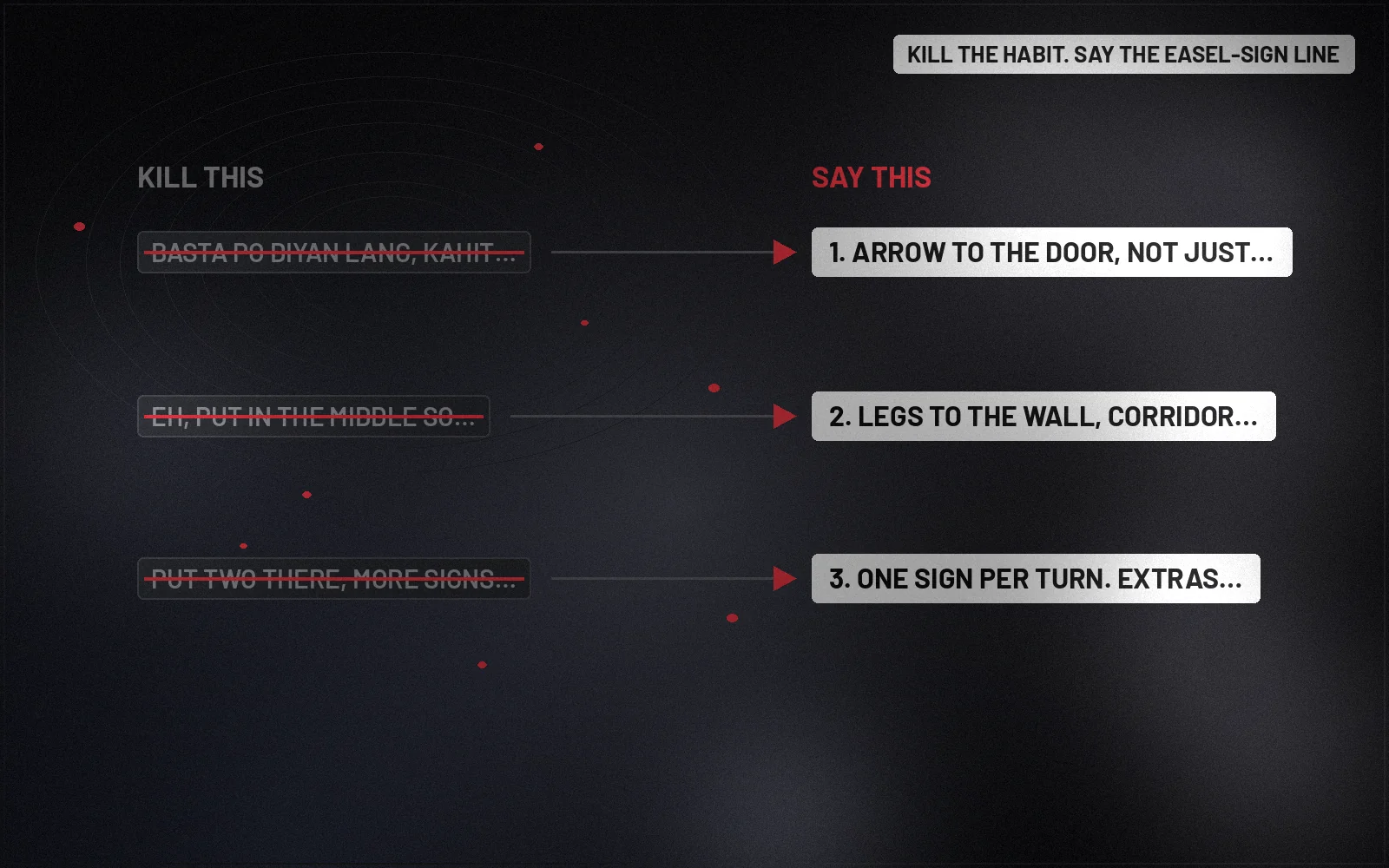
| Kill this | Say this (illustrative) | Why |
|---|---|---|
| Basta po diyan lang, kahit saan banda. | Arrow to the door, not just the direction. | A real target |
| Eh, put in the middle so people see lah. | Legs to the wall, corridor clear. | Walkway stays open |
| Put two there, more signs better. | One sign per turn. Extras back to the store. | No mixed arrows |
Lines in this table are illustrative, not quotes from real people.
What if a hall changes on the day?
Change the board, not just the arrow. The lead sends the change to the crew, then walks the route and updates every easel that points to the old hall. Crew at each turn say the new hall plainly until the boards are right.
How do you brief the crew on the easel-sign line?
Brief the floor crew at load-in with a printed route map. Mark each turn, each easel and the door it points to. Assign one crew member to own the signs for the day, with a check walk after every break.
Why does the line work?
Guests read a sign in a second and decide where to walk. When arrows disagree or easels block the corridor, people stop, bunch up and ask crew who are busy elsewhere. The line keeps signs few, clear and out of the way, so the floor flows and crew answer fewer questions.
How does the line play out on PH and SG/MY desks?
Philippines desk. In Quezon City and other PH venues, crews often set easels in a rush. Add po and sir or ma’am in the briefing: arrow to the door po, legs to the wall. Post the route map with sign spots in the crew Viber group so anyone can check.
Singapore and Malaysia desk. In Singapore and Malaysia, keep it brisk and plain: arrow to the door, legs to the wall, one per turn. Photograph each turn after setup and share it on WhatsApp so the check walk has a reference.
Monday field kit
- Route map with every turn and sign spot marked.
- Plain arrow boards matched to each door.
- One crew member who owns the signs for the day.
- Check walk after every session break.
- Kill rule: never place an easel in the walking line or two arrows at one turn.
FAQs
What is an easel-sign line English APAC?
An easel-sign line English APAC is the wayfinding lead’s short setup rule for floor signs: arrow to the door, legs to the wall, one per turn. Every sign points somewhere real and the corridor stays clear.
When do you say the easel-sign line English APAC?
Say it at setup, before doors, as the crew places each easel. Repeat it on every check walk after a break.
Who owns the easel-sign line English APAC?
The floor or wayfinding lead owns the easel-sign line English APAC. The lead says it to crew and checks every easel on the route.
Neuwark Communications writes event scripts like this through strategy and messaging.
Talk to us about your next event script.
Illustrative lines only. Communications craft, not legal advice.