
No wedge in the fire door, let it close, radio security to hold it.
Street-smart APAC English: short sentences a tired operator can say out loud.
Quick answer: A door-stop line English APAC is the backstage crew rule for fire doors on a show day: no wedge in the fire door, let it close, radio security to hold it. Nobody props a fire door with a wedge, a chair or a case, and when a load needs the door open, security holds it.
Bangkok, a concert hall during load-in, and the fire door to the loading bay is wedged open with a rubber stop. Cases roll in for an hour. By show time nobody remembers the wedge, and the door is still open when the house fills.
A wedge saves seconds at load-in and breaks the door’s one job. Read it alongside the alarmed door line English APAC and the stairwell line English APAC.
What is a door-stop line English APAC?
It is a backstage crew lead’s three-part rule at a backstage fire door. Wedge out, door shut, radio call.
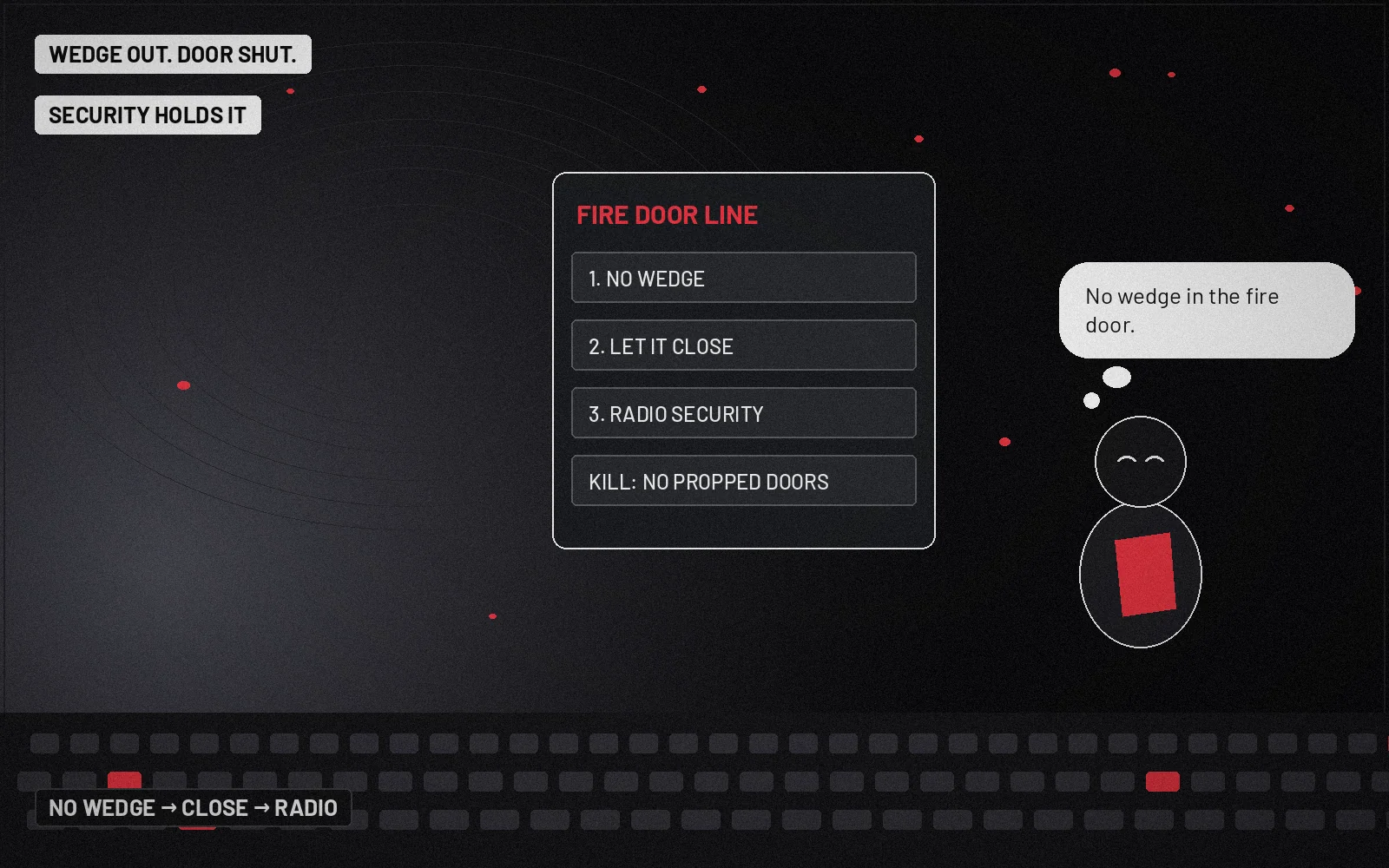
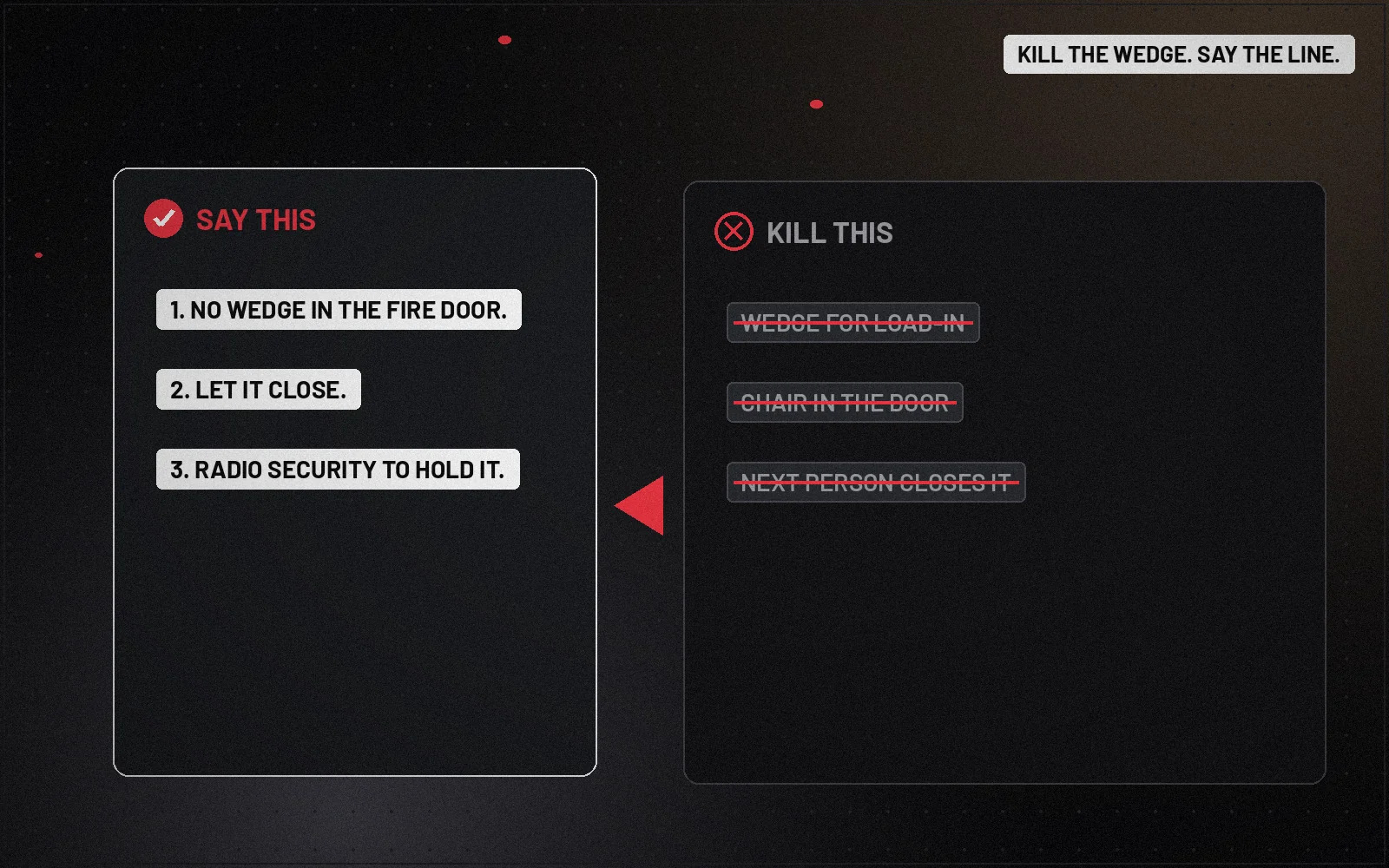
1. No wedge in the fire door. Nothing props a fire door open: no rubber wedge, no chair, no road case.
2. Let it close. After each pass, let the door close on its own and click shut.
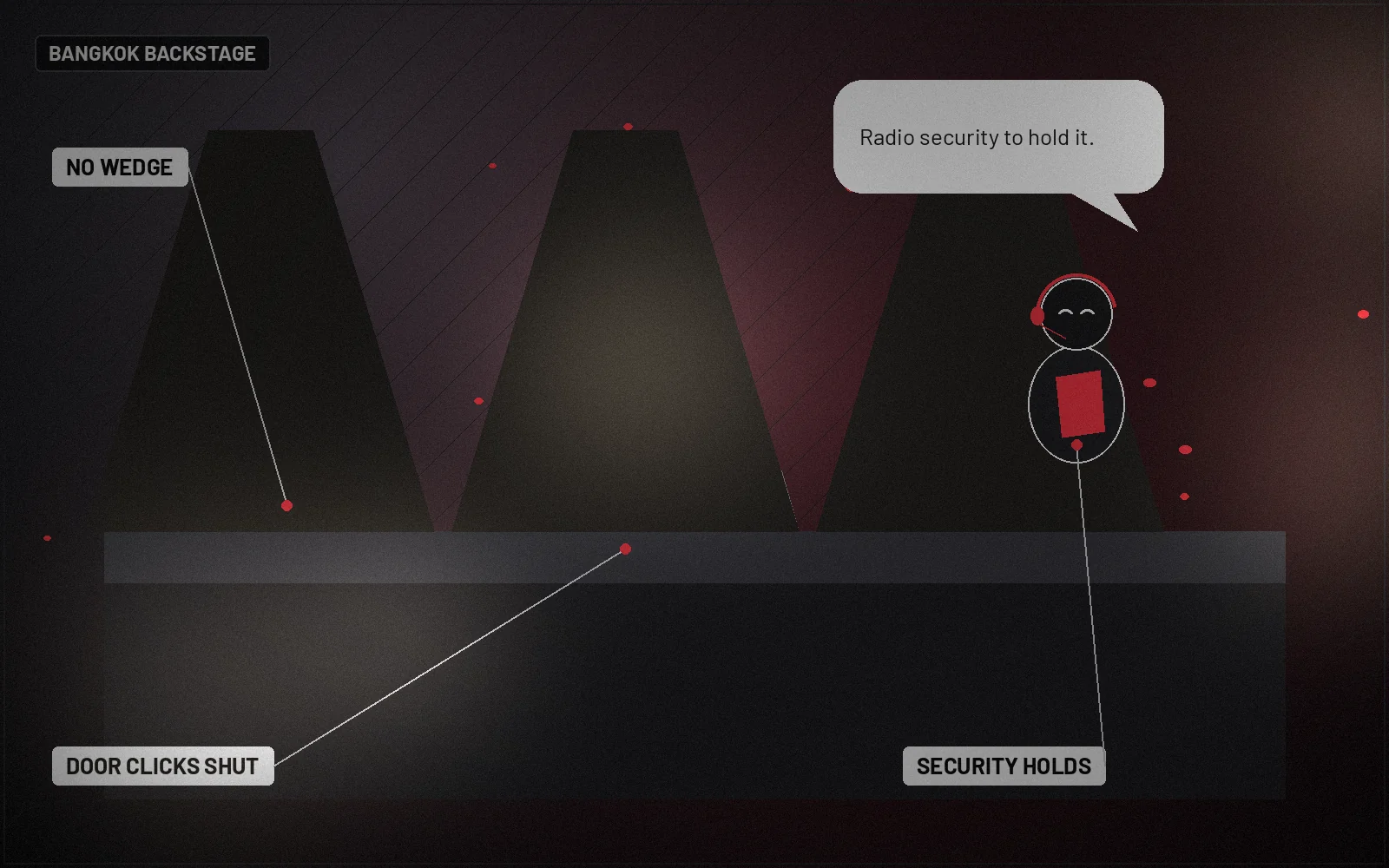
3. Radio security to hold it. If a load needs the door open, security holds it and lets it close after the run.
The habit to break is the load-in shortcut. Someone kicks a wedge under the door to save time, and it stays there long after the trucks leave.
What should a backstage crew lead stop saying about fire doors?
Stop wedging fire doors for speed, and stop leaving the door for the next person to close. Say the three door parts at load-in instead.
| Kill this | Say this (illustrative) | Why |
|---|---|---|
| Lagyan na lang po natin ng pang-ipit para tuloy-tuloy. | No wedge in the fire door. | A fire door only works when it can close (PH Tagalog habit) |
| Just wedge it open lah, faster for loading. | Let it close. | Wedges are forgotten once the rush ends (SG lah habit) |
| Ganjal aja pintunya pakai kursi, Pak. | Radio security to hold it. | Security can hold it and watch it (Jakarta Bahasa habit) |
Lines in this table are illustrative, not quotes from real people.
Say the line at the load-in briefing and again at the changeover, when doors get propped the most.
What if the crew needs the fire door open for a long load?
Do not wedge it, even for a long load. Ask security for a door holder or ask the venue whether a different, non-fire door can be used for the run.
Who plans fire door use before load-in?
The production manager plans it with the venue’s security and building team, before the load-in schedule is final. They agree which doors are fire doors, which can be held and who holds them.
PH / SG / Jakarta desk notes
Same three parts. Different desks.
Philippines desk. Direct and friendly. No wedge in the fire door po. Let it close po. Radio security to hold it po, sir.
Singapore desk. Brisk and even. No wedge in the fire door. Let it close. Radio security to hold it.
Jakarta desk. Mixed local and touring crews in Jakarta get the three parts in English, with Bapak or Ibu only if the house style uses it.
Monday field kit
- Walk the backstage route with venue security and mark every fire door.
- Agree which doors can be held, by whom and for how long.
- Brief crew on the lock: no wedge in the fire door, let it close, radio security to hold it.
- Practise one radio call asking security to hold a door for a load.
- Kill rule: no wedges, no chairs, no cases holding doors.
Illustrative only. Follow the venue’s own fire plan; this wording is a template.
FAQs
What is a door-stop line English APAC?
A door-stop line English APAC is the backstage crew rule for fire doors on a show day: no wedge in the fire door, let it close, radio security to hold it. Nobody props a fire door with a wedge, a chair or a case, and when a load needs the door open, security holds it.
What should a backstage crew lead stop saying about fire doors?
Stop wedging fire doors for speed, and stop leaving the door for the next person to close. Say wedge, close, security, in that order.
What if the crew needs the fire door open for a long load?
Ask security for a door holder or a different door. If the venue allows a hold, a named person stays with it the whole time.
Who plans fire door use before load-in?
The production manager plans it with venue security and building staff. On the day, changes go through security on the radio.
What to do this week
Speakable lock (illustrative): “No wedge in the fire door, let it close, radio security to hold it.”
Do one backstage walk with your production manager at changeover and count the doors that are open. Backstage wording like this is drafted at our Manila HQ in Makati and checked with colleagues at MBFC Tower 2 in Singapore before crews say it.
Neuwark Communications builds event and campaign communications as part of our strategy and messaging work. More street-smart lines live in Insights.
Related: alarmed door line English APAC · stairwell line English APAC
Talk to us about your next event script.
Illustrative lines only. Communications craft, not legal advice.