Digital fundraising fails in two loud ways: it raises nothing, or it raises money by torching the only asset that compounds—trust. Countdown timers that reset. Crisis voice on an ordinary Tuesday. Guilt dressed as solidarity. In Philippine and APAC public life, where family chats forward every exaggerated claim and opponents screenshot your worst frame, trust-burning creative is not a growth hack. It is a future liability with a donation receipt attached.
Neuwark Communications builds belief systems for candidates, causes, and institutions. We don't decorate agendas. We engineer belief. Fundraising creative is belief work under cash pressure. The discipline is to make an honest ask so clear that a skeptical uncle in a group chat cannot easily call it a scam—and so concrete that a first-time twenty-peso donor understands what changed because they gave.
Why "urgent" creative becomes untrustworthy
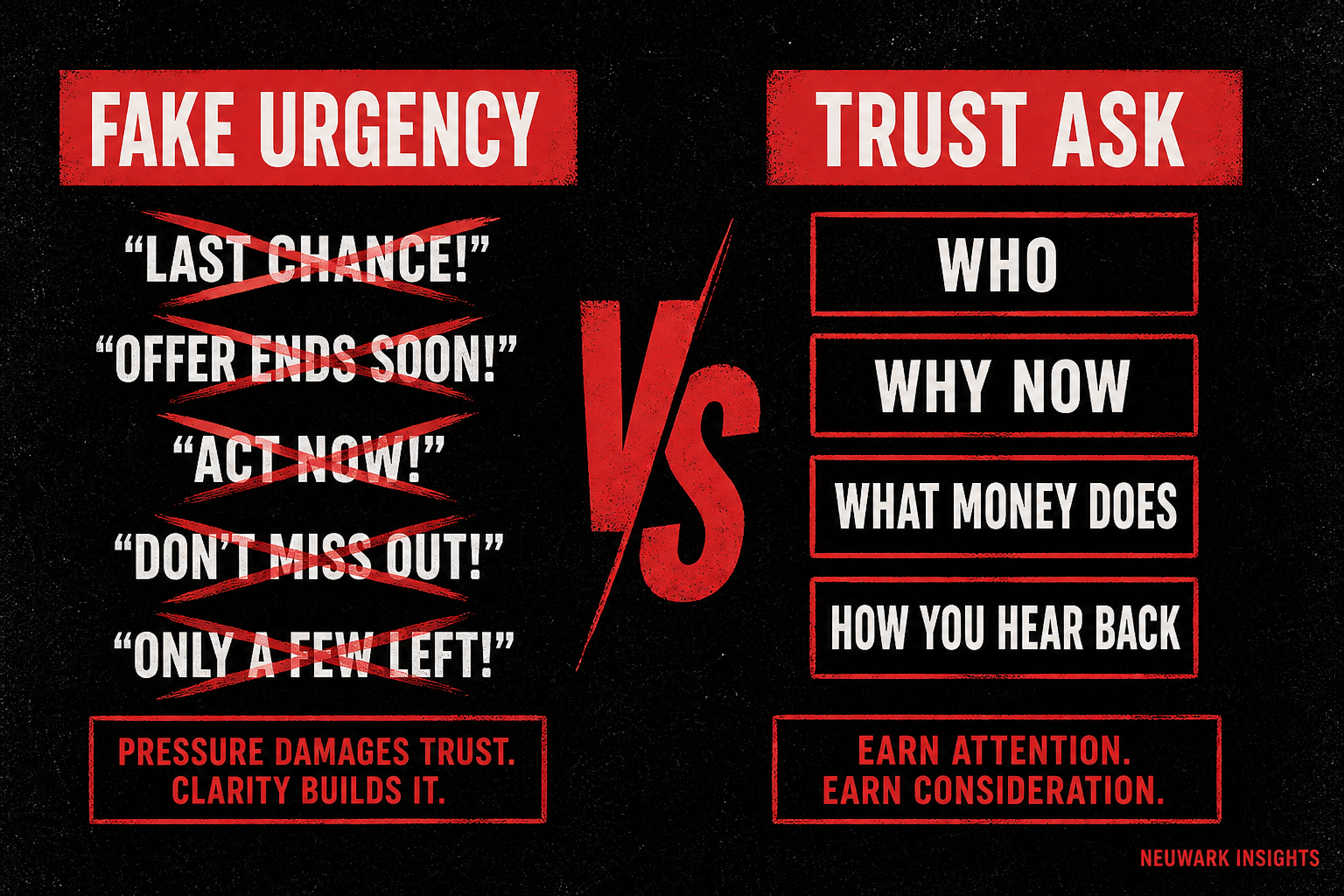
Urgency is real when a filing deadline, a matching window, a disaster response, or a debate-night rapid response truly expires. Fake urgency is a costume:
- Eternal "final hours" that restart after lunch.
- Abstract doom without a specific use of funds.
- Manipulative intimacy ("we're abandoned") that volunteers know is theatrical.
- Stock tears and borrowed disaster imagery unrelated to your actual program.
- Influencer scripts that overpromise outcomes no campaign can control.
Operator rule: if your fundraising creative would embarrass you when played at a town hall beside your finance officer, do not boost it.
Trust-safe urgency still moves people. It names the real clock, the real gap, and the real next action. It does not invent a hostage situation every Thursday.
The trust stack behind every ask
Every fundraising unit—Reel, carousel, SMS, email, live comment pin—should make four things obvious:
1. Who is asking (legal name / program, not a mystery page). 2. Why now (a real constraint, not a vibe). 3. What the money does in one concrete sentence (fuel for canvass vans this weekend; airtime for vernacular radio reads; legal filing fee; relief packs already costed). 4. How donors will hear back (receipt, update ritual, public reporting cadence).
Missing any one of the four invites chargebacks, rumor, and long-term list decay. In markets where e-wallet giving and small-donor culture are growing, clarity beats melodrama.
Creative patterns that raise without corroding
Proof before pitch. Show the work: a clip of the barangay briefing, the packed relief table, the call sheet, the radio booth. People give to motion they can verify.
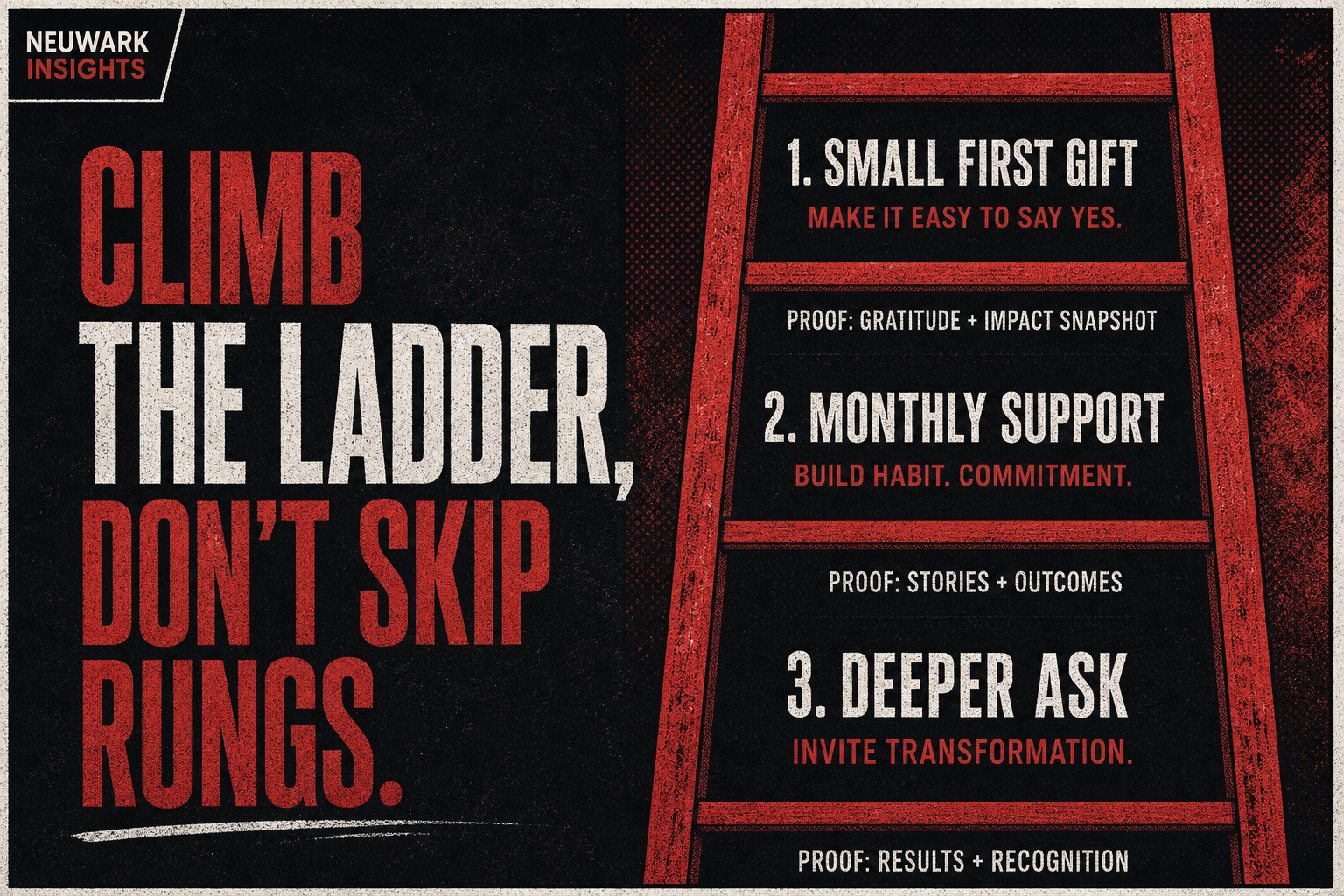
Ask ladder, not ask cliff. Invite small first gifts with dignity. Then invite monthly or second gifts with new proof—not the same panic louder.
Vernacular honesty. Tagalog, Cebuano, and other registers should sound like a neighbor explaining a need, not a dubbed corporate CSR spot. Over-polished English can read as distant extraction.
Messenger fit. Validators who actually steward the work outperform celebrity guilt. If a celebrity helps, let them narrate proof, not manufacture crisis.
Cadence hygiene. Cap crisis tone. Alternate gratitude, impact, and invitation. Silence after taking money is how lists turn hostile.
Compliance as creative. Show where funds are lodged, what is audited, what is ring-fenced. In contested political seasons, opponents will allege theft; your creative should pre-answer with boring transparency.
Mid-cycle safeguards for paid fundraising
- Separate prospecting creative from housefile creative; do not hammer new audiences with insider jargon or insider panic.
- Frequency caps that protect dignity—especially on retargeting.
- Creative exhaustion checks: if comments shift from questions to accusations, pause and rewrite.
- Landing pages that match the ad's promise exactly. Bait-and-switch is a trust crime even when legal.
- Refund and error paths visible on mobile. Friction after payment creates rumor faster than any opponent ad.
The screenshot test (use it before every boost)
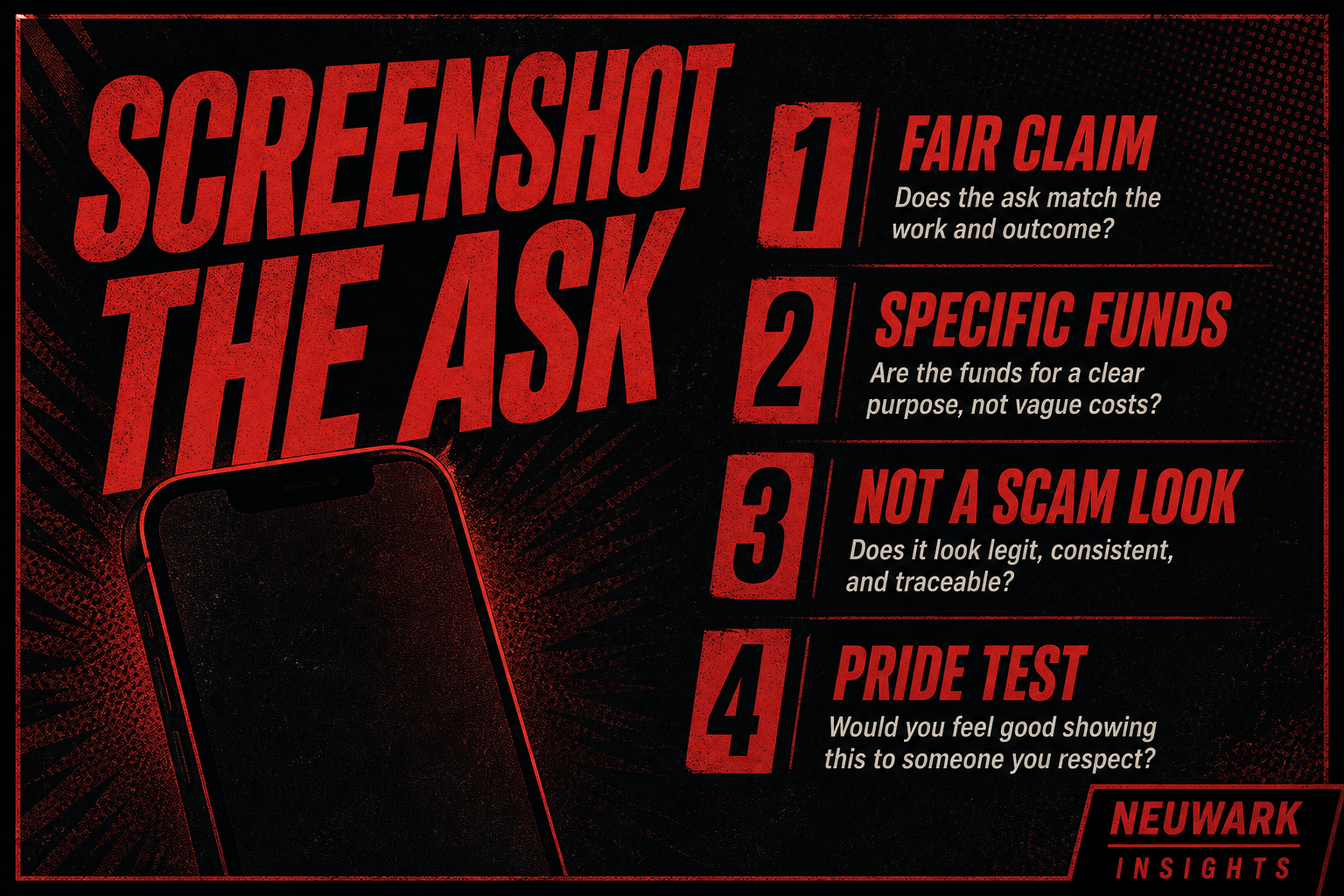
Before you spend, imagine your harshest opponent posting your frame with a sneering caption in a family group. Ask:
- Does the claim still look fair without your caption?
- Is the use of funds specific enough to falsify?
- Could a reasonable stranger confuse this with a scam page?
- Are you leaning on fear of outgroups, humiliation, or unverifiable conspiracy?
- Would a donor feel proud showing this ask to their kids?
Fail any one, rewrite. Progressive and public-interest fundraisers sometimes excuse ugly tactics because the mission is just. Audiences do not grade on intentions. They grade on patterns. Patterns of extraction teach people that your movement is another hustle.
Housefile creative vs. prospecting: stop mixing the medicines
Your existing donors already granted trust. Talk to them like partners: updates, specific gaps, invitations to deepen. New audiences need proof of legitimacy first—who you are, what you already did, where money sits—before any hard ask. Mixing housefile panic into cold prospecting teaches strangers that you are desperate and possibly dishonest.
A weekly fundraising creative board helps:
- Green: proof-forward asks with clear use of funds.
- Yellow: real deadline urgency with finance sign-off.
- Red: guilt, reset timers, unverifiable claims, bait thumbnails — banned from boost.
In PH e-wallet and small-donor culture, micro-gifts are often social. Design shareable receipt moments and thank-you creative that donors are proud to forward. Pride compounds. Shame does not.
Also plan for opponent screenshots as a creative constraint from day one. If your thumbnail only works when cropped away from the disclaimer, you are already losing the trust war.
Disaster and crisis giving: special rules
When a real flood, conflict, or humanitarian shock hits, speed matters—and so does anti-scam hygiene. Lead with verified need, partner NGOs or local governments when relevant, itemized pack costs, and a public update ritual within 72 hours. Do not recycle disaster creative for ordinary political cash later. Audiences remember. Mixing relief moral capital into routine campaign fundraising is how movements inherit permanent suspicion.
If you co-fundraise with partners, put logos and fund flows on the creative itself. Ambiguity is where rumor lives.
Raise money like you intend to ask again.
The campaigns that compound are the ones whose donors feel informed, respected, and updated—not ambushed. Digital fundraising creative should sound like an adult asking for fuel to do named work. That is not softer. It is harder—and it lasts across cycles, screenshots, and skeptical family chats.
Neuwark Communications designs fundraising message systems and creative for political and advocacy clients who need resources without burning the public square. If your current donor creative only works when people don't look closely, start a conversation with us.
[Start a conversation →](https://neuwarkcommunications.com/contact)