
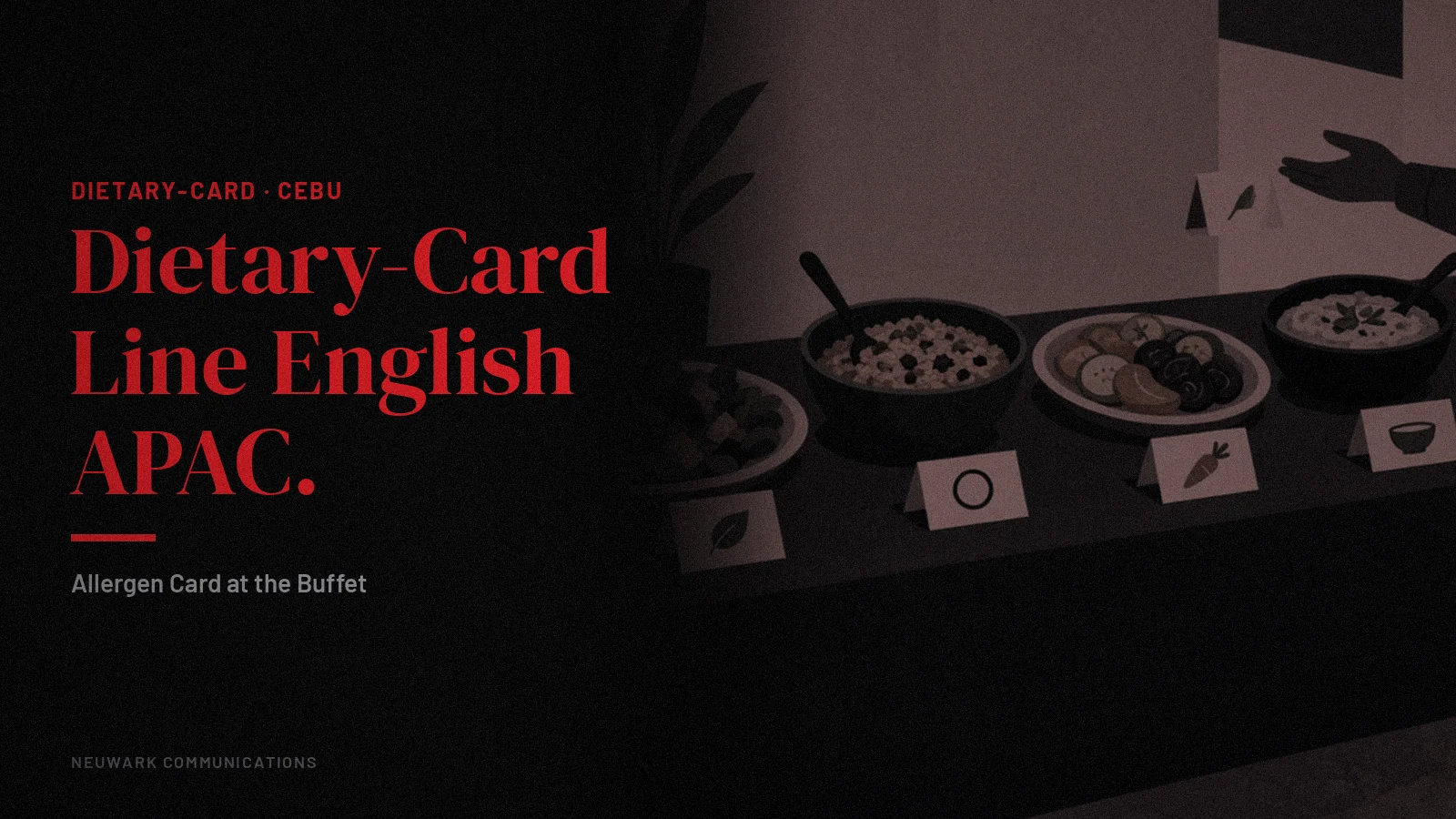
A Cebu ballroom buffet, mid-lunch. A guest points at a tray and asks the server, “Is there peanut in this?”
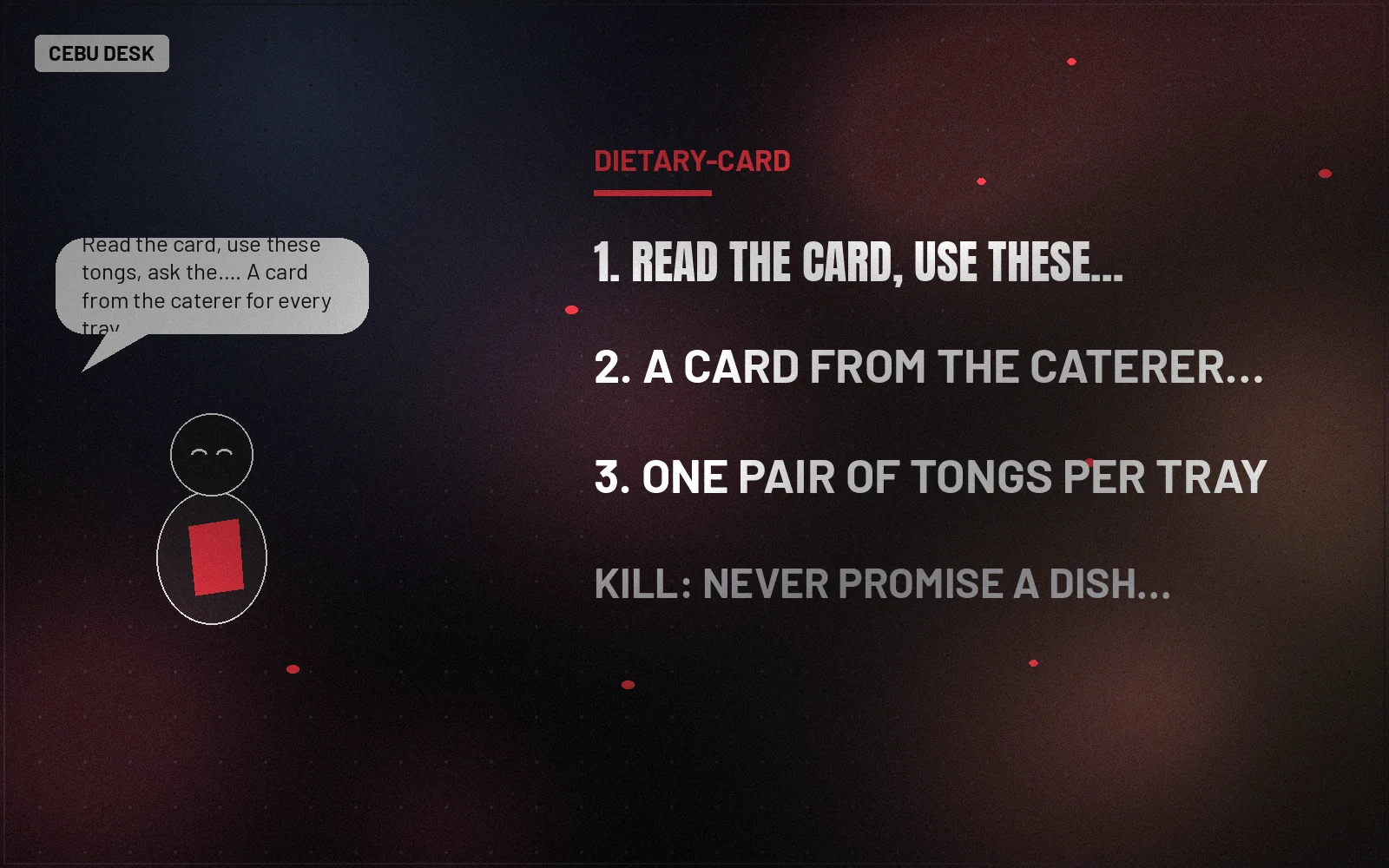
Dietary-card line English APAC is the short buffet line about allergen cards: read the card, use these tongs, ask the kitchen if unsure.
Quick answer: A dietary-card line English APAC is what buffet staff say at the allergen card: this is what the kitchen told us is in the dish, please use the tongs for this tray only, and if you are unsure, I will ask the kitchen. Never guess, and never promise a dish is free of anything.
Street-smart APAC English: short sentences a tired operator can say out loud.
It works on the day, at the tray. The dietary request text English APAC collects needs before the event, and the buffet-open line English APAC releases the tables; this line sits between them, at each card.
What goes in a dietary-card line English APAC?
A dietary-card line English APAC has three parts: what the card says, which tongs belong to the tray, and who to ask when unsure. Staff point to the card, repeat the kitchen’s own words, and send real questions to the kitchen lead instead of answering from memory or guesswork.
Dietary-card line (illustrative):
“This card lists what the kitchen told us is in this dish.”
“Please use these tongs for this tray only.”
“If you’re not sure, I’ll check with the kitchen for you.”
How do I answer a guest who asks what is in a dish?
Point to the card and read it back, word for word. If the question goes beyond the card, say you will check, then actually ask the kitchen lead. Careful event language protects the guest and the host here, because a confident guess is worse than an honest offer to check.
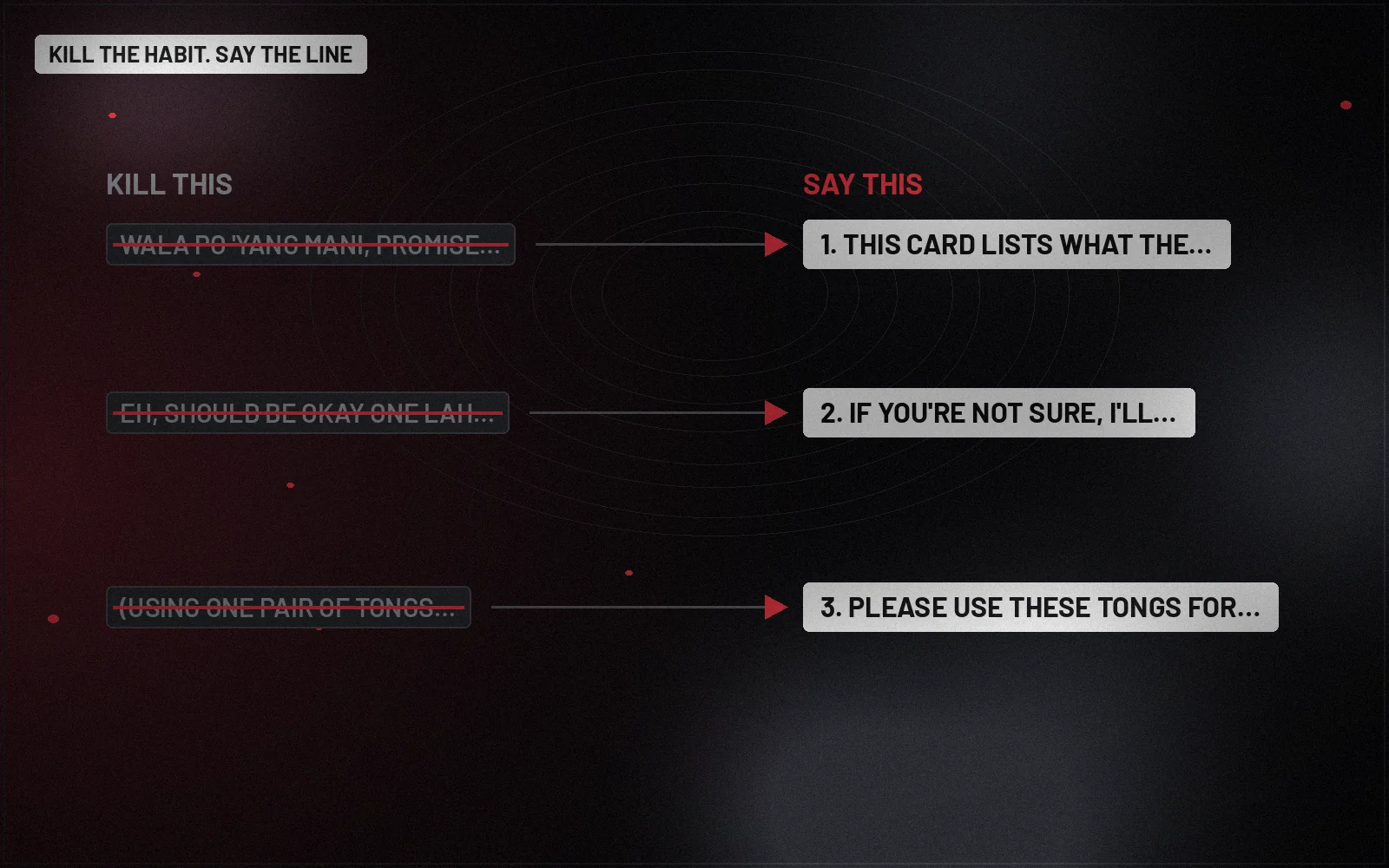
| Kill this | Say this (illustrative) | Why |
|---|---|---|
| Wala po ‘yang mani, promise, kain lang kayo! | This card lists what the kitchen told us is in this dish. | The card, not a promise |
| Eh, should be okay one lah, just try. | If you’re not sure, I’ll check with the kitchen for you. | Checks instead of guessing |
| (using one pair of tongs across trays) | Please use these tongs for this tray only. | Keeps trays separate |
| Basta vegetarian ‘yan, sige na. | The vegetarian dishes are on this end, each with its own card. | Says where, with cards |
Why does every buffet tray need its own tongs?
Shared tongs carry food from one tray to the next, which undoes the point of the card. Give each tray its own tongs, keep cards and tongs together, and ask servers to swap any tongs that wander. Group dishes with common allergens at one end, so the line stays simple.
What if the kitchen cannot confirm an ingredient?
Say so plainly: the kitchen cannot confirm it, so you would not suggest that dish. Offer what the kitchen can confirm instead, or ask whether a plate can be made up in the kitchen directly. Never fill the gap with a guess, even when the guest is in a hurry.
How does this play out in PH and SG?
The three parts hold in both markets, but menus and expectations differ. Use the desk notes below to adjust the cards, the wording and the kitchen contact for Philippine and Singapore buffets, and agree the card format with the caterer before the event.
Philippines desk. In the Philippines, buffets often share sauces and garnishes across dishes, and guests may be shy to ask. Ask the caterer to note shared sauces on the card, say the line in English or Filipino, and invite questions warmly.
Singapore and wider APAC desk. In Singapore, guests often expect clear labels, including halal and vegetarian markers where the caterer provides them. Keep the line in plain English, keep cards consistent across trays, and keep campaign communications materials off the buffet.
Paste-ready lock
Speakable lock (illustrative): “This card lists what the kitchen told us is in this dish, please use these tongs for this tray only, and if you’re not sure, I’ll check with the kitchen.”
Monday field kit
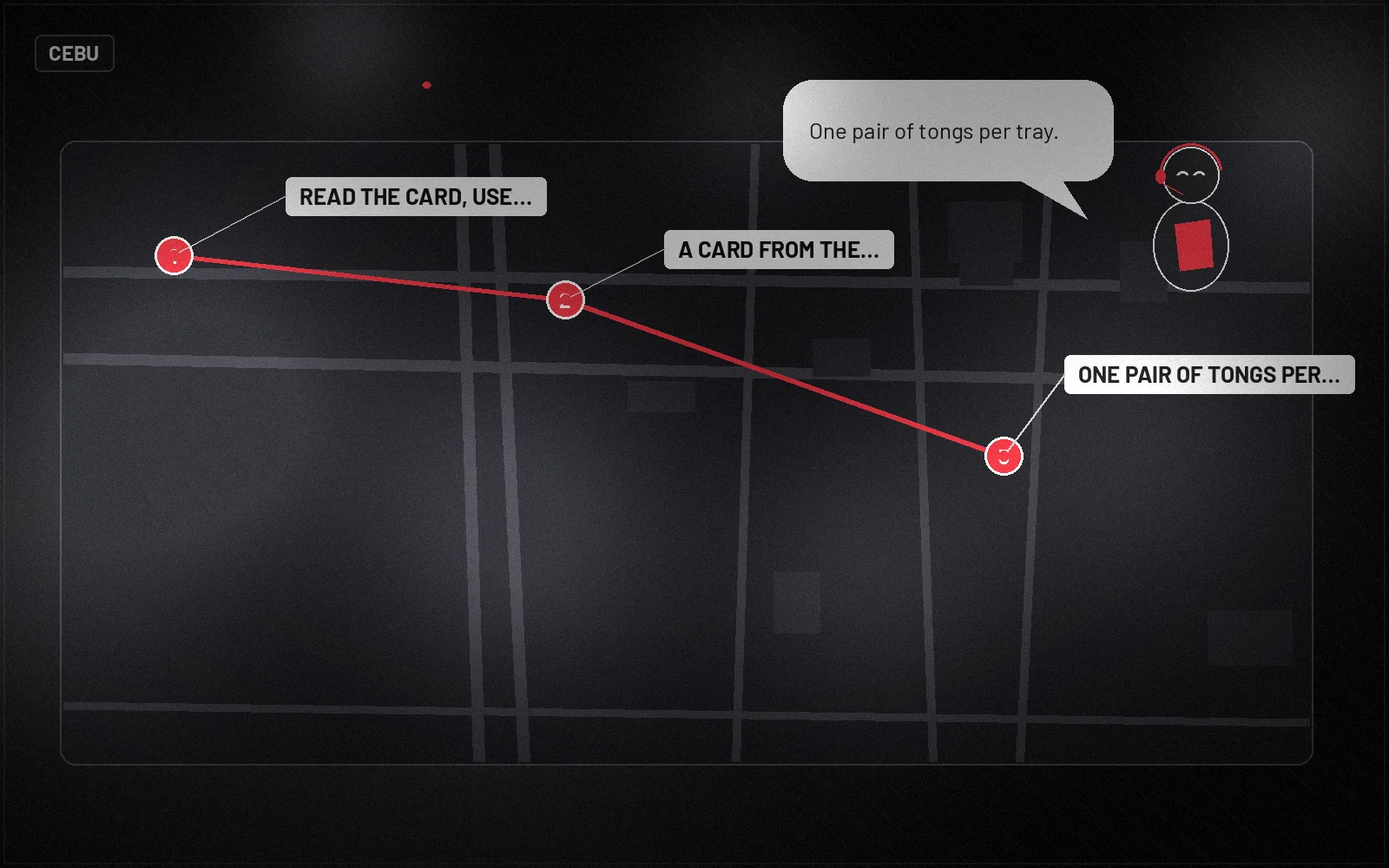
- Read the card, use these tongs, ask the kitchen if unsure.
- A card from the caterer for every tray.
- One pair of tongs per tray.
- A named kitchen lead servers can ask.
- Kill rule: never promise a dish is free of anything the card does not confirm.
What to do this week
- Ask the caterer for a card for every dish.
- Order enough tongs for every tray.
- Name the kitchen lead for questions.
- Brief servers to read the card, not guess.
Kill rule: if a dish has no card, take it off the line until it has one.
FAQs
What is a dietary-card line English APAC?
A dietary-card line English APAC is the short buffet line staff say at the allergen card. It points to the card, the tongs for that tray and the kitchen for questions.
What should an allergen card at a buffet say?
An allergen card at a buffet should say what the kitchen confirms is in the dish, in plain words. It should come from the caterer, not be written from memory.
Why should each buffet tray have its own tongs?
Each buffet tray should have its own tongs so food does not move from one tray to the next. Shared tongs undo the point of the allergen card.
What if staff do not know what is in a dish?
If staff do not know what is in a dish, they should ask the kitchen lead rather than guess. When the kitchen cannot confirm, staff say so plainly.
Neuwark Communications builds event scripts and campaign communications as part of our strategy and messaging work and wider services. More street-smart lines live in Insights.
Related: Dietary request text English APAC · Buffet-open line English APAC
Talk to us about your next event script.
Illustrative lines only. Communications craft, not legal advice.