
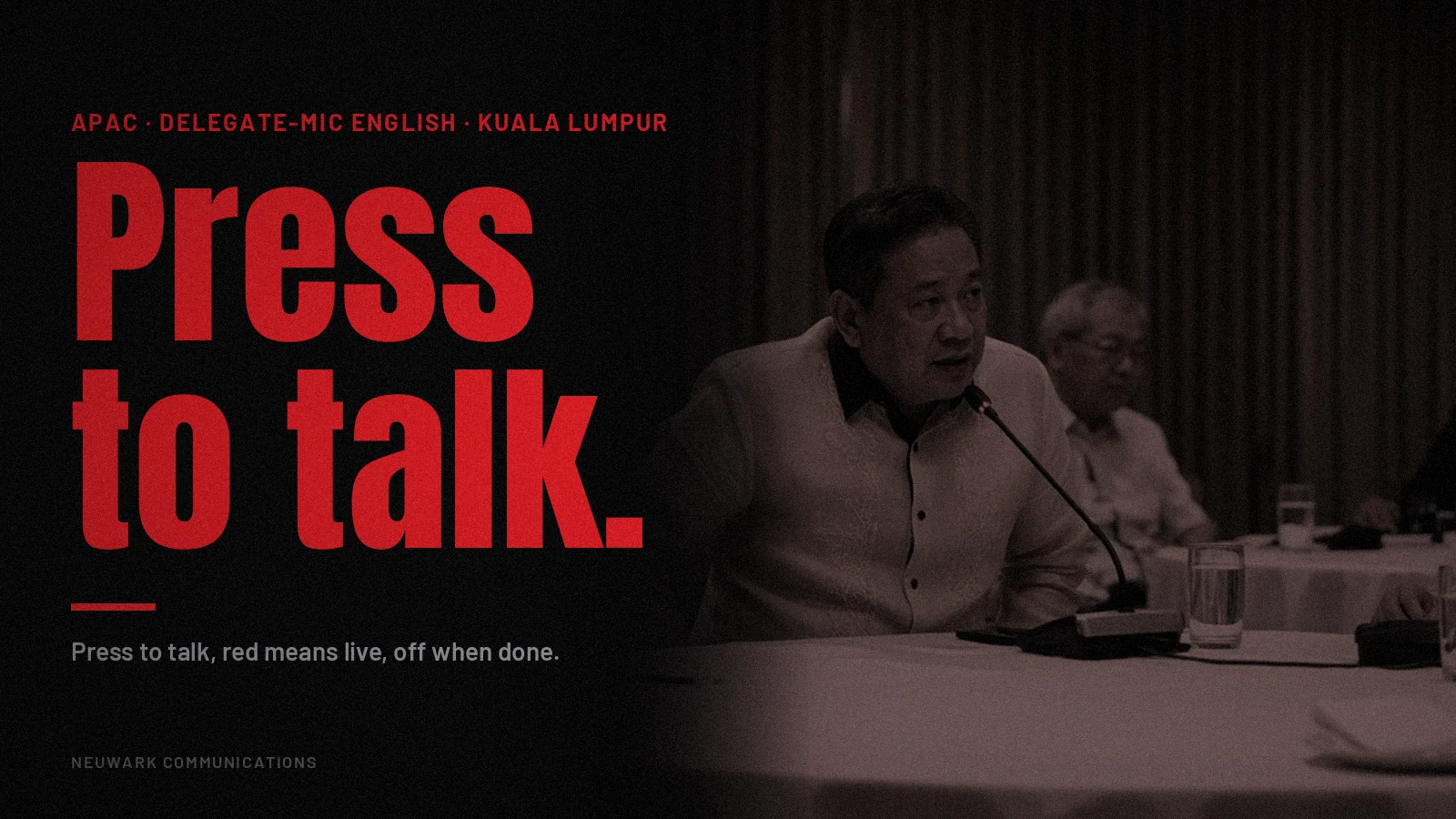
Quick answer: A delegate-mic line English APAC is the chair’s short brief on the table microphones: press to talk, red means live, off when done. Say it once at the start, in the same words, so every delegate is heard and no side comment goes out to the room.
A Manila hotel function room, a roundtable of thirty delegates.
Two delegates talk at once, neither pressed the button, and the back row hears nothing.
Later, a side comment goes out on a mic someone forgot to switch off.
Delegate-mic line English APAC is the short brief on table microphones at a roundtable: press to talk, red light means live, press again when done.
Street-smart APAC English: short sentences a tired operator can say out loud.
It sits with our lapel-mic line English APAC for speakers on stage and the roaming-mic line English APAC for open-floor questions. Good event language at the table keeps a roundtable audible from the first word.
What goes in a delegate-mic line English APAC?
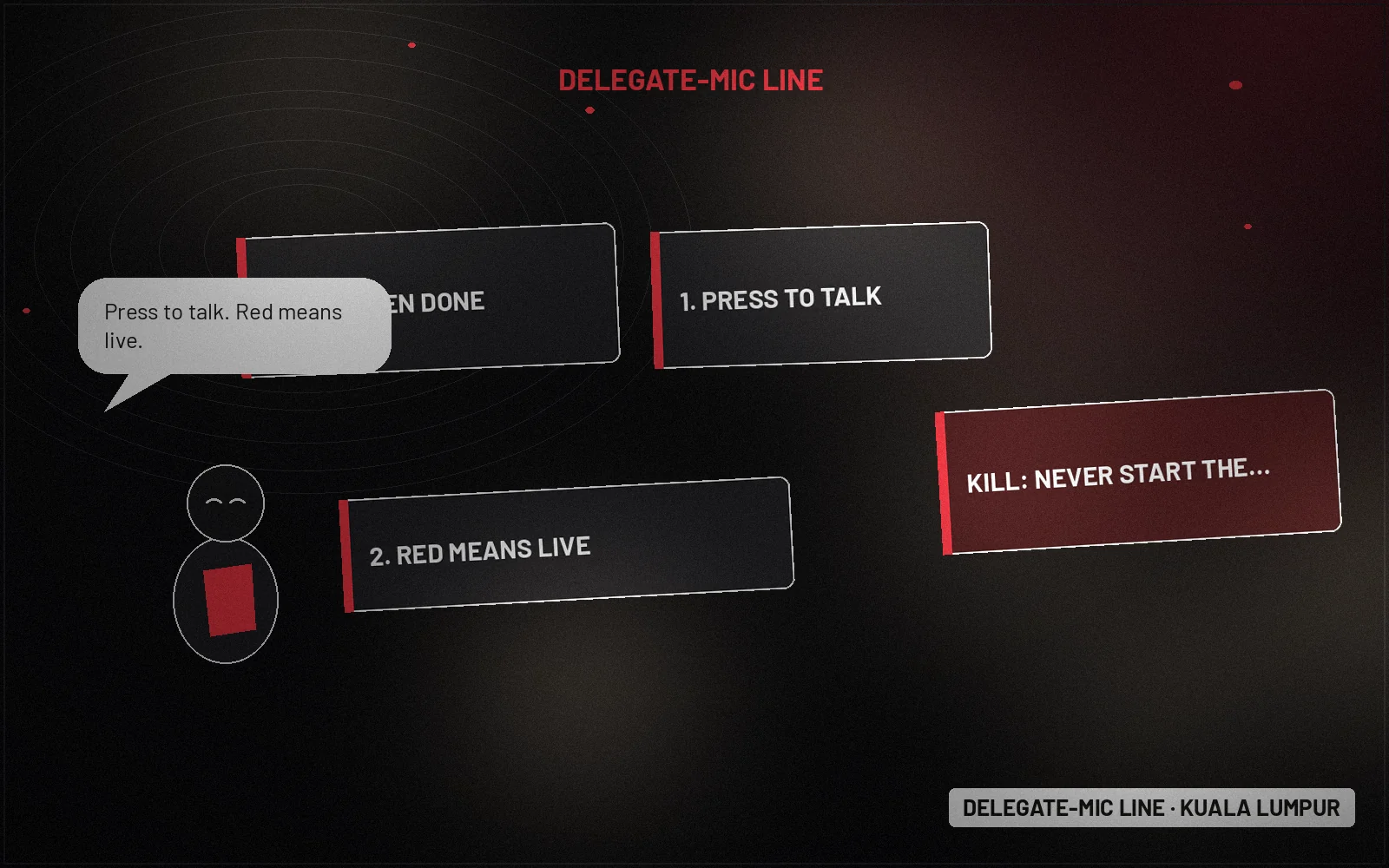
Three parts. Press to talk, red means live, off when done.
Delegate-mic line (illustrative):
“Before we start, a quick word on the microphones.”
“Press the button to talk. The red light means you are live.”
“Press it again when you are done, so the next person can speak.”
Off when done matters most. A mic left on picks up every whisper and page turn, and some systems limit how many mics can be live at once.
What does the chair say about the table microphones?
Say the three parts once, before the first agenda item, and demonstrate on your own mic. Ask the room to test: press, say your name, press off. Remind the room again after the break, when new people join.
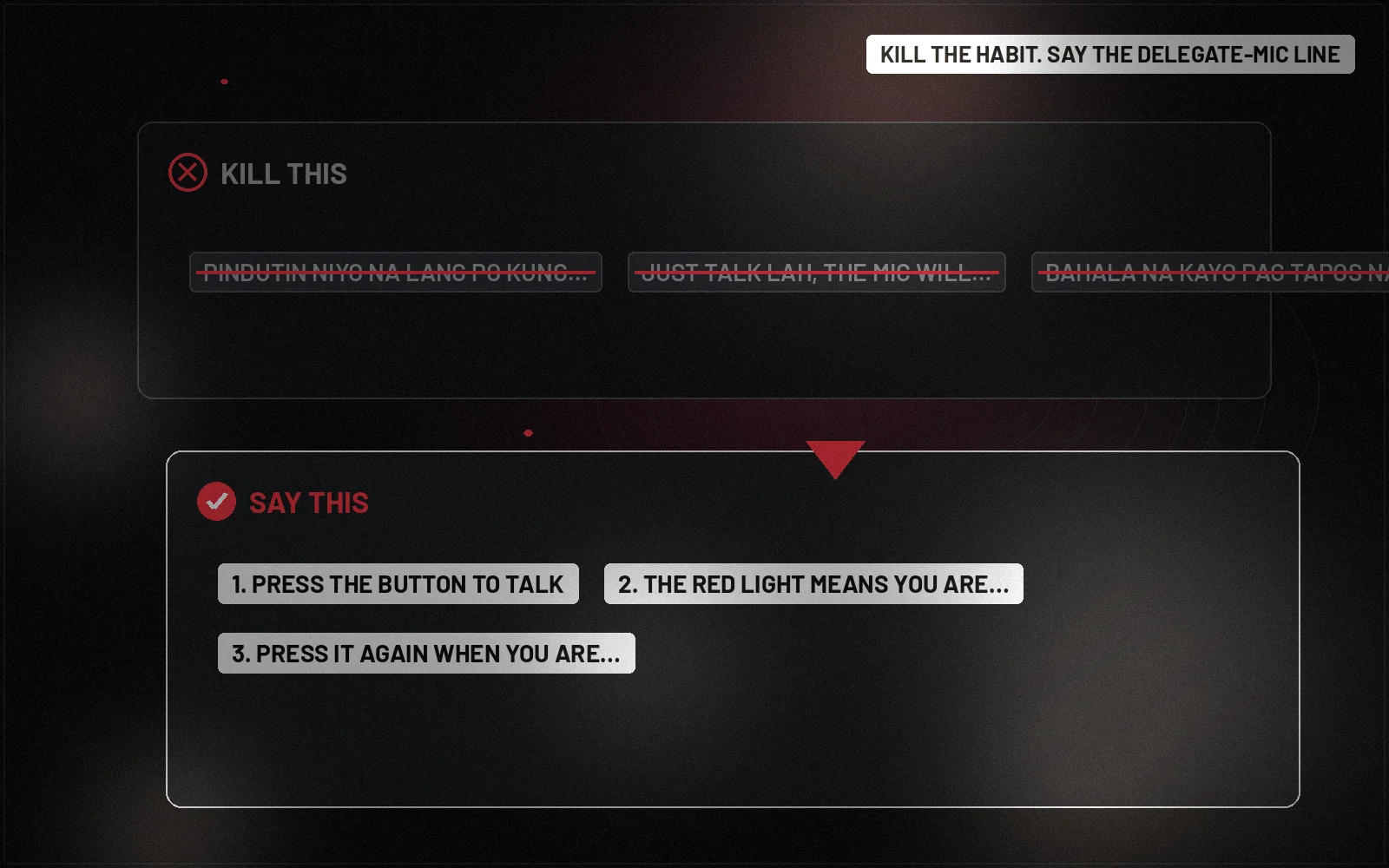
| Kill this | Say this (illustrative) | Why |
|---|---|---|
| Pindutin niyo na lang po kung gusto niyo magsalita. | Press the button to talk. | A clear first step |
| Just talk lah, the mic will catch. | The red light means you are live. | Live is visible |
| Bahala na kayo pag tapos na. | Press it again when you are done. | Frees the line |
| Can everyone hear? Okay, good. | Please say your name before you speak. | The room knows who spoke |
| Lean in more, louder! | Speak in a normal voice, about a hand from the mic. | The desk sets the level |
Lines in this table are illustrative, not quotes from real people.
What if two delegates press at the same time?
The chair decides the order, out loud: the delegate on my left first, then the delegate opposite. The second delegate presses off and waits. If the system queues requests, the chair still says the order, so nobody talks over the queue.
Who watches for mics left on?
The sound operator watches the desk and the chair watches the room. Agree one quiet signal between them, such as a nod, and let the chair say it plainly: a mic is still on, please check yours. No names, no blame.
How does this play out in PH and SG?
Same three parts. Different desks.
Philippines desk. In Manila roundtables, senior delegates may wait to be invited before they press. Invite them by title, with po: sir, ma’am, please go ahead po, press to talk. Repeat the mic brief after lunch, when seats often change.
Singapore and wider APAC desk. In Singapore and Kuala Lumpur meetings, delegates expect a short, formal brief. Keep the line in plain English, demonstrate once, and leave the red-light rule on a small card at every seat.
Paste-ready lock
Speakable lock (illustrative): “Press the button to talk, the red light means you are live, and press it again when you are done.”
Monday field kit
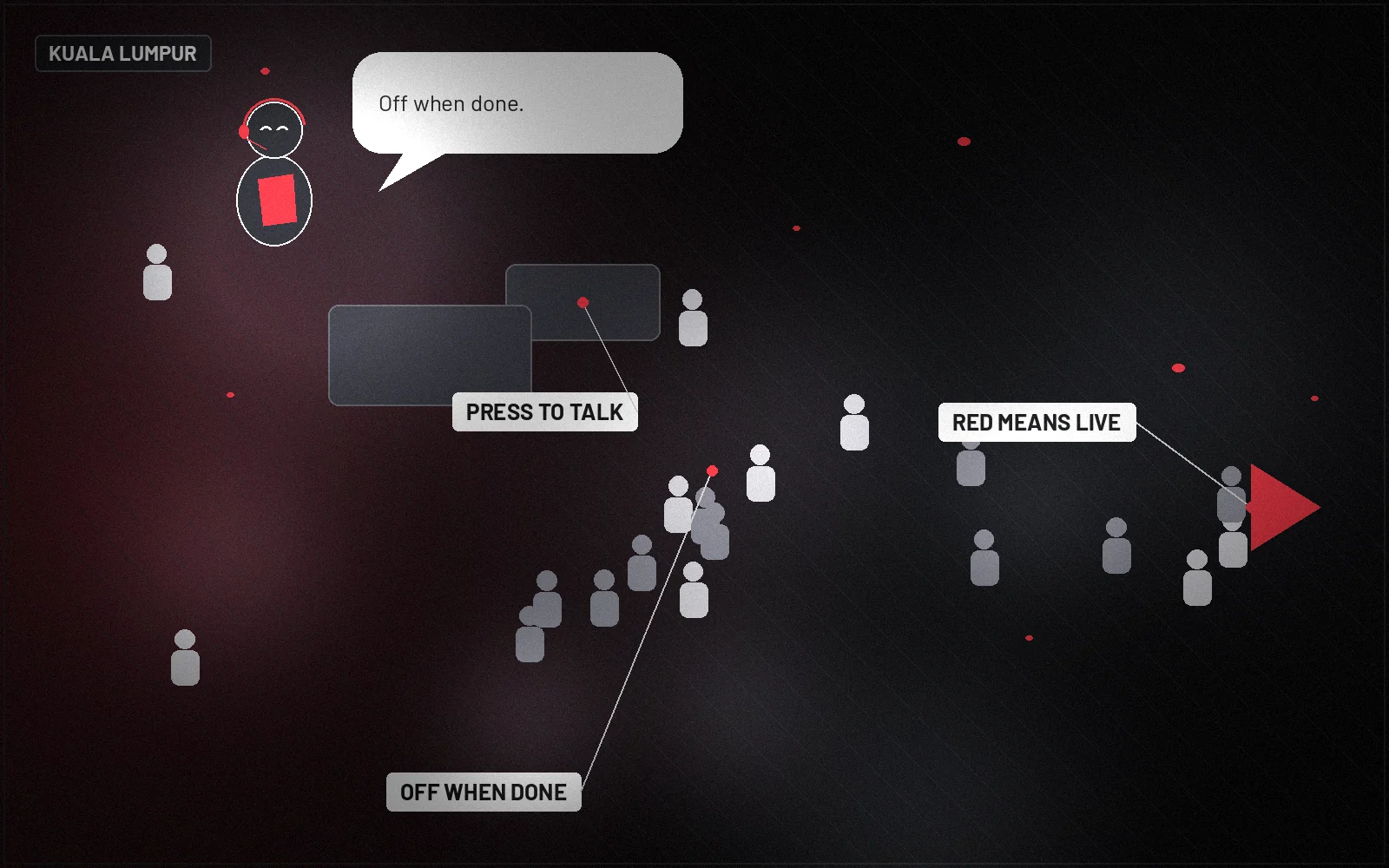
- Press to talk, red means live, off when done.
- Every mic tested with a voice at load-in.
- Chair demonstrates on their own mic.
- One quiet signal agreed with the sound operator.
- Kill rule: never start the agenda before the room has heard the mic brief.
What to do this week
- Write the three lines on the chair’s opening card.
- Test every delegate mic with the sound operator.
- Agree the quiet signal for a mic left on.
- Put a red-light card at every seat.
- Add the mic brief to the after-break script.
FAQs
What is a delegate-mic line English APAC?
A delegate-mic line English APAC is the chair’s short brief on table microphones: press to talk, red means live, off when done. It runs once at the start and again after breaks.
How do you use a conference table microphone?
Press the button to talk, check the red light is on and speak in a normal voice. Press again when you are done so the next delegate can speak.
Why switch off a delegate mic after speaking?
A live mic picks up side comments and page turns, and some systems limit how many mics can be on at once. Switching off frees the line for the next speaker.
What should a chair say before a roundtable starts?
The chair should give the mic brief, demonstrate once and ask delegates to say their name before speaking. Then the first agenda item starts.
Neuwark Communications writes event scripts like this through strategy and messaging. More street-smart lines live in Insights.
Related: lapel-mic line English APAC · roaming-mic line English APAC
Talk to us about your next event script.
Illustrative lines only. Communications craft, not legal advice.