
Your best organizer knows everyone. That is also your biggest risk. When the relationship graph lives in one person’s Notes app, a lost phone becomes a lost precinct.
Progressive campaigns and advocacy orgs in the Philippines still confuse charisma with infrastructure. The canvass worked. The townhall was full. The WhatsApp list looks huge. Then you ask who consented to SMS, who wanted volunteer shifts, who is a mid-tier donor prospect, and who is simply a cousin who once liked a post—and silence falls.
Neuwark Communications treats organizer CRM hygiene as communications infrastructure. This is how you keep community contacts alive, respectful, and useful across PH and APAC progressive work—without turning organizers into call-center robots.
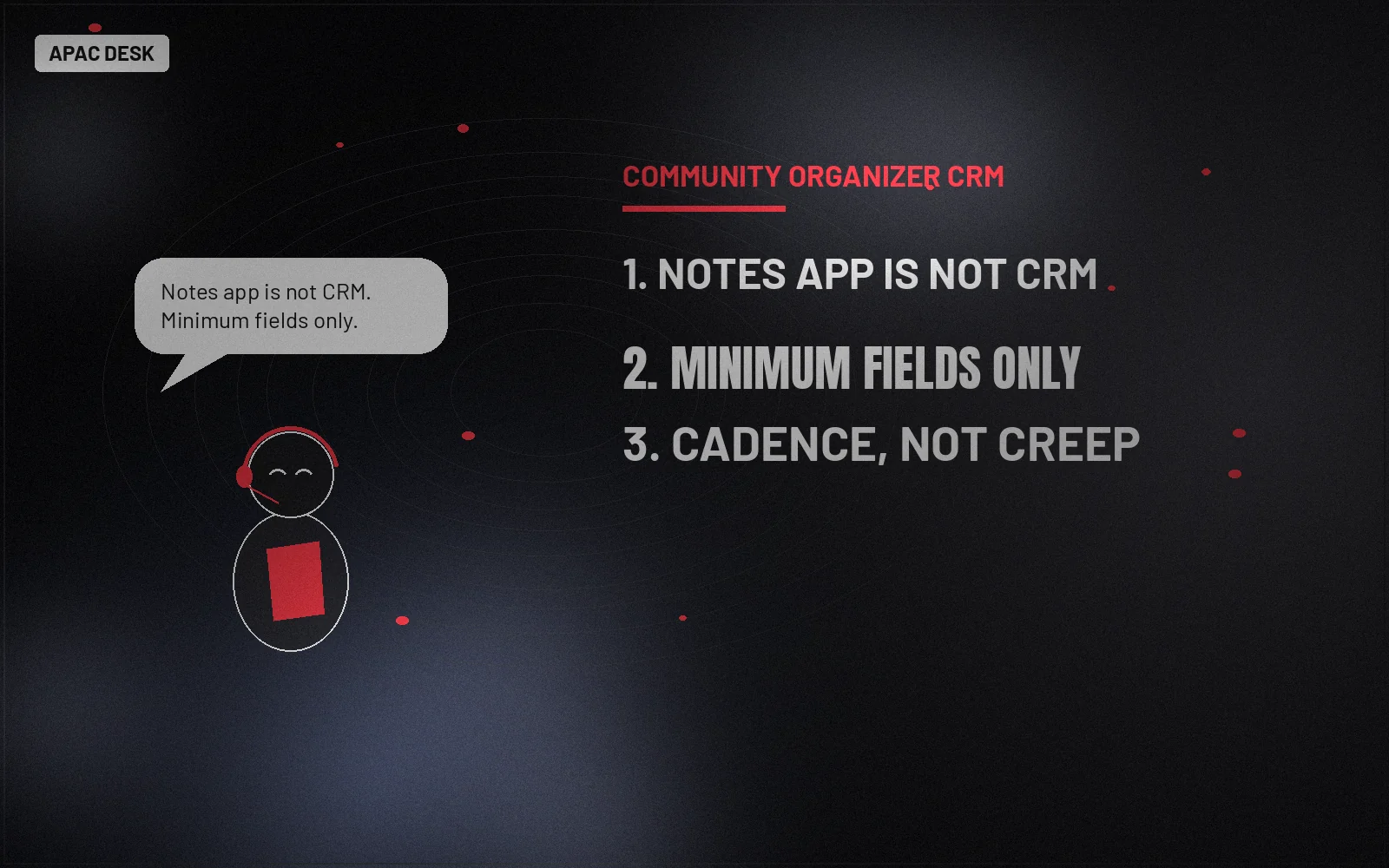
Notes apps are not a CRM
Notes apps fail in boring, fatal ways:
- No shared access when the organizer gets sick or burns out
- No consent trail for SMS/Viber/email
- No tags for interest, geography, or language
- No follow-up dates—only vibes
- No audit when a hostile actor asks how you got their number
Group chats fail differently: everyone sees everyone; sensitive donor notes leak; mute culture kills signal.
A CRM—whether Airtable, a proper tool, or a ruthlessly structured sheet—is not corporate cosplay. It is how a movement remembers.
Hygiene vs surveillance
Collect what you need for organizing and compliance. Do not build a dossier hobby. Progressive brands lose trust when “data” feels extractive. Say why you ask. Offer STOP paths. Protect access.
Minimum viable fields organizers will actually fill
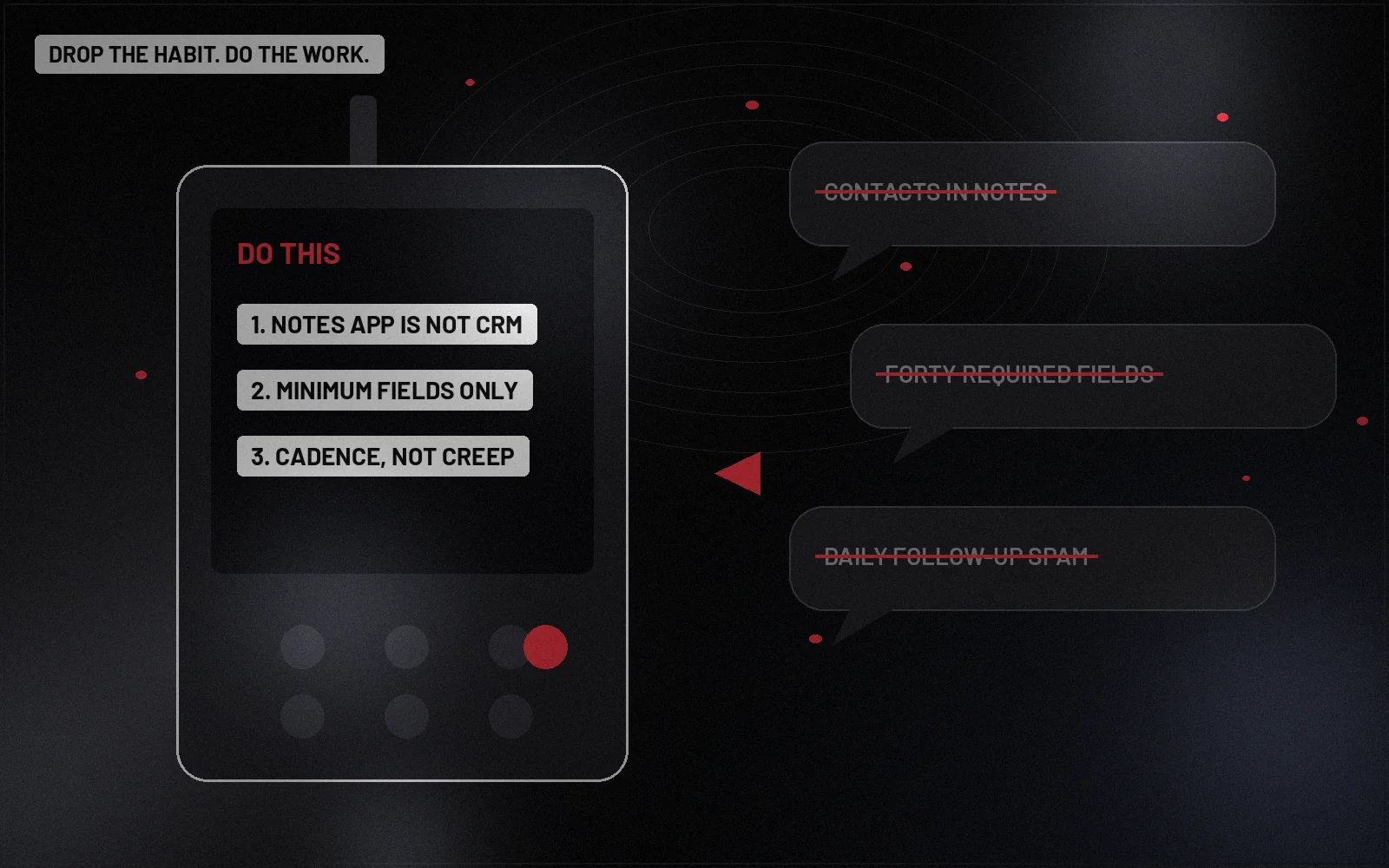
If your schema has forty columns, organizers will invent a parallel Notes app again. Start thin.
Identity & reach
- Name (as they use it)
- Mobile / Viber / WhatsApp preference
- City / barangay or district
- Language preference
- Consent flags by channel and purpose (volunteer, updates, fundraising)
Relationship
- Source (canvass, townhall, partner referral, web form)
- Owner organizer
- Last meaningful contact date
- Next action date
- Interest tags (issues + roles)
Risk & care
- Do-not-contact
- Safety notes (private, limited access)
- Public-facing vs quiet supporter
Everything else is optional until the thin model works.
Intake moments that feed the CRM
- End of canvass (five fields, not a novel)
- Livestream / townhall form
- Partner event sign-in digitized same night
- Volunteer onboarding
- Donor welcome (separate stewardship fields if needed)
Same-night entry is the rule. “We will encode on Saturday” is how Saturday never comes.
Cadence without creep
Hygiene is not only data structure. It is respectful rhythm.
Suggested cadences:
- New volunteer lead: path options within 24 hours
- Event RSVP no-show: one gentle follow-up, then a longer nurture lane
- Issue follower: weekly or biweekly value, not daily spam
- Quiet supporter: quarterly check-ins unless they raise their hand
- Do-not-contact: sacred
Quiet hours apply. Shared family phones apply. Consent purpose limits apply. Progressive SMS that ignores manners trains the public to hate all progressive SMS.
Owner model
Every contact has an owner. Ownership can transfer; it cannot be “the youth wing.” When organizers leave, run a handoff checklist: open promises, sensitive notes, upcoming birthdays or hearing dates they were tracking.
Weekly hygiene ritual (45 minutes)
- Deduplicate obvious twins
- Clear next-action overdues
- Tag new interests from field debriefs
- Remove dead numbers after bounce / STOP
- Spot-check consent flags before any blast
- Export a simple board for city leads: who needs a human call this week
This ritual is more valuable than buying a shinier tool.
Metrics that prove hygiene
- % contacts with owner + next action
- % with channel consent documented
- Time-to-first-follow-up for new leads
- STOP / complaint rate
- Organizer retention of accurate logging after week 2
Vanity list size without consent and owners is a liability dressed as growth.
PH and APAC practicalities
- Barangay names and spelling variants—use a controlled list where possible
- OFW contacts: time zones and diaspora-sensitive asks
- Multilingual tags so the right human calls
- Offline capture forms that sync later for low-signal areas
- Separate political ops lists from pure nonprofit program lists when legal structures differ
Failure modes
Buying Salesforce energy for a 900-contact list. Fit the tool to the team.
Punishing organizers for imperfect logging without training. Teach the five fields in microlearning.
Mixing hostile opposition research into community CRM. Different vault, different access.
Blasting everyone because a hearing feels important. Segmentation is respect.
No deletion path. People have a right to leave cleanly.
Migrating off Notes apps without a civil war
Organizers fear CRM rollouts because those rollouts usually ignore their reality. Do this instead:
1. Shadow one strong organizer for two days; list what they actually track. 2. Map those needs to the thin field set—do not add “nice to have” columns yet. 3. Digitize last 30 days of hot contacts first, not the entire historical junk drawer. 4. Run parallel for one week with a rule: new contacts go to CRM only. 5. Publicly retire Notes as official; keep a personal scratchpad if they need it for poetry, not for the voter file.
Reward clean logging the same way you reward doors. If the only praise is for charisma, hygiene will always lose.
Duplicates and identity reality
People change numbers. People share phones. People spell barangay names five ways. Build simple matching rules and a human merge step. Do not auto-merge aggressively and erase distinct humans. Do not refuse to merge and spam the same household three times.
Consent as a first-class object
Store:
- Channel (SMS, Viber, WhatsApp, email, voice)
- Purpose (volunteer ops, issue updates, fundraising)
- Timestamp and source of consent
- STOP / withdrawal timestamp
Before any blast, filter on purpose. Progressive campaigns get ruined by “we have their number from the rally” logic that would not survive a basic fairness test. Quiet hours and purpose limits are part of CRM hygiene, not separate paperwork.
Field-to-CRM loop
Evening debriefs should create CRM tasks automatically where possible: “revisit hostile—owner Ana—by Friday,” “volunteer interest—send microlearning link,” “donor signal—route to stewardship.” If debrief data dies in a chat, your CRM is a museum of old forms.
Train the loop in microlearning. Five fields. Same night. Owner assigned.
Security and access
- Role-based access: not every volunteer sees donor notes
- 2FA on the CRM login
- Offboarding removes access the same day
- Export controls for sensitive lists
- Incident plan if a phone with access is stolen
Community trust is the asset. Protect it like money.
What “good” looks like after 30 days
- Hot contacts from the last month mostly have owners and next actions
- Blasts run only on consented purpose lists
- One organizer vacation does not freeze a precinct’s memory
- Leadership can answer “how many warm volunteer leads in District X?” without theater
That is hygiene. Everything else is decoration.
Segment architecture that prevents “everyone blast”
Build segments organizers understand:
- Hot volunteers (active in last 14 days)
- Warm leads (new, not yet shifted)
- Issue followers by top tag
- Event RSVPs by upcoming date
- Quiet supporters
- Stewardship-only (fundraising manners)
Blasts choose a segment on purpose. “All contacts” should require a second human confirmation. That one friction saves months of trust repair.
Reporting organizers will open
Weekly one-pager:
- New contacts by source
- Follow-ups overdue
- STOP count
- Top issue tags
- Wins: humans who moved from lead → shift → reliable
If reports are twenty tabs, nobody opens them. Keep it one screen.
Training the thin schema into muscle memory
Add CRM hygiene to microlearning:
- 3-minute drill: enter a contact correctly
- 3-minute drill: mark STOP
- 3-minute drill: set next action
Mystery-check a sample weekly—for coaching, not humiliation. Organizers improve when they see their data change tomorrow’s deployment.
Coalition and chapter data sharing
When chapters share a fight, decide what contact data can cross orgs. Default to minimal share: event attendance lists with consent for joint follow-up, not full donor notes. Use separate tags for coalition-sourced leads. Put the rule in the partner kit so freestyle CSV swaps do not become a privacy incident.
Across APAC partner networks, cross-border transfers need extra care—know your legal constraints before you email a sheet. When in doubt, keep lists local and share only aggregated counts until counsel clears a transfer protocol.
Soft close: Neuwark builds organizer systems that remember
If your progressive movement’s memory lives in Notes apps, you are one cracked screen away from amnesia. CRM hygiene keeps community relationships human and durable.
Neuwark Communications designs organizer data systems for PH and APAC campaigns—thin fields, consent, cadence, and handoffs that survive real life. Talk to Neuwark when you are ready to stop losing people in scrollback.