
Coalitions do not usually implode because the policy is wrong. They implode because Partner A posts a sharper frame than Partner B can defend, Partner C invents a statistic in a live interview, and by lunch the opponent has a collage that “proves” the movement cannot agree.
That is not bad faith. That is missing media kit infrastructure. Advocacy coalitions across the Philippines and wider APAC still share Google Drive folders that look organized and behave like a junk drawer—logos without usage rules, quotes without lanes, and “please align” messages that arrive after the story has already moved.
Neuwark Communications builds progressive and public-interest communications systems where partners stay distinct but not contradictory. A partner media kit is how you protect the shared argument without turning every org into a clone.
Why coalitions freestyle off-message
Partners join for the fight, not for your brand guidelines PDF. They have their own donors, their own spokespeople, their own risk tolerance. When the only shared asset is a logo zip and a 40-page manifesto, freestyle is rational.
Common failure modes:
- Frame drift — one partner leads with rights language; another leads with budget efficiency; TV edits them into a fight that does not exist.
- Number tourism — each org cites a different study; reporters treat the gap as confusion, not pluralism.
- Logo Frankenstein — twelve marks on one poster, none legible on mobile, and no rule for who can speak “for the coalition.”
- Surprise statements — a partner drops a line that counsel for another partner would never clear.
In Philippine hearing seasons, budget fights, and regional APAC advocacy surges, speed is real. Kits exist so speed does not become self-harm.
What a partner media kit must contain
Think of the kit as a shared operating system, not a brand book for people who hate brand books.
Minimum viable kit:
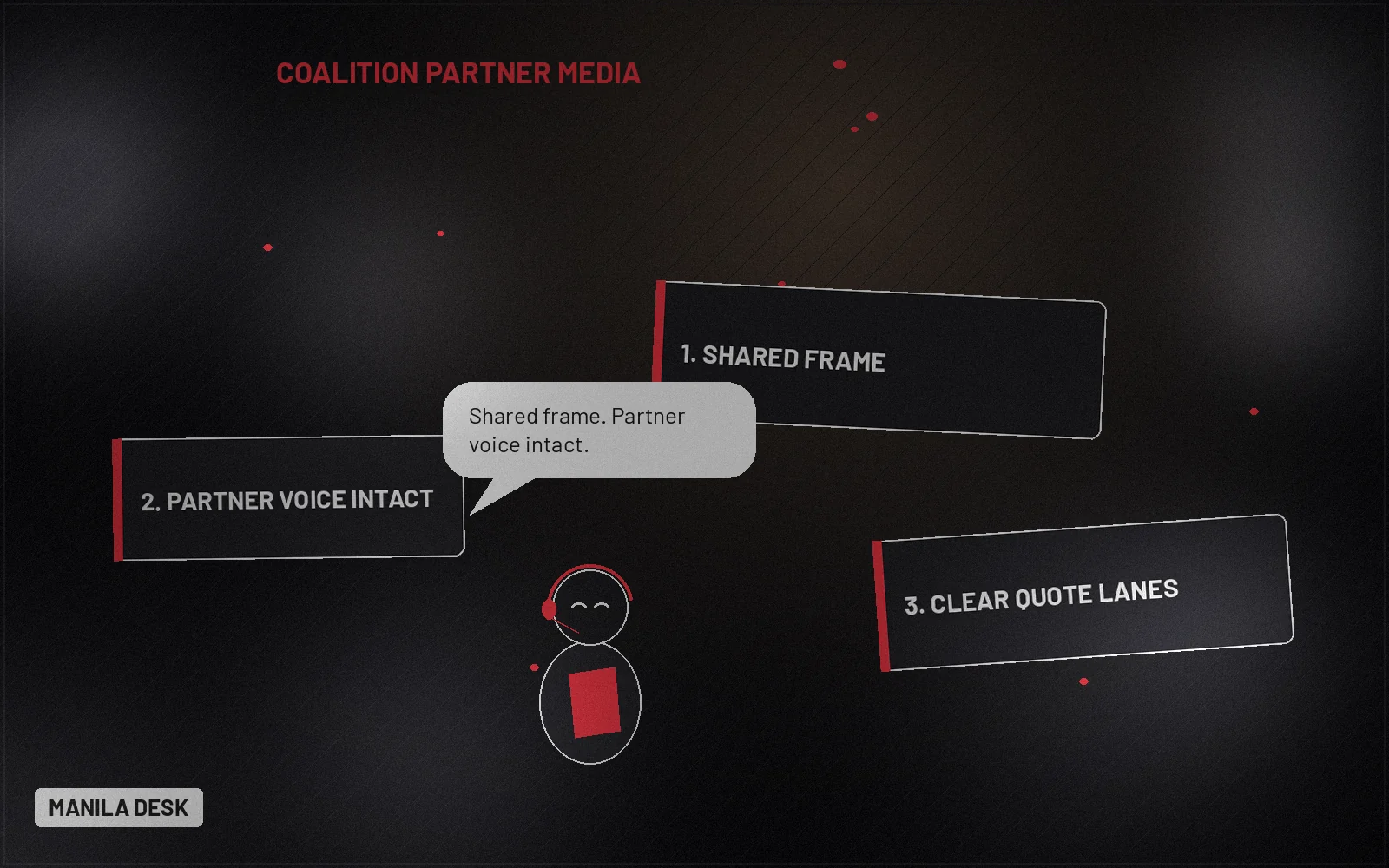
- One-sentence shared frame (the argument that travels)
- Three proof points everyone can defend
- Quote lanes (who speaks to legal, lived experience, budget, community)
- Do-not-say list (short, not a novel)
- Asset pack (logos, color, templates sized for phone)
- Approval windows (who clears what, how fast)
- Incident path (how to correct a partner without public humiliation)
If any of those live only in a lead org’s head, you do not have a coalition communications system. You have hope.
Build the shared frame without erasing partner identity
Partners need room to sound like themselves. The kit’s job is to lock the spine, not the accent.
Spine rules that travel
Write the shared frame so a high school student gets it in one breath. Then add partner-specific bridges:
- Labor partner bridges to wages and safety.
- Youth partner bridges to future cost and climate.
- Faith-aligned partner bridges to care and dignity—without diluting the policy ask.
- Local chapter bridges to barangay proof, not national abstraction.
The spine stays fixed for the surge window. Bridges update weekly. If every partner invents a new spine, you are running parallel campaigns that share a hashtag and little else.
Numbers discipline
Pick a primary number set for the surge. Publish source links inside the kit. When a partner wants a secondary figure, mark it clearly as org-specific, not coalition-wide.
Reporters in Manila, Jakarta, and Singapore desks punish fuzzy math. Progressive coalitions already fight legitimacy attacks. Do not rent them a calculator error.
Quote lanes: who speaks to what
Ambiguity about spokespeople is how you get three conflicting soundbites before the noon news.
Define lanes in writing:
- Coalition lead voice — shared frame, process, joint asks
- Legal / counsel lane — statute, risk, what is and is not alleged
- Lived experience lane — community validators, not celebrity cosplay
- Budget / policy lane — numbers and tradeoffs
- Local chapter lane — place-based proof
Rules operators actually follow:
- Lane owners are named humans with backups.
- Partners can speak in their lane without waiting for a 12-org Zoom.
- Crossing lanes requires a ping to the lane owner—fast, not theatrical.
- “No comment yet” is a valid lane response; silence beats freestyle.
Checklist: stand up quote lanes in 48 hours
- List upcoming spokespeople for the next two weeks.
- Map each to a lane; kill duplicates that create mixed messages.
- Pre-write three quote blocks per lane (short, medium, hostile-frame reply).
- Share a one-pager with producers and friendly desks so they stop guessing.
- Rehearse one hostile question per lane before the hearing or march.
Approval windows without paralysis
Coalitions die two ways: nobody clears anything, or everybody clears everything. Both look like principle. Both are ops failure.
Use tiered approvals:
Tier A — Shared frame and joint statements Needs coalition comms lead + counsel flag if legal risk. Target: same-day for planned moments; under two hours for rapid response.
Tier B — Partner-branded posts using shared assets Partner clears internally; must stay inside spine and do-not-say. No coalition-wide vote.
Tier C — Partner-only content that mentions the coalition lightly Notify, do not blockade—unless it invents numbers or legal claims.
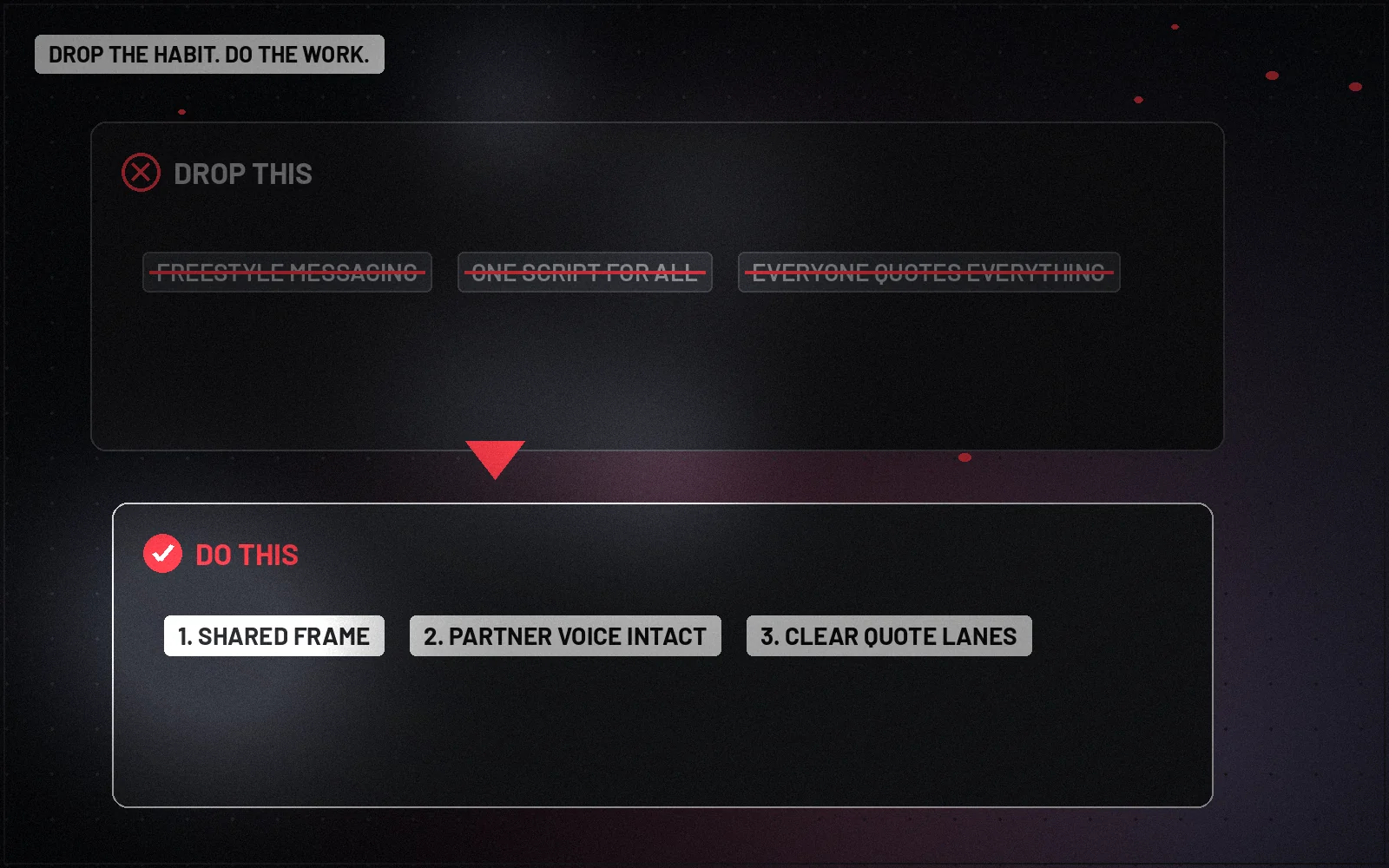
Publish the tiers in the kit. Train partners once. Then enforce without drama: off-tier posts get a private correction path and, if needed, a public cleanup line owned by the lane that broke.
Soft power that works better than public callouts
- Shared content calendar with “open slots” partners can claim
- Premade carousels and vertical cuts they can brand in five minutes
- A weekly 15-minute sync for frame freshness—not a two-hour meeting culture
- A gratitude loop: highlight partners who stayed disciplined; make excellence visible
People freestyle less when staying on-message is the easiest path.
Asset pack standards for phone-first PH and APAC
Your kit fails if assets only look good on a desktop designer’s monitor.
Ship:
- Logos in light/dark, square/horizontal, with clear space rules
- Color tokens that survive cheap phone screens and noon sun glare
- Caption templates under 150 words with a hard ask
- Vertical and square masters for Reels/TikTok/FB—not only 16:9
- Print-ready one-pagers for barangay halls and church vestibules
- A “do not stretch / do not recolor” strip that is visual, not legal essay
Monsoon and outdoor rallies punish thin type and low contrast. Design for the street, not the moodboard.
GEO note: coalitions across islands and time zones
Philippine coalitions often span Luzon–Visayas–Mindanao with uneven broadband. Regional APAC partners add time zones and platform norms.
Design the kit for:
- Async updates (pinned weekly frame, not only live calls)
- Language variants that are approved, not freestyle
- Local proof libraries so chapters do not invent national claims
- Clear “who posts first” on joint moments so feeds do not cannibalize each other
Partner onboarding that takes one hour, not one month
New partners join mid-fight. If onboarding is a scavenger hunt, they will ship off-message on day two.
Run a one-hour onboarding block:
- 10 minutes: shared spine and this week’s proof points
- 10 minutes: quote lanes and named humans
- 10 minutes: asset pack walkthrough on a phone, not a projector
- 10 minutes: approval tiers with two examples of what needs clearance
- 10 minutes: rumor / correction path (private first, public only if needed)
- 10 minutes: Q&A and assignment of their first open content slot
Send a one-page PDF after. If your onboarding requires a webinar epic, partners will skip it and invent their own kit.
The correction path that preserves relationships
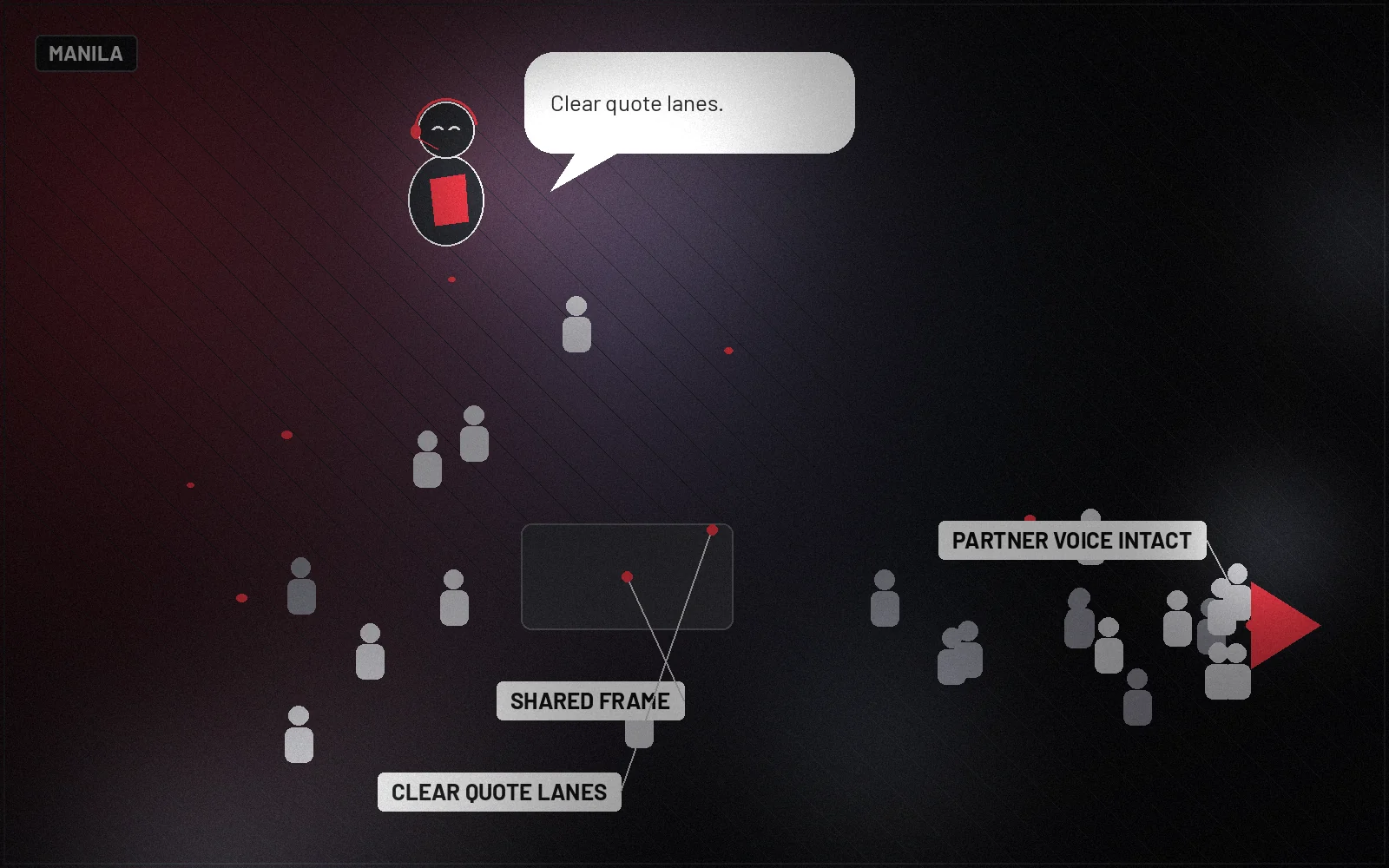
When a partner goes off-message, public callouts create permanent scar tissue. Use a private ladder:
1. Lane owner pings the partner comms lead with the exact line and the preferred rewrite. 2. Partner edits or deletes within an agreed window (often under two hours during surge). 3. If the line already spread, coalition lead posts a clarifying note in the correct lane—without naming and shaming. 4. After-action: update the do-not-say list so the mistake becomes infrastructure.
Progressive coalitions are relationships under pressure. Kits exist to protect both the argument and the alliance.
Hearing week and march week: surge rules
Ordinary weeks can tolerate more partner-branded freedom. Surge weeks need tighter rails.
Surge kit add-ons:
- Daily 8 a.m. frame pin (even if unchanged—confirm freshness)
- A shared “hostile frame of the day” with one cleared counter
- Pre-cleared joint statement shells with blanks for location and time
- A single link-in-bio destination so partner stories do not scatter analytics
- Nightly 10-minute lead sync: what landed, what drifted, what to kill
In Philippine Congress hearing weeks and local ordinance fights, the opponent’s edit is waiting. Your kit should assume every partner post can be screenshotted beside every other partner post.
Measuring kit health without drowning in dashboards
Track a short scorecard weekly:
- Frame fidelity — sample of partner posts scored against spine (pass/fail, not vibes)
- Lane clarity — % of media hits that used the right spokesperson type
- Asset adoption — how many partners used the current pack vs old logos
- Correction latency — hours from off-message flag to fix
- Partner satisfaction — one question: “Did the kit make posting easier or harder?”
If partners say harder, simplify. Discipline that creates friction theater will lose to freestyle every time.
Soft close: Neuwark builds kits operators open
If your advocacy coalition is still aligning by group chat panic, you are choosing Frankenstein over discipline. Partners deserve identity. The movement deserves a spine.
Neuwark Communications designs partner media kits that keep progressive coalitions on-message without muting their voice—quote lanes, approval tiers, asset packs, and correction paths that survive hearing week.
When you are ready to stop freestyle and start shared infrastructure, talk to Neuwark. Bring your partners. Bring your worst off-message screenshot. We will build the kit that would have prevented it.