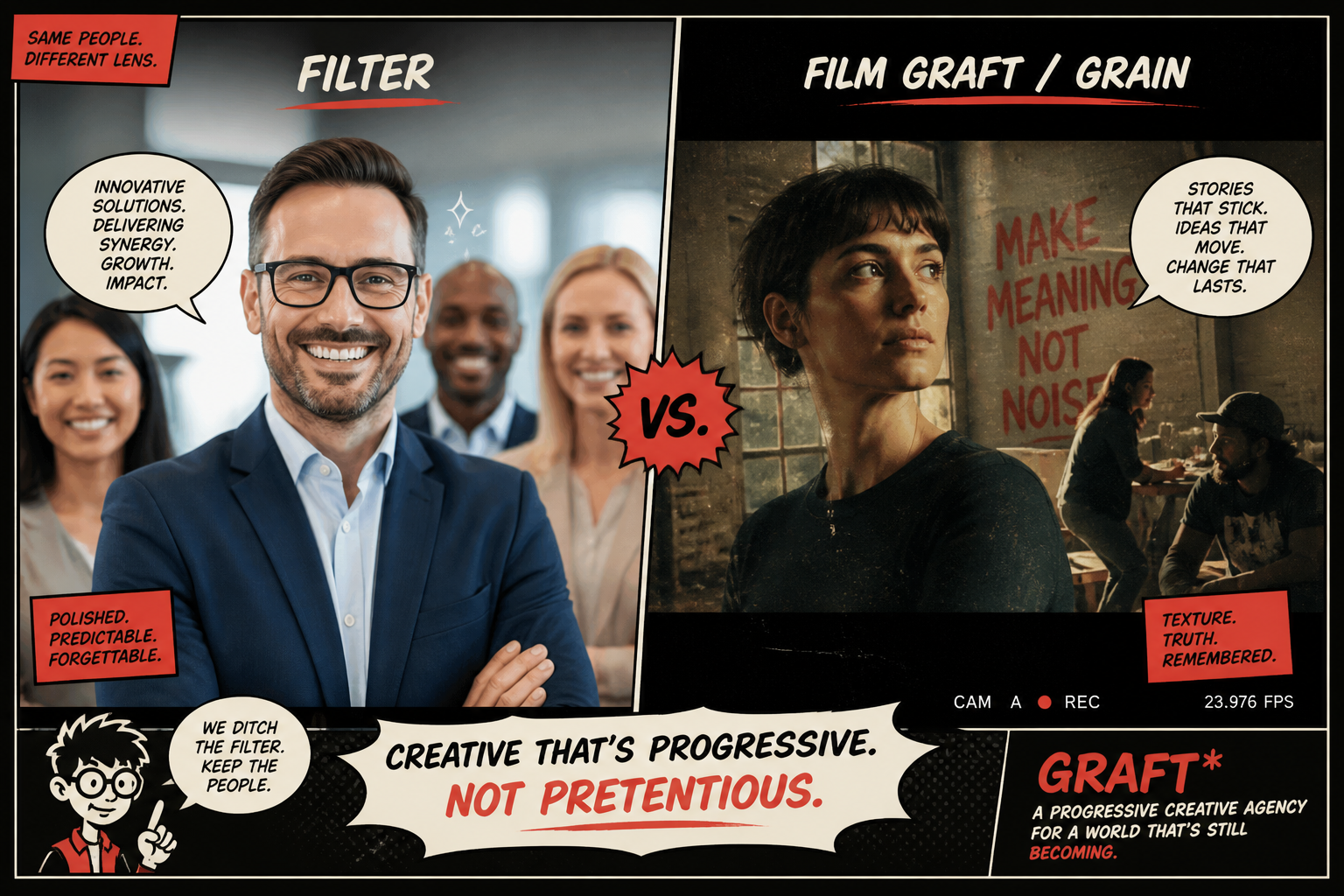
Progressive and public-interest campaigns often lose the feeling war before they lose the argument war. The policy is sound. The coalition is earnest. The creative looks like a bank’s CSR spot: soft piano, slow smile, lens flare pretending to be hope. Audiences clock it instantly. Not because people hate polish—because they hate borrowed sincerity. Emotional authority is not a filter you slap on in post. It is craft: light, texture, pacing, sound, and moral clarity working as one system.
Neuwark Communications makes work for political and advocacy stages where belief must feel earned. Our visual language leans dark, cinematic, and intentional—film grain, not beauty filter; letterbox tension, not stock-photo cheer. We don’t decorate agendas. We engineer belief. And belief, on camera, is a production problem as much as a messaging one.
Why “inspirational progressive” creative so often feels fake
Three industrial habits keep draining authority from causes that deserve better:
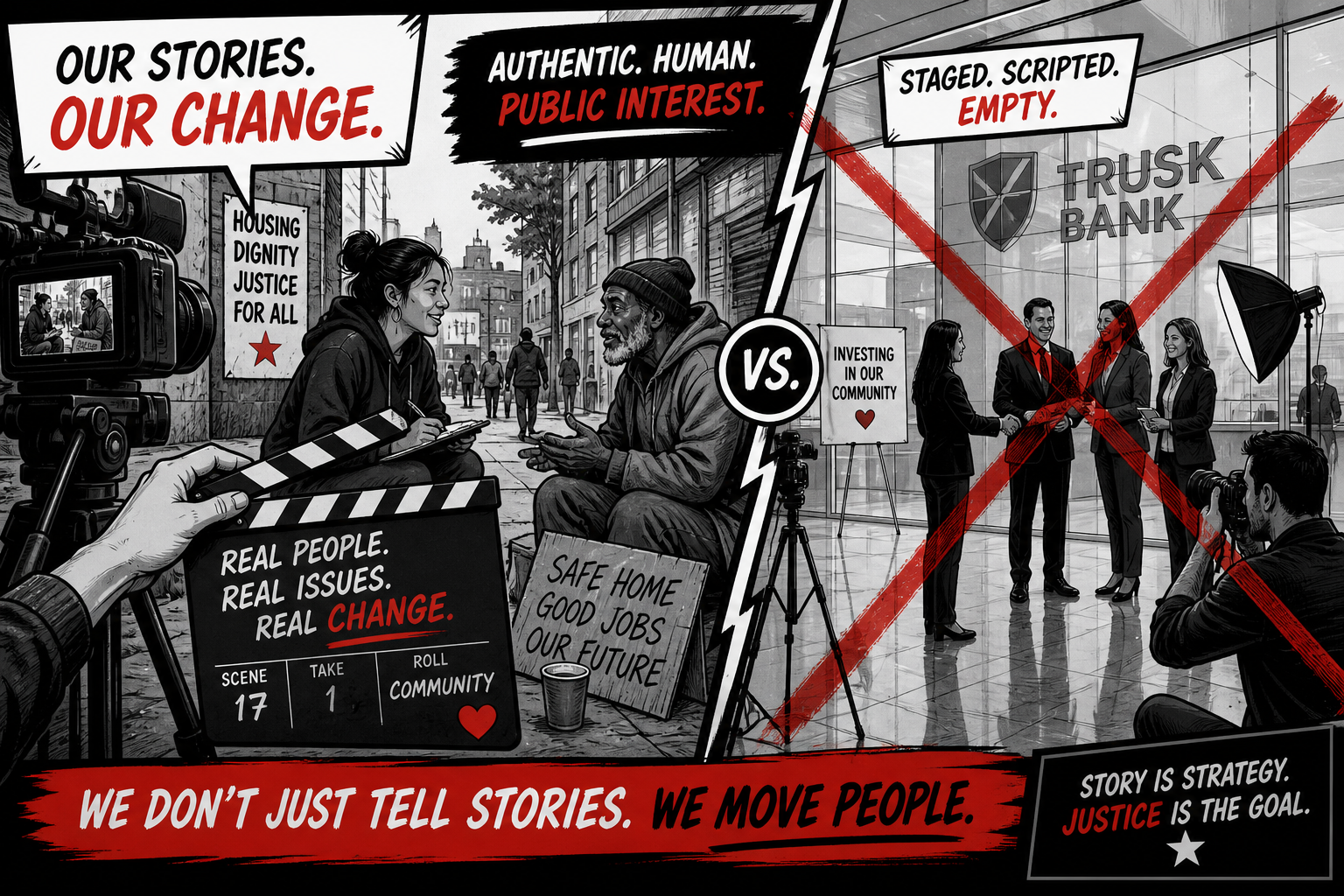
1. Aesthetic outsourcing. Teams buy the look of mainstream brand advertising because it signals “professional.” In the Philippines and across APAC, that often means global template packs, over-smoothed skin, generic aerials of cities at dusk, and typography that could sell either a telco plan or a climate pledge. When your visual system is interchangeable, your moral claim is too.
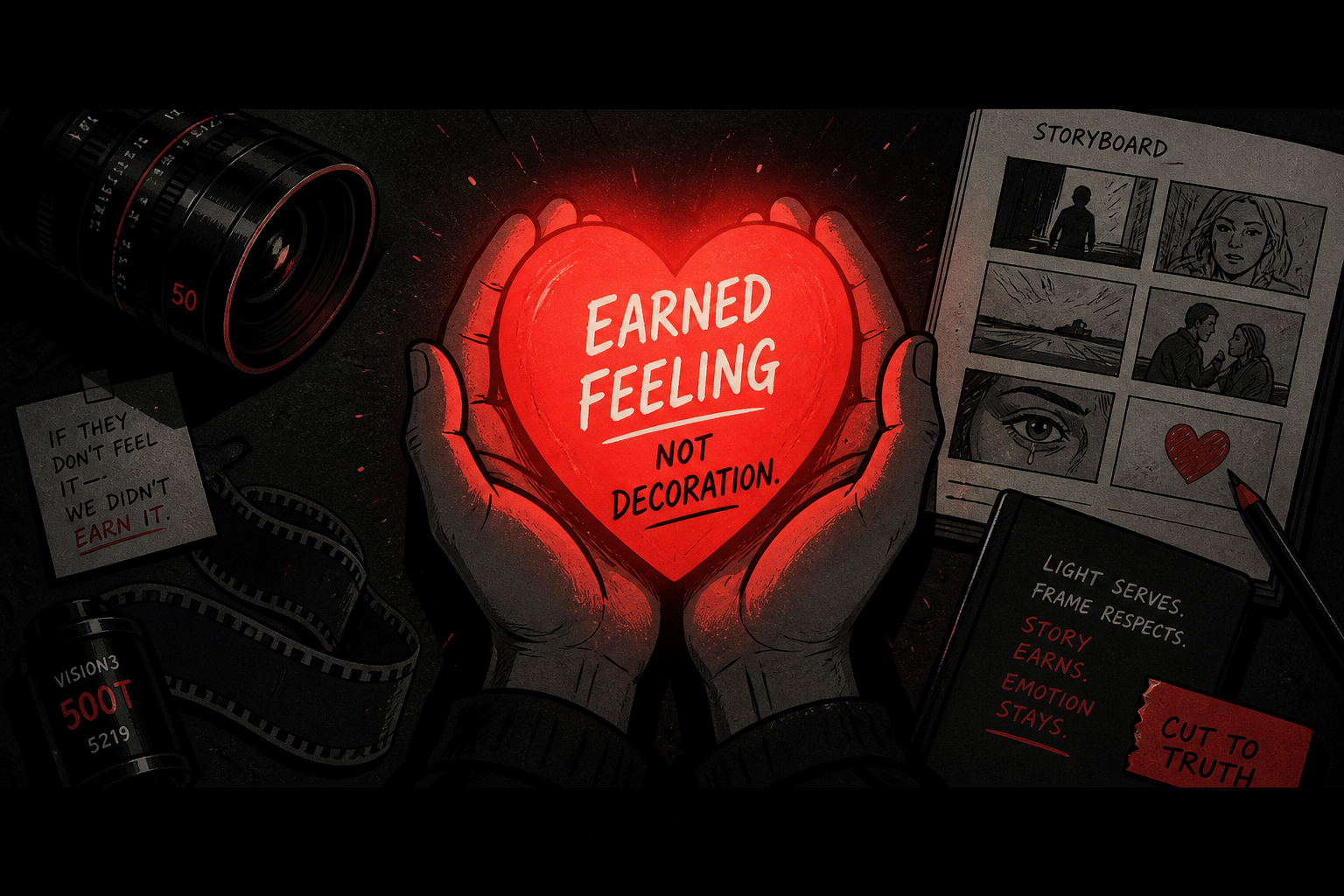
2. Emotion as garnish. Tears and swelling strings arrive late, unearned. Cinema earns emotion through specificity: a hand that hesitates before signing, a waiting room’s fluorescent hum, a barangay street at 5 a.m. before the heat. Abstract uplift is cheap. Particular life is expensive—and persuasive.
3. Fear of darkness. Progressive campaigns sometimes equate darkness with negativity, so everything is bright, safe, and forgettable. Darkness is not despair. Darkness is contrast. It lets light mean something. Cinematic craft uses shadow to create gravity so the audience feels the stakes without a narrator shouting them.
If your spot could sell a credit card with the logo swapped, you do not have campaign creative. You have rental aesthetics.
Emotional authority is a trust signal
Voters and issue publics grant authority to communicators who seem to have seen the world they describe. That is why documentary texture often outperforms glossy hero films in advocacy—especially when audiences are saturated with political advertising and influencer gloss. Film grain, imperfect audio beds, restrained color, and patient framing signal: we were there; we are not selling you a lifestyle; we are asking you to face a real condition.
This matters acutely in Philippine public life, where audiences are visually fluent, meme-native, and allergic to elite distance. A too-clean spot can read as Manila-centric polish disconnected from provincial realities. Cinematic does not mean expensive Hollywood. It means intentional seeing.
The craft system: how to make progressive work feel alive
Treat creative like a message system: hierarchy, proofs, asks—translated into image and sound.
Image: texture over cosmetics
– Prefer motivated light. Practicals, window light, sodium street glow, fluorescent offices. Motivated light tells truth about place. Unmotivated beauty light tells truth about the rental house. – Keep grain or gentle texture when it serves documentary honesty. Do not fake “vintage” as a costume. Use texture to resist the plastic look of over-denoised digital. – Frame for power and vulnerability. Who holds the center of the frame? Who is cropped out? Progressive creative often centers institutions by accident. Re-center people living the consequence. – Limit LUT addiction. One coherent grade across a campaign beats a new Instagram mood every asset. Consistency builds recognition; filter hopping builds amnesia.
Sound: the invisible half of authority
Most campaign edits over-score. Music tells the audience what to feel before the picture has earned it. Try this discipline: cut picture to ambient truth first—traffic, rain on tin, hospital corridor, market noise, jeepney doors—then add score only where silence would be dishonest. Voiceover should sound like a person in the room, not a luxury brand announcer. In bilingual or multilingual PH/APAC work, let vernacular rhythm lead; do not force English “global” cadence onto local stories.
Pacing: respect the scroll without surrendering to it
Short-form platforms reward hooks. That is real. It does not require surrendering all cinematic patience. Open with a concrete image that implies conflict (a sealed folder, a dry tap, a child counting coins), state the frame in plain language, then deliver one proof beat before the ask. Hook ≠ gimmick. Hook = clarity under time pressure.
Performance and casting: stop casting “aspirational”
Aspirational casting is how public-interest work starts looking like a bank ad. Cast for credibility in the specific community you claim to serve. Direct for stillness more than theatrical tears. Micro-expressions and withheld emotion often read as stronger than performed grief—especially to audiences who have seen too much performed politics.
Production constraints are not the enemy of cinema
Budgets in advocacy and many candidate races are real. Cinema is not synonymous with crane shots. Operator-level moves that raise authority without exploding cost:
– One excellent location deeply used beats five mediocre locations skimmed. – A disciplined shot list tied to message proofs (problem / consequence / agency / ask) prevents beautiful but irrelevant B-roll. – Available-light schedules at golden hour and blue hour for outdoor truth; practical-heavy interiors for institutional critique. – A small kit used masterfully (prime lenses, shotgun + lav, steady handheld or simple slider) outperforms a large kit used generically. – Editorial ruthlessness. Cut anything that looks like content for content’s sake. Every second must advance frame, proof, or ask.
For coalitions, create a shared cinematic bible: color world, type system, do/don’t references, music rules, end-card discipline. Partners can produce locally without fracturing the public’s sense that this is one fight.
What “without looking like a bank ad” means in practice
Bank ads sell reassurance and upward mobility. Progressive and public-interest campaigns must often sell confrontation with a condition and agency to change it. That flips the creative brief:
| Bank-ad habit | Campaign authority move | |—|—| | Soft focus comfort | Hard focus on consequence | | Anonymous smiling diversity | Named communities, specific places | | Logo-first end cards | Ask-first end cards | | Generic hope anthem | Sparse score + real rooms | | Product as hero | Public as agent |
You can still be beautiful. Beauty in this lane is moral clarity made visible—not lifestyle cosplay.
A pre-flight checklist before you call it “cinematic”
Before locking picture, run this operator pass with strategy and media in the room:
1. Frame audible in the first 8 seconds? If not, the craft is decoration. 2. One concrete proof beat that could not belong to another campaign? Specificity is authority. 3. Ask is behavioral and logistically possible this week? Emotion without a path is brand tourism. 4. Muted viewing still communicates? Captions, visual verbs, and end-card clarity matter on mobile. 5. Would you be embarrassed if a community depicted said you never visited? If yes, reshoot or rebuild with them.
Pass four of five and you are ready to spend. Fail the first or the fifth and no amount of grain will save you. Cinematic progressive work is not a vibe pack. It is disciplined seeing in service of a message system people can act on.
Craft is how belief looks on screen.
Slogans without systems fail. Media plans without portfolios panic. Creative without craft borrows someone else’s sincerity and wonders why nobody trusts it. Film grain is a metaphor and a method: texture that says the work touched reality.
If you are building progressive, political, or public-interest campaigns in the Philippines or across APAC and you are tired of work that looks expensive but feels empty, start a conversation with Neuwark Communications. We build cinematic creative systems that carry emotional authority—dark enough to take stakes seriously, clear enough to move people to act.
[Start a conversation →](https://neuwarkcommunications.com/contact)