Campaigns fall in love with a line. It fits on a hat, a jeepney sticker, a debate punch, a TikTok caption. Lines matter. They travel. They make donors feel clever and volunteers feel armed. Then the news cycle turns—an opponent drops a cut, a platform throttles reach, a surrogate freelances on morning radio—and the line sits there, decorative and useless. A slogan is a surface. What survives is a message system: nested arguments that still make sense when you are not on offense.
Neuwark Communications works where persuasion decides outcomes: candidates, issue campaigns, coalitions, and institutions across the Philippines and the wider APAC public square. Our stance is simple. We don’t decorate agendas. We engineer belief. That starts by treating messaging as infrastructure, not merchandise.
A slogan is a product. A message system is an operating system.
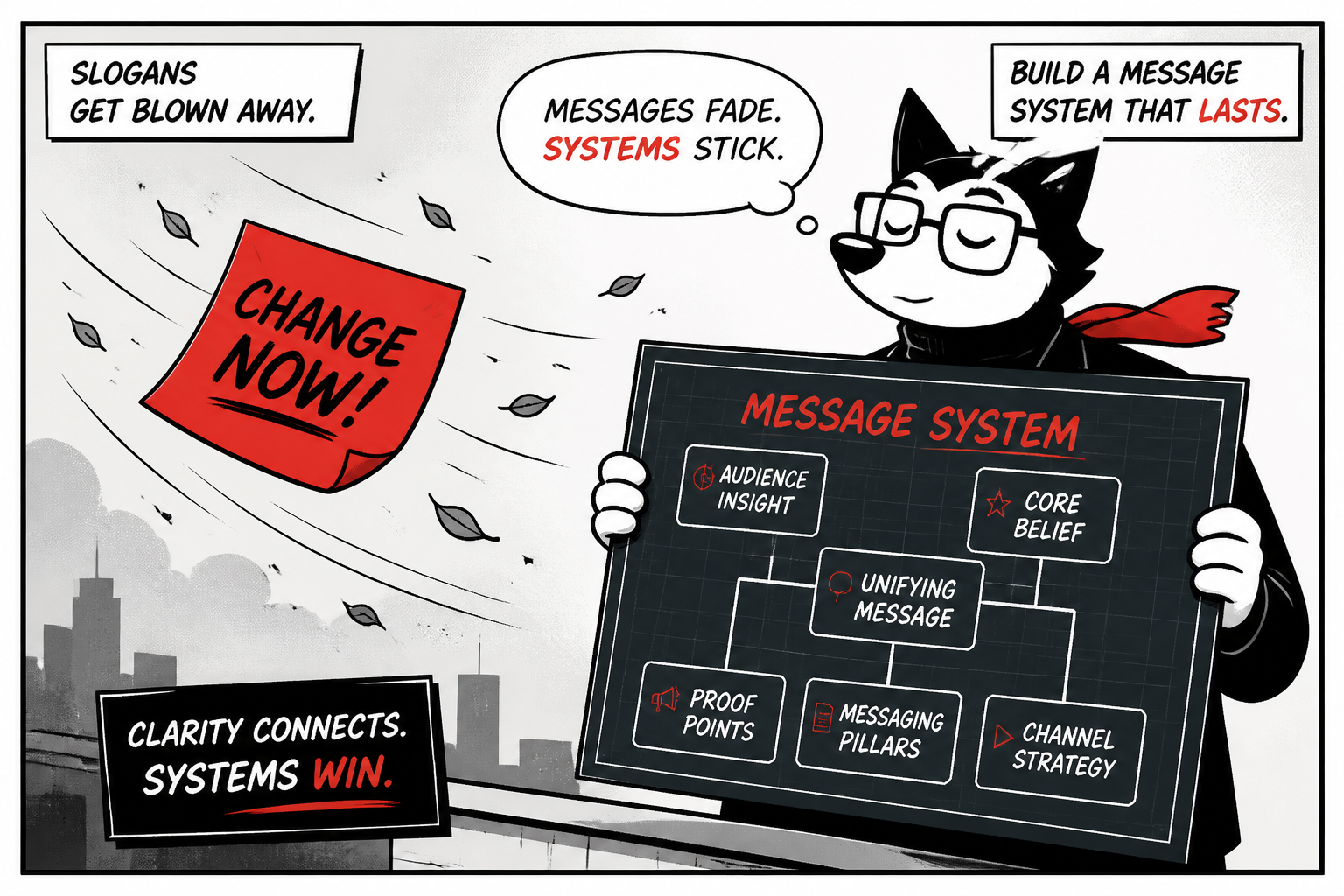
A slogan answers: What do we say when we have five seconds? A message system answers: What do we still believe—and how do we prove it—when we have five minutes of hostile questions? Those are different jobs. Conflating them is how campaigns end up reinventing their identity every Tuesday.
In Philippine and regional politics, the information environment is especially unforgiving. Fragmented media diets, hyperlocal rumor economies, vernacular code-switching, and rapid meme mutation mean a single English-language zinger rarely carries a whole coalition. Voters in Metro Manila, Cebu, Davao, and diaspora chats do not share one attention graph. If your “message” is only the top-line rhyme, you have nothing durable for barangay captains, youth organizers, labor partners, or faith validators to actually use.
Operator rule: if your message only works when you control the frame, you do not have a message—you have a mood. Moods evaporate. Systems remix.
The three layers that have to hold
Build every campaign message as a hierarchy you can hand to speechwriters, digital leads, and paid buyers on one page.
1. Frame. Your specific theory of the problem and the force—villain, inertia, capture, neglect—that sustains it. Not wallpaper words like “progress,” “change,” or “unity.” A frame names what is broken, who benefits from the break, and why now. In advocacy work (climate, health access, anti-corruption, labor), the frame often matters more than the candidate personality. In candidate work, the frame still comes first; biography is proof, not the spine.
2. Proof stack. Stories, numbers, validators, contrasts, and lived texture that make the frame feel inevitable. Proof is not a fact dump. It is sequenced evidence that low-information audiences can feel and high-information audiences can verify. In APAC contexts, validators frequently matter more than polished stats: trusted local voices, professional associations, community leaders, and earned media that does not feel imported.
3. Behavioral ask. What someone should do this week—not “believe,” not “care.” Vote, volunteer, call a representative, share a clip, join a watch party, donate a small amount, show up at a hearing. Soft asks create soft campaigns. Hard asks create measurable movement—and they force your creative and media teams to design for action, not applause.
When these three layers lock, rapid response becomes remix, not reinvention. You do not invent a new campaign overnight. You rotate proofs and sharpen asks while the frame holds.
Why slogans die mid-cycle—and how systems absorb the hit
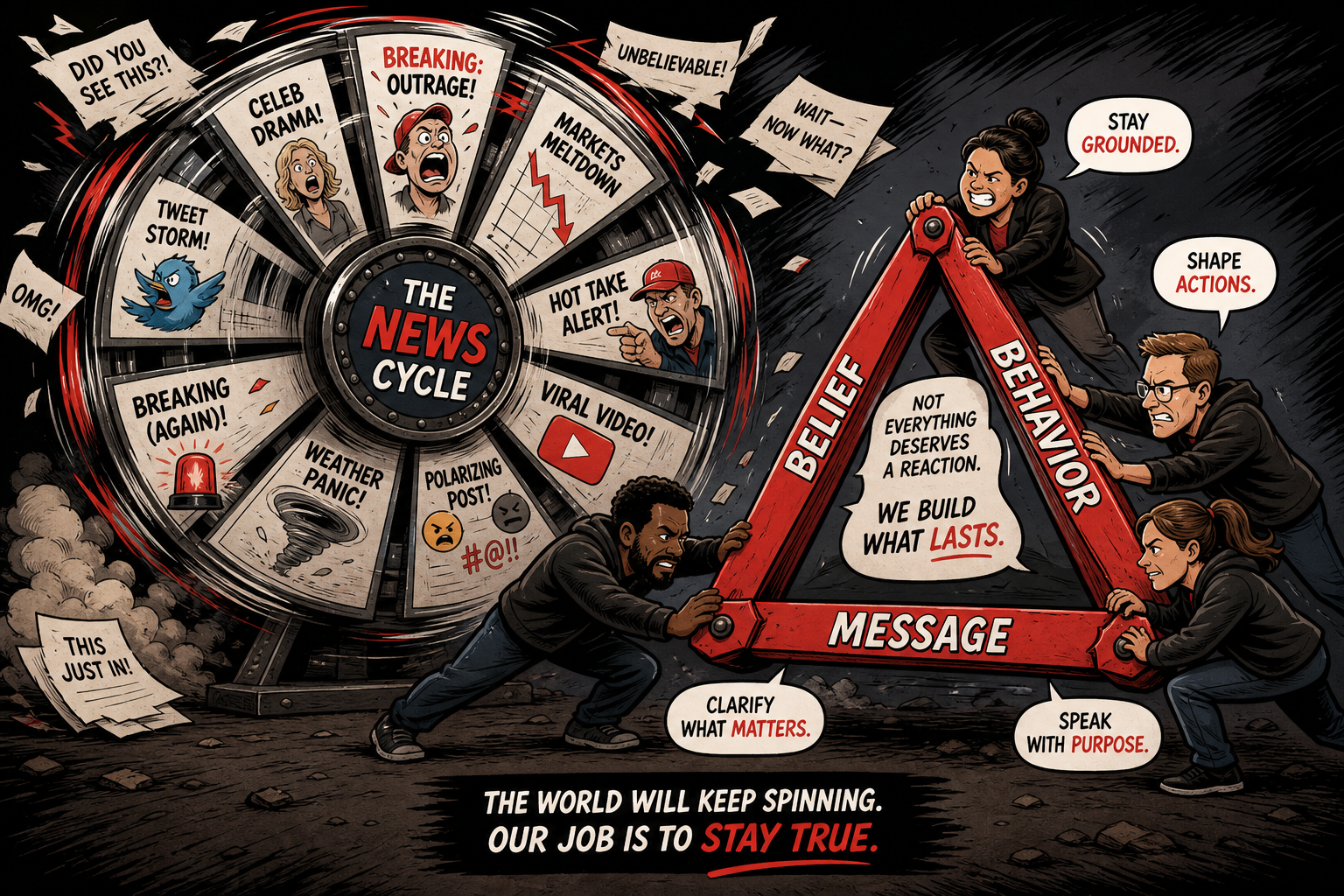
Slogans fail for predictable operational reasons:
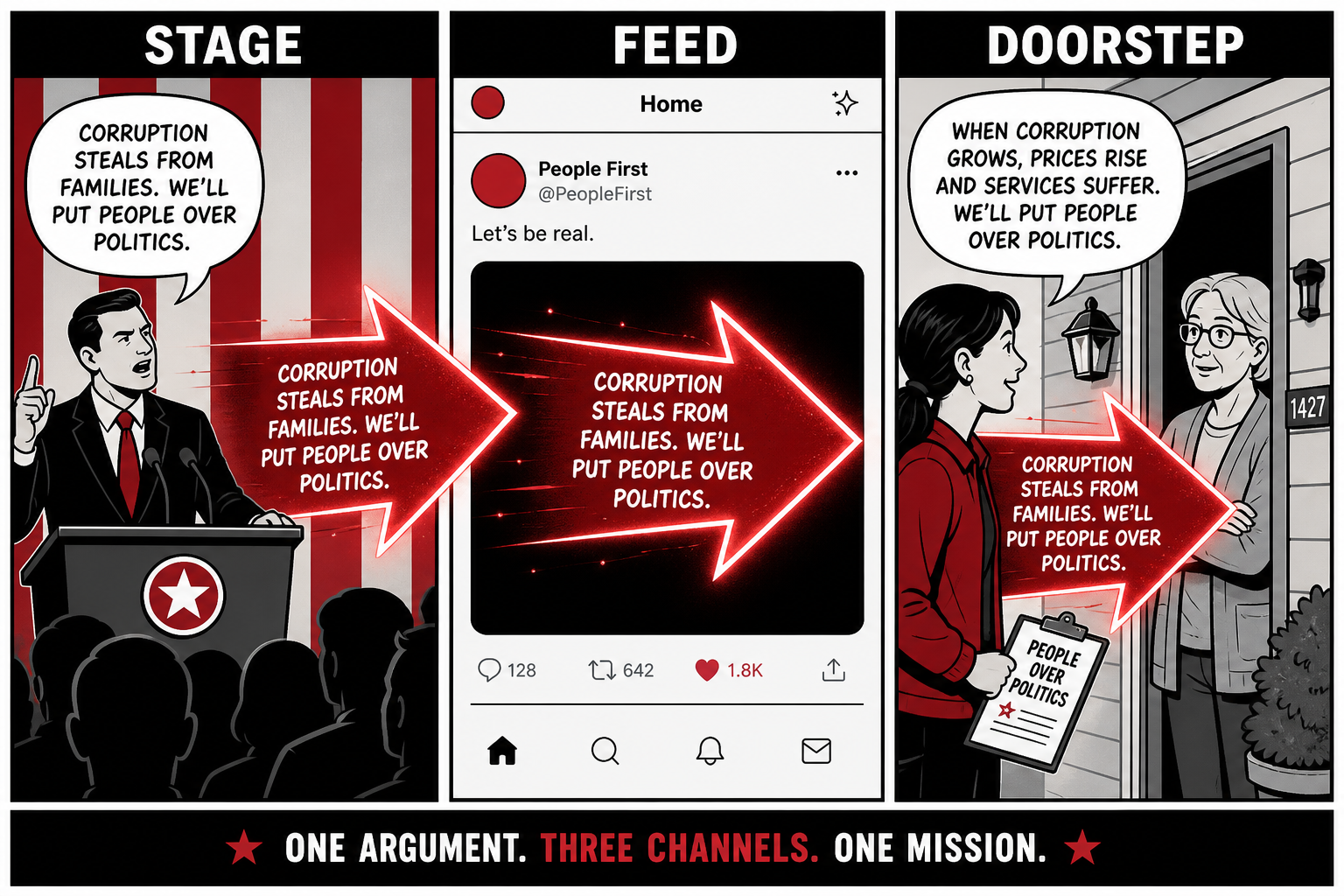
– They are optimized for friendlies. Your base loves the line. Persuadables hear branding, not meaning. – They have no contrast engine. Without a clean “us vs. the broken status quo” contrast that fits in one breath, opponents define you first. – They cannot survive hostile edits. If a 15-second negative cut makes your line sound empty, you never stress-tested it. – They do not travel across channels. TV, community radio, Facebook Reels, barangay assemblies, and SMS blast culture need the same spine in different densities—not different campaigns. – They outrun internal alignment. When paid, organic, and earned teams invent language separately, the public hears noise. Coalitions fail less from missing logos than from missing a shared sentence.
A message system absorbs those failures by design. You pre-write contrast lines that do not require a 60-second explanation. You maintain surrogate Q&As that sound like people, not binders. You build vernacular variants—Tagalog, Cebuano, Ilocano, and English registers—that keep the same hierarchy. You pressure-test against the five-second scroll and the ten-minute town hall.
Field kit: what “system” looks like on Monday morning
Give every workstream the same spine:
– A one-page message hierarchy (frame → pillars → proofs → asks) owned by strategy, not creative alone. – A contrast sheet with three clean oppositions your team can say without notes. – A proof library tagged by audience and channel: personal story, data beat, validator clip, visual evidence. – A surrogate pack with natural language answers to the five hardest questions you will face this month. – A rapid-response matrix: which proof rotates in when the opponent attacks on integrity, competence, economy, or identity—without changing the frame. – A weekly alignment ritual: 20 minutes where speech, digital, and media read the same page before they invent assets.
If any of those artifacts do not exist, you are improvising under fire. Improvisation feels brave. Systems win.
How to build the system without drowning in workshops
Campaigns fear “message architecture” because it sounds like a three-day retreat. Keep it ruthless and short.
Day 1 — Diagnose. Collect the last 30 days of earned coverage, opponent attacks, top organic posts, paid creative, and volunteer scripts. Circle every place language drifted. Name the three audiences that actually move your race or issue—not twelve personas for a deck.
Day 2 — Decide the frame. Write one paragraph that a field organizer can memorize. If leadership cannot agree on the frame, stop. Creative cannot paper over strategic disagreement. In Philippine coalitions especially, force the shared sentence before you force the shared logo.
Day 3 — Stack proofs and asks. Assign owners. Kill orphan facts. Choose one primary ask per audience for the next two weeks. Then lock the one-pager and ship it.
After that, iterate weekly. Message systems are living documents, not brand bibles. The discipline is not perfection—it is coherence under pressure.
For public-interest and progressive campaigns, this discipline is also an ethics of clarity. Belief is not manufactured by volume alone. It is engineered when your argument remains legible after the algorithm shifts, after a scandal adjacent to your lane breaks, after your opponent spends more. Clarity is respect for the public. Fog is a luxury of the already powerful.
Pressure tests we run before language goes live
– Can a volunteer explain the frame in under 20 seconds without reading? – Does the contrast still work if the opponent claims the same values words? – Will a hostile caption make the line sound cynical or naive? – Does the ask survive contact with real logistics (transport, time, risk, money)? – Can vernacular versions keep the hierarchy without becoming a different campaign?
If you fail two of five, you are not ready to spend media money amplifying it.
Build the spine before the cycle builds you.
The next news cycle will not wait for your slogan committee. Opponents will not wait for your brand refresh. Platforms will not wait for your “final” line. What you can control is whether your campaign owns a message system sturdy enough to remix—frame intact, proofs rotating, asks concrete.
Neuwark Communications builds those systems for political, advocacy, and institutional clients who need belief that holds when the spotlight turns harsh. If your current “message” is a slide with three bullets and a logo, start a conversation with us before the cycle writes your story for you.
[Start a conversation →](https://neuwarkcommunications.com/contact)