
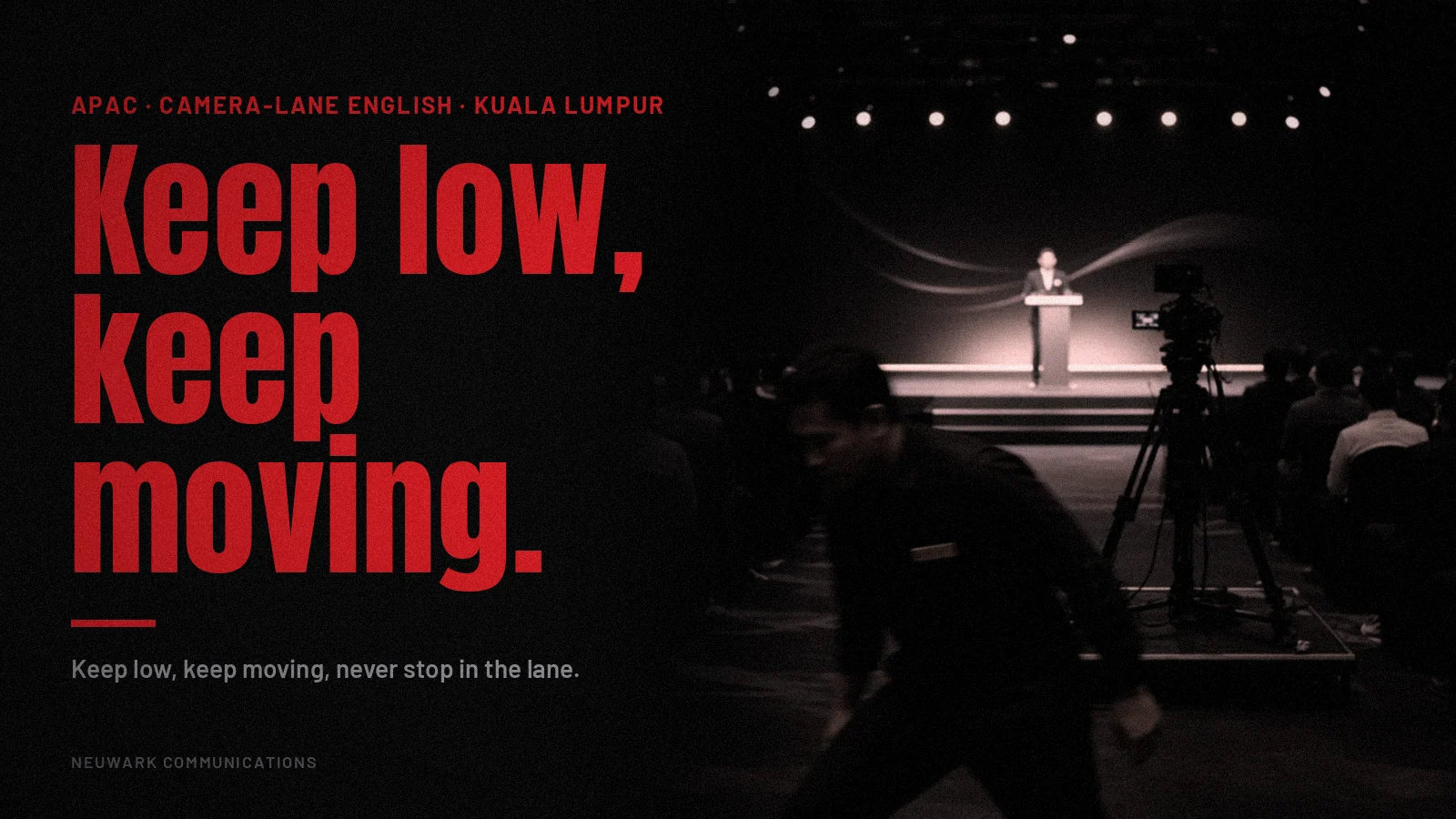
Camera-lane line English APAC is the floor lead’s short rule for the gap between the camera riser and the stage: keep low, keep moving, never stop in the lane.
Street-smart APAC English: short sentences a tired operator can say out loud.
A Kuala Lumpur convention hall, a livestreamed launch, the camera riser at the back of the centre aisle.
During the keynote, a server stops in the aisle to check a table number.
For twenty seconds, the stream shows the back of a black vest.
Quick answer: A camera-lane line English APAC is the floor lead’s rule for anyone crossing between the camera and the stage: keep low, keep moving, never stop in the lane. Say it at the crew brief, so the livestream never loses the speaker.
Pair it with the media-pen line English APAC for the press and the flash-photo line English APAC for the audience. Good event language at the crew brief protects the shot without stopping the service.
What goes in a camera-lane line English APAC?
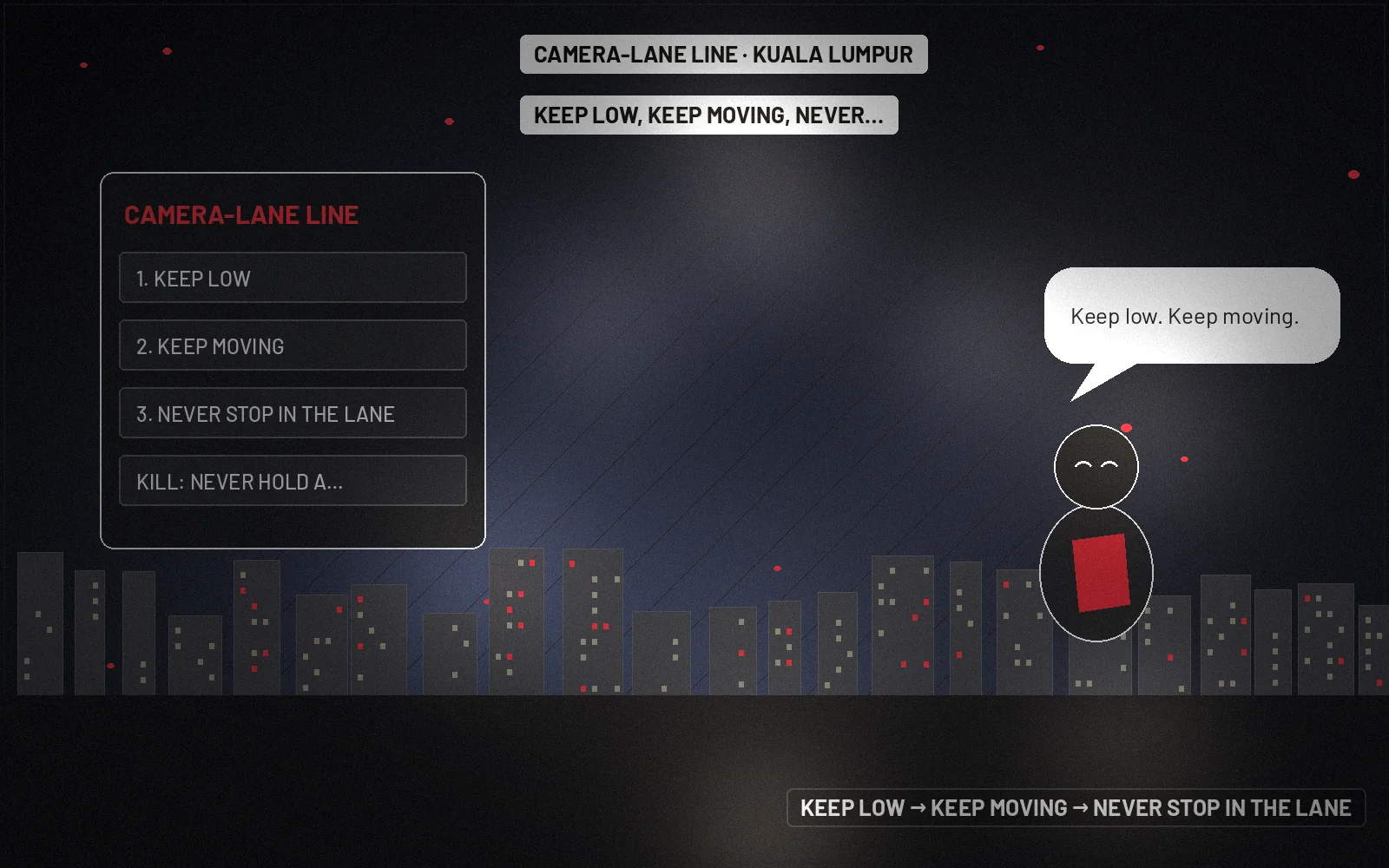
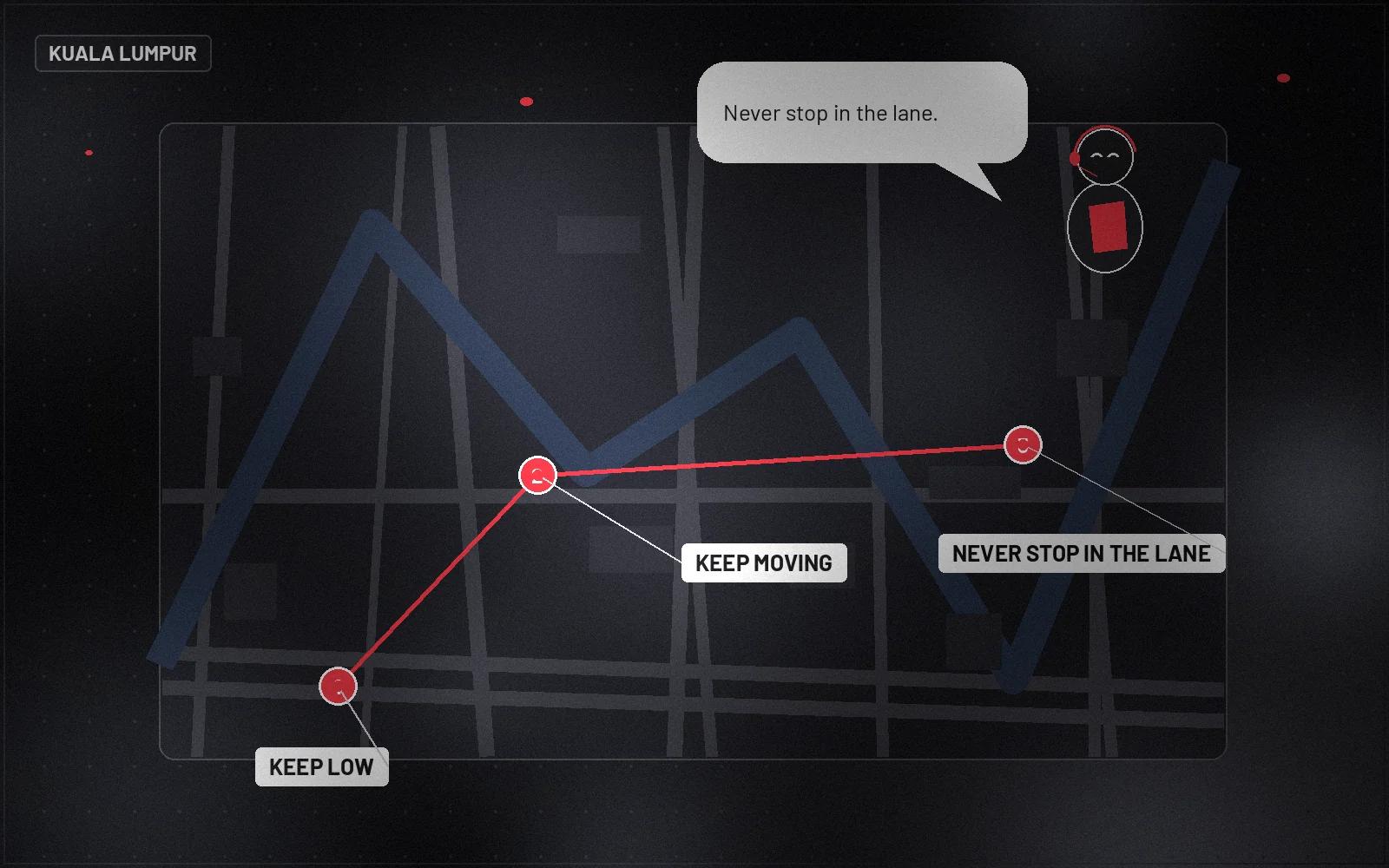
Three parts. Keep low, keep moving, never stop in the lane.
Camera-lane line (illustrative):
“The centre aisle is the camera lane during the programme.”
“If you must cross, keep low and keep moving.”
“Never stop in the lane. Step to the side to talk.”
Speakable lock (illustrative): “Keep low, keep moving, and never stop in the camera lane.”
Never stop in the lane matters most. A quick crossing is a blur on the stream; a pause is a blocked speaker that viewers remember.
What should the floor lead stop saying about the camera lane?
Stop saying be careful of the camera and start saying where and how to cross. Crew cannot see the shot, so they need a place and a rule. Mark the lane, name it, and give the three beats in the same words at every brief.
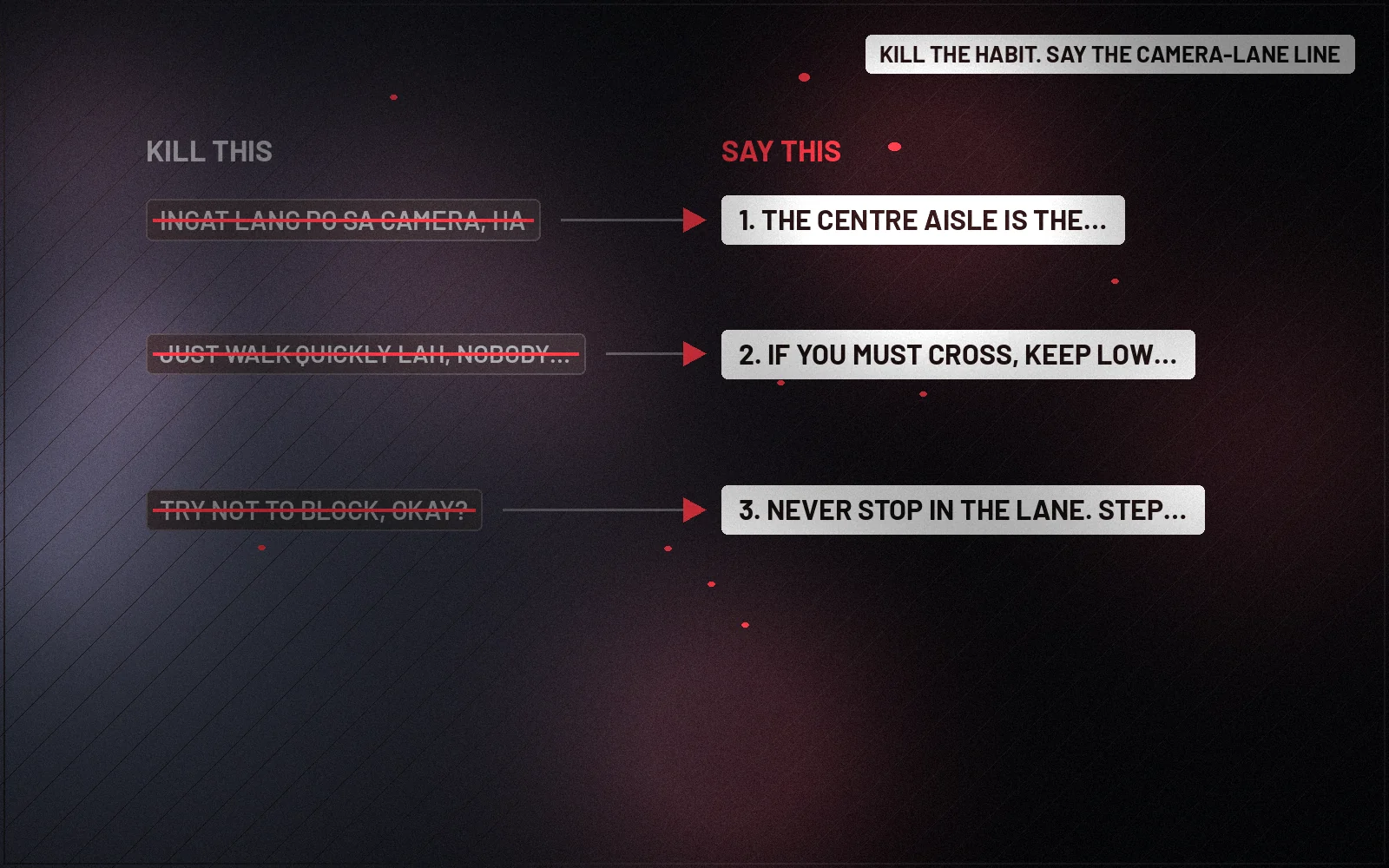
| Kill this | Say this (illustrative) | Why |
|---|---|---|
| Ingat lang po sa camera, ha. | The centre aisle is the camera lane during the programme. | A named place |
| Just walk quickly lah, nobody see one. | If you must cross, keep low and keep moving. | A clear way to cross |
| Try not to block, okay? | Never stop in the lane. Step to the side to talk. | A rule, not a hope |
| Sige, dito na lang tayo mag-usap. | Let’s talk by the side wall. | Talk outside the lane |
| Whenever can, then cross. | Cross between speakers, not during the speech. | Timing that helps |
Lines in this table are illustrative, not quotes from real people.
Where is the camera lane at an event?
The straight line from the camera riser to the stage, usually the centre aisle. Walk it with the camera operator at the tech run and mark the edges on the floor plan. Tell servers, ushers and photographers where it starts and ends, and keep stands and spare chairs out of it.
Who reminds people during the show?
The floor lead, quietly, with one hand signal. Agree a signal with the crew, such as a low palm, that means keep moving. Guests who stop in the lane get a quiet please step to the side. Never call out across the room during a speech.
How does this play out on PH, SG and Bangkok desks?
Same three parts. Different desks.
Philippines desk. In Manila and other PH events, servers and volunteers often stop to help guests wherever they are asked. Brief them kindly, with po for older crew: keep low po, keep moving, sa gilid tayo mag-usap. Post the floor plan with the lane marked in the crew Viber group.
Singapore desk. In Singapore, crews usually work from a marked floor plan and expect a short rule. Keep the line in plain English, show the lane on the plan, and give the hand signal once at the brief.
Bangkok desk. In Bangkok, crews may be briefed in Thai and English together. Keep the three beats short in both, show the lane on the floor plan, and agree the same low-palm signal.
Monday field kit
- Keep low, keep moving, never stop in the lane.
- Lane walked with the camera operator at the tech run.
- Lane edges marked on the floor plan.
- One hand signal agreed with the whole crew.
- Kill rule: never hold a conversation in the camera lane during the programme.
FAQs
What is a camera-lane line English APAC?
A camera-lane line English APAC is the floor lead’s rule for the gap between camera and stage: keep low, keep moving, never stop in the lane. Everyone on the crew hears the same words.
How do event staff avoid blocking the livestream camera?
Staff cross the camera lane low and quickly, between speakers where possible, and never stop in it. Conversations happen at the side wall.
Where should photographers stand during a livestreamed event?
Photographers work from the sides and agreed positions, outside the camera lane. The floor lead shows those spots at the brief.
Neuwark Communications builds event and campaign communications as part of our public affairs work. More street-smart lines live in Insights.
Related: media-pen line English APAC · flash-photo line English APAC
Talk to us about your next event script.
Illustrative lines only. Communications craft, not legal advice.