
It is late. The reporter has the quote. Now they need one line on who you are.
They scroll to the bottom of your release. They find three paragraphs of mission language, a founding story and a list of awards. They close the file and write “a local group” instead.
Boilerplate English APAC is the fixed last paragraph of a release: who you are, what you do, where you work and how to reach you, written so a reporter can paste it unchanged.
Street-smart APAC English: short sentences a tired operator can say out loud.
It belongs with our press kit English APAC piece. The press kit is the folder. The boilerplate is the one paragraph inside it that travels into every story.
What goes in a boilerplate English APAC paragraph?
Four things. Who you are, what you do, where you work, how to reach you. Nothing else earns a place.
Boilerplate (illustrative):
“Riverside Neighbours Network is a volunteer group in Pasig that runs flood-season cleanups and street meetings.”
“It works with residents’ associations along the river.”
“Media contact: the press desk, by email or the number on this release.”
Read it out loud. If you run out of breath, it is too long. If a reporter has to ask what you actually do, it is too vague.
Why do reporters skip most boilerplate?
Because it reads like a brochure. Reporters paste facts, not adjectives.
“Leading,” “passionate,” “innovative” and “award-winning” get cut on sight. So does any claim the reporter cannot check quickly. What survives is the noun, the verb and the place.
| Kill this | Say this (illustrative) | Why |
|---|---|---|
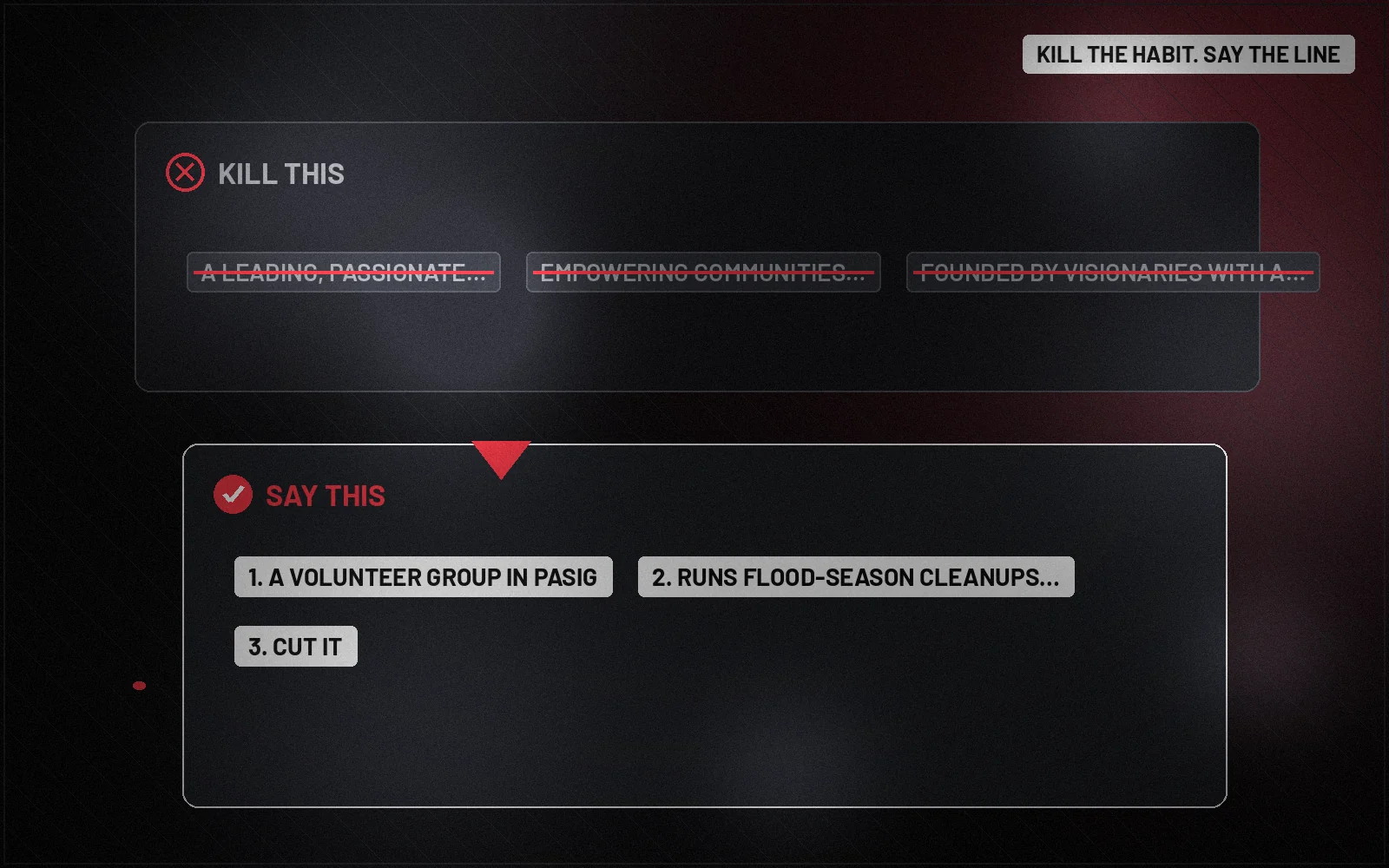
| A leading, passionate movement for change | A volunteer group in Pasig | Noun and place |
| Empowering communities through innovative solutions | Runs flood-season cleanups and street meetings | A verb a reader can picture |
| Founded by visionaries with a dream | Cut it | Founding stories go on the website |
| Award-winning, nationally recognised | Cut it, unless the reporter can check it | No unverified claims |
| For more information, follow our socials | Media contact: the press desk, by email | One route that answers |
How long should the paragraph be?
Three sentences. Short enough to read aloud in one breath. Keep a one-line version and a full version built from the same facts.
Write three lengths once and keep them in the same file:
- One line: who you are and where. For photo captions and lower thirds.
- One paragraph: who, what, where, contact. For releases and statements.
- Full version: add how you are governed and funded, only as leadership and counsel confirm it. For the About page.
If a figure would help, such as members or sites, it must be verified and dated in your files before it goes in. Otherwise leave it out.
Should the boilerplate change for each release?
No. That is the point of boilerplate. It changes when the organisation changes, not when the news changes.
If every release carries a slightly different paragraph, reporters stop trusting any of them. Archive searches turn up five versions of who you are. Pick one, date it in your files, and give one person the right to edit it.
How does this play out in PH and SG?
Same four fields, different reading habits. Name the place in words a local reporter would use.
Philippines desk. Name the city, barangay or province the way local media writes it. If the release also goes out in Filipino or a regional language, translate the boilerplate once, have a native speaker check it, and lock both versions. Keep the English one as the base so editors can compare.
Singapore and wider APAC desk. Editors expect a formal, compact paragraph. Write the full registered name once, then the short name. If you work across markets, name them in plain words instead of “regional presence.”
What about coalition and partner releases?
Each organisation keeps its own short boilerplate, stacked at the end in the agreed order. Do not blend them into one paragraph.
Keep each partner paragraph roughly the same length so nobody looks bigger by word count. Each partner approves its own text. The comms lead only checks that all of them follow the same four fields.
What to do this week
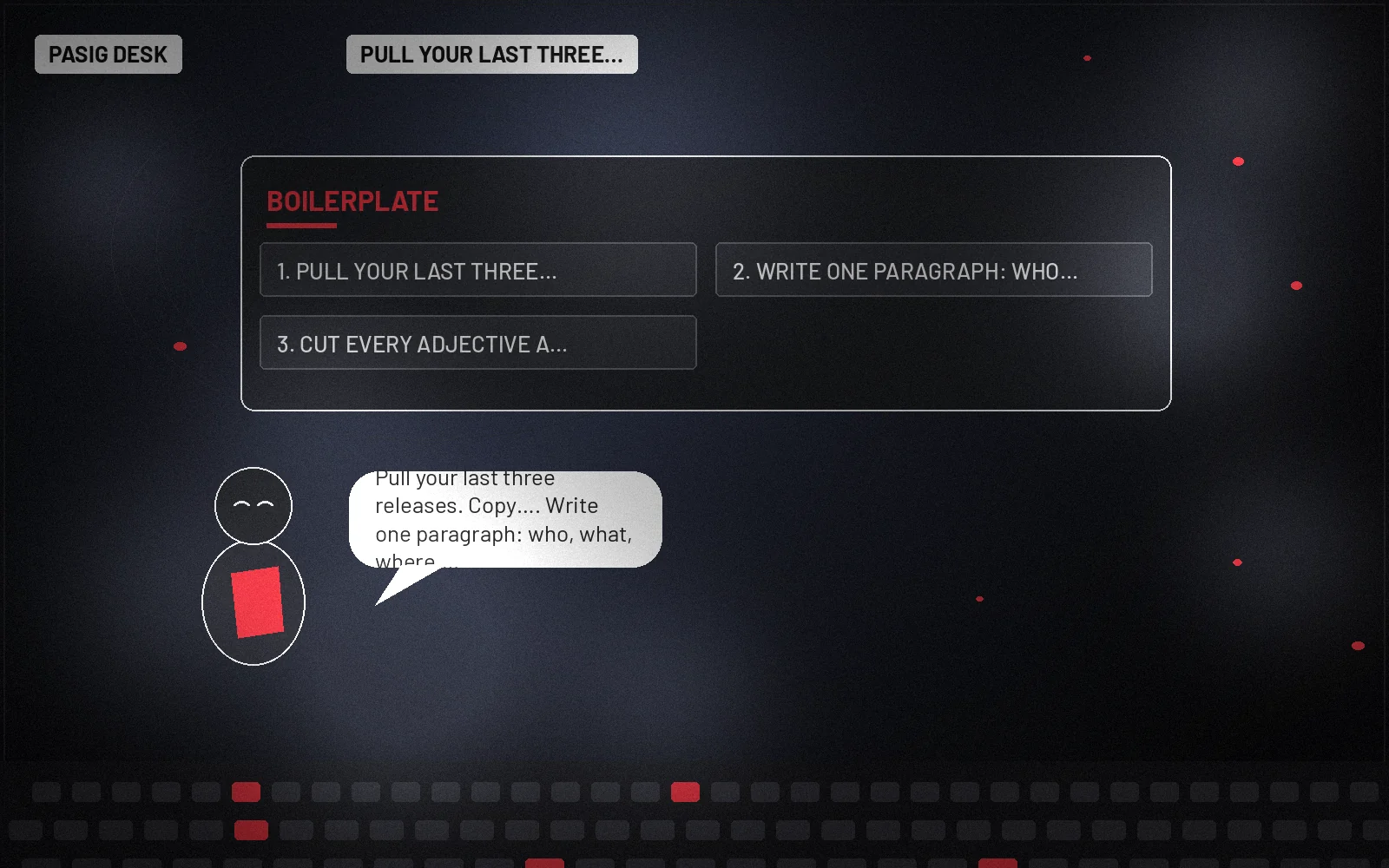
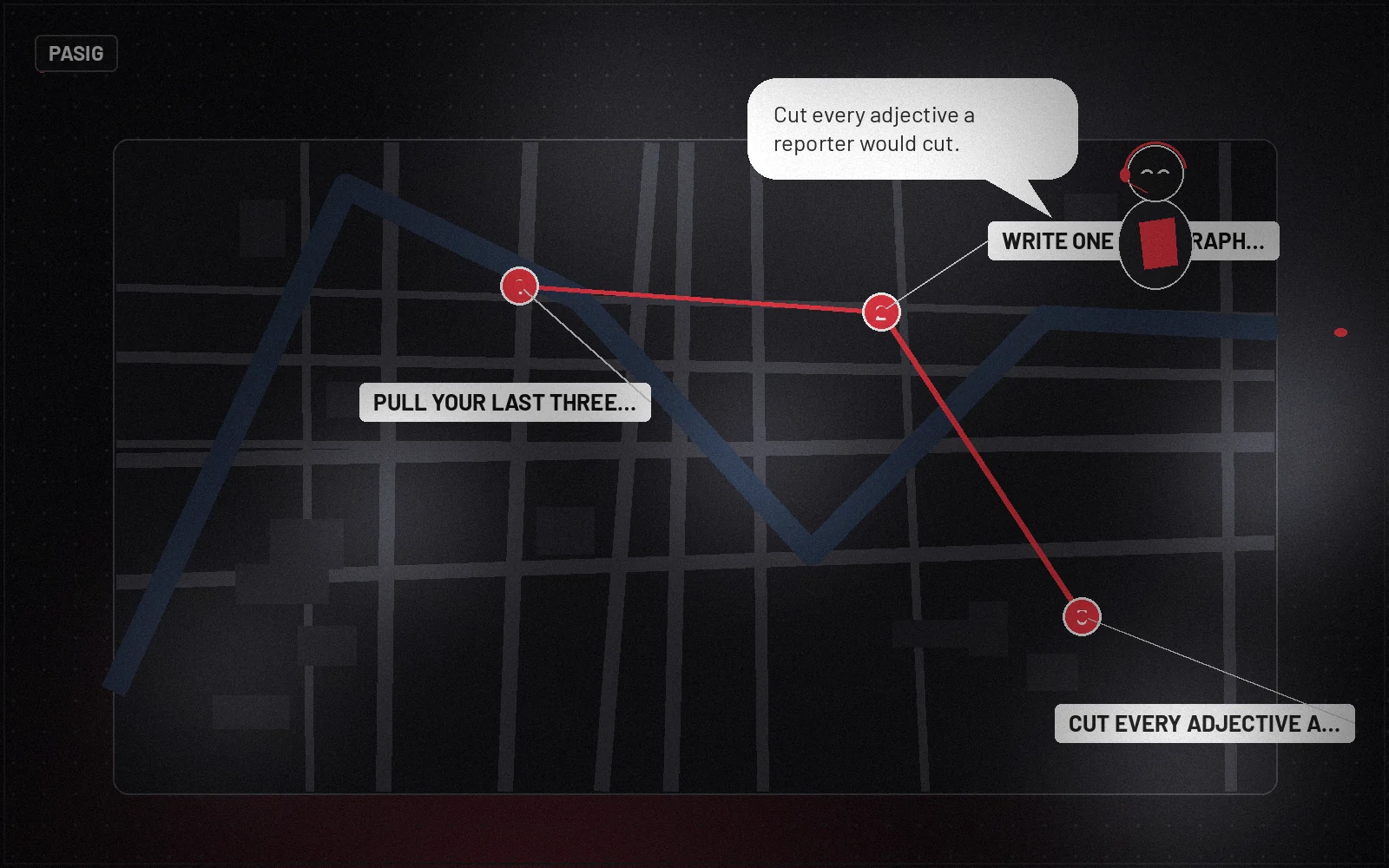
- Pull your last three releases. Copy their closing paragraphs into one file. Count the versions.
- Write one paragraph: who, what, where, contact. Read it aloud.
- Cut every adjective a reporter would cut.
- Write the one-line and full versions from the same facts.
- Name one owner. Nobody else edits the boilerplate.
Kill rule: if a reporter cannot paste it without editing, it is not boilerplate yet. Rewrite it.
FAQs
What is boilerplate English APAC?
Boilerplate English APAC is the fixed last paragraph of a release: who you are, what you do, where you work and how to reach you, written so a reporter can paste it unchanged. It stays the same across releases.
Can the boilerplate include a mission statement?
Only if it is one plain sentence a reporter would paste. Most mission statements belong on the website, not at the bottom of a release.
Should we list awards or figures in it?
Only facts that are verified, dated and easy for a reporter to check. If in doubt, leave them out.
Who signs off the paragraph?
The comms lead owns the words. Leadership and counsel confirm the facts once, then the paragraph is locked until something real changes.
Neuwark Communications writes releases and press materials as part of our services, including Strategy & Messaging. If your closing paragraph reads like a brochure, talk to us at Contact. More language companions live in Insights.
Communications craft, not legal advice. Counsel checks election-period, consent and platform rules, plus any claims about registration or funding, before a boilerplate goes out.
Related: Press kit English APAC · Briefing one-pager English APAC