
Every September, Southeast Asia remembers that air can become a corporate crisis. In mid-September 2026, transboundary haze from Indonesian wildfires pushed Kuala Lumpur, Singapore, and Kuching into the world's worst air-quality ranks. Schools closed. Advisories stacked across Indonesia, Malaysia, Singapore, the Philippines, and Vietnam. Outdoor brands, logistics firms, tourism operators, and every employer with a city office took the hit twice: once in operations, once in trust.
Haze crisis communications ASEAN is not a weather tweet. It is a recurring stakeholder system—workforce, customers, communities, regulators—that you rehearse before the AQI spikes, not after the group chat fills with N95 selfies and anger at corporate silence.
Neuwark Communications builds crisis retainers for APAC brands that treat seasonal hazards like calendar entries, not surprises. This playbook is the money version: protect people, protect spend, and stop sounding like you discovered particulate matter yesterday.
Why silence during worst-air days reads as indifference
Ops will close sites, shift delivery windows, and buy filters. That is necessary. It is not enough.
When the sky turns brown, employees read silence as indifference. Customers read vague "we care about the environment" posts as greenwashing. Communities notice if your warehouse keeps running while their kids stay home. Regulators notice if your public line contradicts your leave policy. Investors notice when ESG pages promise stewardship and September looks like amnesia.
The commercial damage lands in four places:
- Productivity and attrition — staff who feel unprotected do not stay loyal through the next peak season
- Brand equity — outdoor, F&B, tourism, and retail take reputation hits when they look clueless
- Operational spend — panic PPE buys, last-minute WFH tooling, and chaotic vendor pauses cost more than a pre-built playbook
- ESG credibility — buyers and lenders already skim sustainability pages; haze season is a live test
ASEAN haze is predictable enough to plan. That is the strategic gift. Treat it like typhoon season for HR and brand, not like a one-off PR fire.
Stakeholder map: employees, families, customers, investors
Employees and schools-adjacent families
Lead with clarity, not vibes. Name the AQI threshold that triggers WFH, staggered shifts, or site closure. Spell out PPE, leave, and medical support in one page people can forward. Give managers a script for "do I have to come in?" that does not invent policy on the spot. Update daily during peak days—even if the update is "thresholds unchanged."
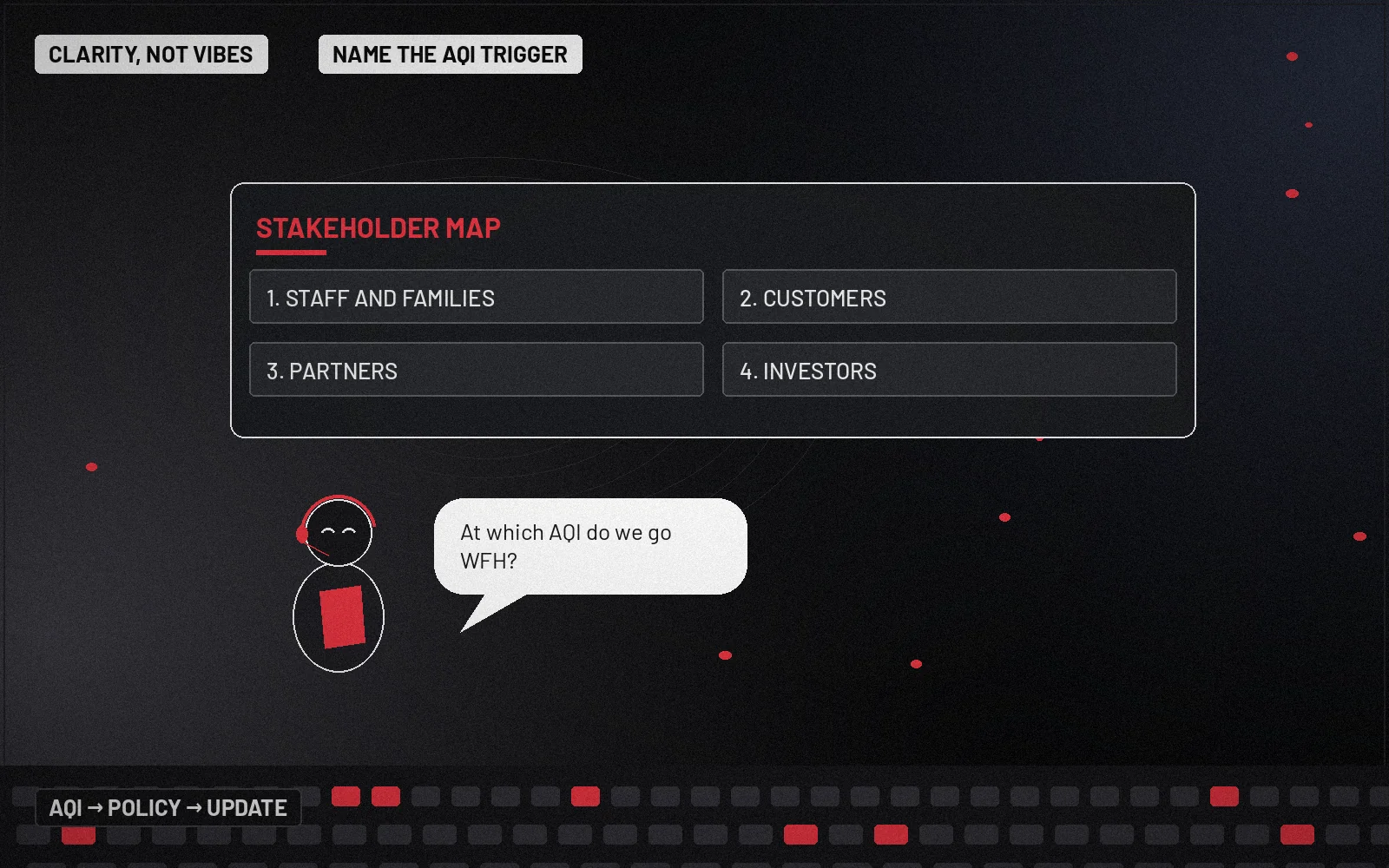
Parents on your payroll are also watching school closures. If your policy ignores that reality, they will invent their own—and resent you for making them choose between a paycheck and a child's lungs.
Customers and partners
Be honest about service without turning the brand into a meteorologist. Say what deliveries, store hours, or outdoor events change—and until when. Brief call centers and marketplace sellers with the same facts HQ uses. If you pause outdoor activations, say so early; do not ghost ticket holders.
Brand and outdoor / logistics playbooks when AQI spikes
When AQI spikes, kill leftover sunny creative. Pause influencer outdoor shoots without a safety brief. Continuity is good. Pretending the air is fine is not. Delivery fleets need rider guidance that matches what the brand says publicly—otherwise the screenshot writes itself.
Investors and ESG audiences
Keep a one-pager: sensor readings you trust, leave and safety actions taken, vendor status, and who owns the next update. When someone asks, answer in minutes—not after a war-room scramble that looks like you never planned for September.
Recurring haze calendar: treat it like a known crisis season
Build the system once. Run it every haze season.
Triggers
- Define AQI (or PSI) bands: advisory / limited outdoor / WFH default / site pause
- Assign auto-activation: who posts the first internal note within 60 minutes of crossing a band
Owners
- One channel with HR, ops, brand, legal, and facilities—no parallel WhatsApp freestyle
- Named backup if the primary owner is offline
Proof pack
- Leave and attendance notes ready for auditors and investors
- Vendor and logistics status in one shared doc
- Customer FAQ that matches the internal note (version numbers matter)
Message hygiene
- Kill leftover outdoor campaign creatives for the week
- Hold ESG storytelling that cannot survive a screenshot next to a hazardous AQI chart
- Align local site managers with city advisories before HQ posts inspirational copy
Add haze to the same annual crisis calendar you already use for typhoons and floods in PH and Vietnam sites. The difference is duration: haze can tax trust for weeks, not hours.
Employee and ops messaging without greenwashing
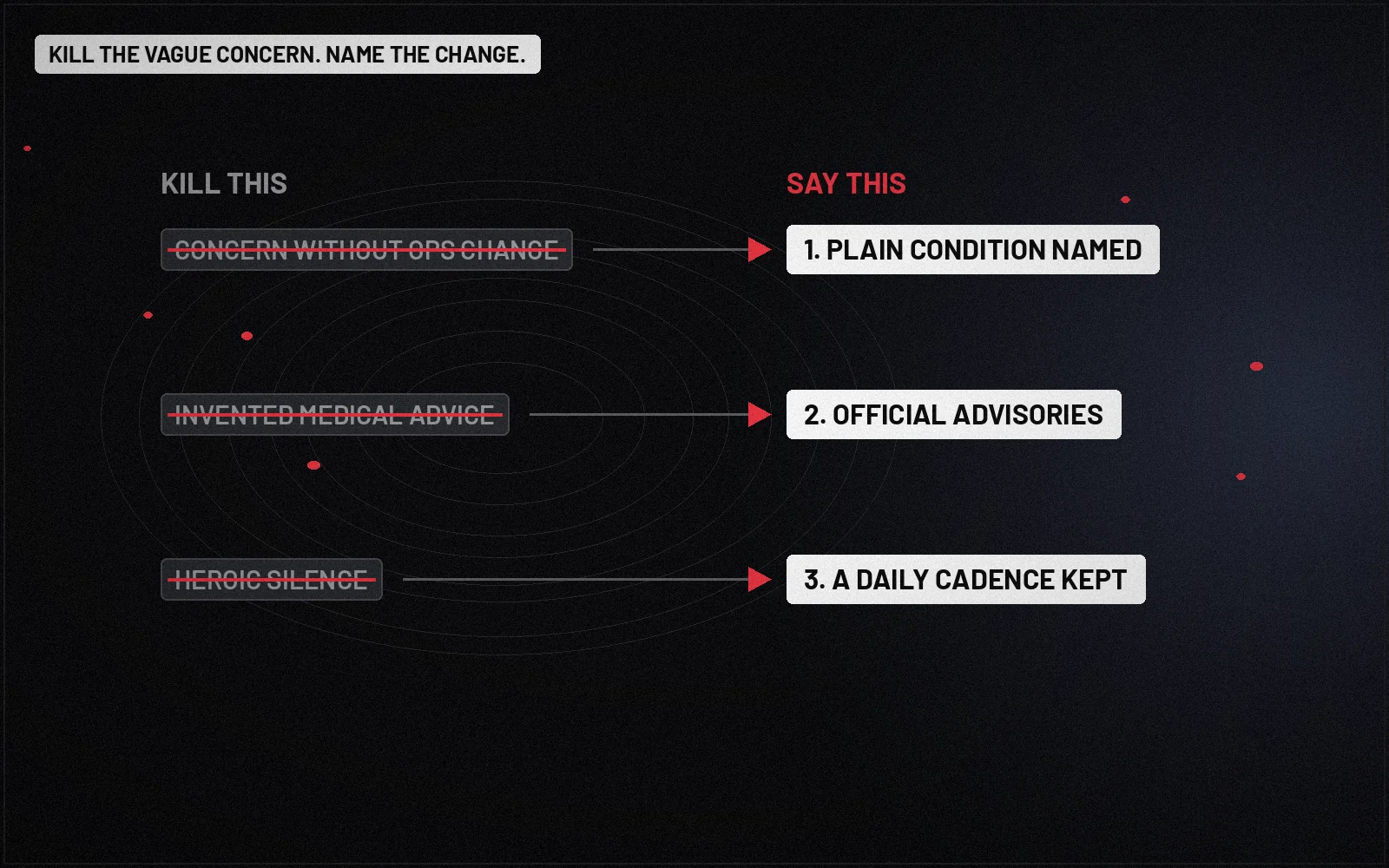
Do this
- Name the condition in plain language ("hazardous air quality across [cities]")
- Lead with staff protection, then service changes
- Update on a cadence you can keep (daily beats heroic silence)
- Point to official advisories; do not invent medical advice
Not this
- Vague "concerned about communities" with zero ops change
- PR weather poetry while warehouses run full outdoor shifts
- Radio silence until a journalist asks
- Green claims timed to the smoke peak
Street-smart rule: if your mother would not understand the update in one read on her phone, rewrite it.
Cross-border narrative: ID source vs regional employer duty
Haze is transboundary politics as much as smoke. Brands do not need to mediate ASEAN diplomacy. They do need to own what they control: staff safety, service truth, and local coordination. Commenting on Indonesian fire policy usually helps no one unless you are a policy actor with standing. Employer duty travels with your people in KL, Singapore, Jakarta, Manila, and Ho Chi Minh City—regardless of where the smoke started.
Pair this playbook with holding-statement discipline from the Insights hub—especially crisis templates you can activate without blank-page panic. Keep Crisis & Rapid Response and Public Affairs on the same retainer calendar so ops and narrative do not fight each other mid-week.
For related narrative craft on hard policy weeks, see public-affairs pieces already live in Insights, and reuse crisis holding-statement structure so haze updates share DNA with other rapid-response work.
Money angle: retainers beat scramble
Haze weeks burn cash when teams invent policy under particulate panic. A retainer that includes haze-season scripts, employer-brand holding lines, and stakeholder maps costs less than one week of confused overtime, refund fights, and reputation repair. Outdoor and logistics brands that wait for the AQI chart to go viral pay twice: once in ops chaos, once in trust debt.
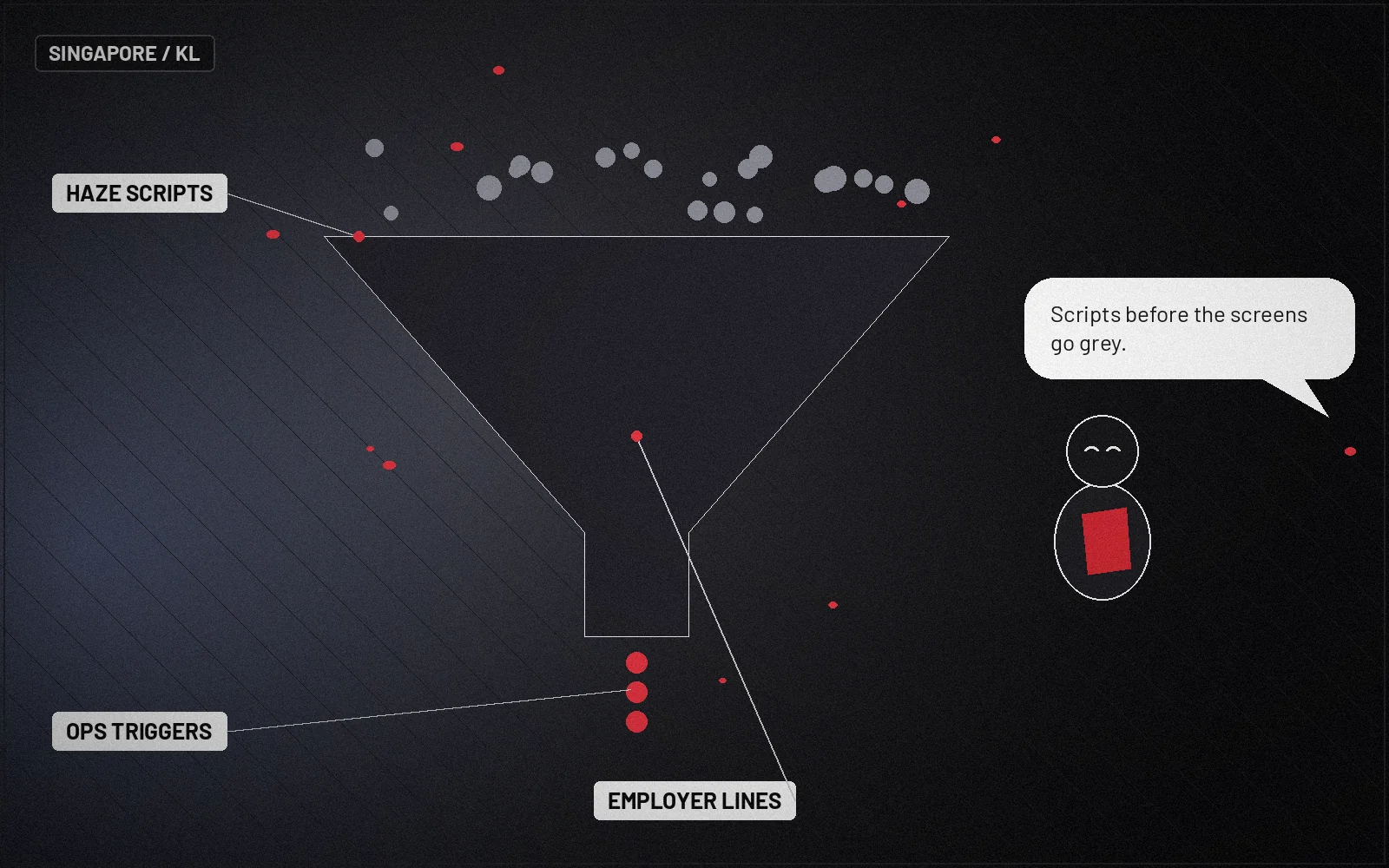
The sell is not "more press releases." The sell is a system that protects workforce continuity, customer honesty, and ESG credibility before the screenshot economy invents your story for you.
Soft CTA: haze-season crisis retainer
Neuwark builds ESG and haze-season stakeholder systems for ASEAN employers and consumer brands: trigger bands, workforce scripts, customer honesty lines, and update cadences that protect trust and spend. If your September still starts with "what do we say?", talk to us—or start with who we are and how we run retainers across Crisis & Rapid Response and Public Affairs & Advocacy.
FAQ
Is haze crisis communications only for logistics and outdoor brands? No. Any employer with offices in KL, Singapore, Jakarta, or haze-hit cities needs workforce messaging. Consumer brands need customer honesty when service slips.
Should we comment on Indonesian fire policy? Usually no—unless you are a policy actor. Stick to what you control: staff safety, service truth, local coordination.
How is this different from a flood crisis playbook? Floods are acute site disasters. Haze is a multi-week regional stakeholder tax. Same discipline, different calendar and longer update arc. Keep flood crisis content distinct from seasonal haze ops inside your Insights library.
Haze is not just weather. For ASEAN employer brands, it is a recurring crisis calendar entry. Build the playbook while the sky is still clear.
Operator appendix: seven-day haze drill (run once before peak season)
Treat the week before typical haze onset as a drill, not a brainstorm.
Day 1 — Trigger sheet. Lock AQI/PSI bands and the exact owner who sends the first internal note. Print it. Put it in the facilities channel description.
Day 2 — Workforce pack. One page: WFH rules, PPE, leave, medical contacts, manager script. Test that a new hire can follow it without calling HR.
Day 3 — Customer pack. Service FAQ, call-center lines, marketplace seller note. Version stamp everything.
Day 4 — Creative kill list. Identify outdoor and "blue sky" assets that must pause. Assign who pulls them from paid and organic queues.
Day 5 — Proof folder. Leave logs template, vendor status table, ESG one-pager outline. Empty folders fail under pressure; pre-label them.
Day 6 — Tabletop. Thirty minutes: AQI crosses the WFH band at 07:00. Who speaks first? What goes external by 10:00? What stays internal?
Day 7 — Retainer gaps. List what legal, HR, and brand still freestyle. Those gaps are what a crisis retainer is for—close them before the sky turns.
This appendix is deliberately boring. Boring is how you protect revenue when the air is not.
Regional employers with sites in multiple ASEAN capitals should also map which legal entity owns which message. A Singapore HQ note that ignores a Kuala Lumpur warehouse shift plan creates two truths—and employees always find both. Align entity-level owners before peak season, and keep a shared glossary so "limited outdoor work" means the same thing in every language your supervisors use on the floor. For hub-vs-country narrative sequencing beyond haze season, see our ASEAN market-entry communications desk.