
Case study · Policy roadmap · Department of Energy
CREVI 2025–2050
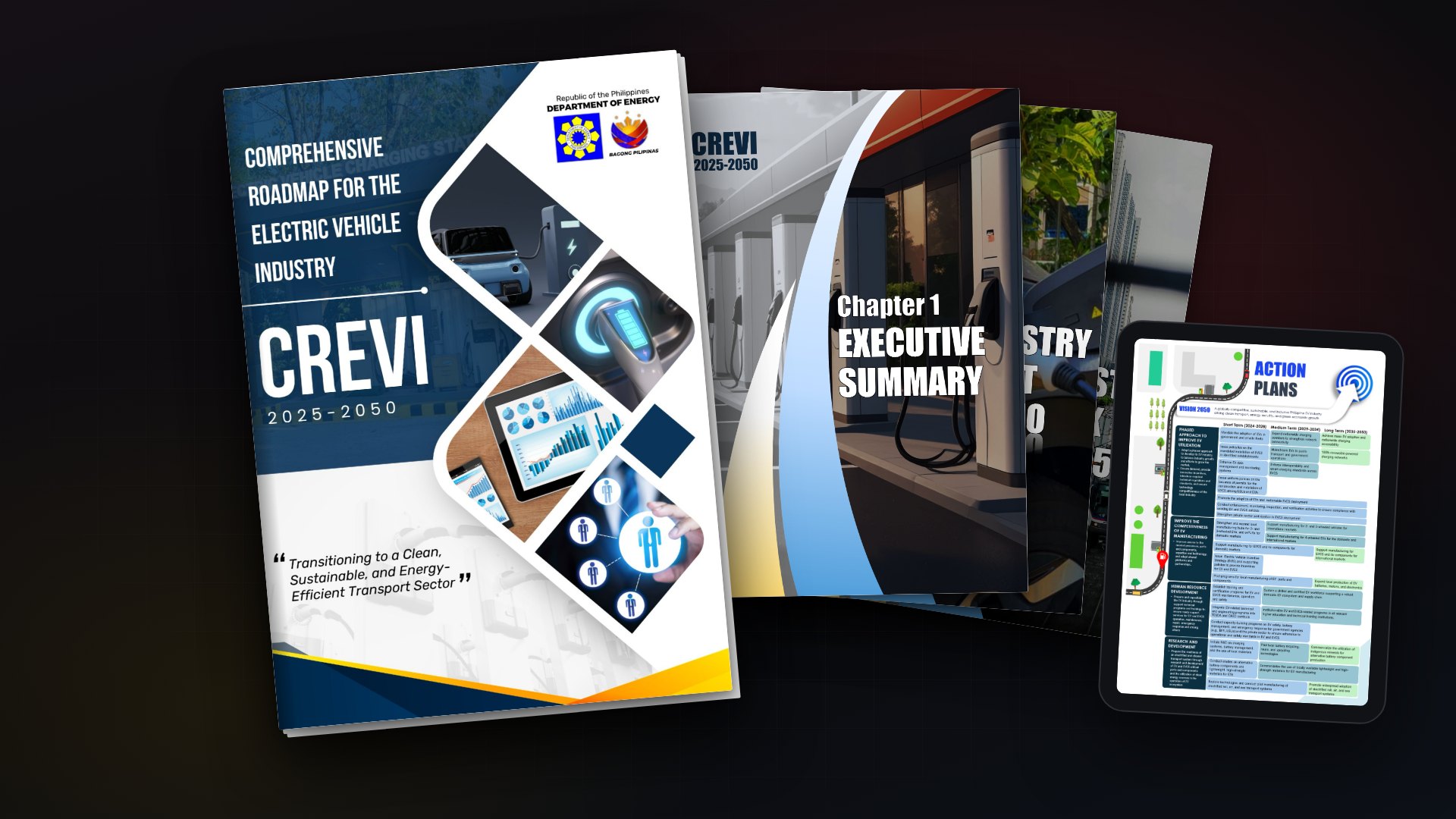
The Department of Energy (DOE) commissioned an updated Comprehensive Roadmap for the Electric Vehicle Industry, the national plan for e-mobility in the Philippines. Neuwark delivered the CREVI 2025–2050 roadmap document for the DOE.
- Client
- Department of Energy (DOE), Republic of the Philippines
- Delivered
- CREVI 2025–2050 roadmap document
- Format
- 100-page A4 report in five chapters
- Horizon
- 2025 to 2050, aligned with the Philippine Energy Plan 2023–2050
01 — Context
A national plan for e-mobility.
The Electric Vehicle Industry Development Act (EVIDA, Republic Act No. 11697) became law in 2022. The CREVI is its implementing policy framework: the national development plan for moving the Philippines to cleaner, more energy-efficient transport.
The DOE commissioned an updated roadmap that takes in recent policy, market and technology changes and extends the planning horizon to 2050, in line with the Philippine Energy Plan 2023–2050.
02 — Challenge
A lot of ground in one document.
- Many audiences. One document for government agencies, local government units, industry, investors and the public.
- Dense material. Market data, regulation, infrastructure, workforce and research, set out so readers can find what applies to them.
- A long horizon. Show where the industry stands today and the path to 2050 in a structure that holds together.
- Clear direction. Goals and action plans readers can take in at a glance, without losing the detail behind them.
03 — What we delivered
One roadmap, five chapters.
Neuwark delivered the 100-page CREVI 2025–2050 document for the DOE. It opens with a summary of strategic goals and action plans, then works through five chapters, each opening on its own illustrated divider.
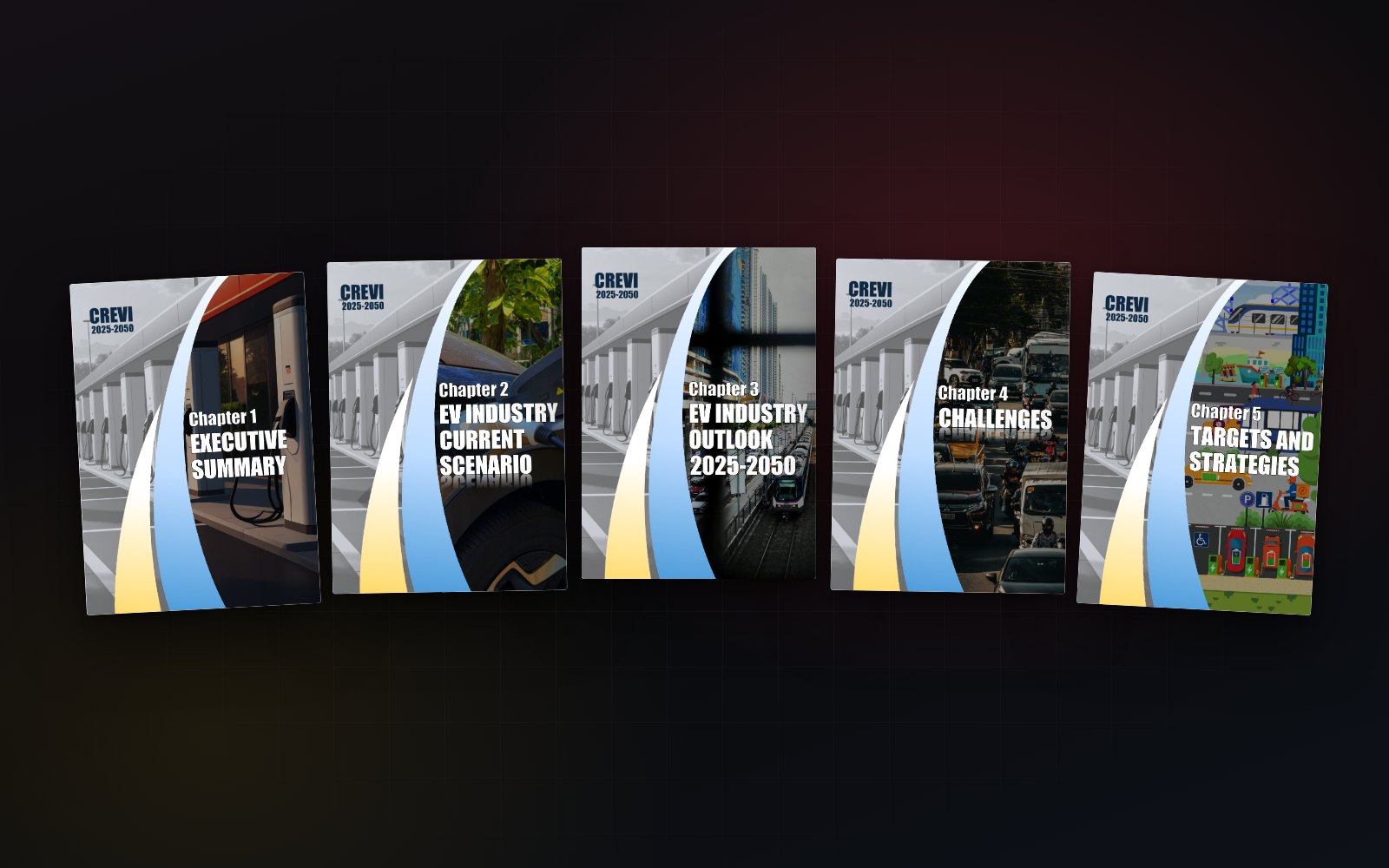
- 01Executive Summary. The roadmap’s purpose, its link to the EVIDA, and the strategic goals and action plans on two summary pages.
- 02EV Industry Current Scenario. Where the Philippine EV industry stands today, across policy, market and infrastructure.
- 03EV Industry Outlook 2025–2050. The long-range view of how the industry is expected to develop.
- 04Challenges. The barriers the industry and government need to address.
- 05Targets and Strategies. How the roadmap’s goals are to be pursued.
Features
Built to be navigated.
Summary up front
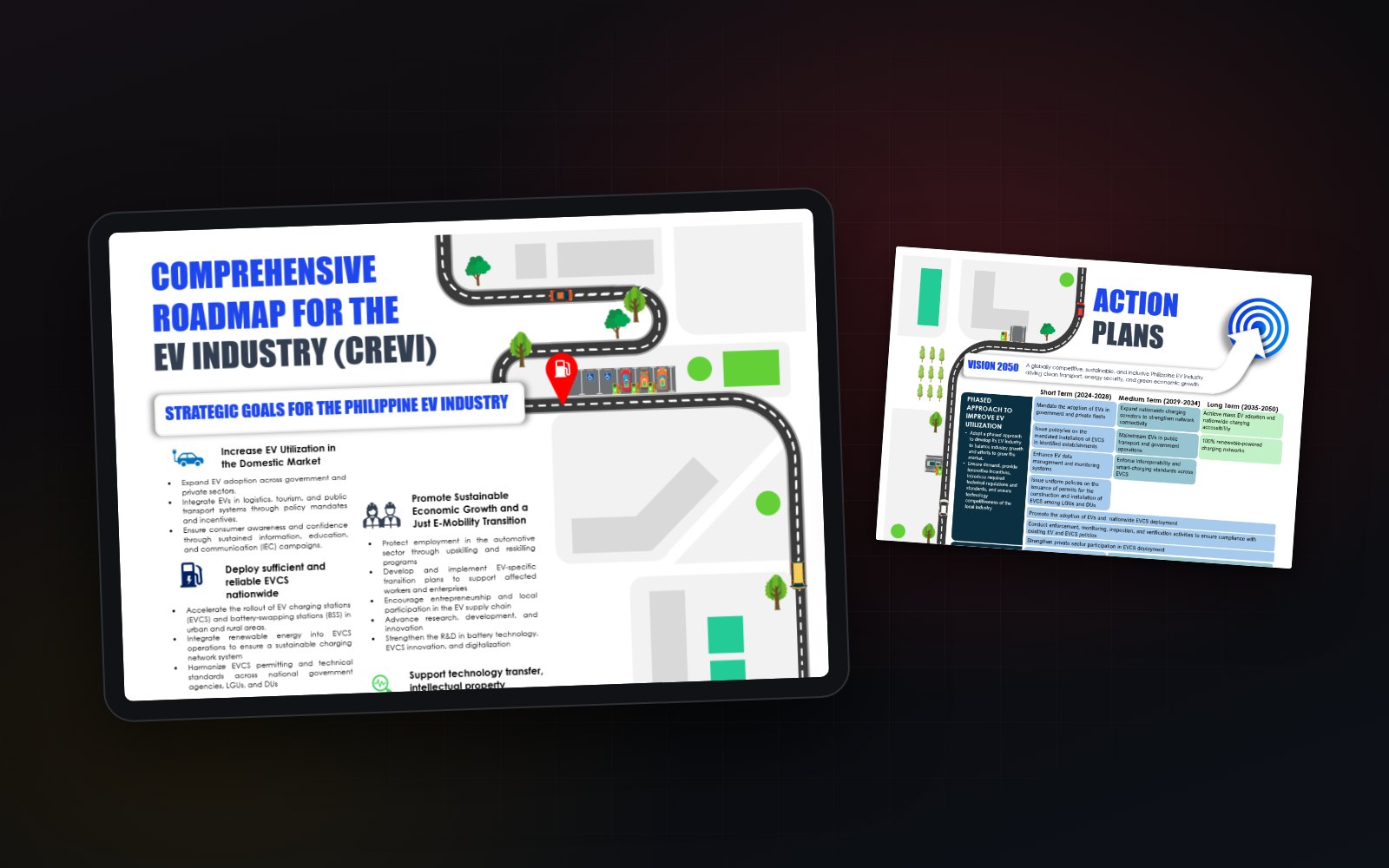
The strategic goals and action plans come first, so readers see the direction before the detail.
Five strategic goals
EV use, charging infrastructure, manufacturing, a just transition, and research and innovation, laid out along a single road graphic.
Phased action plans
Short-, medium- and long-term actions set out in one table under the roadmap’s Vision 2050.
Illustrated chapter dividers
Each chapter opens on its own full-page illustration, so it is easy to tell where you are in the document.
One visual language
A consistent palette, type and illustration style from the cover to the last chapter.
Government identity
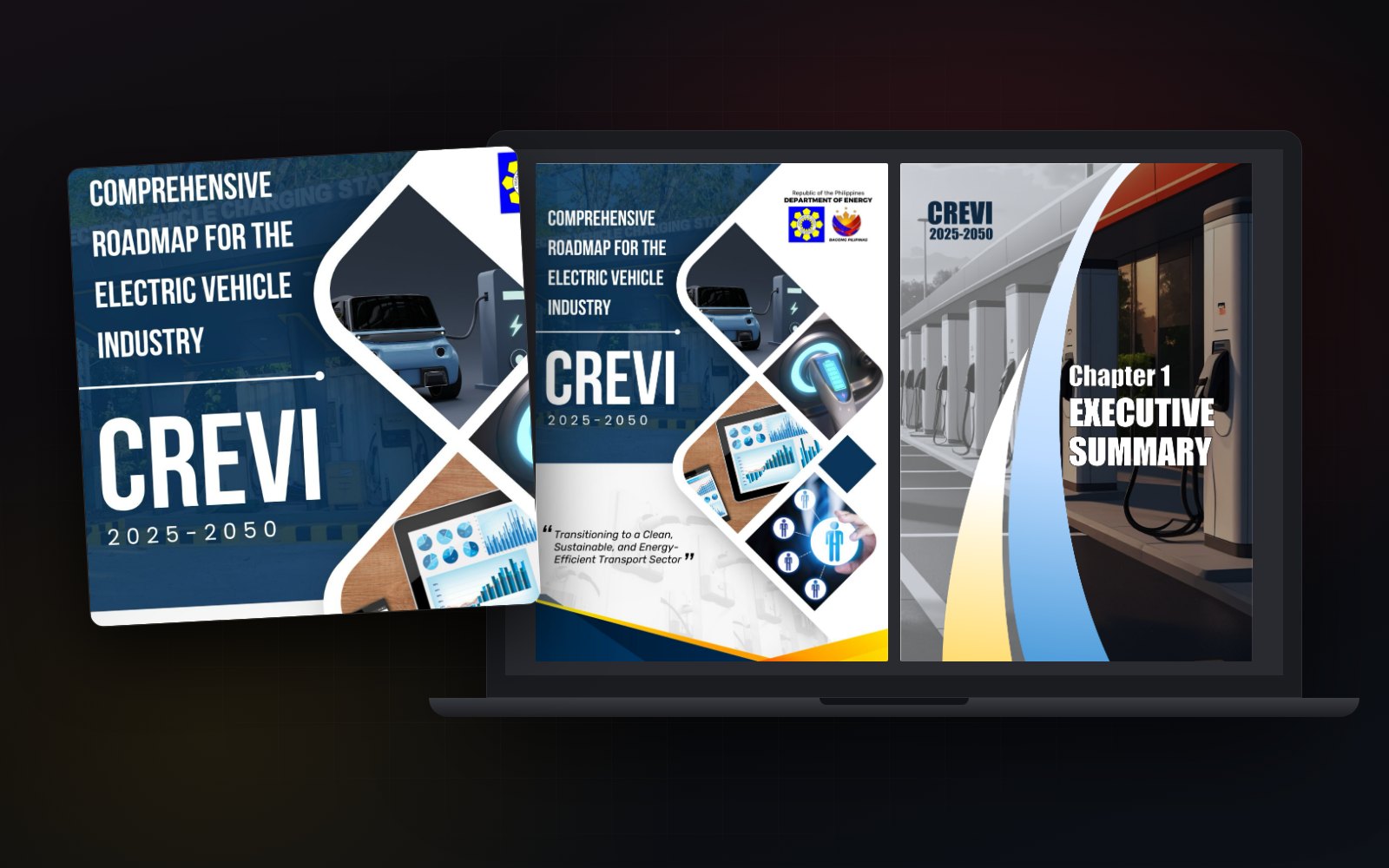
The cover carries the Republic of the Philippines, Department of Energy and Bagong Pilipinas marks.
04 — Outcome
A roadmap to 2050.
The DOE has a single, structured roadmap document for the electric vehicle industry. It covers the industry from its current state to 2050 and sets out strategic goals and phased action plans under the EVIDA.
Its five chapters move from the current scenario and outlook to the challenges and the targets and strategies, each with its own illustrated divider, so readers can go straight to the part that concerns them.
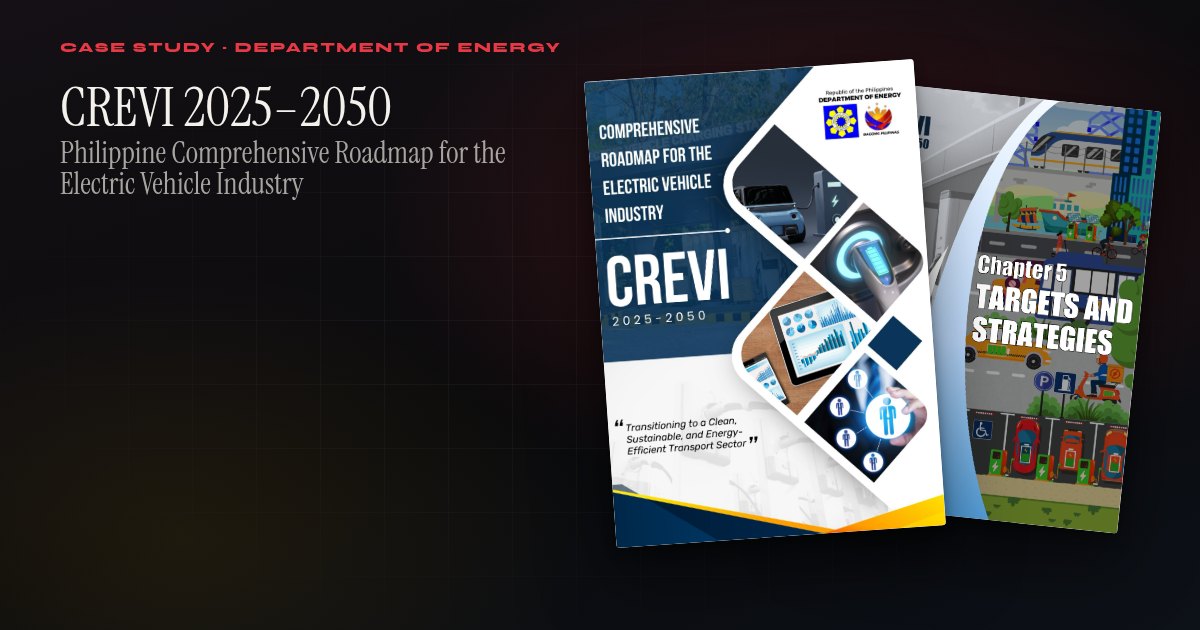
About this case study. Neuwark delivered the CREVI 2025–2050 roadmap document for the Department of Energy, which commissioned it. The policies, targets and positions in the roadmap are the DOE’s own. Images show the cover, summary pages and chapter dividers.
Your roadmap, next.
Need a roadmap, report or policy document that people can actually find their way through? Tell us what you’re working on.