

People Also Ask English APAC desks need is the question ladder: the question a searcher types, the follow-ups the box opens next, and one opener line for each rung that points to an answer your page already holds.
Most campaign pages answer the first question and stop. The People Also Ask box does not stop. It opens the next question, and the next. If your page has no rung for that follow-up question, someone else’s page answers it.
This is the language companion to our GEO FAQ playbook for People Also Ask during budget and accountability spikes. The answer block itself (direct answer, local stake, proof, boundary) already lives in GEO FAQ answer English, so this piece does not repeat it. This piece writes the questions.
Street-smart APAC English: short sentences a tired operator can say out loud.
What does the People Also Ask box show?
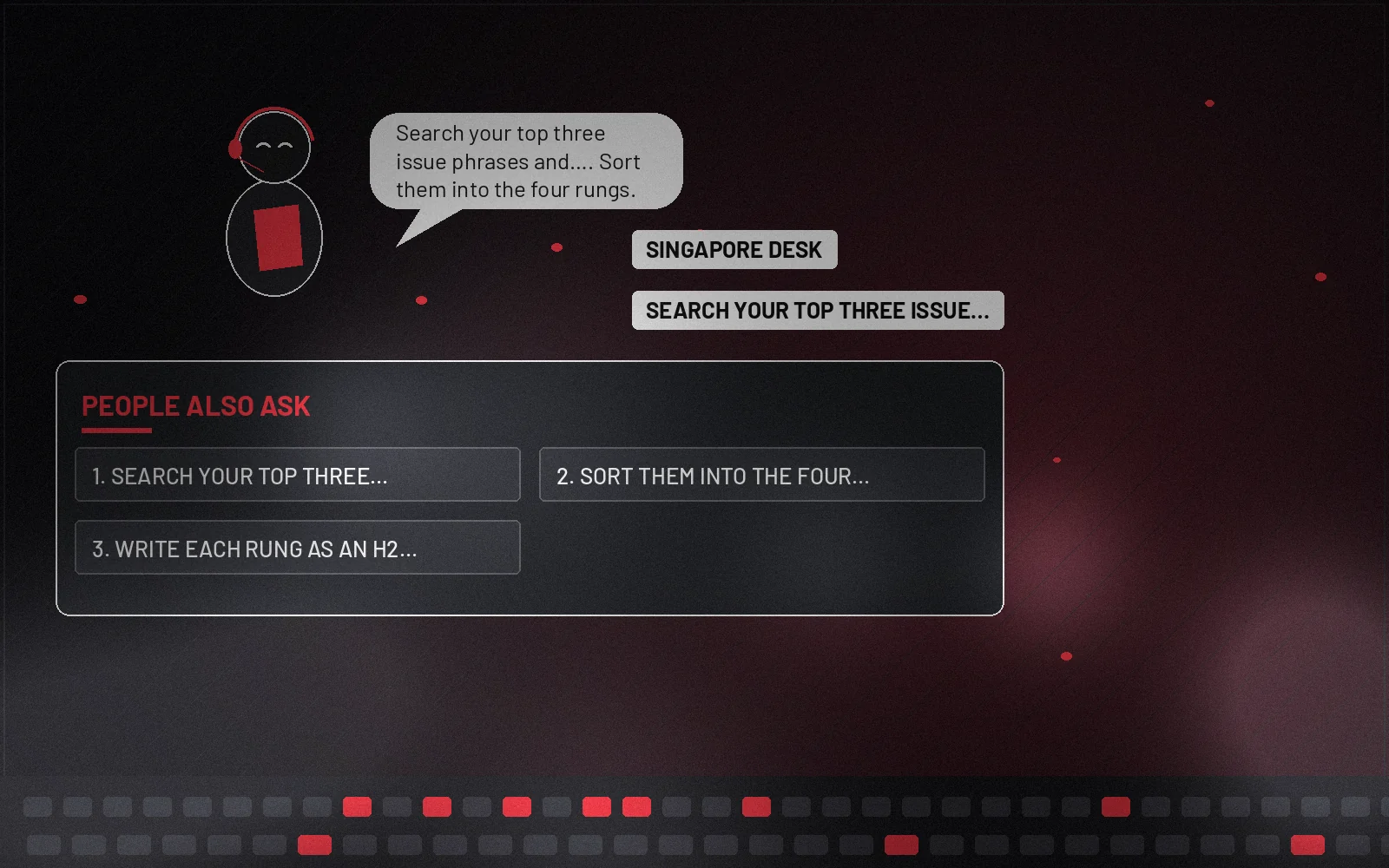
A stack of related questions under a search result. Open one and you get a short excerpt from a page, a link, and often more questions underneath.
That last part is the whole game. The box behaves like a nervous reader. It asks, then asks again. A page built as one essay gives it one quote at most. A page built as a ladder gives it a rung for each step.
Nobody outside the search engine controls which questions appear. You control whether your page has a clean rung when they do.
Why do advocacy pages lose the follow-up question?
Because the page was written in the order the organisation thinks, not the order people ask.
The organisation thinks: mission, context, position, ask. The searcher asks: what is it, why should I care, who decides, is the rumour true. The second list is the ladder. The first list is a brochure.
Advocacy pages also skip the uncomfortable rung. If the fourth question people type is hostile, the page pretends it does not exist. The box does not pretend.
What is a question ladder?
Four rungs. Each one is an H2 written the way people type it.
| Rung | Kill this | Say this |
|---|---|---|
| 1. What is it | “Understanding the policy landscape” | “What are unprogrammed appropriations?” |
| 2. Why it matters | “The stakes for our shared future” | “Why do unprogrammed appropriations matter?” |
| 3. Who decides, and when | “Governance considerations” | “Who decides when they are released?” |
| 4. The hostile one | Leaving it off the page | “Are unprogrammed appropriations pork?” |
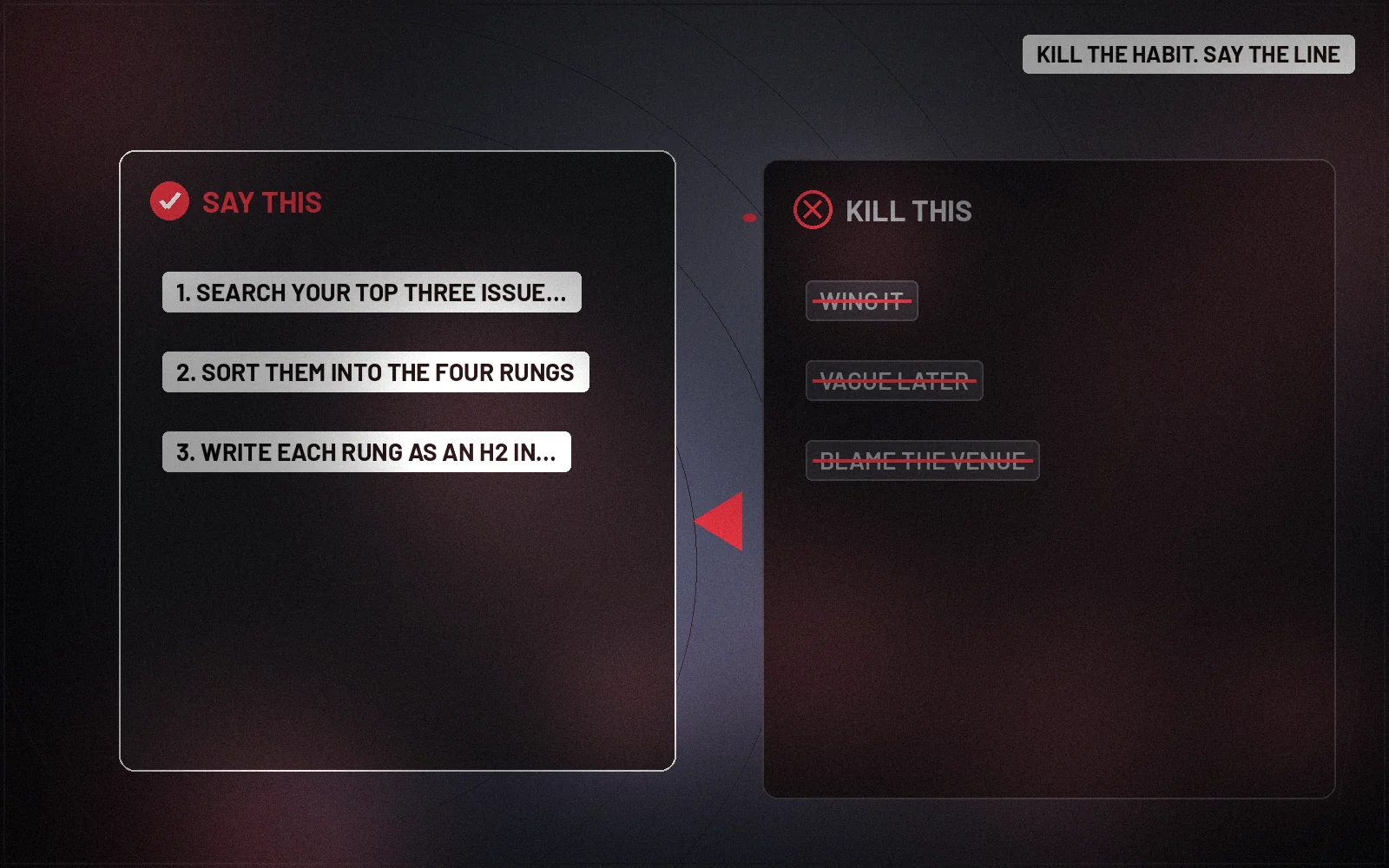
Each rung gets one opener line under the H2. The opener is the sentence a machine is most likely to lift. The full answer block sits right under it.
What does People Also Ask English APAC look like on a PH budget page?
Illustrative only. Check every opener against the current budget documents before you publish.
Rung 1: What are unprogrammed appropriations?
Opener: They are standby budget items that only get money if extra revenue or new loans come in.
Rung 2: Why do unprogrammed appropriations matter?
Opener: Because they can be funded later in the year, after most people have stopped watching the hearings.
Rung 3: Who decides when they are released?
Opener: Release follows the conditions written into the budget law. This page links the current text and names the office we are asking.
Rung 4: Are unprogrammed appropriations pork?
Opener: We do not call a line item a name. We show what it funds and what the hearing record says.
Rung four is the one that protects you. It answers the rumour with a boundary instead of a slogan.
What does a Singapore consultation ladder look like?
Illustrative only. Use the consultation’s own title and closing date from the official page.
Rung 1: What is the public consultation on the draft code?
Opener: It is the window where the public can send views before the draft code is finalised.
Rung 2: How do I submit a response?
Opener: Through the official consultation page, before the closing date posted there.
Rung 3: Does my response change anything?
Opener: No one can promise an outcome. We will link any published summary of responses when it appears.
Rung 4: Is the consultation just for show?
Opener: We will not guess motives. We filed our view and posted it here, so you can read what we asked for.
Same shape, different country. The ladder travels. The facts stay local.
Which People Also Ask questions should you refuse?
Refuse is the wrong word. Answer them with a boundary.
| Question type | Kill this | Say this |
|---|---|---|
| Named-person accusation | “Everyone knows who is behind it.” | “We do not name people without a public record. Here is the record we have.” |
| Legal outcome | “This will be struck down.” | “Courts decide that. We can tell you what we filed and when.” |
| Prediction | “This will pass next week.” | “The next hearing date is posted on the committee page.” |
| Number you do not have | A round figure from memory | “We will publish the figure when we can cite the document.” |
A boundary rung reads short and calm. That is why it survives being quoted.
Where do the rungs go on the page?
As H2s, in ladder order, near the top. Not in a separate “People Also Ask” section at the bottom.
Keep the questions visible text. If you add FAQPage markup, mark up only questions and answers a reader can see on the page. Structured data should match the visible text, and markup does not rescue a vague answer.
One page, one ladder. If a rung needs its own page, link it with an anchor that names the question, not “read more.” Our AI Overview source English post covers the single block you would bet the page on. The ladder is what sits around it.
Monday field kit
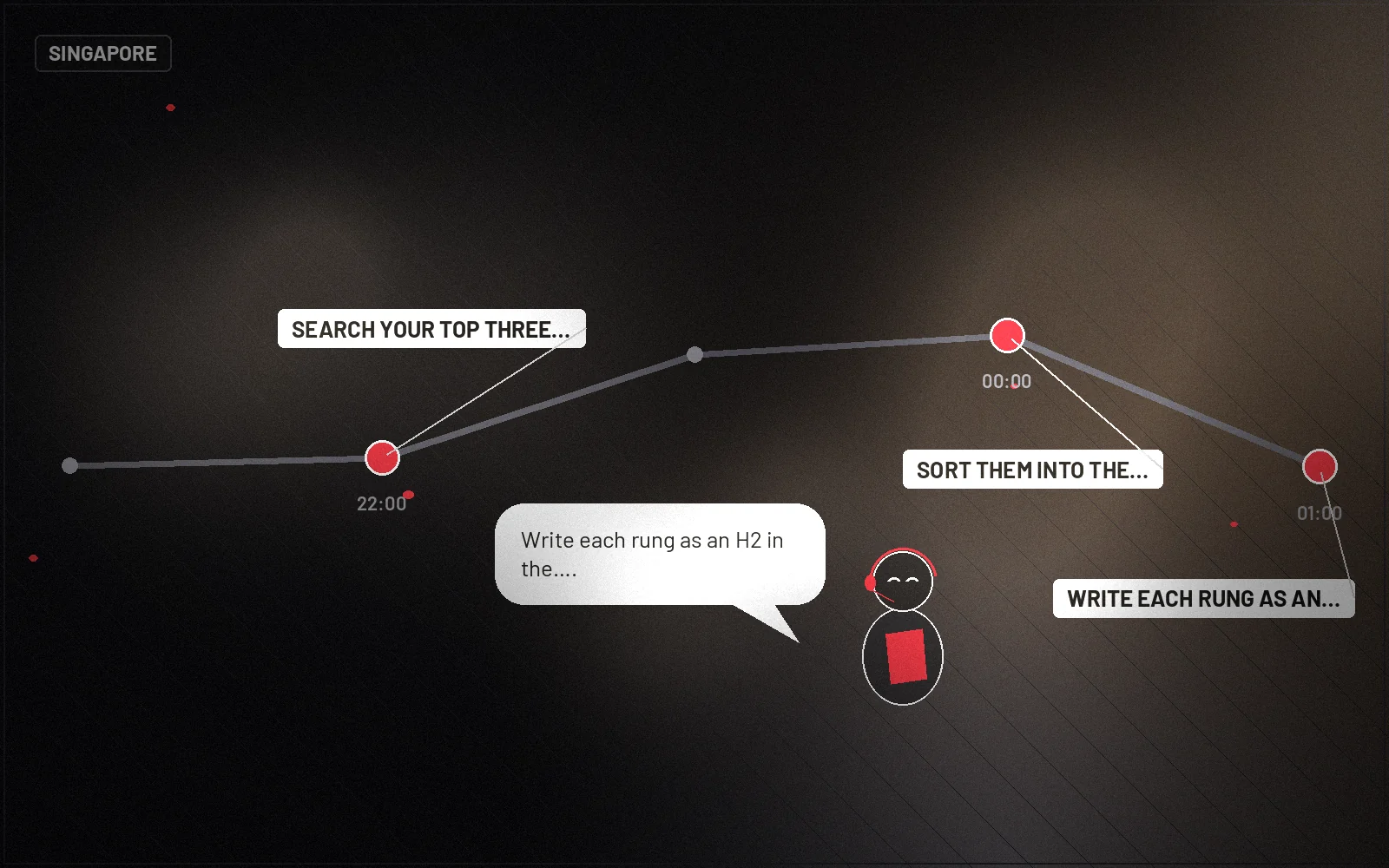
- Search your top three issue phrases and write down the follow-up questions you see.
- Sort them into the four rungs.
- Write each rung as an H2 in the searcher’s words.
- Write one opener line per rung. No throat-clearing.
- Add the hostile rung. Answer it with a boundary.
- Check every opener against a document you can link.
Paste-ready note for the editor:
Ladder check: four rungs, typed-question H2s, one opener each, hostile rung answered with a boundary, every opener checked against a linked document.
FAQs
What is People Also Ask English APAC?
It is the question ladder for an advocacy page: the typed question, the follow-ups, and the hostile question, each with a one-line opener. It shapes the questions so the answer blocks under them get found.
Is this the same as a GEO FAQ answer block?
No. The answer block is the paragraph under one question. The ladder decides which questions the page asks and in what order.
Can we guarantee a spot in the People Also Ask box?
No. The search engine picks the questions and the excerpts. You can only make sure your page has a clean rung ready when a question appears.
Should the hostile question really be on our page?
Yes, if people are typing it. A calm boundary answer on your page beats a rumour answering it on someone else’s.
What to do this week
Pick one live issue page. Write its ladder on four cards. If the page has no rung three or rung four, add them before you write anything new.
Neuwark Communications builds GEO question ladders and issue pages under Digital & Social and Strategy & Messaging. If the box keeps answering your follow-ups with someone else’s page, talk to us at Contact. More language companions live in Insights.
Communications craft, not legal advice. Check budget and consultation facts against the current official documents, and have counsel review any line that touches law or a named person.
Related: GEO FAQ pages for People Also Ask spikes · GEO FAQ answer English · AI Overview source English · Search query map English