

On 14 September 2026 Komdigi Minister Meutya Hafid said Indonesia had formulated PP TUNAS child-protection enforcement fines—up to 6% of global revenue for large and global platforms, with domestic PSE caps by business scale. YouTube, TikTok, Meta apps, X, Bigo Live, and Roblox were flagged in public coverage as high-risk contexts. The draft moved toward Finance for PNBP codification. A 6% global-revenue fine is a legal number until creators, parents, and advertisers hear about it—then it is communications.
That is the money case for public affairs agency Indonesia: stakeholder narrative before compliance theater, especially for platforms, advertisers, and market-entry brands. Soft path: Services · Contact.
Why a fine formula becomes a board-level narrative overnight
Legal teams can model a percentage. Boards hear something else: “Are we the villain in a child-protection story?” Advertisers hear brand-risk. Creators hear livelihood risk. Parents hear whether platforms are safe enough for kids. Jakarta stakeholders hear whether foreign platforms take Indonesian rules seriously.
Public affairs converts the formula into sequenced human messages. Without that conversion, compliance memos leak as panic screenshots. Adjacent lessons live in Indonesia’s halal mandate public affairs messaging and Vietnam data-sanctions PA communications—different statutes, same lesson: revenue-linked penalties become trust stories fast.
Translate PP TUNAS for parents, creators, advertisers—not just counsel
Counsel needs statute language. Everyone else needs plain speech:
- Parents — what child-protection duties platforms owe; what changes in product experience might look like
- Creators — what enforcement means for monetization and community guidelines without fearmongering
- Advertisers — inventory and brand-safety implications without declaring the market “unbuyable”
- Employees — how to answer family questions without inventing policy
Write Bahasa Indonesia and English versions that match—not a stiff translation that sounds like a robot lost in Jakarta traffic. Youth-facing tone without cringe matters when the audience includes younger users—see craft notes in youth voter content without cringe for discipline, not for politicizing PP TUNAS.
Stakeholder sequence: Jakarta regulators, platforms, brand partners
Sequence beats simultaneous spam:
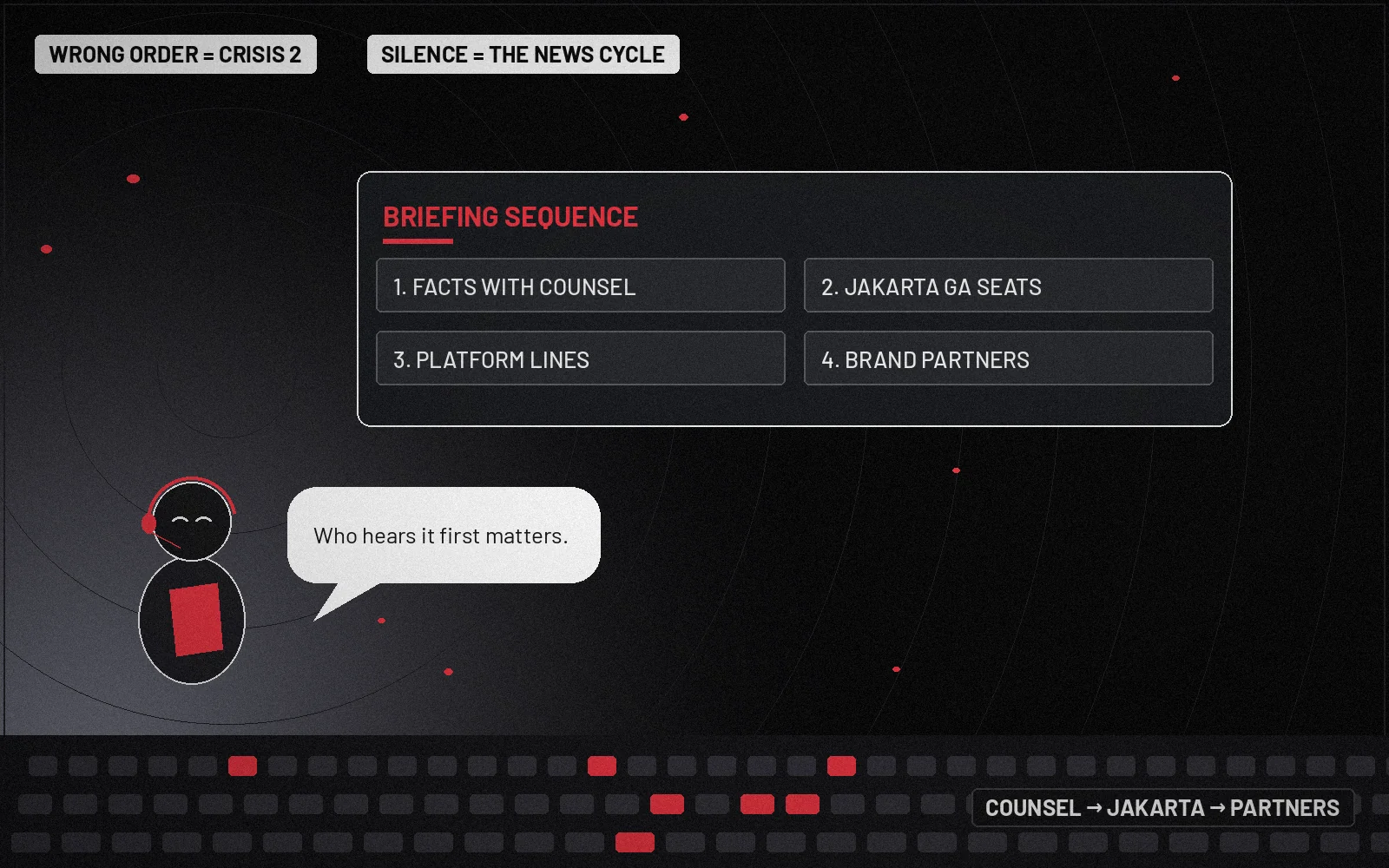
- 1. Align internal facts with counsel on what is final vs draft
- 2. Brief Jakarta-facing government affairs seats
- 3. Align platform policy and trust & safety public lines
- 4. Brief brand partners and agencies buying inventory
- 5. Publish parent/creator FAQs when product changes are real—not speculative
If you brief advertisers before regulators on a rumor, you create a second crisis. If you brief nobody, the Antara/RRI cycle writes your first draft for you.
Compliance theater vs trust messaging: what not to say
Compliance theater:
- “We take this very seriously” with no next step
- Threatening creators as if they are the enforcement target
- Overpromising product changes that engineering has not scoped
- Copy-pasting a US trust-and-safety blog into Indonesian media
Trust messaging:
- Clear ownership of child-protection duties you actually control
- Timelines you can keep
- Honest limits (“draft pending Finance / PNBP steps”)
- Respect for parents and creators as stakeholders, not props
Street-smart rule: if your statement cannot survive a creator stitching it next to a parent interview, rewrite it.
Local SEO: “public affairs agency Indonesia” as money page + offer
Market-entry and platform teams search for help in category language. Your page should:
- Rank and educate on public affairs agency Indonesia
- Lead with PP TUNAS as the live narrative hook (September 2026)
- Offer retainers: stakeholder maps, bilingual FAQs, Jakarta rhythm, advertiser briefings
- Sink to Public Affairs & Advocacy on Services
- Interlink halal-mandate and Vietnam sanctions pieces as proof you work revenue-linked narrative events
Do not hide the CTA behind a “download the white paper” wall. Stressed GDPA leads want a call, not a gated PDF.
Market-entry PA rhythm while PNBP codification moves
While Finance codification moves:
- Weekly internal digest: what changed in public statements
- Advertiser office hours for brand-risk questions
- Creator community listening without performative panic
- Scenario planning for fine headlines vs quiet procedural updates
- Alignment with regional APAC PA so SG/MY/KR hubs do not freestyle Indonesia policy
Market-entry brands that sell into Indonesia without a PA rhythm will learn about PP TUNAS from a partner’s panicked Slack message. That is not a strategy.
Soft CTA: public affairs agency Indonesia engagement
PP TUNAS made child-protection enforcement a board-level story. Neuwark scopes public affairs agency Indonesia engagements that turn compliance into trust messaging for platforms, advertisers, and market-entry teams.
See Services, Insights, Contact, About. Home: [/](/). A 6% global-revenue fine is communications the moment parents and creators hear the number.
Board one-pager: three decisions by Friday
Decision 1: Who owns the Indonesia narrative—legal alone, or legal + PA with a named lead? Decision 2: What can we say this week that is true about draft vs final? Decision 3: Which audiences get a FAQ first—parents, creators, or advertisers?
Write the answers on one page. Attach a bilingual glossary so “PP TUNAS,” “PSE,” and “PNBP” do not get mangled in partner decks. That one-pager is often the first deliverable inside a public affairs agency Indonesia retainer. Ship it before the next ministerial quote forces your CEO to freestyle on a panel.
What “good” looks like 30 days after the fine headline
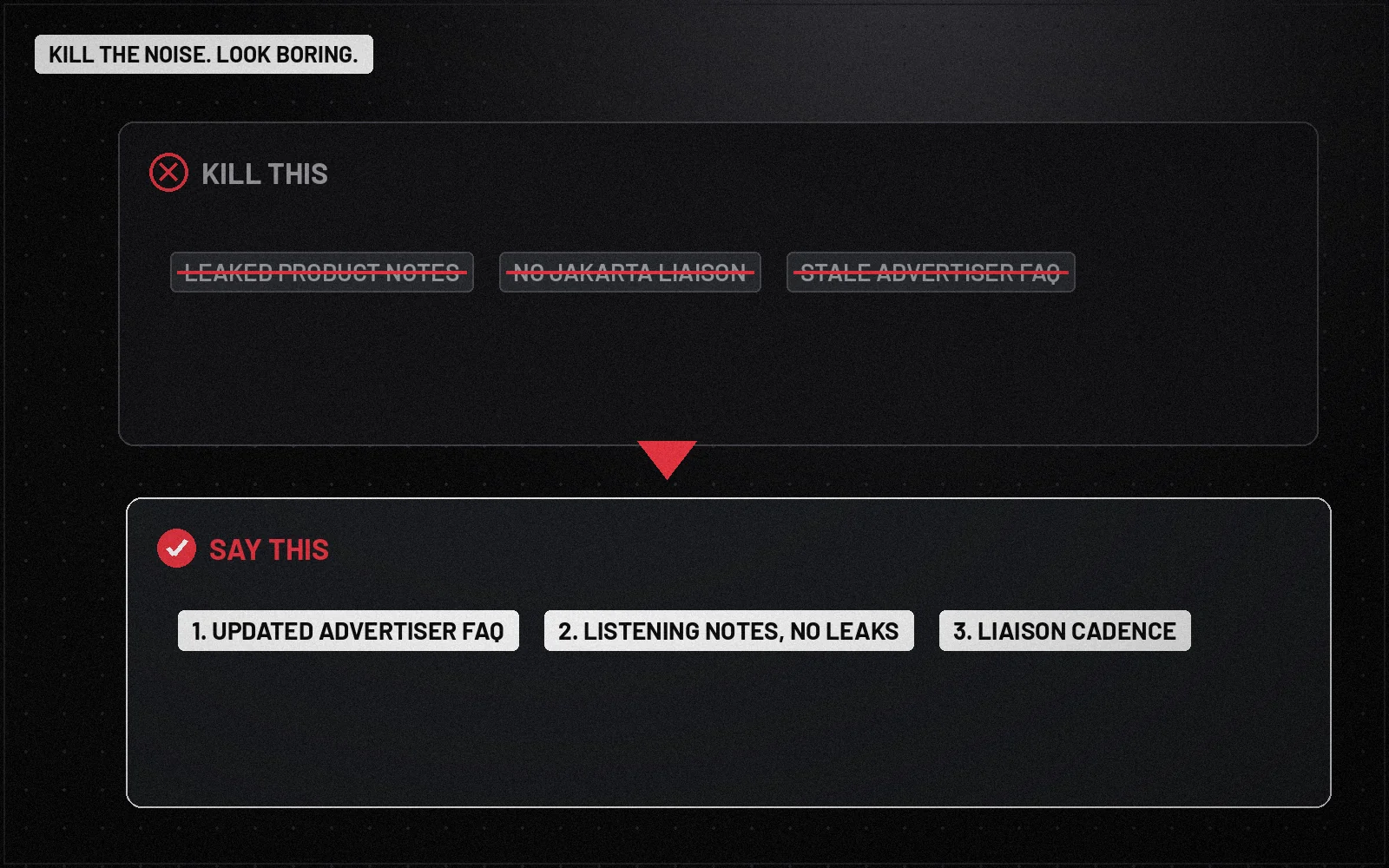
Good looks boring: updated advertiser FAQ, creator listening notes with no leaks of unreleased product, Jakarta liaison calendar, and zero freestyle executive quotes that invent enforcement timelines. Bad looks loud: a viral “we care about kids” film that counsel has to walk back, or a silence that partners fill with rumor. Choose boring. Revenue-linked child-protection rules reward operators who treat narrative as infrastructure. That is the commercial offer behind public affairs agency Indonesia in September 2026—and it will still matter when the next percentage hits a headline.
Bilingual glossary that stops partner decks from inventing policy
Include a one-page glossary in every public affairs agency Indonesia kickoff:
- PP TUNAS — child-protection regulatory framework referenced in September 2026 enforcement-fine announcements
- PSE — electronic system providers; domestic caps by business scale may differ from global-platform formulas
- PNBP — non-tax state revenue pathways Finance may use to codify fine collection
- Komdigi — ministry seat speaking publicly on the fine formula
- High-risk platform contexts — publicly flagged categories in coverage (do not invent your own list without counsel)
Force partners to use the glossary. Most narrative accidents start as a well-meaning agency slide that “simplifies” a fine into something false.
Advertiser briefing outline (30 minutes)
Minute 0–5: What was announced vs what is still draft. Minute 5–12: What child-protection duties mean for inventory without declaring Indonesia unbuyable. Minute 12–20: Questions brands should ask platforms and agencies this quarter. Minute 20–25: What we will not say (timelines we do not control, villain narratives). Minute 25–30: Next update cadence and owner contacts.
Record the session for internal teams. Do not leak it as a fear asset. Trust messaging dies when your “confidential advertiser brief” becomes a creator stitch.
Creator listening without exploitation
Creators will narrate PP TUNAS whether brands like it or not. Listening rules:
- Track themes, not individuals for punishment theater
- Separate livelihood anxiety from policy disagreement
- Never seed talking points that ask creators to defend your fine exposure
- If product changes land, explain them in creator-native language after counsel clears
Parents deserve the same respect: no trauma creatives, no scare ads that use kids as props. Child-protection narrative that exploits children fails the plot.
How SG / MY / KR regional hubs should not freestyle Indonesia
Regional PA hubs love analogies—“like Vietnam’s 5%” or “like Korea’s surcharge.” Analogies without counsel create false certainty. Allowed: “Indonesia announced a global-revenue-linked child-protection fine formula; details are still moving through Finance.” Forbidden: inventing effective dates, naming every platform as already fined, or promising product roadmaps you do not run.
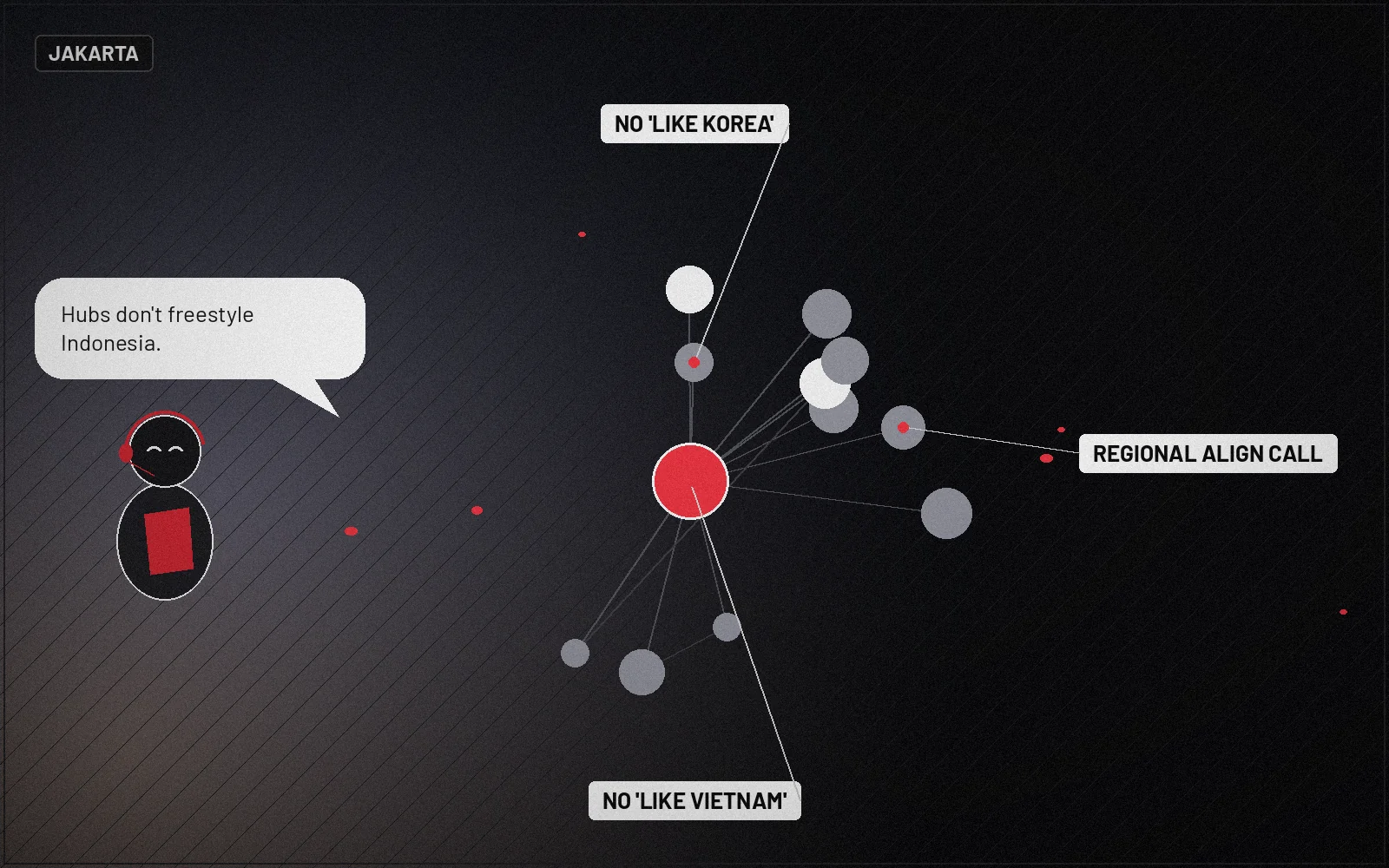
Public affairs agency Indonesia retainers should include a regional alignment call so Singapore and Seoul offices stop improvising Jakarta policy on customer calls. That alone prevents half the self-inflicted wounds in market-entry weeks.
Closing discipline for market-entry weeks
If you are entering Indonesia while PP TUNAS headlines circulate, do not lead with “we are excited about the opportunity.” Lead with child-protection seriousness, bilingual clarity, and a named public affairs owner. Excitement without trust messaging reads like you only heard the user-growth slide. Public affairs agency Indonesia work exists so the fine formula does not become the only story investors and parents remember about your launch.
Why platforms and advertisers need different PA packs under the same fine headline
Platforms own product and enforcement interfaces. Advertisers own brand adjacency and inventory choices. Stuffing both into one generic statement creates confusion: creators think advertisers are regulators; parents think brands set the fine. Public affairs agency Indonesia retainers should ship two packs under one narrative architecture—platform trust lines and advertiser risk lines—sharing the same glossary and the same “draft vs final” discipline. That split keeps Jakarta conversations coherent when the 6% number trends again.