
Right side in, left side out, call door.
Street-smart APAC English: short sentences a tired operator can say out loud.
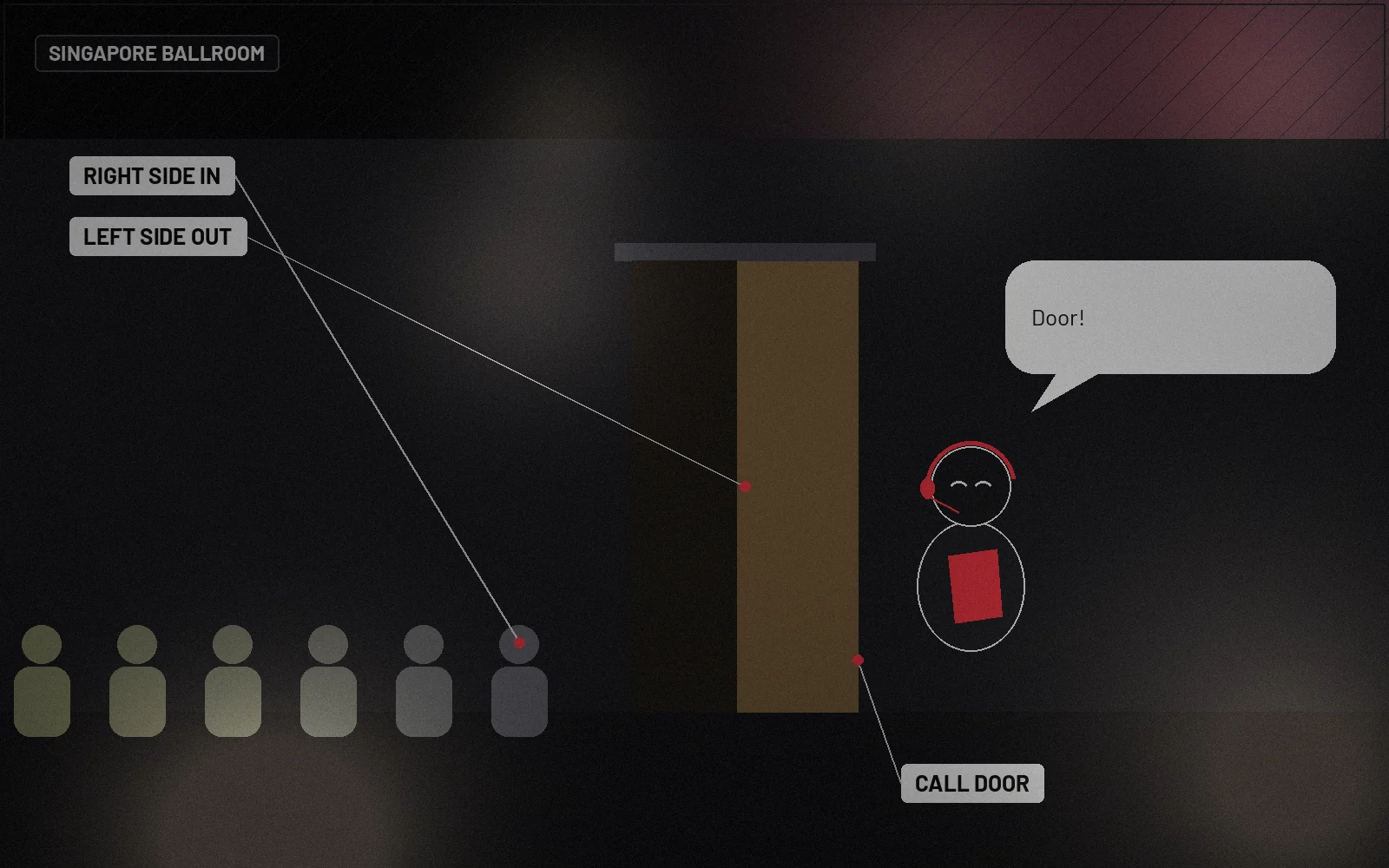
Quick answer: A kitchen-door line English APAC is the banquet server’s rule for the kitchen door at a hotel ballroom: right side in, left side out, call door. Servers come in on the right, go out on the left, and say the word door before they push through, so nobody behind it gets hit.
Singapore, a hotel ballroom during the main course, and two servers hit the kitchen door from both sides at once. A tray of soup tilts. Nobody called out before pushing.
A kitchen door only keeps service smooth if each side runs one way and every push comes with a call. Read it alongside the service cue line English APAC and the service lift line English APAC.
What is a kitchen-door line English APAC?
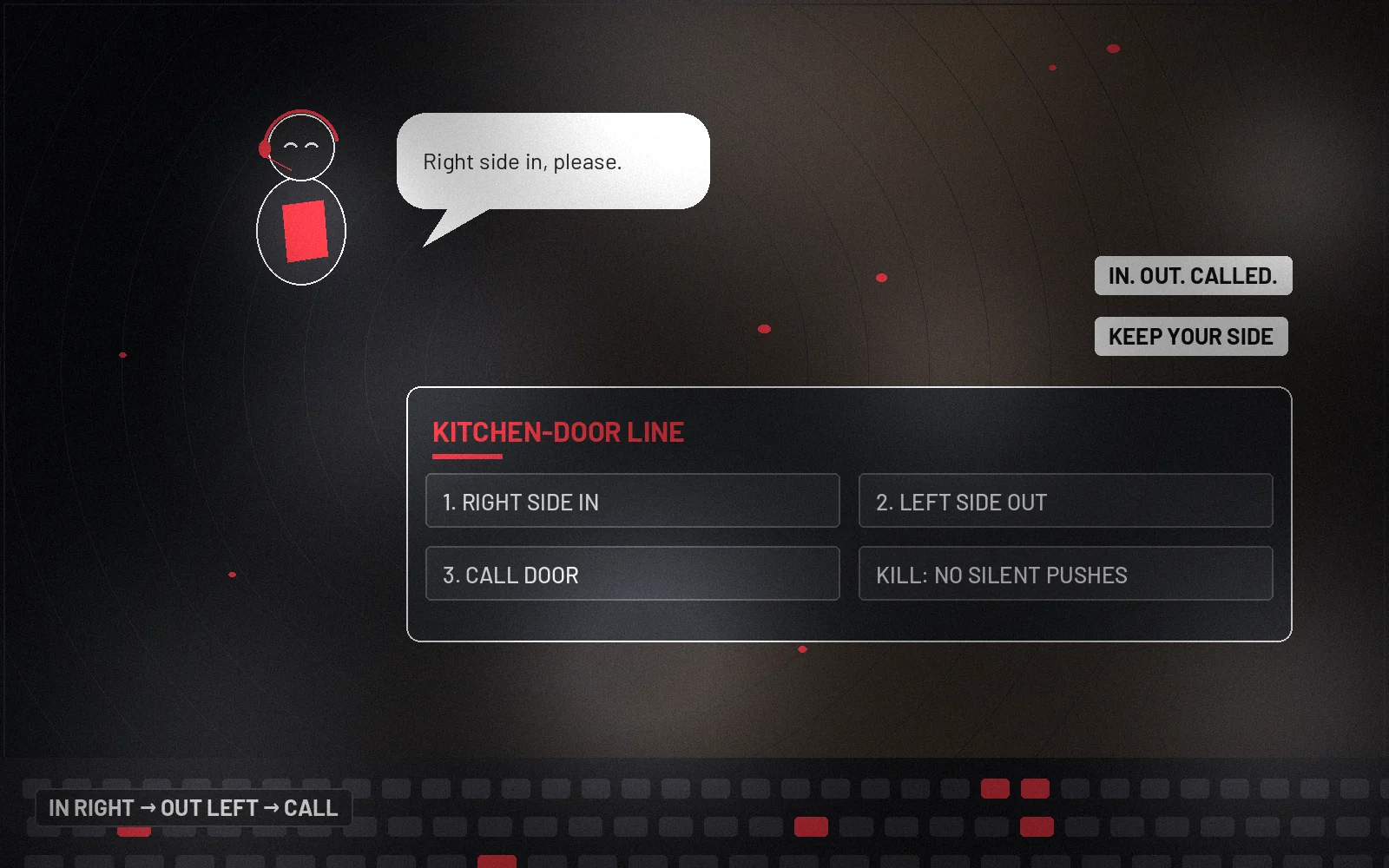
It is a banquet server’s three-part rule at the kitchen door at a hotel ballroom. Right side in first, left side out second, call door third.
1. Right side in. Come in through the right-hand side. Keep to it, even empty-handed.
2. Left side out. Go out through the left. Plates up, eyes forward.
3. Call door. Say door, loud and short, before you push. Wait a beat.
The habit to break is the shortcut: whichever side is nearer, shoulder first, no word.
What should a banquet server stop saying about the kitchen door?
Stop using whichever side is nearer, and stop pushing the door without a call. Say the three door parts at the pre-service brief instead.
| Kill this | Say this (illustrative) | Why |
|---|---|---|
| Sige po, dito na lang ako dadaan, mabilis lang. | Right side in. | Right side in keeps incoming servers out of the outgoing lane (PH Tagalog habit) |
| Just push the door lah, sure nobody behind one. | Left side out. | Left side out means full plates never meet empty trays head on (SG lah habit) |
| Lewat mana aja, Mas, yang penting cepat. | Call door. | Calling door warns whoever is on the other side before it swings (Jakarta Bahasa habit) |
Lines in this table are illustrative, not quotes from real people.
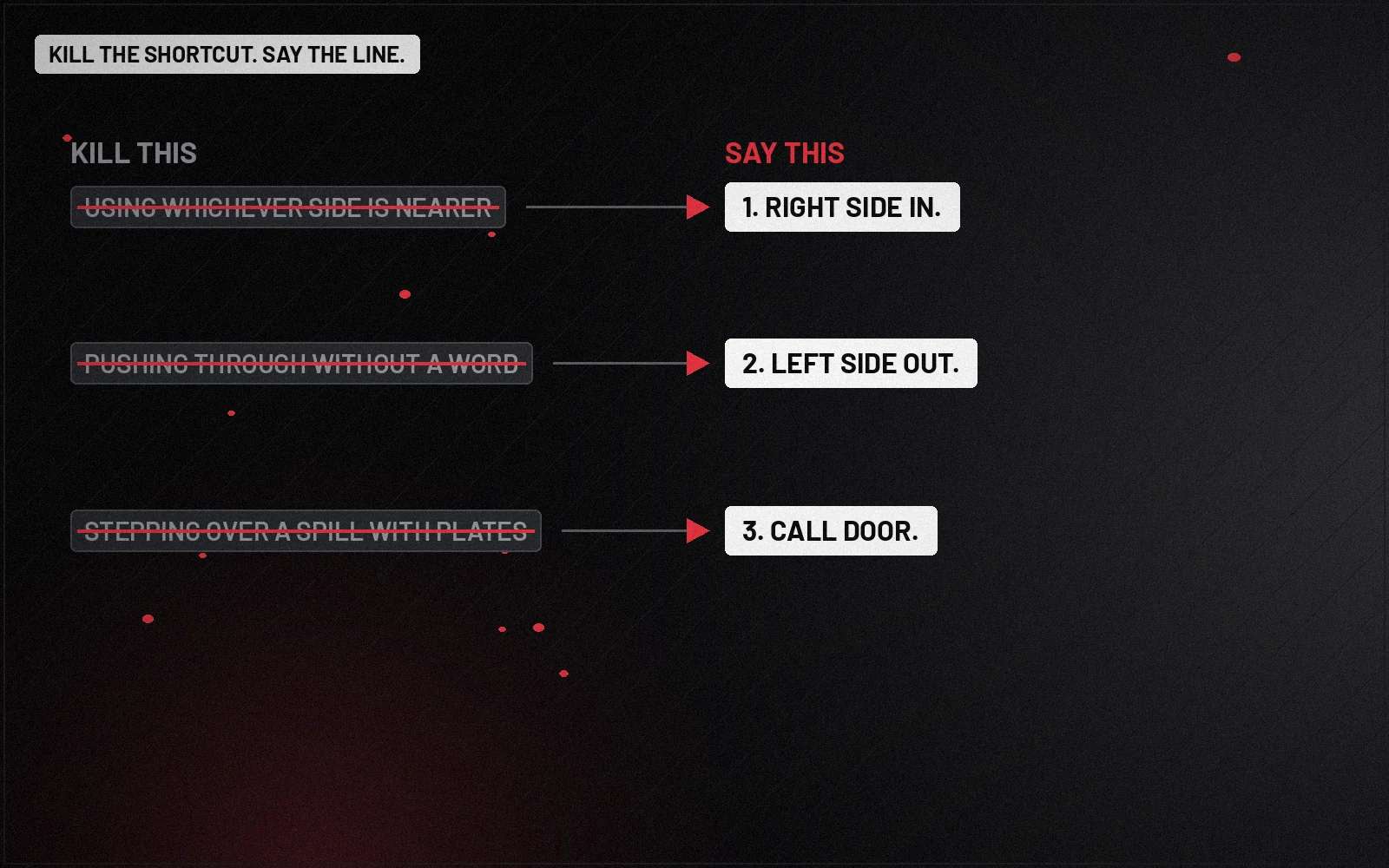
Say the line at the pre-service brief, before the first course leaves the pass.
What if a tray drops at the kitchen door?
Do not step over the spill with plates in hand. Call stop on that side, send traffic through one side only, and clear the floor before both lanes reopen.
Who plans kitchen-door traffic before a banquet?
The banquet manager plans it with the kitchen team, using the service plan. They agree which side is in, which is out, and who holds the door for big courses.
PH / SG / Jakarta desk notes
Same three parts. Different desks.
Philippines desk. Quick and polite. Right side in po. Left side out po, sir. Door po, salamat.
Singapore desk. Brisk and short. Right side in. Left side out. Door. Thank you.
Jakarta desk. Jakarta banquet crews often brief in Bahasa first. Keep the three parts in English for mixed teams and add Bapak or Ibu only if the house style uses it.
Monday field kit
- Mark the in and out sides of the kitchen door on the service plan.
- Put a small IN and OUT sign on each side before guests arrive.
- Brief servers on the lock: right side in, left side out, call door.
- Practise one full course run through the door at the rehearsal.
- Kill rule: no wrong-side shortcuts, no silent pushes, no stepping over spills.
Illustrative only. Follow the venue’s own kitchen and service rules; this wording is a template.
FAQs
What is a kitchen-door line English APAC?
A kitchen-door line English APAC is the banquet server’s rule for the kitchen door at a hotel ballroom: right side in, left side out, call door. Servers come in on the right, go out on the left, and say the word door before they push through, so nobody behind it gets hit.
What should a banquet server stop saying about the kitchen door?
Stop using whichever side is nearer, and stop pushing the door without a call. Say right side in, left side out, call door, in that order.
What if a tray drops at the kitchen door?
Call stop on that side and send traffic through one side only. Clear the floor before both lanes reopen.
Who plans kitchen-door traffic before a banquet?
The banquet manager plans door traffic with the kitchen team on the service plan. Servers brief the line before the first course.
What to do this week
Speakable lock (illustrative): “Right side in, left side out, call door.”
Walk the kitchen door with your banquet manager before service. Service wording like this starts at our Manila HQ in Makati and gets a second read from the team at MBFC Tower 2 in Singapore before servers use it.
Neuwark Communications builds event and campaign communications as part of our strategy and messaging work. More street-smart lines live in Insights.
Related: service cue line English APAC · service lift line English APAC
Talk to us about your next event script.
Illustrative lines only. Communications craft, not legal advice.