
Around 14 September 2026, Chubu Electric’s top executives announced resignations after manipulated Hamaoka seismic-assessment data; restart applications were withdrawn. A technical integrity failure became a governance and trust narrative overnight—textbook crisis communications Japan territory for industrials and any JP/KR/HK/TW-touching brand that still thinks “the engineers will explain it.”
In Japan, the apology is expected. The proof system behind it is what markets, regulators, and employees price. Empty theater gets noticed. So does slow sequencing.
Neuwark Communications scopes crisis communications retainers and local SEO money pages for Japan-facing industrials. Soft path: Services · Contact.
How a technical finding becomes a Japan board-level story overnight
Data manipulation is not a footnote. It collapses three trusts at once: technical competence, regulatory honesty, and leadership character. Media and stakeholders skip your preferred frame (“process deviation”) and land on “they cooked the numbers.”
Triggers that accelerate board-level status:
- Leadership resignations (already a story)
- Withdrawn applications / restarted processes
- Safety adjacency (nuclear, transport, health)
- English-language spillover to investors
If your monitoring only tracks brand mentions and ignores integrity verbs—falsify, manipulate, retract—you will learn the story from a journalist’s call. Pair crisis craft with reputation scorecard habits when those hubs are in your library; until then, use holding-statement templates as the immediate spine.
Holding lines that respect apology culture without empty theater
Japanese crisis communications rewards sincerity signals—and punishes scripted emptiness. Holding lines should:
- Acknowledge harm and uncertainty without speculation
- Separate known facts from under-investigation items
- Name accountability without sacrificial theatrics that outrun facts
- Promise a dated proof path (what will be published when)
Avoid English-first swagger that sounds like a US litigation stance. Avoid over-apologizing for things you have not verified. The street-smart test: would a plant manager forward this without cringing?
Regulator sequencing and restart-narrative landmines
Restart and re-application narratives are landmines. If you imply “business as usual” while regulators are still absorbing integrity failures, you create a second crisis. Sequence:
- 1. Regulator and authority notifications (counsel-led)
- 2. Employee and contractor briefings
- 3. Local community / site-adjacent audiences
- 4. National media
- 5. International investors and partners
Do not freestyle restart optimism in a CEO interview. One undisciplined sentence becomes the quote. Keep APPI and data-governance adjacent messaging consistent with hubs like Japan APPI AI data communications.
Proof systems: what rebuilds trust after data integrity fails
Apology without proof is a press release. Proof systems include:
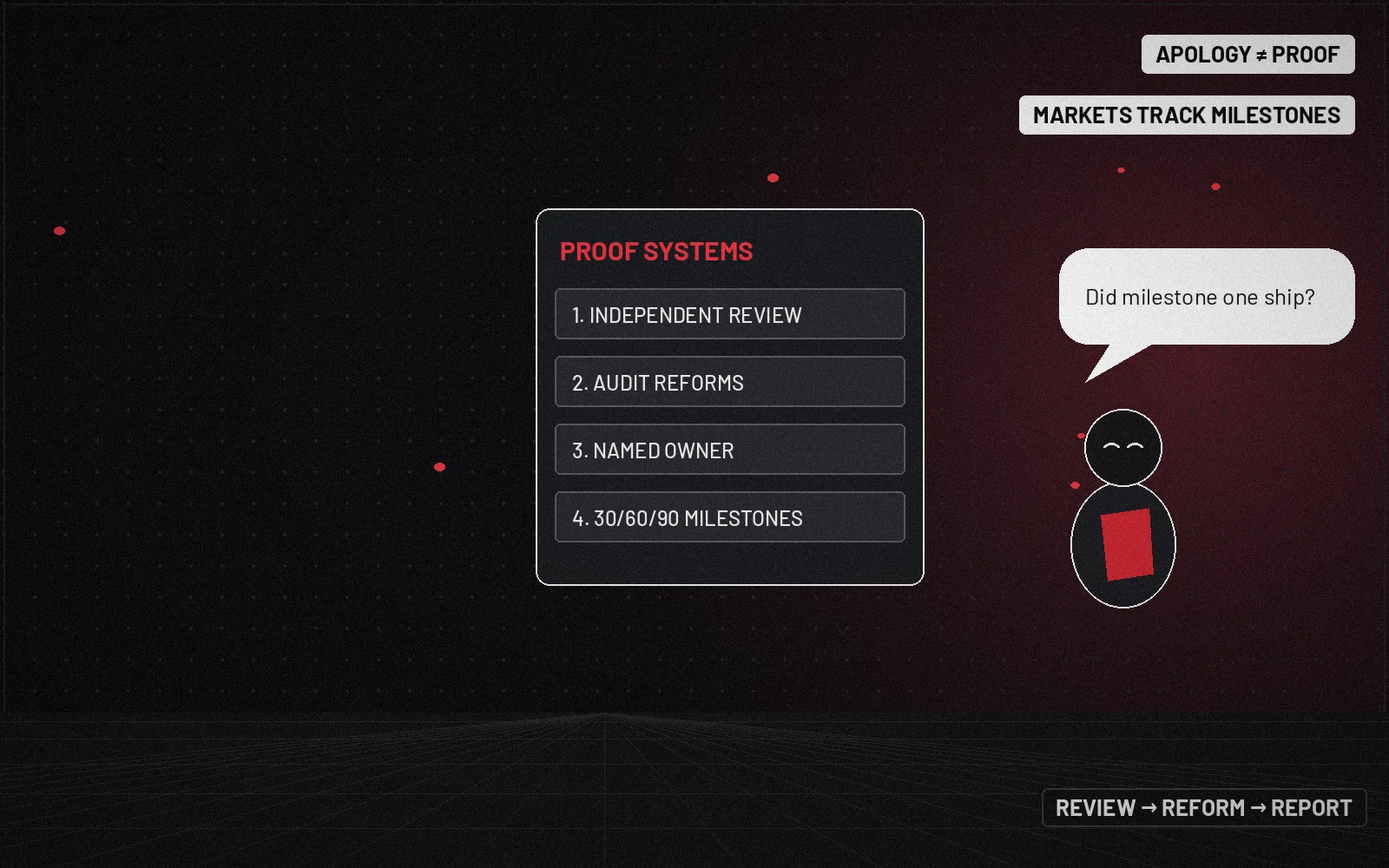
- Independent review timelines
- Data lineage and audit reforms you can show
- Named ownership for integrity (not a vague committee)
- Public milestones at 30 / 60 / 90 days
- Employee channels that beat rumor speed
Markets discount promises. They track whether milestone one actually shipped.
Local SEO money page: crisis communications Japan for industrials
Operators search crisis communications Japan when a peer’s resignation cycle hits the wires. Your money page should:
- Speak industrial and regulated-sector language
- Offer retainer scoping, not only project fire drills
- Link to holding-statement and dark-site hubs
- CTA to Crisis & Rapid Response on Services
This Insights piece is the teachable moment. The service page is the close. Do not make industrials hunt through lifestyle PR case studies.
Pre-built stack for JP/KR/HK/TW-touching brands
Regional brands need a pre-built stack before the next integrity shock:
- Bilingual holding kits (JP + EN minimum)
- Regulator-aware sequencing cards
- Dark-site templates
- On-call roster with Japan hours coverage
- Scorecard triggers that escalate before resignation memos
Build it in peace. Buying it after Chubu-class headlines means you are already late.
What industrial boards should demand in the first 48 hours
- Single source of truth document (facts vs unknown)
- Named spokesperson lanes (JP primary, EN secondary)
- Regulator contact log
- Employee briefing before external EN interviews
- Hold on restart/optimism language
- Proof milestone calendar draft—even if dates move
Boards that skip employee briefing create internal leaks that become the story. Use holding-statement templates as structure, then localize tone.
EN spillover: how Tokyo stories become Singapore and NY problems
English wires and investor chats amplify resignation language fast. Assign an EN desk that:
- Does not freelance optimism
- Matches JP facts without over-translating apology rituals into US litigation tone
- Prepares investor FAQ that counsel clears
- Monitors for “fraud / manipulation / cover-up” verb clusters
If you only staff Japanese media and ignore EN investor blogs, you will be surprised by the secondary narrative. Keep privacy/data adjacent messaging coherent with Japan APPI AI data communications.
Local SEO: crisis communications Japan for industrials
Money-page must-haves:
- Primary phrase crisis communications Japan early and naturally
- Industrial / regulated-sector proof shapes (anonymized)
- Retainer scoping CTA
- Links to holding statements, dark-site readiness, and reputation scorecard hubs when live
- Clear statement of JP-hour coverage
Avoid lifestyle campaign case studies as the hero. Industrials bounce. This Chubu-week Insights piece is the timely door; the service module is the room.
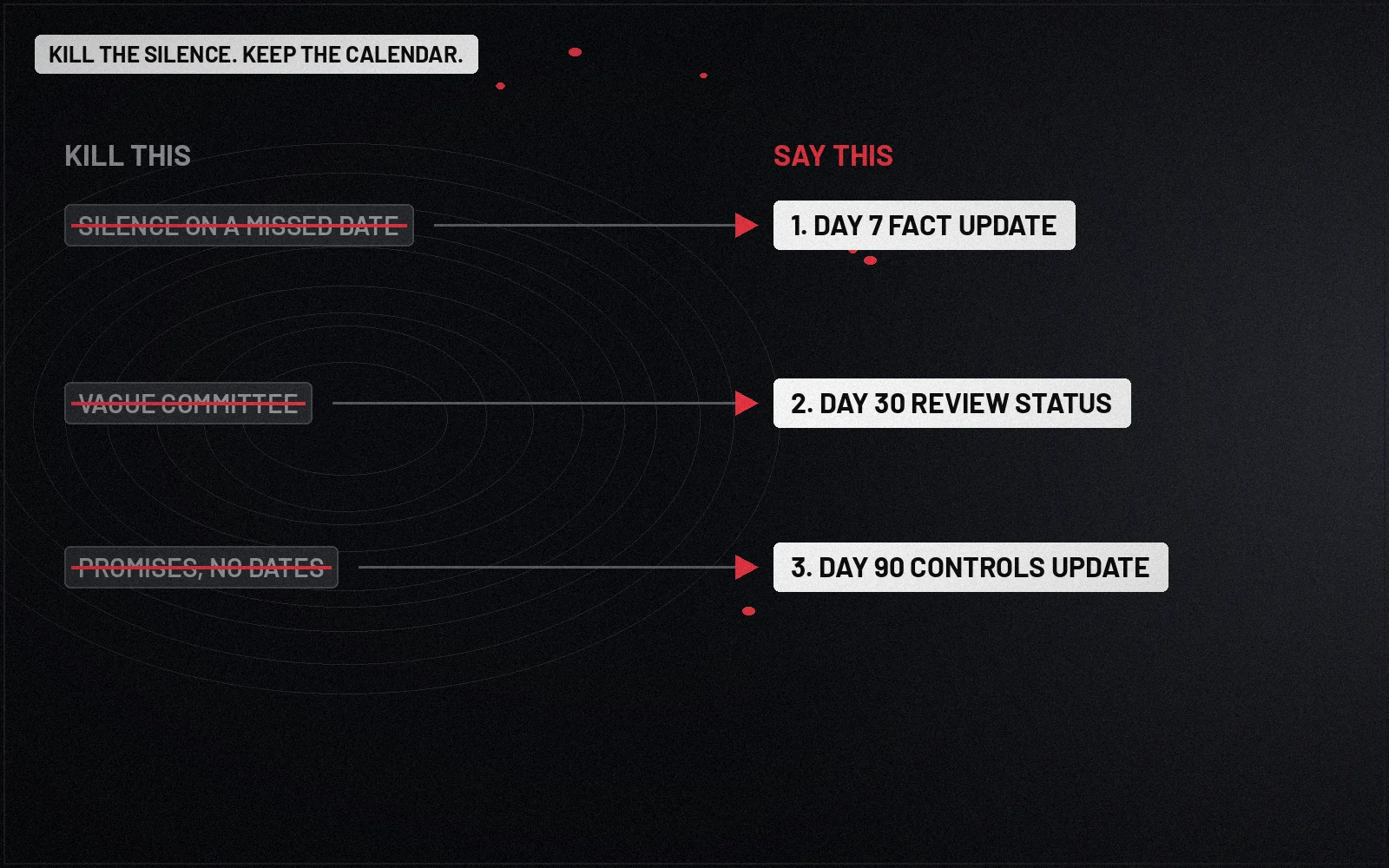
Proof calendar example (adapt, do not copy blindly)
- Day 0–2: holding line + employee note
- Day 7: interim fact update
- Day 30: independent review status
- Day 60: process reform summary
- Day 90: public integrity controls update
Missed milestones need explanation—not silence. Silence restarts the distrust clock.
Pre-mortem questions for JP/KR/HK/TW-touching brands
- 1. Who can approve a JP holding line at 11 p.m.?
- 2. Where does the dark site live, and who has keys?
- 3. What integrity verbs trigger escalation in monitoring?
- 4. What is our EN investor FAQ if a peer resigns over data?
- 5. Which proof artifacts exist before we need them?
If you cannot answer those five, you are not retainer-ready. Start the scoping conversation on Contact or browse Services.
Soft CTA: Japan crisis communications retainer
If your Japan exposure includes regulated data, safety assessments, or restart narratives, scope a crisis communications retainer before the next integrity finding. Neuwark helps industrials and cross-border brands pre-build the stack markets actually price: proof, not theater.
Services · Contact · Insights · About. The apology is expected—the proof system is the product.
Message architecture for data-integrity crises (JP + EN)
Build three layers and keep them consistent:
- 1. Fact layer — what is confirmed, what is under review
- 2. Accountability layer — who owns the response (roles, not theater)
- 3. Proof layer — dated milestones the public can check
EN versions should not “toughen” the JP apology into a US courtroom voice. JP versions should not hide facts EN investors can already read on the wires. Consistency is the product. Holding-line craft lives in holding-statement templates.
What not to say after a Chubu-class headline
- “This does not affect safety” without a dated basis
- “A few bad actors” before investigations finish
- “Restart remains on track” while applications are withdrawn
- “We have always prioritized integrity” as the lead line—show controls instead
Markets punish vibes after integrity failures. They track proof.
Retainer components industrials actually buy
- JP-hour on-call roster
- Bilingual holding kits
- Regulator sequencing cards
- Dark-site templates
- Integrity-verb monitoring
- Quarterly tabletop on data/governance scenarios
- Local SEO money page maintenance for crisis communications Japan
If a vendor sells only “media training for the president,” you are buying a camera skill—not a crisis system. Adjacent privacy narrative hygiene: Japan APPI AI data communications.
Cross-border playbooks for KR/HK/TW-touching groups
Share the spine; localize the manners. Same fact layer. Different apology and regulator customs. Same proof calendar discipline. One regional crisis lead with local counsel lanes beats five disconnected country statements.
Operator drill: 60 minutes on an integrity shock
Minute 0–10: inject a falsified-assessment rumor with partial confirmation. Minute 10–25: draft JP holding line + EN investor note. Minute 25–40: sequence regulator vs employee vs media. Minute 40–50: decide dark-site go/no-go. Minute 50–60: after-action—where did optimism leak?
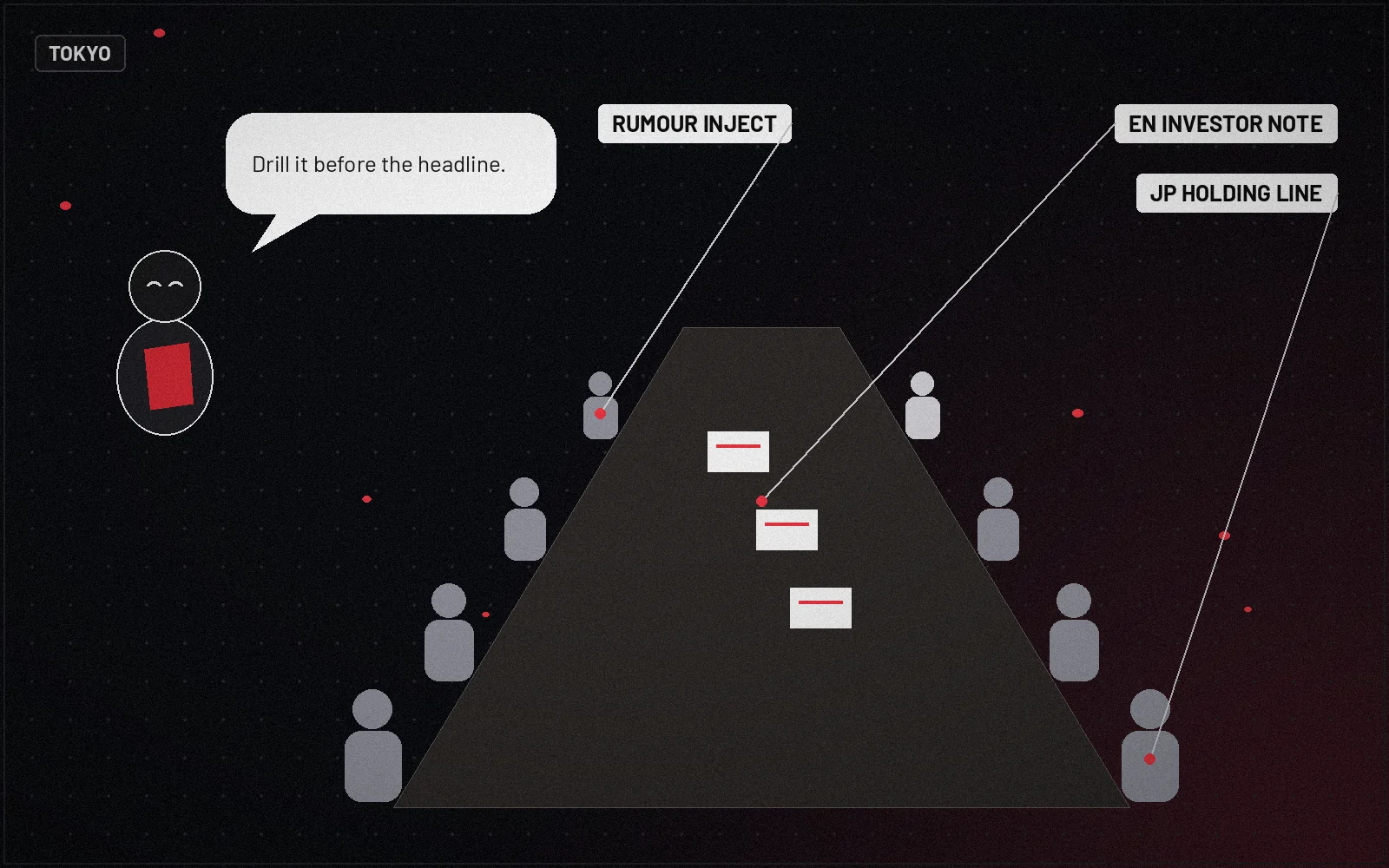
Run it before you need it. Chubu-week headlines are the case study; your drill is the insurance.
Why local SEO and crisis retainers belong in the same SOW
Industrial buyers search crisis communications Japan while they are scared—and they buy retainers when they are calm. The Insights money page catches the scared search. The retainer SOW catches the calm budget cycle. Keep both. A page without a retainer offer is a magazine. A retainer without a page is an invisible product. Chubu-week is the reminder to connect them before the next integrity shock.
Closing discipline for Japan integrity crises
Do not close the crisis when the press conference ends. Close it when the proof calendar’s first three milestones ship, employees can repeat the fact layer without improvising, and EN investors stop asking whether the numbers were theater. That is the standard behind serious crisis communications Japan retainers—and the lesson Chubu-week wrote in public.
Integrity crises end on proof, not applause.