

September’s overlapping APAC attention spikes do not wait for your editorial calendar. ASEAN haze weeks, Philippine monsoon and cyclone DROMIC updates through mid-September 2026, and accountability news all reward publishers who ship Discover-eligible article pages the same day the story moves. If your CMS treats breaking posts like leisurely blog entries, you are invisible while the searcher is still angry, wet, or organizing.
Google Discover NewsArticle schema campaigns are not a vanity SEO checkbox. They are a production system: clean NewsArticle markup, a news sitemap Google can trust, IndexNow pings for Bing- and Naver-class engines, and an ops checklist that survives a 11 p.m. publish. Google still does not speak IndexNow—plan for both rails.
Neuwark Communications builds GEO production retainers for advocacy and public-affairs publishers who need same-day visibility without fake “Discover dashboards.” Soft path: Services and Contact.
Why monsoon and accountability cycles punish slow CMS stacks
Habagat weeks and accountability spikes share one trait: the public’s attention window is short, mobile, and merciless. A DROMIC update at 6 p.m. creates morning searches. A graft arrest creates evening group-chat forwards. If your page goes live twelve hours late with BlogPosting schema and a weekly sitemap refresh, you did not publish—you archived.
Slow stacks fail in predictable ways:
- Approval chains that require three signatures for a 400-word update
- Themes that strip schema or duplicate titles
- Media libraries that block uploads during the only hour editors are free
- No kill switch when a draft is wrong but already indexed
Street-smart rule: if you cannot ship a clean article page in under two hours with two trained people, you do not have a news capability. You have a brochure site with a blog plugin. Pair this discipline with hubs like GEO content engines for political agencies and rapid-response content calendars for the Philippines.
NewsArticle vs BlogPosting: what Discover actually needs
Discover and news surfaces prefer pages that look like journalism infrastructure, not lifestyle blogging. That usually means NewsArticle (or a strict Article implementation that still carries news-ready fields)—not a generic BlogPosting that tells crawlers “this is a diary.”
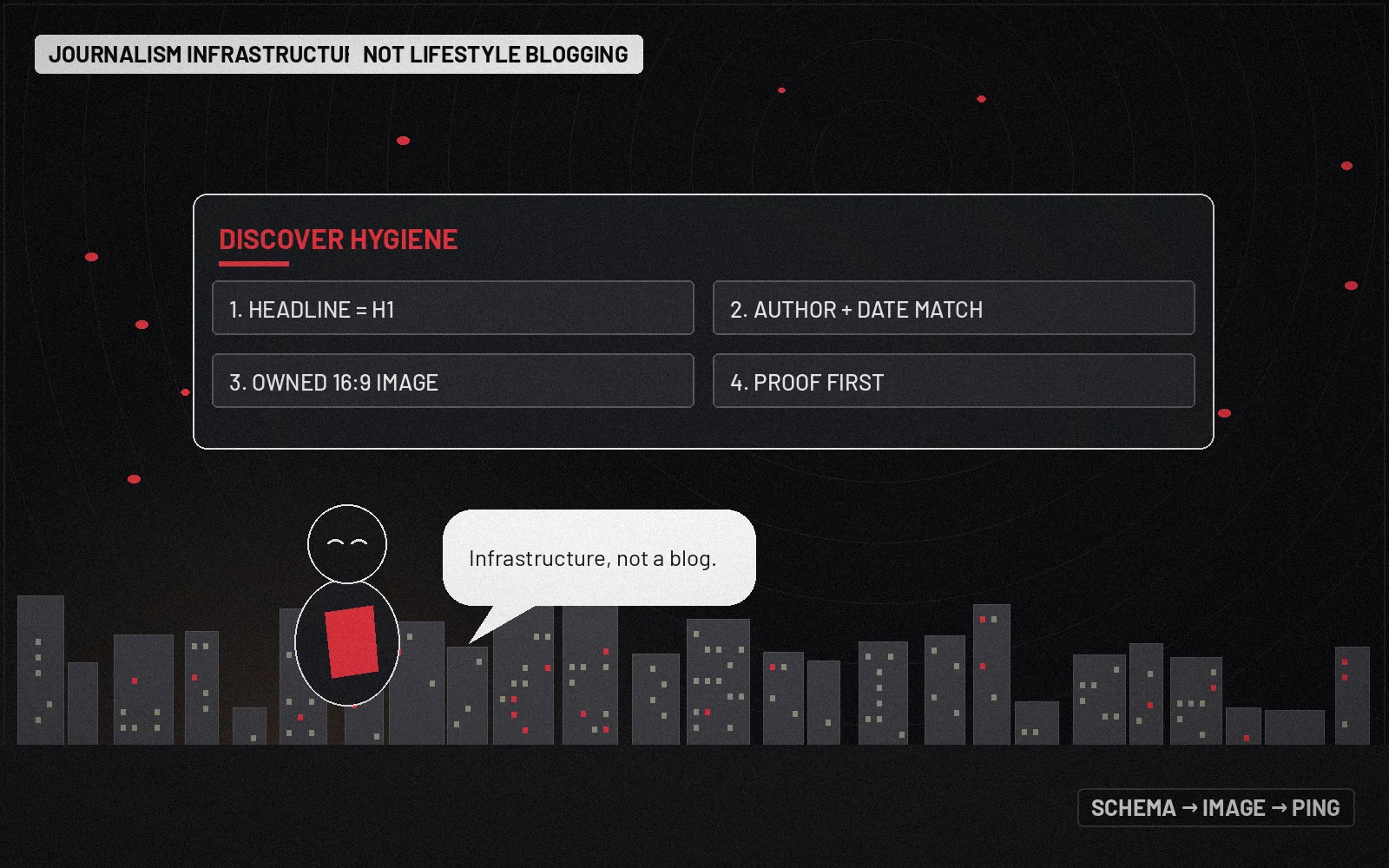
Minimum Discover-grade hygiene:
- 1. One clear headline that matches the H1 and the meta title intent
- 2. Visible author and date that match schema
- 3. Unique 16:9 featured image you own—no competitor logos, no stolen wire crops with watermarks
- 4. Body that earns the click—proof, not throat-clearing
- 5. Internal links to Insights, Services, and related hubs without stuffing
Do not invent fake newsiness. If the piece is a timeless explainer, say so. If it is tied to a 17 September DROMIC report or a mid-September accountability spike, date it and schema it like news. Discover punishes bait; it rewards pages that survive a skim.
News sitemaps for Google; IndexNow for Bing/Naver-class engines
Treat indexing as two jobs:
- Google: NewsArticle (or equivalent) + news sitemap + fresh lastmod discipline. Classic XML sitemaps help; news sitemaps help faster for news-shaped URLs.
- Bing / Naver-class: IndexNow on publish and on material update. Google does not consume IndexNow—stop waiting for it to.
Operator checklist at publish:
- Validate schema (author, datePublished, headline, image)
- Ping IndexNow with the live URL
- Confirm the URL appears in the news sitemap
- Spot-check mobile render and Open Graph crop
- Log who approved the page (for kill-switch accountability)
If your stack cannot ping IndexNow without a developer ticket, you will miss the day. Bake the ping into the publish ritual—same as uploading the featured image.
Same-day publish ops: roles, checklists, kill switches
Tools do not save a chaotic team. Name roles before monsoon season:
- Writer — drafts the street-smart body with proof blocks
- Editor — kills fluff, checks names/dates, enforces high-school clarity
- Publisher — schema, sitemap, IndexNow, category (Insights), Rank Math fields
- Owner — can unpublish in one step if facts break
Kill switches matter. A wrong casualty figure or a misnamed official should not require a Slack archaeology dig. Document the unpublish path. Soft-hold templates beat silence when counsel is still reading.
Use GEO FAQ pages for campaign SEO as cite-ready companions—not as substitutes for the news URL itself.
Advocacy/PA proof blocks that survive summarization
Answer engines and Discover-style cards compress you. Write so a 60-word summary still sounds like your offer:
- What happened (one sentence, dated)
- Why operators should care (money, trust, or compliance)
- What to do in the next 24–72 hours
- Soft CTA to a real service—not “learn more about our passion”
Avoid slogan fog. “Navigating complexity together” dies in a summary. “Ship NewsArticle-clean pages with IndexNow the same day DROMIC moves” survives.
Measurement without fake Discover dashboards
Skip products that invent a “Discover score” with no path to a meeting. Measure:
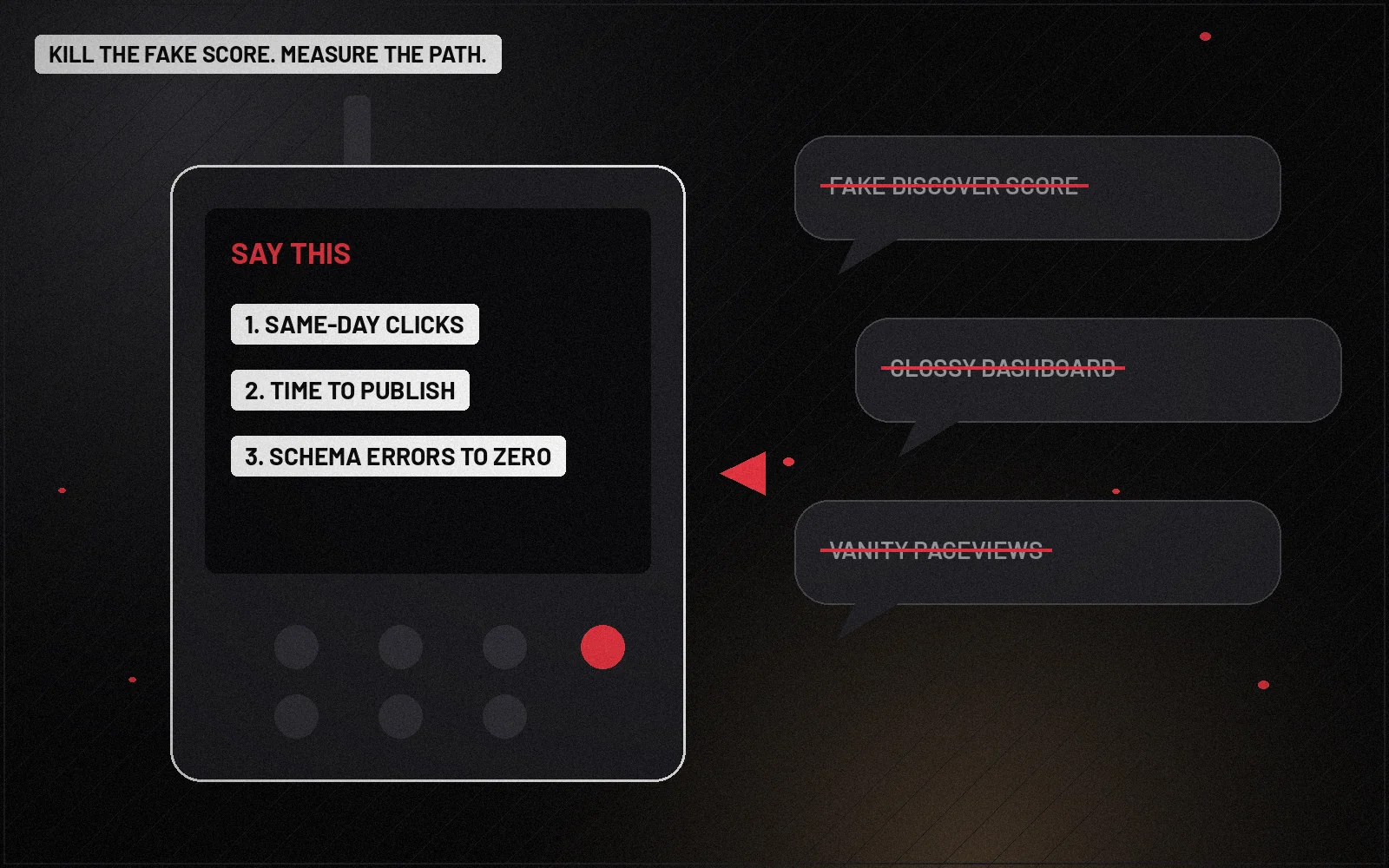
- Same-day impressions and clicks on news URLs
- Branded + offer searches after spikes
- Assisted contacts that cite the piece
- Time-to-publish from hook to live URL
- Schema error rate (should trend to zero)
A weekly operator note beats a glossy dashboard nobody trusts. If you need a scorecard habit, borrow the seriousness of reputation monitoring—not vanity charts.
Field checklist: same-day Discover-grade publish (print this)
Tape this next to the publisher laptop:
- 1. Hook confirmed against a dated source (DROMIC, wire, regulator note)
- 2. H1 = human headline; SEO title ≤60; meta ~155
- 3. Featured 16:9 unique image uploaded and set
- 4. Two in-body images with alt text that describe the scene
- 5. NewsArticle (or news-ready Article) validates: headline, datePublished, author, image, publisher
- 6. Category = Insights; internal links to Insights hub, Services, About, Contact, plus topical hubs
- 7. News sitemap entry present; IndexNow pinged
- 8. Mobile render checked; OG crop checked
- 9. Owner named for unpublish
- 10. Soft CTA points to a real retainer conversation—not “subscribe for vibes”
If step 5 or 7 fails, you are not Discover-grade. You are hoping.
What proof blocks that survive summarization look like
Answer engines and Discover cards compress. Write blocks they can lift without inventing your offer:
- Definition block: “A Discover-grade publish retainer is a monthly engagement that ships NewsArticle-clean pages, news sitemap hygiene, IndexNow on publish, and same-day roles for advocacy and public-affairs sites.”
- Ops block: “Two trained people can take a verified hook to a live Insights URL in under two hours, including schema validation and IndexNow.”
- Exclusion block: “This is not a promise that Google Discover will show every post. It is a promise your page is eligible infrastructure when attention spikes.”
Put one of those near the top of the related Services module. Repeat the definition lightly on About if you sell GEO production. Machines quote what you repeat with discipline.
Common failure modes that burn monsoon weeks
- BlogPosting for breaking news — crawlers treat you like a diary
- Weekly-only sitemaps — freshness dies in the queue
- IndexNow as a ticket — engineering backlog during the only hour that matters
- Stock featured images with watermarks — trust and eligibility both take a hit
- No kill switch — wrong facts linger while Slack argues
- Fake Discover dashboards — teams celebrate scores with no meetings attached
Kill those before you buy another “AI visibility” tool. Pair production with cite-ready habits in GEO content engines for political agencies and FAQ discipline in GEO FAQ pages for campaign SEO. For Philippine spike calendars, keep rapid-response content calendars adjacent—not as a substitute for schema-clean URLs.
How retainers should be scoped (money talk)
Buyers should see inclusions and exclusions in plain bullets:
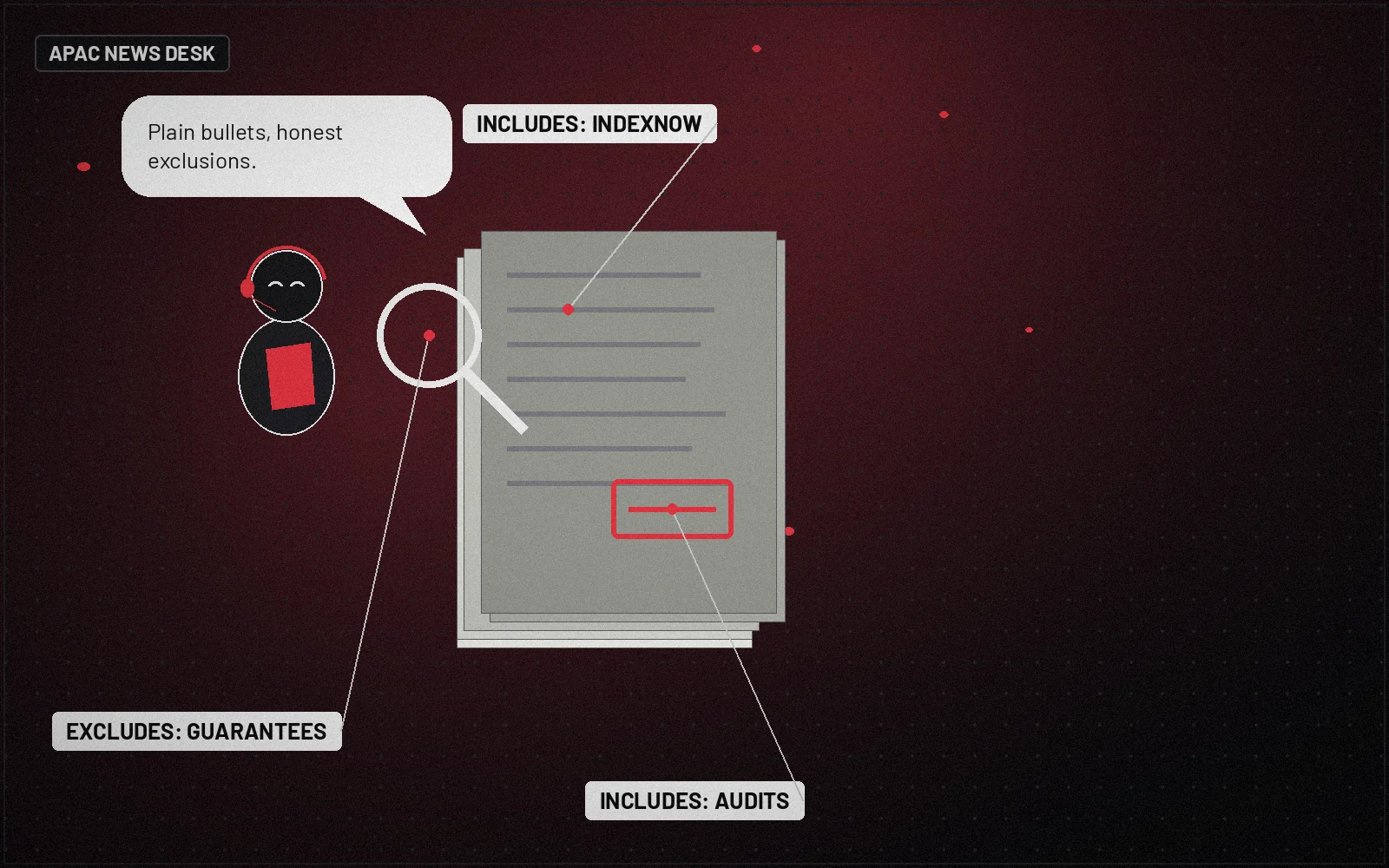
Includes: NewsArticle hygiene audits; news sitemap ops; IndexNow on publish/update; same-day publish playbook; two drills per quarter; Rank Math field QA; monthly operator note.
Excludes: Guaranteed Discover placement; inventing news; legal clearance; paid media boost.
Price the retainer against the cost of missing one accountability spike or one monsoon week of irrelevance. If your board only funds “content marketing,” rename the line item to GEO production—same work, clearer money job.
Ninety-day build for advocacy publishers
Days 1–30: Fix schema templates, author pages, and featured-image rules. Train two publishers. Days 31–60: Run three live same-day drills on real hooks. Log time-to-publish. Days 61–90: Add news sitemap automation, IndexNow on every status=publish, and a weekly operator note that finance understands.
By day 90 you should not be debating whether Discover “likes” you. You should be debating which spikes deserve a page.
Soft CTA: GEO production / Discover-grade publish retainer
If monsoon and accountability cycles already define your calendar, buy the publish system before the next spike. Neuwark’s GEO production retainers cover NewsArticle hygiene, news sitemap ops, IndexNow on publish, and same-day roles that hold under stress.
Explore Services, skim more on Insights, or talk scope on Contact. About if you want the dual-desk context. Home is fine for orientation—then come back to the stack that ships.