
Leave it sealed, point them to it, call the medic.
Street-smart APAC English: short sentences a tired operator can say out loud.
Quick answer: A first-aid-kit line English APAC is the floor steward’s rule for the wall kit on event day: leave it sealed, point them to it, call the medic. Nobody digs through the kit for small fixes, guests are pointed to it only when needed, and any real injury goes to the medic on the radio.
Bangkok, an exhibition corridor mid-afternoon, and a guest asks for a plaster. A steward opens the wall first-aid kit, digs past sealed packs, and leaves the door ajar. Ten minutes later another steward cannot tell what is still complete.
A wall kit only helps if it stays sealed, complete and backed by a medic call when something is more than a plaster. Read it alongside the hard hat line English APAC and the fire extinguisher line English APAC.
What is a first-aid-kit line English APAC?
It is a floor steward’s three-part rule at a wall first-aid kit on event day. Sealed first, point second, medic third.
1. Leave it sealed. Leave the kit sealed when you are not using it. Do not dig through it to tidy or to check out of habit.
2. Point them to it. If a guest needs a basic item and house rules allow it, point them to the kit or open it once, then reseal.
3. Call the medic. For anything more than a simple ask, call the medic on the radio. The steward does not handle injuries alone.
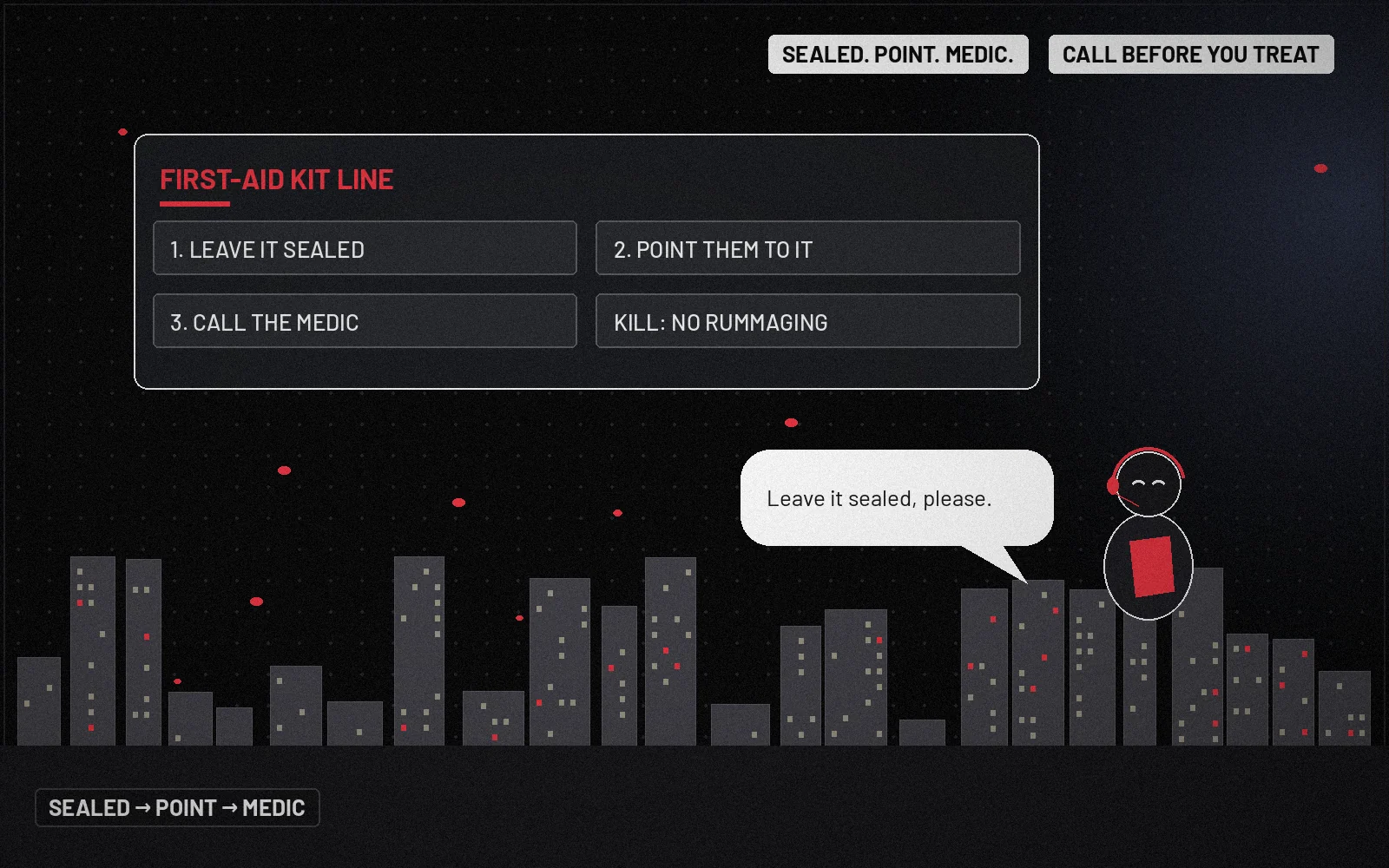
The habit to break is the helpful rummage. Stewards open the kit for every small request and the inventory quietly falls apart.
What should a floor steward stop saying about the first-aid kit?
Stop digging through the kit for every small ask, and stop handling anything that needs a medic. Say the three kit parts on the floor brief instead.
| Kill this | Say this (illustrative) | Why |
|---|---|---|
| Buksan na lang po natin, may plaster ba diyan? | Leave it sealed. | A sealed kit stays complete for the next person (PH Tagalog habit) |
| Just take a plaster lah, no need to call anyone. | Point them to it. | Pointing beats rummaging when the guest can wait (SG lah habit) |
| Ambil aja isinya, Bu, nanti diganti. | Call the medic. | The medic owns anything beyond a simple ask (Jakarta Bahasa habit) |
Lines in this table are illustrative, not quotes from real people.
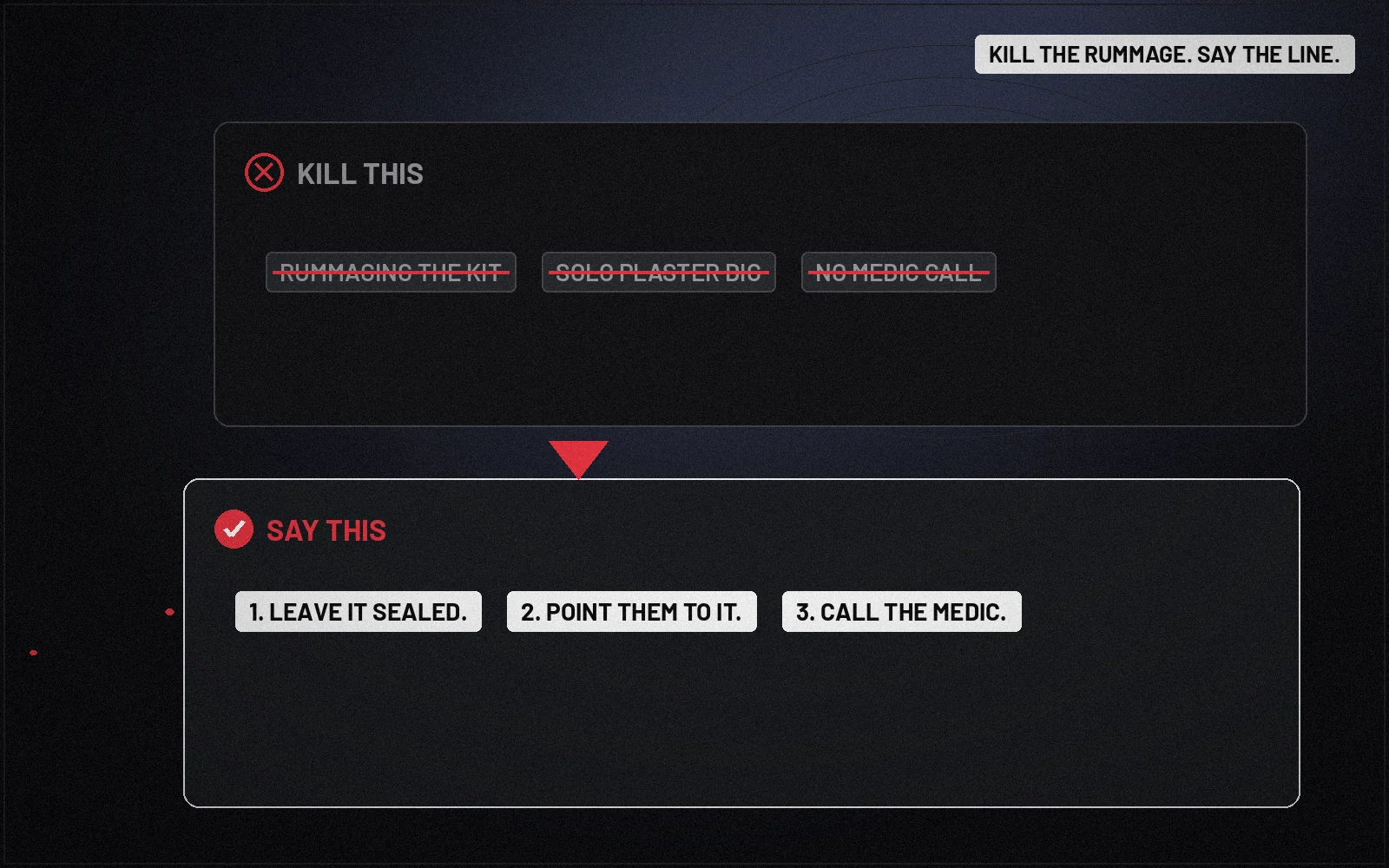
Say the line at the morning floor brief, before the first plaster request of the day.
What if a guest is bleeding or cannot stand?
Do not dig through the wall kit as your first move, and do not move them alone. Call the medic on the radio, stay with the guest and keep the area clear.
Who plans first-aid-kit checks before doors open?
The venue’s safety lead plans it with the event operations lead, before doors. They confirm kit locations, sealed stock and the medic radio channel.
PH / SG / Jakarta desk notes
Same three parts. Different desks.
Philippines desk. Firm and polite. Leave it sealed po. Point them to it po, sir. Call the medic po, ma’am.
Singapore desk. Brisk and even. Leave it sealed. Point them to it. Call the medic.
Jakarta desk. Jakarta floors often brief in Bahasa first. Keep the three parts in English for mixed teams and add Bapak or Ibu only if the house style uses it.
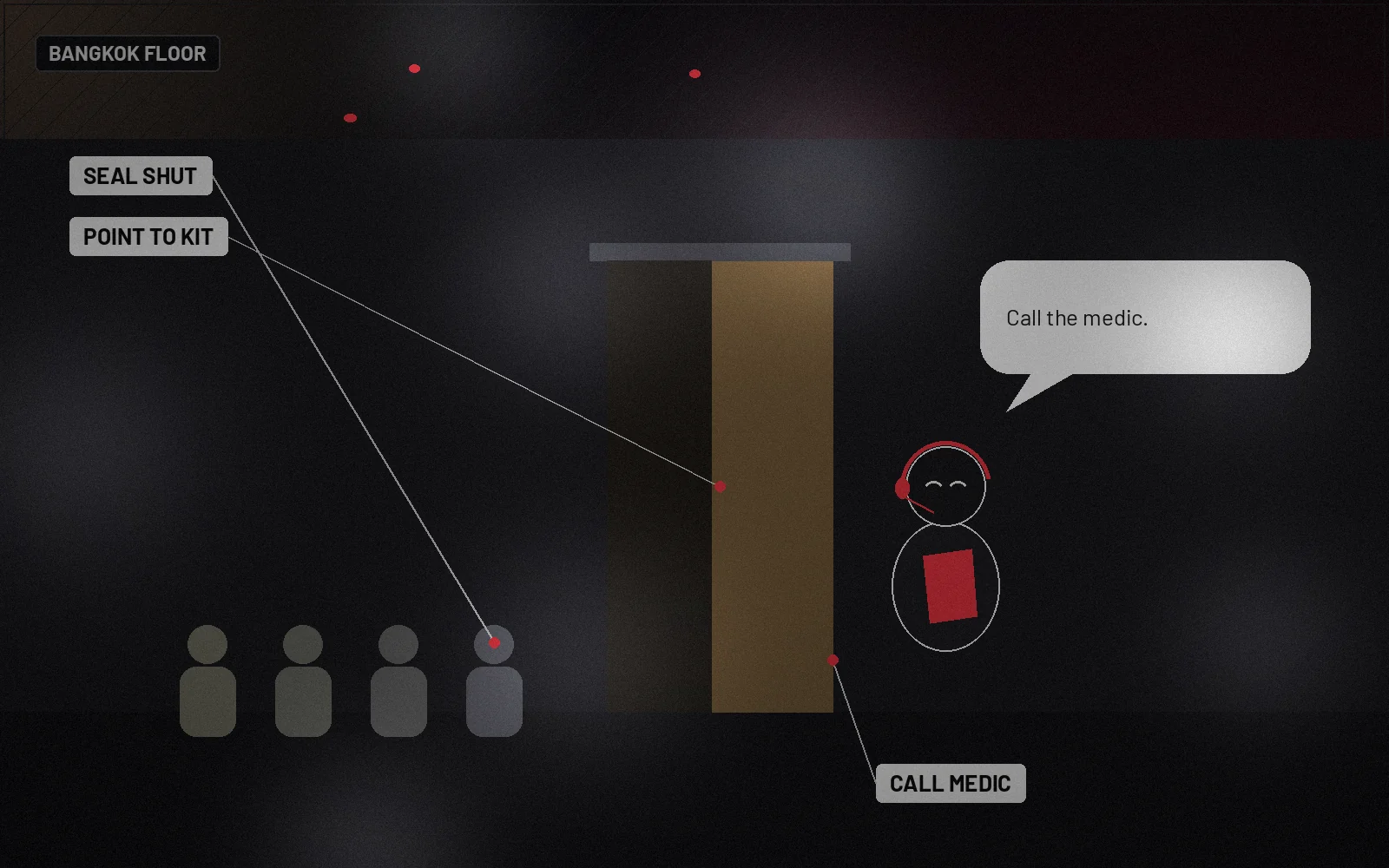
Monday field kit
- Confirm kit locations and the medic channel with the safety lead.
- Check each kit seal on the morning walk.
- Brief stewards on the lock: leave it sealed, point them to it, call the medic.
- Practise one radio call for a guest who cannot stand.
- Kill rule: no rummaging, no unlogged opens, no solo care from the kit.
Illustrative only. Follow the venue’s own first-aid procedure; this wording is a template.
FAQs
What is a first-aid-kit line English APAC?
A first-aid-kit line English APAC is the floor steward’s rule for the wall kit on event day: leave it sealed, point them to it, call the medic. Nobody digs through the kit for small fixes, guests are pointed to it only when needed, and any real injury goes to the medic on the radio.
What should a floor steward stop saying about the first-aid kit?
Stop digging through the kit for every small ask, and stop handling anything that needs a medic. Say sealed, point, medic, in that order.
What if a guest is bleeding or cannot stand?
Call the medic, stay with the guest and keep the area clear. Do not handle them from the wall kit alone.
Who plans first-aid-kit checks before doors open?
The safety lead plans kit checks with event operations before doors. Stewards brief the line and report broken seals.
What to do this week
Speakable lock (illustrative): “Leave it sealed, point them to it, call the medic.”
Walk the corridor kits with your safety lead before the next show and check which doors still seal shut. We write steward wording like this at our Manila HQ in Makati and review it with colleagues at MBFC Tower 2 in Singapore before floors use it.
Neuwark Communications builds event and campaign communications as part of our strategy and messaging work. More street-smart lines live in Insights.
Related: hard hat line English APAC · fire extinguisher line English APAC
Talk to us about your next event script.
Illustrative lines only. Communications craft, not legal advice.