
Reputation retainers sell calm—scorecards are how you prove you earned it. Mid-September 2026 stacked APAC reputation shocks: Chubu Electric’s leadership resignations over Hamaoka data integrity around 14 September, plus Malaysia’s institutional-credibility debate around 18 September. Together they prove a hard commercial truth: “we’ll handle PR if it blows up” is not a monitoring system. Corporate reputation risk communications APAC needs a weekly stakeholder-trust scorecard that triggers counsel before the resignation memo.
Neuwark sells reputation retainers and monitoring packs for SG, HK, JP, and KR-touching brands—distinct from ops-only weekly-comms scorecards. Soft CTA: Services · Contact.
Why “handle PR if it blows up” is not a monitoring system
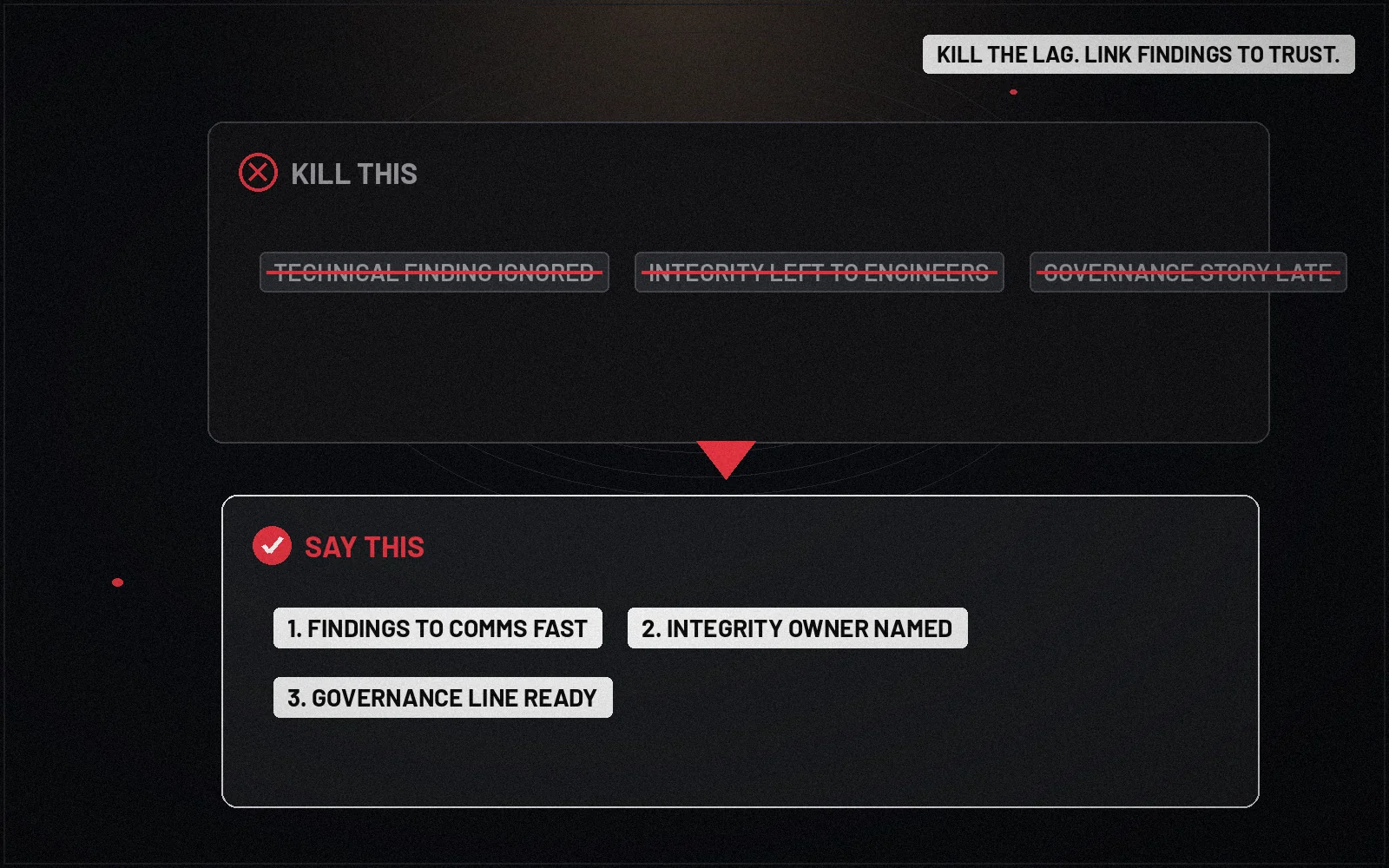
Reactive PR assumes you will notice the fire early enough to look composed. Data-integrity scandals and credibility shocks often move from technical finding to board event overnight. If your only sensor is a Google Alert and a panicked call, you are not monitoring—you are waiting.
Monitoring systems have thresholds, owners, and escalation paths. Hope is not a threshold. A quarterly reputation slide in a board pack is not a sensor. Weekly trust signals are.
Scorecard vs ops weekly-comms hub: different money job
Do not confuse this with a progressive operator weekly-comms scorecard. That hub is campaign and advocacy ops KPIs. This scorecard is corporate reputation risk: stakeholder trust, integrity signals, and early counsel triggers.
Different money job. Different buyers. Different retainers. Keep the URLs and offers distinct so you do not cannibalize your own SEO or confuse procurement.
Signals that matter: stakeholder trust, not vanity mentions
Track signals that predict resignations and tender loss—not vanity:
- Employee sentiment spikes on integrity topics
- Customer diligence questions about governance
- Regulator or media queries escalating in tone
- Partner hesitation language in renewals
- Leadership rumor velocity (internal and external)
Mention volume without sentiment and stakeholder mapping is theater. A crimson LED on a vanity dashboard is still vanity.
Trigger rules: when the scorecard calls counsel before the memo
Write trigger rules in the SOW:
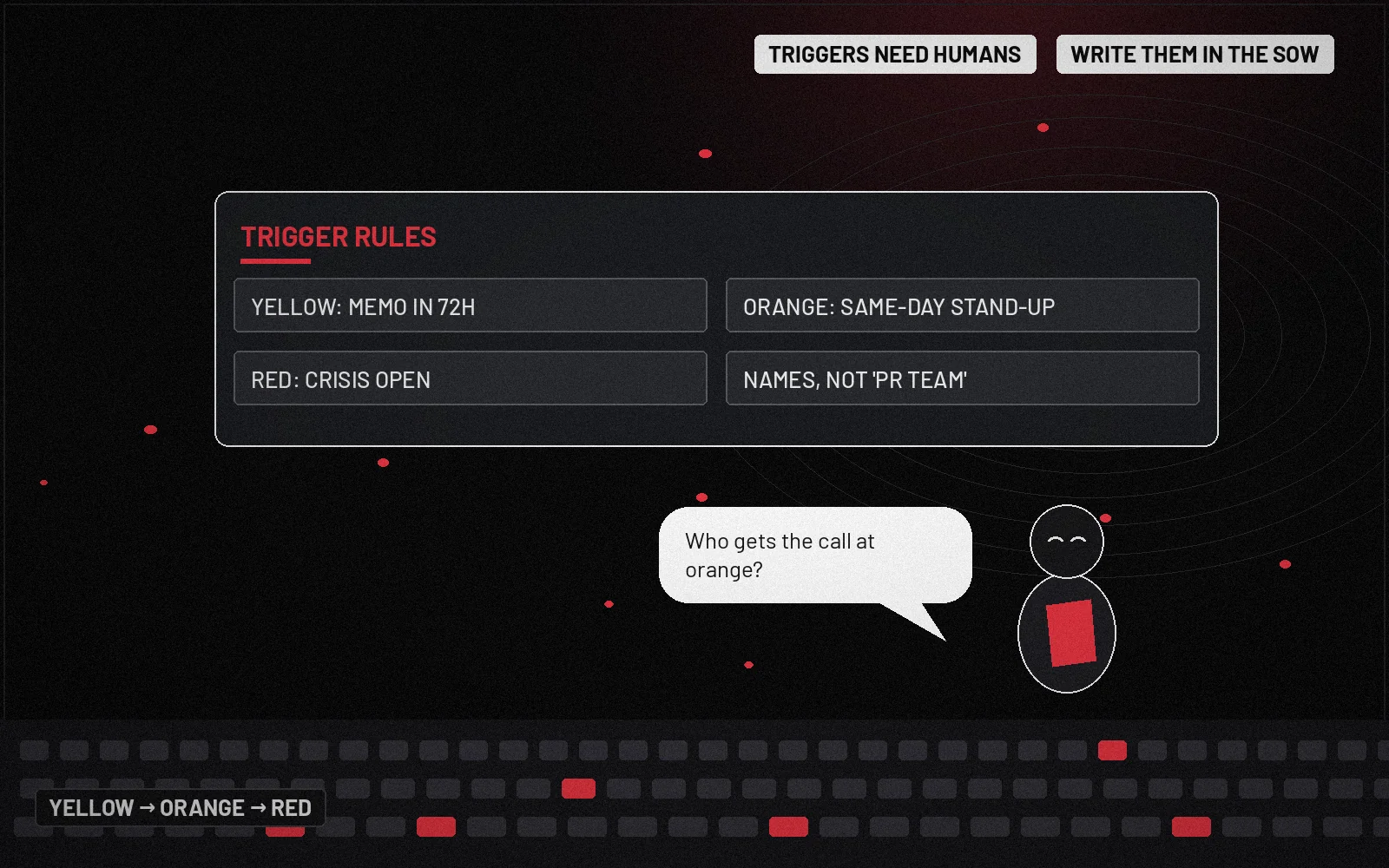
- Yellow — two consecutive weeks of rising integrity questions → counsel memo within 72 hours.
- Orange — media/regulator inquiry + employee spike → war-room stand-up same day.
- Red — leadership change rumor with data/governance core → full crisis adjacency open.
Triggers without named humans fail. Put names, not “the PR team.”
APAC stacking risk: Japan data integrity + MY credibility weeks
September 2026 showed stacking: a Japan industrial trust shock and a Malaysia political-credibility week in the same news diet. Regional brands feel both through supply chains, banks, and HQ Slack.
Your scorecard should allow multi-market flags. A calm week in Singapore does not cancel an orange flag in Tokyo. Stacking risk is why weekly beats quarterly.
Hold crisis holding statement templates ready. When Japan-facing industrials need deeper crisis stacks, that is a separate retainer conversation—but the scorecard should have already blinked.
What a reputation monitoring retainer should include
A serious pack includes:
- Weekly trust scorecard (one page, human-readable)
- Named trigger thresholds and owners
- Counsel hours bank for yellow/orange
- Stakeholder sequence cards (employees, customers, investors)
- After-action notes that update the scorecard itself
- Clear exclusion: this is not a vanity media-clip scrapbook
Price monitoring separately from full crisis war-room hours, then bind them with adjacency clauses so escalation is not a procurement fight mid-crisis.
Building the one-page weekly scorecard
Columns that work:
- Market / entity
- Trust signal (employee / customer / media / regulator / partner)
- Direction (up / flat / down) vs prior week
- Trigger color
- Owner
- Next action by date
Keep it to one page. If it needs a data science team to read, operators will ignore it. Crimson highlighter on one risk column beats twelve dashboards nobody opens.
Roles: who owns what
- Scorecard editor — compiles weekly, no vanity metrics
- Counsel on-call — receives yellow/orange/red
- Market GM — validates local signal quality
- Exec sponsor — clears resource when orange+ hits
Unowned scorecards rot into slideware. Name humans.
Integrating with crisis adjacency without double-billing theater
Monitoring retainers and crisis retainers should connect:
- Yellow stays in monitoring + counsel memo
- Orange opens crisis adjacency hours
- Red opens full war-room under the crisis SOW
Write the handoff in both contracts. Procurement fights during resignations are a self-own.
Japan industrials and data-integrity lessons
Chubu Electric’s mid-September leadership resignations show how fast technical findings become trust and governance narratives. For JP-touching industrials, scorecards should watch data-integrity language in media and employee channels, not only “brand love” metrics. Apology culture expectations make proof systems—not only sorry statements—the priced asset.
Malaysia credibility weeks as a second sensor
Political credibility shocks travel into corporate diligence even when your brand is not named. Scorecards should allow a “macro credibility” flag that tightens customer and banking language without forcing a public political statement. That is reputation risk communications, not commentary.
Ninety-day stand-up plan
Month 1: build scorecard v1; set triggers; assign owners; run two practice weeks. Month 2: connect counsel hours; first yellow drill; refine signals. Month 3: board one-pager; retainer pricing locked; after-action improvements.
By day ninety you should be bored by the ritual. Boredom means the system works.
Sample yellow / orange / red narratives
Yellow: Two weeks of rising employee questions about data handling after a peer-industry story. Action: counsel memo, FAQ refresh, no public statement required.
Orange: Trade press asks about your controls the same week a regulator in an adjacent market fines a peer. Action: same-day stand-up, customer diligence pack, monitoring surge.
Red: Leadership rumor tied to integrity findings inside your house. Action: crisis adjacency open, holding lines, board note, dark-site decision.
Write examples into the SOW so triggers are not abstract.
Tooling without dashboard theater
You need: a shared sheet or lightweight BI view, a monitoring source of truth, a counsel channel, and a weekly 20-minute stand-up. You do not need a six-figure “reputation AI platform” to start. Start human; add tools when signal volume justifies them. Theater platforms that nobody updates are worse than a boring spreadsheet with owners.
Linking scorecards to holding statements and dark sites
When orange/red hits, the scorecard should deep-link to pre-built holding statement packs and dark-site readiness checks. Monitoring that cannot open artifacts is just anxiety with a date stamp.
Board reporting without fear theater
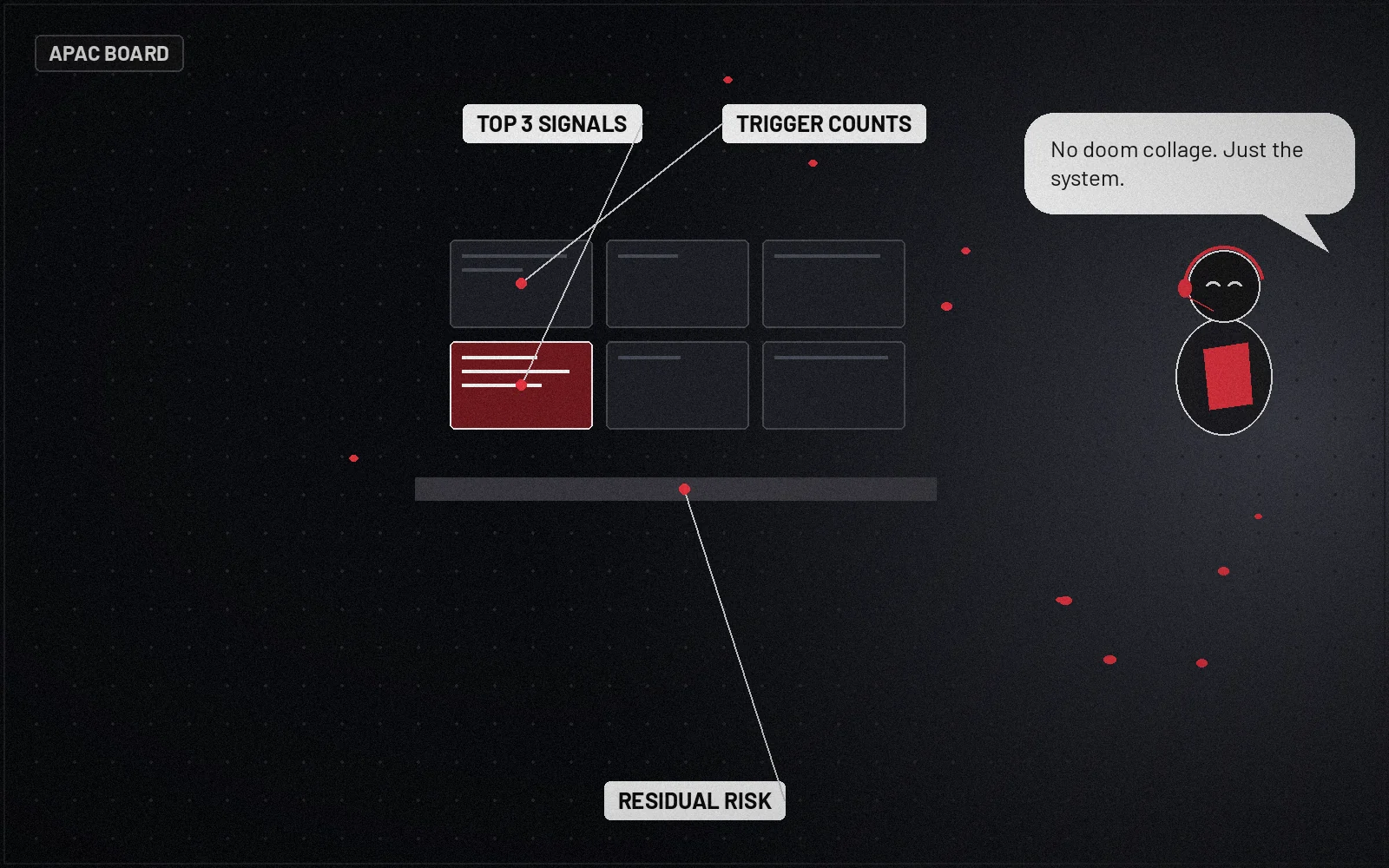
Monthly board view: top three trust signals, trigger counts, actions taken, residual risk. No doom collage. Boards buy systems that reduce surprise. Surprise reduction is the product.
Common failure modes
- 1. Vanity mention counts as “reputation KPI”
- 2. No named counsel on triggers
- 3. Confusing ops weekly-comms scorecards with corporate trust scorecards
- 4. Quarterly-only reviews
- 5. Ignoring stacking risk across markets
- 6. Buying monitoring with no crisis adjacency clause
Kill these six and your retainer becomes defensible to finance.
Commercial packaging
Package as: Monitoring pack (weekly scorecard + yellow counsel hours) with optional Crisis adjacency bolt-on. Price the bolt-on clearly. Brands that only buy monitoring without adjacency will still call you at red—and then argue about fees. Write the argument out of the contract now.
Street-smart summary: calm is sold by retainers; calm is proved by scorecards; scorecards without triggers are diaries.
FAQ blocks for reputation scorecard buyers
How is this different from a weekly-comms ops scorecard? Ops scorecards track campaign KPIs. This tracks stakeholder trust and integrity risk for corporate reputation retainers.
Do we need AI monitoring platforms on day one? No. Start with owned signals, named triggers, and a weekly human stand-up. Add tools when volume requires them.
What does success look like in a quarter? Fewer surprise board moments, faster counsel activation, cleaner customer diligence answers, and a living one-pager leadership actually reads.
Can monitoring exist without crisis adjacency? It can, but should not. Write the handoff now.
Those answers are the sales deck. Keep them boring and true.
Operator closing note
If your region can resign a CEO over data integrity and debate national credibility in the same news week, reputation cannot live in a quarterly slide. Build the weekly scorecard, name the triggers, connect counsel, and price the adjacency. That is corporate reputation risk communications APAC as an operating system—not a hope that PR will “handle it” after the memo lands.
Soft CTA: corporate reputation risk scorecard engagement
Corporate reputation risk communications APAC is a weekly operating habit, not a slide. If your region can produce CEO resignations over data integrity and overnight credibility debates, your board deserves a scorecard that calls counsel early.
Neuwark builds reputation retainers and monitoring packs that prove calm with evidence. See Services, About, Contact, and Insights. Begin at [home](/) if you need the full desk map.
Handle-PR-if-it-blows-up is a hope. A scorecard is a system.