
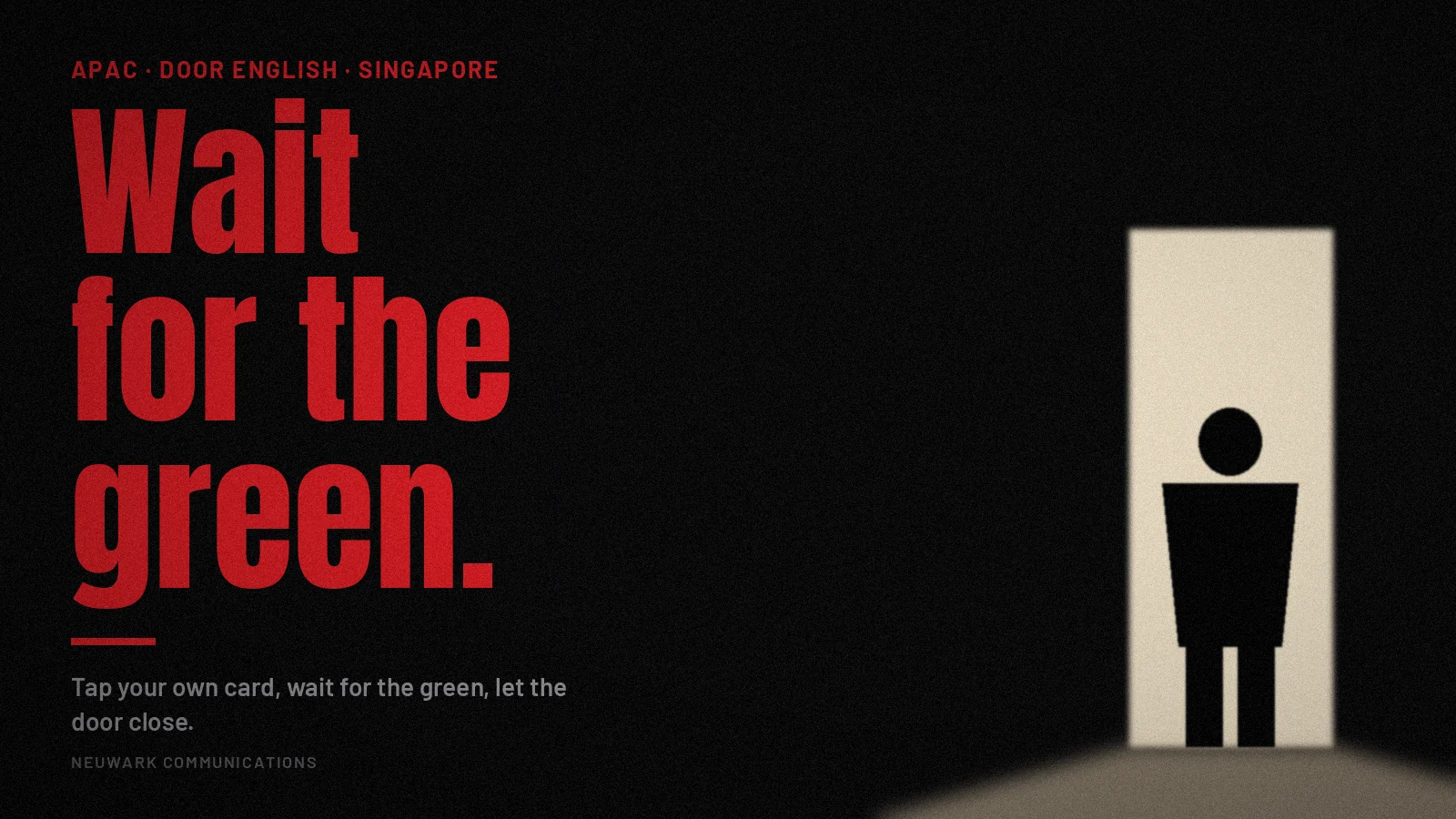
Tap your own card, wait for the green, let the door close.
Street-smart APAC English: short sentences a tired operator can say out loud.
Quick answer: A keycard line English APAC is the floor host’s rule for a card-access door on an event floor: tap your own card, wait for the green, let the door close. Every person taps their own card, nobody walks through on someone else’s green, and the door shuts fully before the next tap.
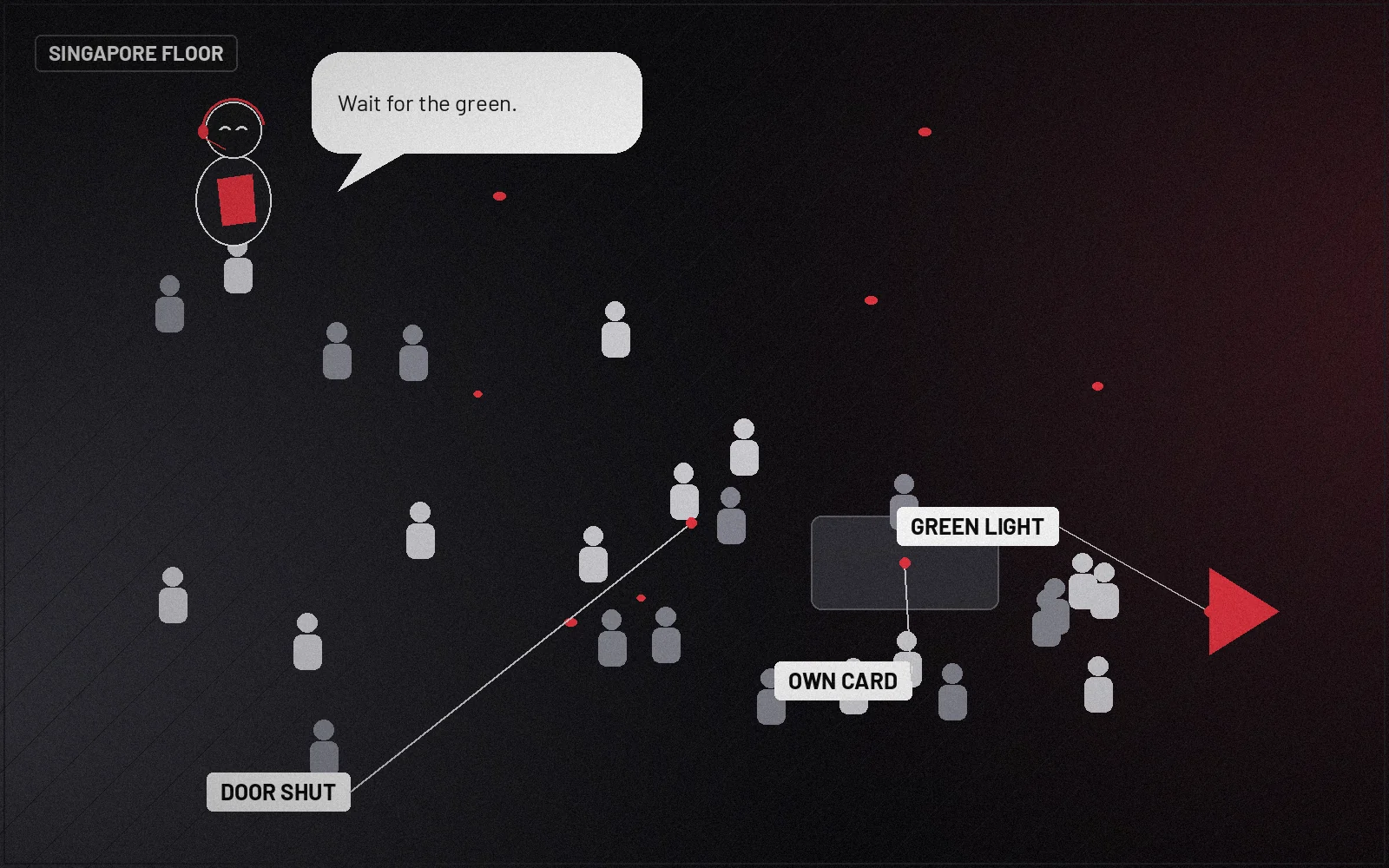
Singapore, a hotel conference floor on day two, and the speaker lounge sits behind a card-access door. One delegate taps, the light turns green, and three more walk through on the same green. A floor host waves them on because they look like they belong.
A green light opens the door for one card, and the host keeps it that way. Read it alongside the lobby pass line English APAC and the backstage pass line English APAC.
What is a keycard line English APAC?
It is a floor host’s three-part rule at a card-access event floor. Card first, green second, door last.
1. Tap your own card. Each person taps their own card. The host does not tap for them or lend a card.
2. Wait for the green. Walk through only on your own green. If it stays red, step back and the host checks the pass.
3. Let the door close. Let the door click shut before the next tap. Nobody holds it or waves a group through.
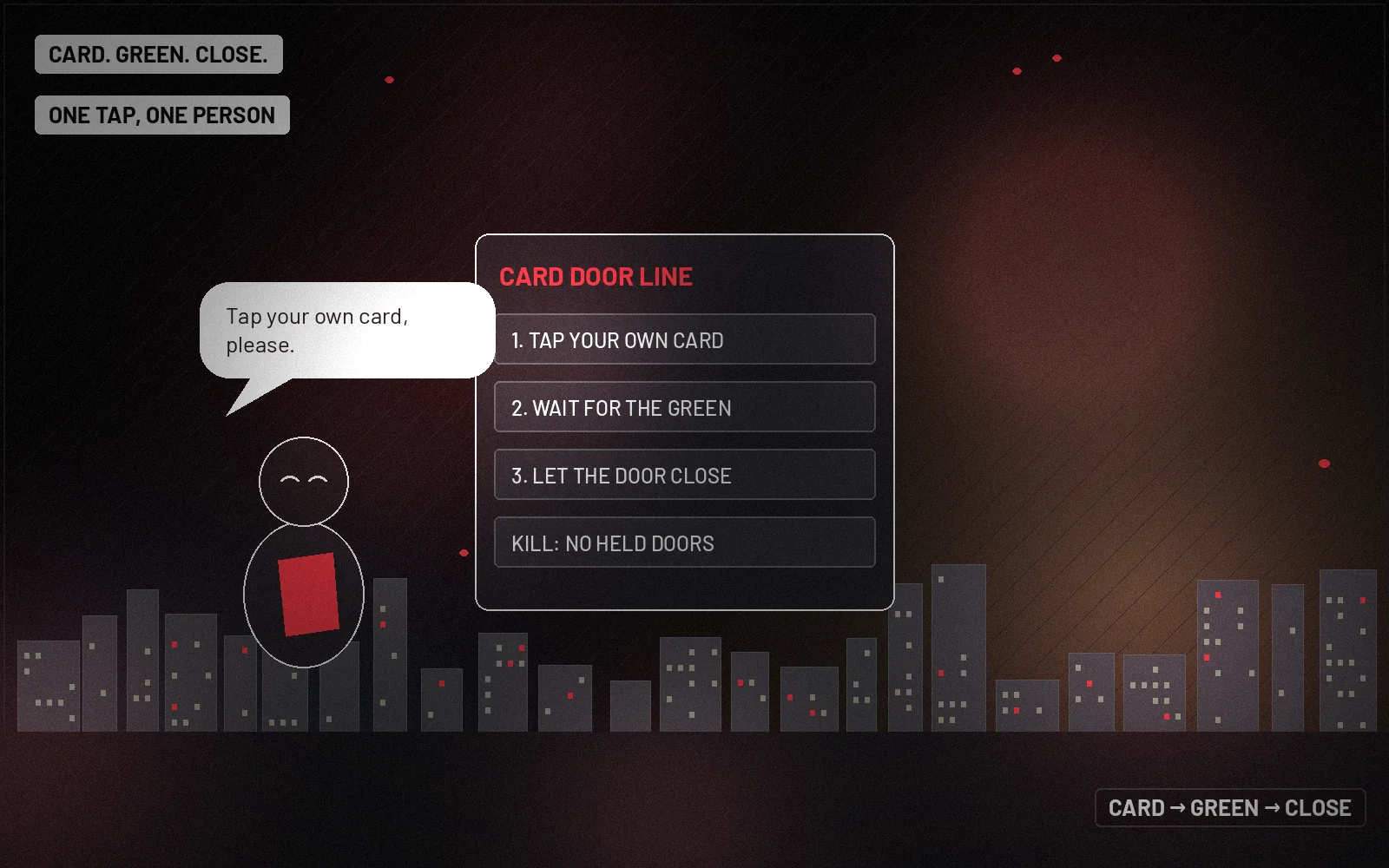
The habit to break is the friendly hold. It feels rude to let a door shut on someone, so hosts hold it, and one card ends up opening the room for half the corridor.
What should a floor host stop saying at the card door?
Stop holding the door for the group, and stop tapping your own card for guests. Say the three door parts at the reader instead.
| Kill this | Say this (illustrative) | Why |
|---|---|---|
| Sige po, sabay na kayo, ako na ang mag-tap. | Tap your own card. | One tap, one person, a clean record (PH Tagalog habit) |
| Just hold the door for them lah, they look like staff. | Wait for the green. | Tailgating is how the wrong room fills up (SG lah habit) |
| Pintunya diganjal aja, Mas, biar gampang. | Let the door close. | A door that never shuts is not a controlled door (Jakarta Bahasa habit) |
Lines in this table are illustrative, not quotes from real people.
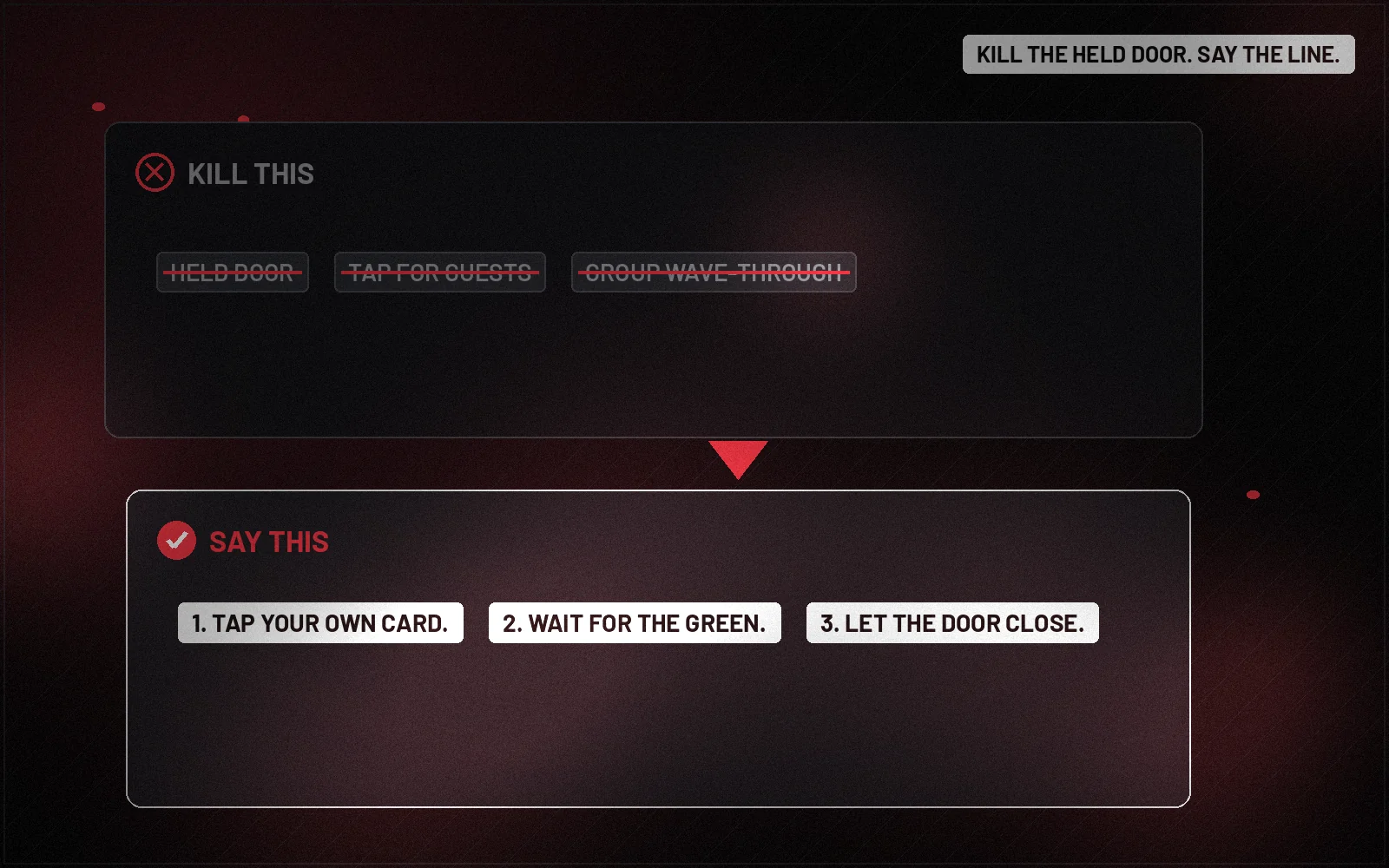
Say the line before people reach the reader, so the queue forms one card at a time.
What if a senior guest’s keycard does not work?
Do not tap them in on your own card, and do not argue at the door. Say it plainly: your card is not opening this door, let me walk you to the desk.
Who plans the keycard rules before doors open?
The event lead plans it with the hotel’s security team, before passes are printed. They decide which doors need cards, which roles get access and where reissues happen.
PH / SG / Jakarta desk notes
Same three parts. Different desks.
Philippines desk. Polite and clear. Tap your own card po, sir. Wait for the green po. Let the door close po, ma’am, salamat.
Singapore desk. Brisk and even. Tap your own card. Wait for the green. Let the door close. Thank you.
Jakarta desk. Jakarta hotel teams often greet in Bahasa first. Keep the three parts in English for mixed delegations and add Bapak or Ibu only if the house style asks for it.
Monday field kit
- Confirm card doors, access roles and the reissue desk with hotel security.
- Stand hosts beside each reader, facing the corridor.
- Brief hosts on the lock: tap your own card, wait for the green, let the door close.
- Practise one failed-card moment: no lending, walk them to the desk.
- Kill rule: no held doors, no shared taps, no group waves.
Illustrative only. Use the hotel’s own names for its doors and desks.
FAQs
What is a keycard line English APAC?
A keycard line English APAC is the floor host’s rule for a card-access door on an event floor: tap your own card, wait for the green, let the door close. Every person taps their own card, nobody walks through on someone else’s green, and the door shuts fully before the next tap.
What should a floor host stop saying at the card door?
Stop holding the door for the group, and stop tapping your own card for guests. Say card, green, door, in that order.
What if a senior guest’s keycard does not work?
Walk them to registration or radio the floor lead to check the card. Never tap them in on your own card.
Who plans the keycard rules before doors open?
The event lead plans it with hotel security before passes are printed. Hosts then brief the line and stand beside the reader.
What to do this week
Speakable lock (illustrative): “Tap your own card, wait for the green, let the door close.”
Stand at one card door through a coffee break with your floor lead and watch who walks through on someone else’s green. We draft door wording like this at our Manila HQ in Makati and check it with colleagues at MBFC Tower 2 in Singapore before hosts use it.
Neuwark Communications builds event and campaign communications as part of our strategy and messaging work. More street-smart lines live in Insights.
Related: lobby pass line English APAC · backstage pass line English APAC
Talk to us about your next event script.
Illustrative lines only. Communications craft, not legal advice.