
A townhall livestream with 8,000 peak viewers and 40 new volunteers is a success story. A townhall livestream with 8,000 peak viewers and a warm feeling is a content expense.
Progressive campaigns in the Philippines still treat livestreams like digital stage lights—point the phone, talk for an hour, post a thank-you sticker. Meanwhile the chat scrolls with questions nobody captures, the replay dies in the algorithm, and field teams learn about the event from Facebook memories a week later.
Neuwark Communications builds political and advocacy systems where attention becomes action. This playbook is how you turn townhall livestreams into leads, RSVPs, and turnout without sounding like a late-night shopping channel.
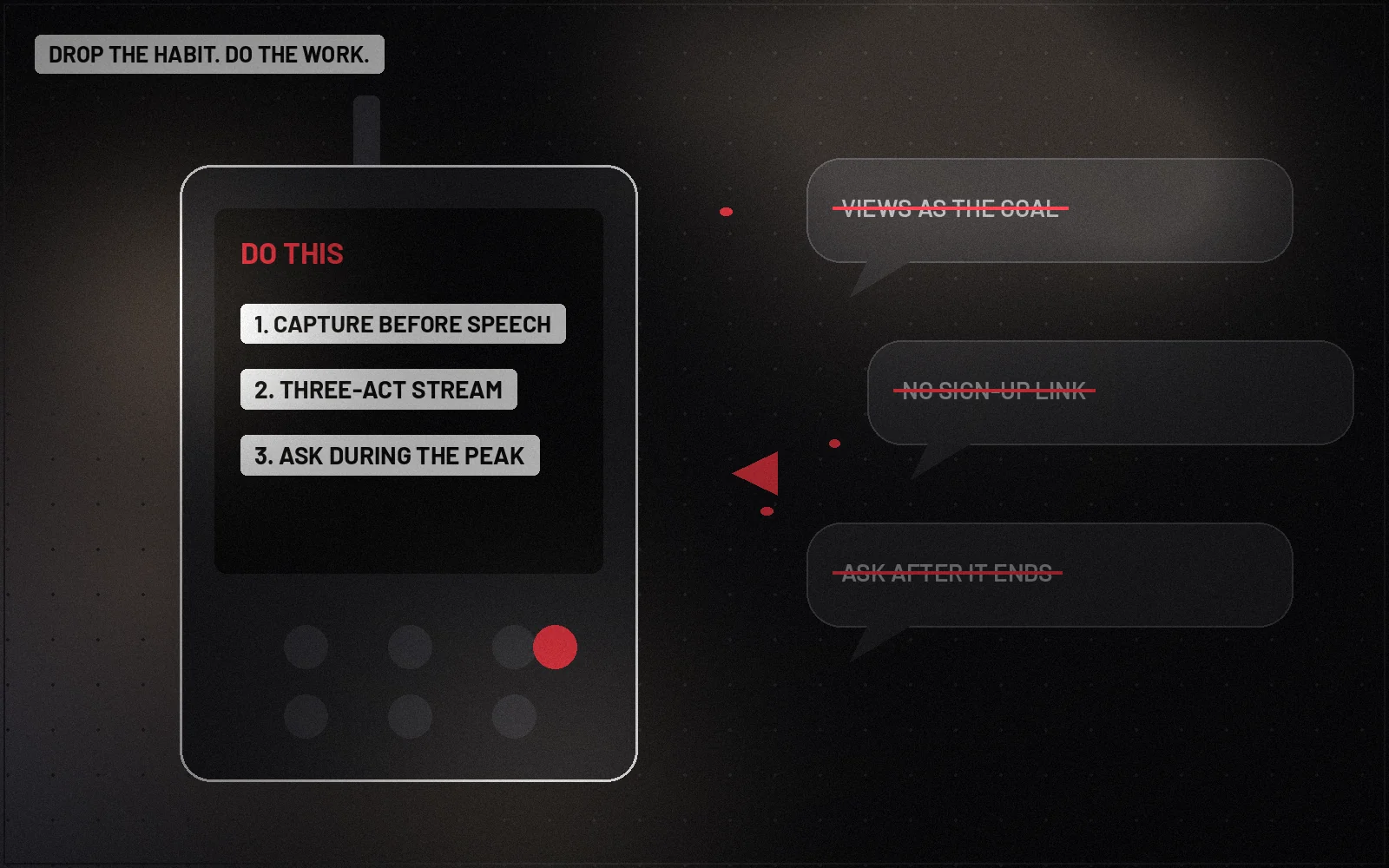
Views are vanity. Conversion is the product.
Platforms reward watch time. Campaigns need names, intents, and show-ups. Those are different jobs.
Define success before you go live:
- Lead — contact with consent and a clear interest tag (volunteer, donor, issue follower, event RSVP)
- Warm lead — answered a question, clicked a form, or stayed for the ask segment
- Turnout action — registered for a canvass, hearing, or barangay meeting within 48 hours
- Clip utility — at least three cuts that field and paid can use the next morning
If your only KPI is peak concurrent viewers, you are optimizing for theater.
Why PH townhalls are conversion-rich (if you design them)
Philippine audiences still show up for candidates and advocates who answer local questions in plain language. Livestream comments are full of barangay-specific pain: flooding, wages, transport, school fees, hospital access. That is not noise. That is segment signal.
APAC progressive movements facing similar platform cultures—high mobile use, group-chat politics, low patience for jargon—win when the stream is built like a conversion funnel with dignity, not a webinar with slogans.
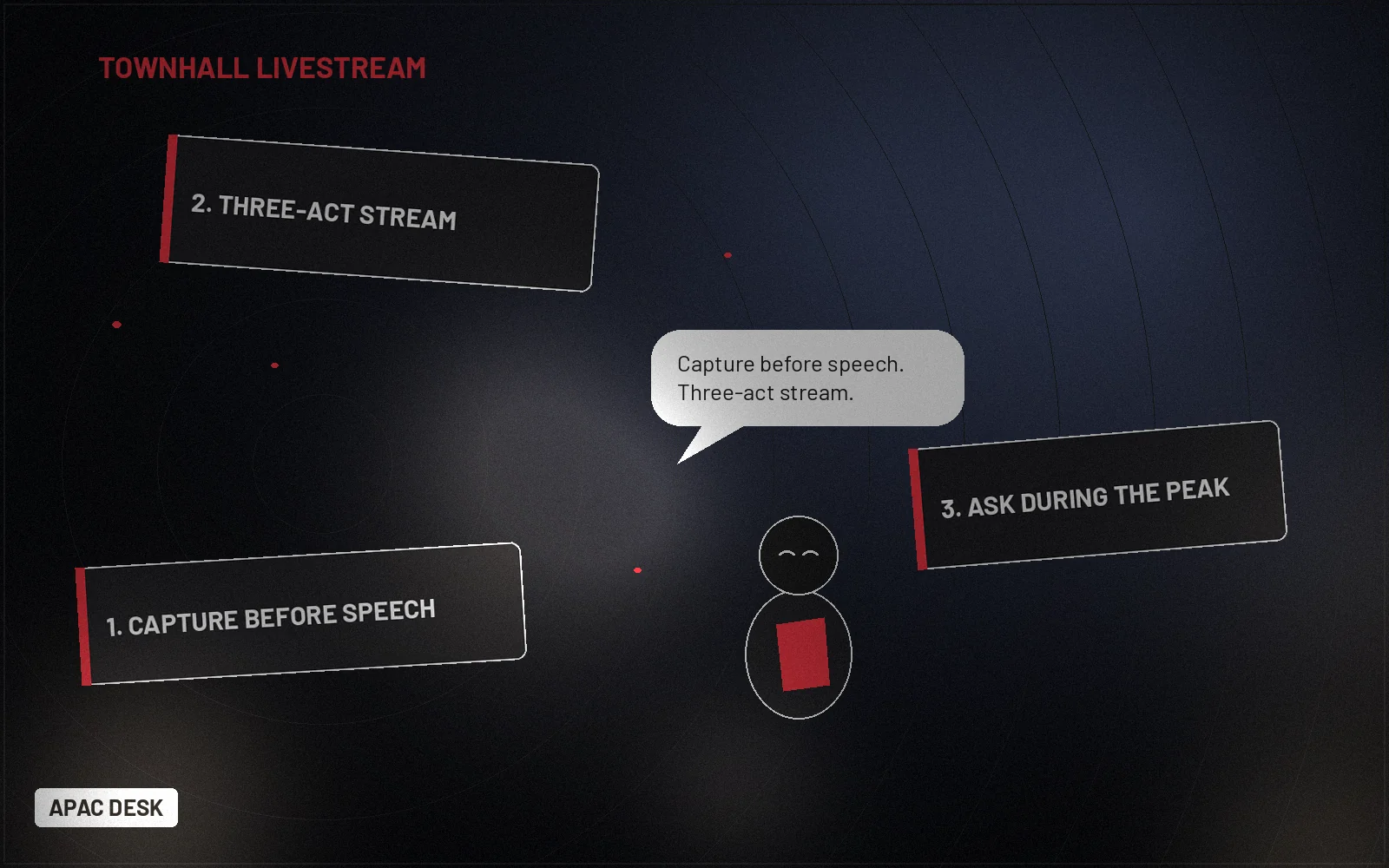
Pre-show: capture before the speech starts
Conversion starts 72 hours out, not when the candidate clears their throat.
List warm-up
- SMS / Viber / email with a single RSVP link and one reason to watch live
- Partner cross-posts with quote lanes already assigned
- Reminder sequence: 24 hours, 90 minutes, 10 minutes—short, not needy
Landing page that matches the stream
- One promise (“ask about flood control in your district”)
- One form (name, city/barangay, consent, interest)
- One mirror of the creative so paid traffic does not bounce into a different story
Tech and roles
- Host, candidate/advocate, chat moderator, clip cutter, form watcher
- Backup uplink and a second device for vertical cut if the main angle dies
- Quiet-hours respect for reminder blasts; urgency is not an excuse for midnight spam
Checklist: 48 hours before go-live
- Form tested on prepaid Android
- Moderators briefed on do-not-engage troll rules
- Three planned asks timed in the rundown
- Counsel-cleared lines for likely hostile questions
- Field leads told which turfs get next-day follow-up from stream leads
The three-act stream
Structure the hour so conversion is inevitable without being greasy.
Act 1 — Capture (first 8–10 minutes)
People join late. Repeat the promise and the form link early, then again after the first answer cluster.
- Host states why tonight matters in one sentence
- Pin the form and the rules for questions
- Candidate opens with a local proof story, not a CV
Act 2 — Prove (the meat)
Answer real questions. Batch them by theme so you do not thrash.
- Moderator clusters chat into three buckets (cost of living, governance, local service)
- Candidate answers with a bridge to the week’s message card
- Host restates the ask after each cluster: volunteer shift, petition, townhall RSVP next week
Show receipts. Progressive audiences punish vibes without proof. Bring one number, one named local example, one next step.
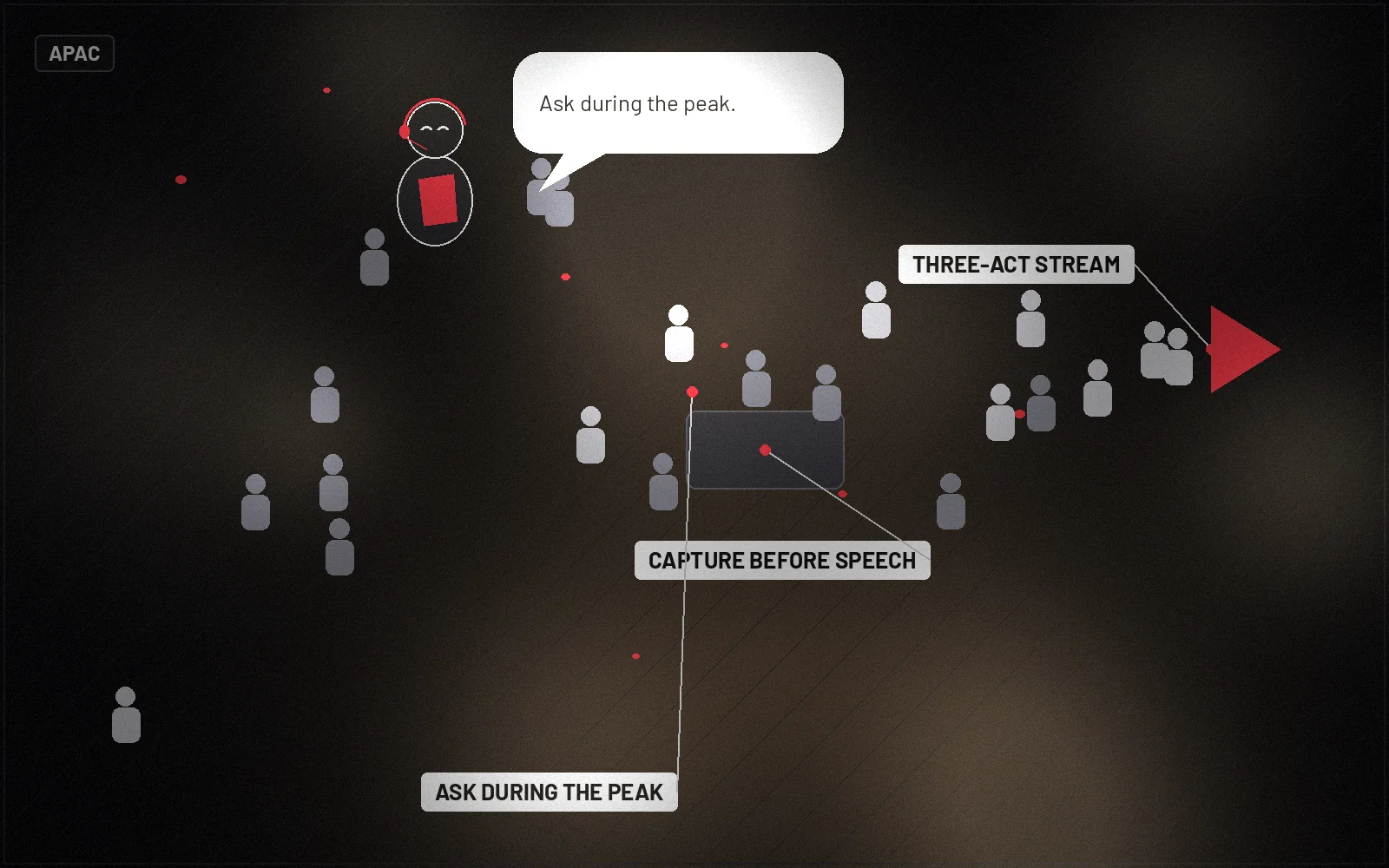
Act 3 — Ask (last 10–12 minutes)
Do not trail off into “thanks for watching.”
- Hard ask #1: submit the form if you have not
- Hard ask #2: bring one person to the next field action
- Soft ask: share a 20-second clip with a caption you provide on screen
- Close with time, place, and what happens after they convert
Mid-stream conversion tactics that do not feel cheap
- On-screen lower-third with short link / QR for in-person overflow rooms
- Chat prompts that are specific (“Type your barangay + top issue”) then capture via form, not only chat screenshots
- Partner shout-outs tied to a lane, not random logo soup
- A “missed the start?” recap card at minute 20 for late joiners
Clip pipeline: the stream’s second life
If clips are an afterthought, you paid for a one-night rental of attention.
Lock clip criteria before the show:
- 15–35 seconds
- One contrast (problem → proof → ask)
- Captions burned for mute autoplay
- Vertical first; horizontal only if you need broadcast
Within 60–90 minutes of sign-off:
- Cut three primary clips
- Ship to field leads and partner kits
- Queue paid amplification on the best-performing answer, not the prettiest lighting
Next morning:
- Publish a text recap with timestamps and the form again
- Segment new leads by issue tag for SMS/Viber follow-up
- Assign human callbacks for mid-tier donor signals if any appeared in chat
Field follow-through within 24 hours
Leads rot. Progressive campaigns that “will nurture later” watch warm intent cool into silence.
Operator rule: every stream lead gets a path within 24 hours.
- Volunteer-interested → next shift options with travel reality
- Issue-interested → FAQ card + invitation to a smaller circle briefing
- Event-interested → calendar hold + reminder stack
- Unclear → one clarifying question, not a seven-email drip on day one
Match language to the barangay tags you captured. A flood question from Marikina should not get a generic jobs reply.
Metrics that matter
- RSVP → live attendance rate
- Live → form completion rate
- Form → 7-day action rate
- Clip → assisted conversions (UTM / unique links)
- Cost per warm lead vs other channels that week
Compare livestream conversion to a static video ad. Many townhalls win on trust density even when CPM looks worse.
Failure modes to kill early
Letting chat run the candidate. Moderators cluster; candidates answer themes.
No form because “the comments are engagement.” Comments are not a CRM.
One-camera boredom. Even a second smartphone angle raises completion and clip options.
Asking for money before proving local fluency. Earn the gift; do not open with it unless the audience is already donor-warm.
Zero partner briefing. Allies who discover the stream late will invent their own frame in quote-tweets.
Paid support without turning the townhall into an ad break
Organic reach rarely matches your persuadable map. Use paid carefully.
- Boost the RSVP link before the show, not only the replay vanity
- Retarget live viewers with the best clip within 24 hours—consent and frequency caps on
- Geo-fence the district or city that matches the townhall promise
- Exclude converters already in the volunteer CRM so you do not pay twice for the same human
- Keep creative native to the stream look; a sudden glossy ad after a barangay hall aesthetic breaks trust
Progressive campaigns with thin budgets should spend on warm lead cost, not on inflated view packages.
Accessibility and trust signals that raise conversion
People convert when they feel respected.
- Captions live if you can; burned captions on clips always
- Language switches announced (“sagot sa Tagalog / English follow”)
- Clear lighting on faces; muddy video reads as low-care politics
- Pronounce local place names correctly—chat will roast you if you do not
- Show the form privacy line in plain words: what you collect, why, how to stop
OFW and diaspora viewers across APAC will watch at odd hours. Leave a replay path with the same form and a note that field follow-up still happens in PH time.
In-person hybrid rooms
Many “livestream townhalls” also have a covered court or hall audience. Treat them as two audiences with one spine.
- In-room host mirrors chat questions so the hall does not feel second-class
- QR codes on seats and stage flanks for people who will not type a long URL
- Capture hall RSVPs on paper only if you digitize the same night
- Do not let the loudest person in the room hijack the conversion clock—host protects Act 3
Hybrid done well creates validators on camera and leads in the CRM. Hybrid done poorly creates a Facebook show and a forgotten sign-in sheet.
Weekly rhythm: make townhalls a system, not a stunt
One heroic stream will not fix a thin organizing program. Put townhalls on a cadence:
- Biweekly local issue townhall (short, specific)
- Monthly candidate / lead advocate townhall (broader)
- Surge townhalls tied to hearings, disasters, or ordinance votes—evergreen process, not panic content
Each instance reuses the same roles, forms, clip criteria, and 24-hour follow-through. That is how conversion compounds.
Soft close: make the townhall work twice
A townhall livestream is not a vibe. It is a conversion machine with a human face—if you design capture, proof, ask, clips, and field follow-through as one system.
Neuwark Communications helps progressive campaigns in the Philippines and across APAC turn live moments into durable organizing assets. If your next townhall still ends at “thanks for watching,” talk to Neuwark before you book the room. We will help you build the playbook that turns views into turnout.